Boss Exaggerates Headcount: 300 as 1000
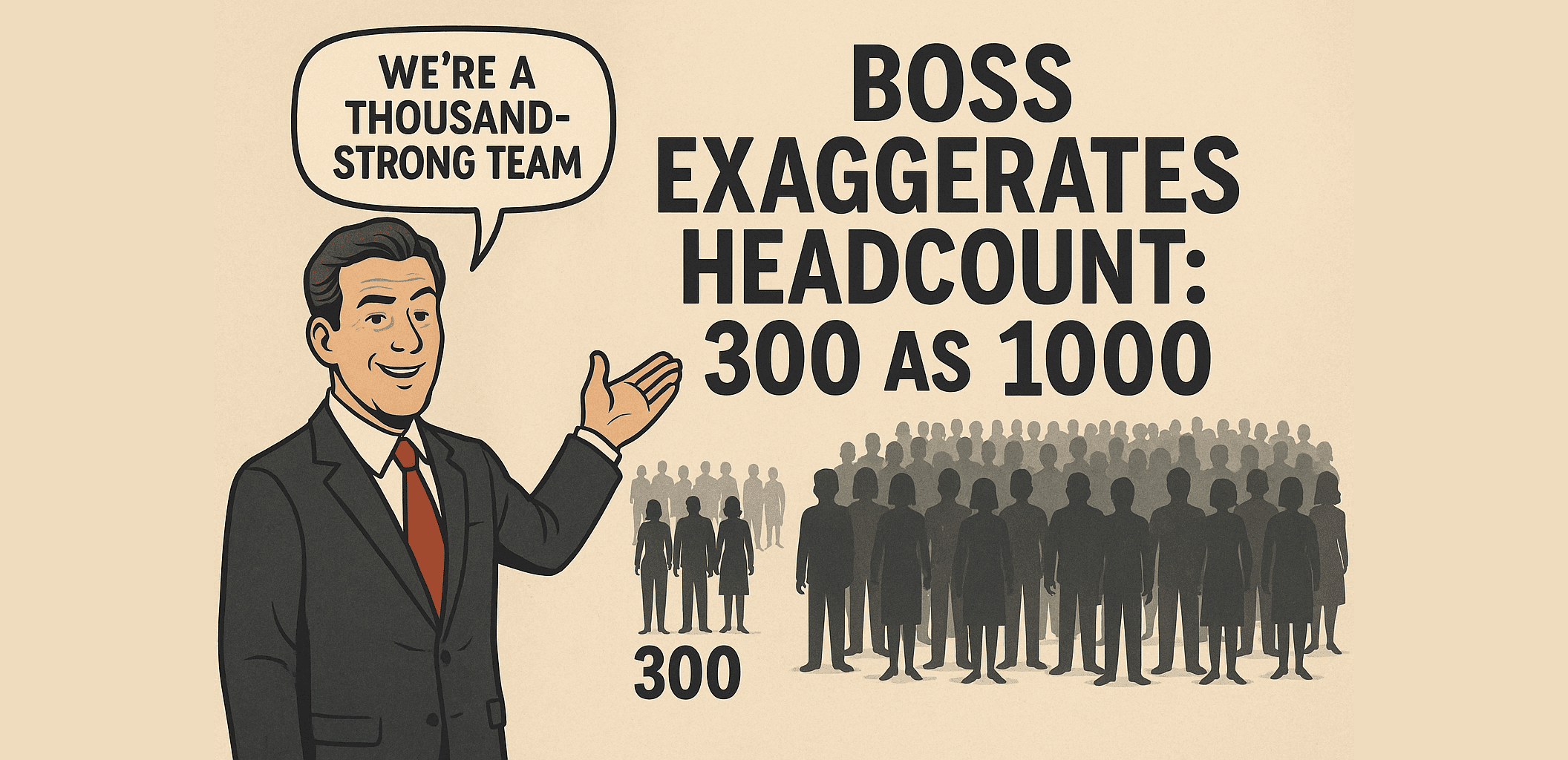
If you’ve worked in real estate, you’ve heard the boast: “We’re a thousand-strong team.” It sounds impressive, commanding, and safe. But in the property agency world, numbers are often less a statistic and more a strategic weapon.
It’s an open secret that headcounts are routinely inflated. A boss might proudly claim the agency has 1,000 people. The reality? Maybe 300 are registered. Dig deeper, and you may find only 20 are consistent top performers. Yet this illusion transforms the agency into a formidable giant in the eyes of clients, recruits, and competitors.
The Harsh Math of Reality
The rule of thumb inside agencies is brutal but accurate: for every 10 agents, only 2 are serious closers while the other 8 are largely inactive. That means:
- A 100-person agency = 10–20 active closers
- A 300-person agency = 30–60 active closers
But when these figures are presented externally, they are artfully multiplied. Those 30–60 real performers are marketed as an unstoppable army of 300, 500, or even 1,000.
Why Bosses Play the Numbers Game
- 1. Winning Developer Projects
Developers want maximum reach. A large headcount—even if inflated—implies an army of salespeople ready to push units. The agency with the “biggest” number often secures the project, regardless of actual performance. - 2. Recruiting New Agents
Recruits are skeptical. Their first question is: “Is this company legitimate?” A huge headcount acts as social proof. If “thousands” have already joined, it must be safe. The illusion makes recruitment much easier. - 3. Boosting Brand Confidence
Perception is reality. Among agents, size signals strength. Joining a “major player” gives confidence when facing clients and the comfort of being backed by a supposed powerhouse. - 4. Projecting Market Capability
A “1,000-person” agency looks capable of handling multiple launches, covering nationwide campaigns, and executing high-volume marketing. That perception alone opens doors to bigger, more lucrative opportunities. - 5. Gaining Negotiation Power
At the table with developers, vendors, or media partners, headcount equals leverage. A company claiming 1,000 agents commands better terms, higher commissions, and more respect than one admitting to 300. - 6. Ego and Status
Real estate is status-driven. Inflated numbers are bragging rights. Managing 300 is respectable; leading “a thousand” is elite. That status attracts more attention, more talent, and more opportunities.
The Inevitable Risks of the Illusion
- Developer trust erodes. Sooner or later, performance gets measured against claims. If a “1,000-strong” agency delivers like 300, confidence collapses.
- Recruit turnover spikes. New agents soon realize most of their “thousand” peers are inactive. Disappointment sets in, and churn follows.
- Industry reputation suffers. Insiders—competitors, seasoned agents, and savvy developers—know the exaggeration. They may play along, but credibility quietly takes a hit.
The Bottom Line
Exaggerated headcount is a clever branding tactic. It works because the market—recruits, developers, even agents themselves—wants to believe bigger means better.
But in the end, only one number truly matters: closed deals. Inflated numbers might open doors, but only performance keeps them open. The most successful agencies know the illusion must eventually give way to results.