The Endgame Question: What Happens to Your Agency When You Retire?
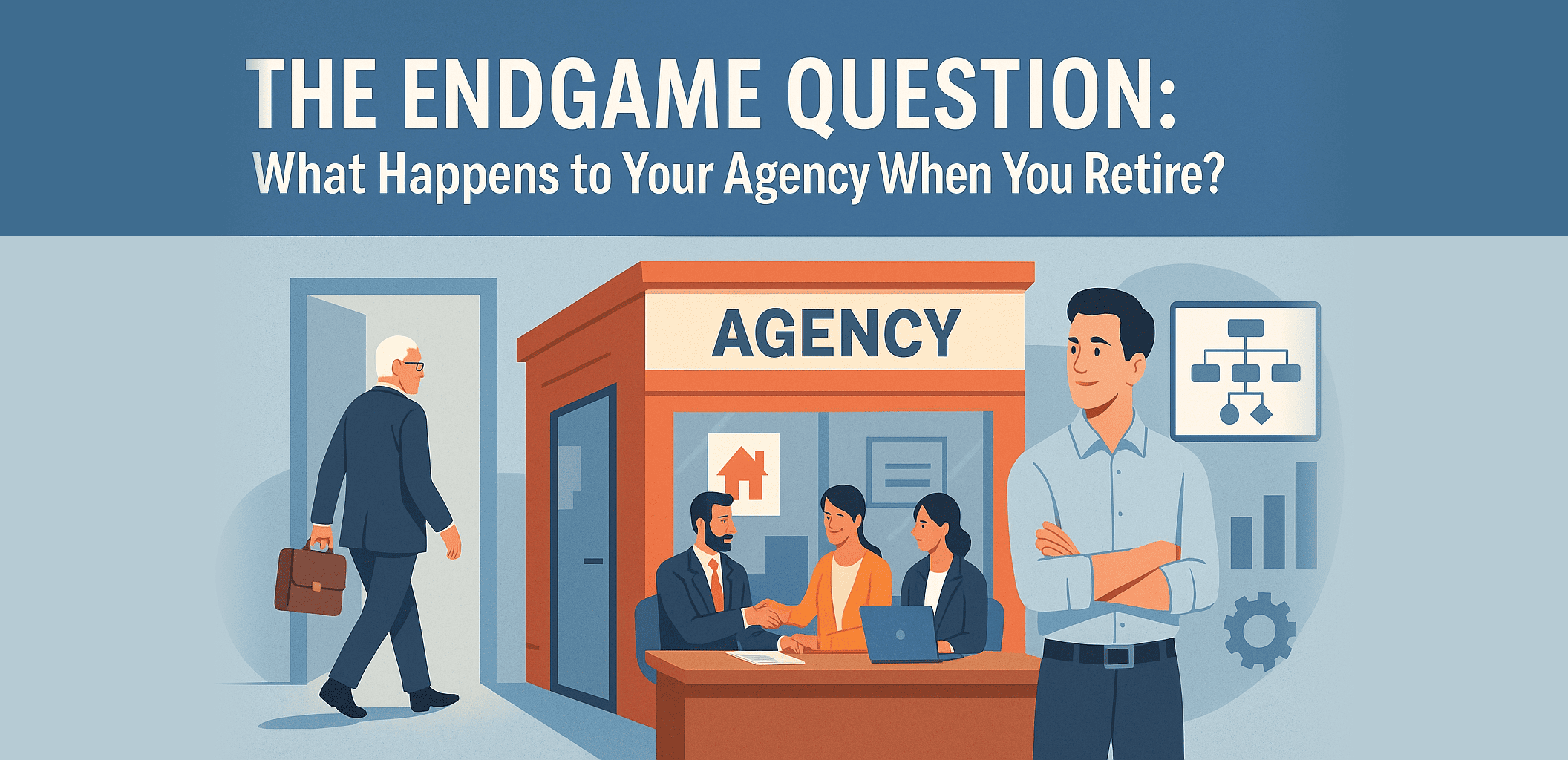
Every property agency boss in Malaysia faces the same inevitable question: what happens to my agency when I step away? Unlike other businesses, property agencies face a structural succession challenge—one that few principals truly prepare for.
The Succession Planning Gap
In many industries, a founder can pass the business to their children. But in Malaysia's property industry, this isn’t straightforward:
- Your son or daughter cannot simply inherit your agency—they must qualify for and obtain a license under Act 242.
- Without a licensed successor, the agency cannot legally operate under family control.
- This means that even if you’ve spent decades building a brand, your children may not be able to carry it forward.
The reality? Most retiring bosses end up selling their shares or letting the next tier of management take over.
Why Agency Brands Rarely Hold Value
You might think your agency’s brand will carry a premium in a sale. Unfortunately, in Malaysia, that’s rarely true:
- Agent loyalty is low. Most negotiators follow leaders, not brands.
- Clients don’t care about the logo. Buyers and sellers choose negotiators, not agencies.
- Capital markets don’t favor agencies. Investors avoid businesses that are people-dependent, low-margin, and easily replicated.
At best, your agency is worth the strength of its leaders and its systems—not the name on the signboard.
The Common “Exit Plan” in Malaysia
Because of these structural issues, most agency bosses fall into the same path:
- Pass leadership to top management
- Hold a minority stake for passive income
- Final handover when the principal passes away
This informal model is a default, not a strategy. It leaves significant value on the table and often leads to fragmentation or decline.
The Harsh Reality: Growth Without Succession = Fragile
Without a real succession plan, even the biggest agencies can collapse within a generation:
- Leaders spin off to start their own firms
- Negotiators scatter when leadership changes
- The agency brand fades as soon as the founder steps away
This isn’t hypothetical—it’s the story of countless once-dominant agencies in Malaysia.
What Could Change the Endgame?
For agencies to survive beyond their founders, two things must happen:
- Systemization – building something bigger than the founder.
- Profitability & Moat– creating replicable margins that can’t be eroded overnight.
This is why the only viable succession plan transforms your agency from a people-dependent operation into a system-driven business. And that’s exactly what tech-driven platforms like ListingMine ERP are designed to provide.
How ListingMine Protects Your Legacy
With ListingMine, succession isn’t guesswork—it’s system innovation.
- No-code scheme builder: Deploy new commission rules in minutes—not just to match existing splits, but to experiment with new payout structures that make sense for your leaders and your margins.
- Cloud-based & instant: Adapt immediately to market pressure without waiting months for a vendor tweak.
- Beyond payouts—new models: Design business systems that were previously impossible, like a co-agency network where multiple agencies share listings, leads, and commissions through automated splits. This isn’t just compliance software—it’s a framework to reimagine how your agency collaborates and grows.
- Margin-first design: While leaders get freedom, the platform always protects a baseline fee for the principal—turning autonomy into retention, not erosion.
With this foundation, your agency stops being just a company that pays commissions. It becomes a platform with its own unique operating system—something that’s difficult to replicate, attractive to leaders, and valuable enough for others to buy into or carry forward.
Final Word
The endgame question is unavoidable:
- If your brand is just a name, it dies with you.
- If your agency depends only on you, it collapses when you leave.
- But if you’ve built systems, empowered leaders, and protected margins, your agency becomes bigger than you.