The Agent's Choice: Exclusive Access or Full Autonomy?
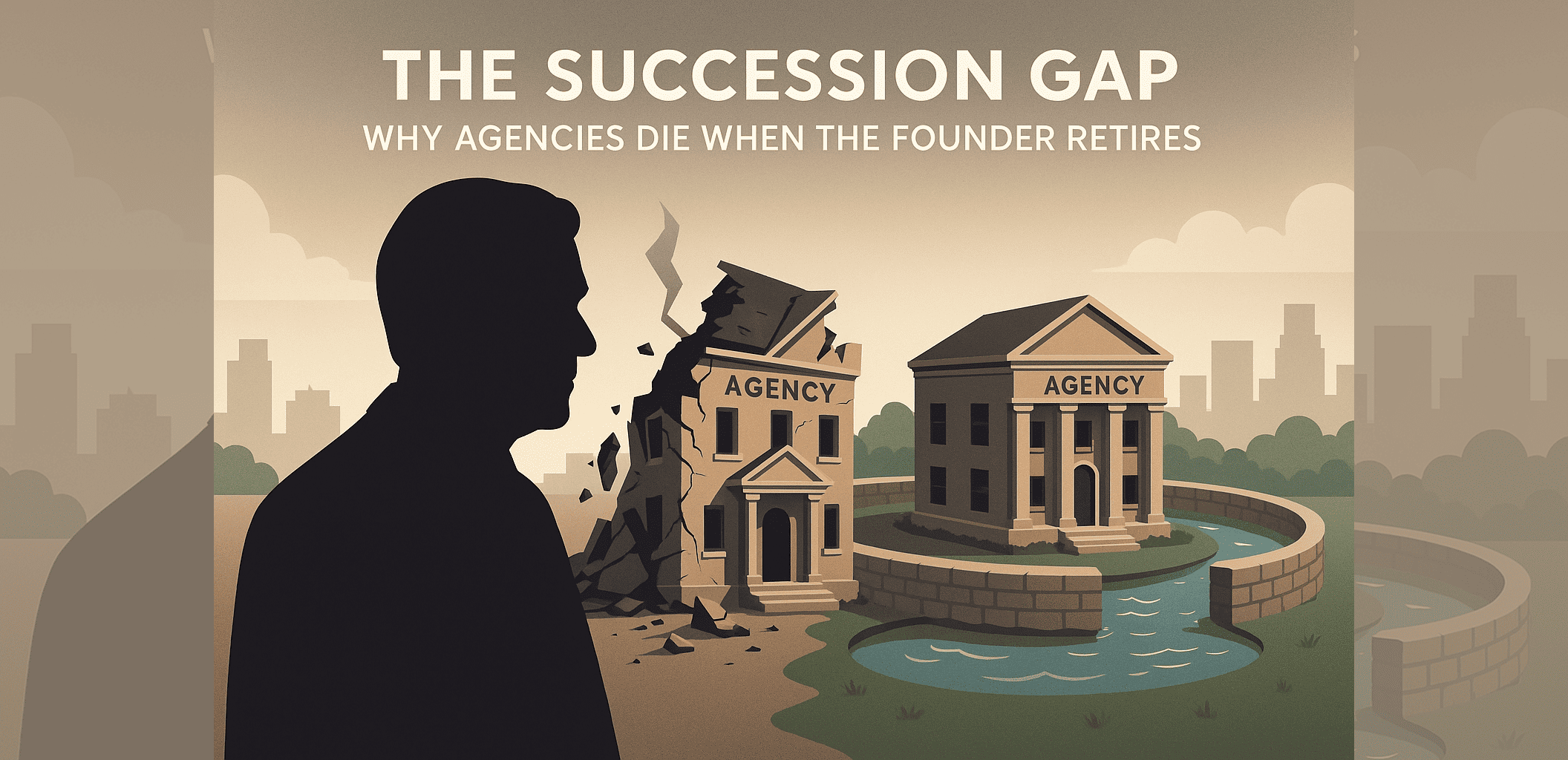
Real estate agencies present themselves as timeless brands—built to last. Their logos, offices, and licenses create an illusion of permanence.
But behind the façade, an agency isn’t a building or a brand. It’s a people and network business. And that’s why so many collapse the moment the founder retires—or worse, passes away.
The Founder Effect: One Person, One Network
In most firms, the founder is the business. They hold the license, nurture the developer relationships, manage the banks and lawyers, and—most importantly—attract and retain the top agents.
The entire operation is tied to their personal network and reputation. They are the glue. When they’re gone, the structure often comes apart.
Without the founder’s presence, successors face an impossible battle:
- Developers drift: Special projects and deals built on personal trust simply evaporate.
- Agents leave: Loyalty was to the leader, not the logo.
- Banks and partners hesitate: Without the familiar handshake, confidence weakens.
- Culture crumbles: The energy that came from one person’s drive can’t be duplicated by a mission statement.
Why Succession Is So Difficult in Real Estate
Other businesses inherit factories, patents, or intellectual property. Real estate agencies inherit relationships—intangible, fragile, and impossible to lock down.
A network walks out the door every evening. If agents and partners don’t feel connected to the successor, they’ll simply take their business elsewhere.
This is why so many once-dominant agencies fade into irrelevance. The brand wasn’t the moat—the person was.
The Moat: What Separates Survivors from Casualties
The few agencies that survive a founder’s exit all share one thing: a moat that protects them even when the key personality is gone.
- Exclusive Project Ties: Deep, contractual ties to developers that successors can monetize, long after the founder's personal charm is gone.
- Unbreakable Loyalty Teams: A culture where leaders beneath the founder feel true ownership. Loyalty must be to the mission, not just the man.
- Systems Over Personalities: A strong cooperation network (ACN), shared lead generation, and collaborative commission structures ensure that no single person controls all the value.
Without a moat, every agency is fragile—one retirement away from collapse.
Closing the Succession Gap
If agencies want to outlive their founders, they must start building now:
- Systemize relationships into platforms and processes.
- Anchor loyalty in opportunities and culture, not just personality.
- Secure exclusive projects that create long-term leverage.
- Build leadership layers so successors inherit more than just a license.
The Bottom Line
An agency built on a founder’s network may look strong, but it is dangerously fragile.
The ones that survive aren’t those with the flashiest branding. They are the ones with exclusive projects, unbreakable teams, and systems that outlast people.
Otherwise, when the founder retires, the agency retires with them.