Why Merging Struggling Agencies Usually Fails
When three underperforming agencies in the same area talk about merging, the logic sounds convincing:
combine forces, share costs, and compete better.
On paper, it looks efficient — shared resources, more listings, a bigger team.
But in real estate, a merger rarely solves the problem.
It usually makes it bigger.
The Illusion of Strength in Numbers
Most agency mergers collapse for one reason: power balance.
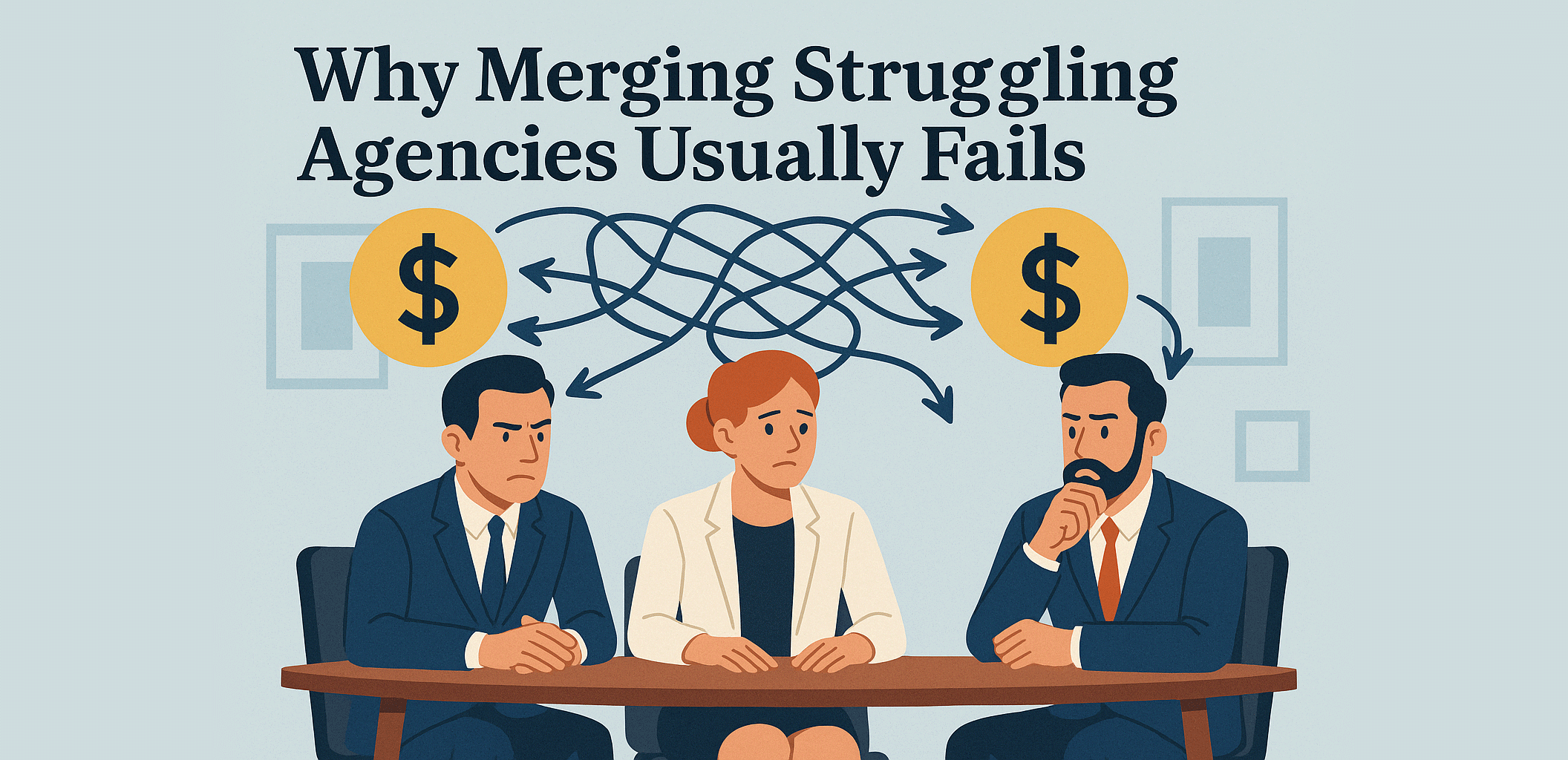
When three firms agree to merge, they often settle for a “fair” 33.33% equity split — assuming equality.
But equality on paper doesn’t translate into real-world efficiency.
The moment the ink dries, someone still needs to lead.
Who decides on recruitment, commission structures, budgets, and team discipline?
With three co-founders, every critical decision becomes a negotiation — or worse, a stalemate.
When authority is diluted, no one leads.
In property, where speed and clarity decide survival, a structure that requires three approvals per decision is a recipe for failure.
Downlines and Divided Loyalties
Even under a new company name, agents remain loyal to their original bosses.
They continue to follow different habits, priorities, and communication channels — leading to daily confusion:
- Whose listings take priority?
- Who approves co-broking and lead sharing?
- Who gets credit for closed deals?
And when one leader’s team starts outperforming the others, optimism fades fast.
Silent competition replaces teamwork.
The “equal” profit split quickly feels unfair — especially when effort and results aren’t equal.
Once leaders or agents feel under-rewarded, collaboration collapses.
You don’t need three bosses fighting over profit.
You need one trusted leadership system.
The Smarter Alternative: Collaboration Without Consolidation
Merging isn’t the only way to grow. You can collaborate without surrendering control:
- Co-broke deals with transparent commission splits.
- Pool marketing budgets to expand area coverage and share exposure.
- Build a local listing exchange to match buyers and sellers efficiently.
This approach keeps independence intact while unlocking the same collective advantage — without the politics of shared ownership.
Final Thought
A merger may seem like a shortcut to strength, but without unity in vision and a single, decisive captain, it’s a shortcut to chaos.
Three struggling agencies don’t become strong by merging; they only inherit each other’s problems.
Clarity beats size.
Leadership beats equality.