Co-Broking Etiquette: The Unwritten Rules for a Seamless Collaboration
In Malaysia’s property market, co-broking is both a blessing and a battlefield.
Done right, it doubles your chances of closing.
Done wrong, it destroys trust, reputations, and relationships faster than any downturn.
Most agents understand the mechanics of co-broking — sharing listings and splitting commissions — but few respect the etiquette that keeps it smooth and sustainable. These unwritten rules separate true professionals from opportunists.
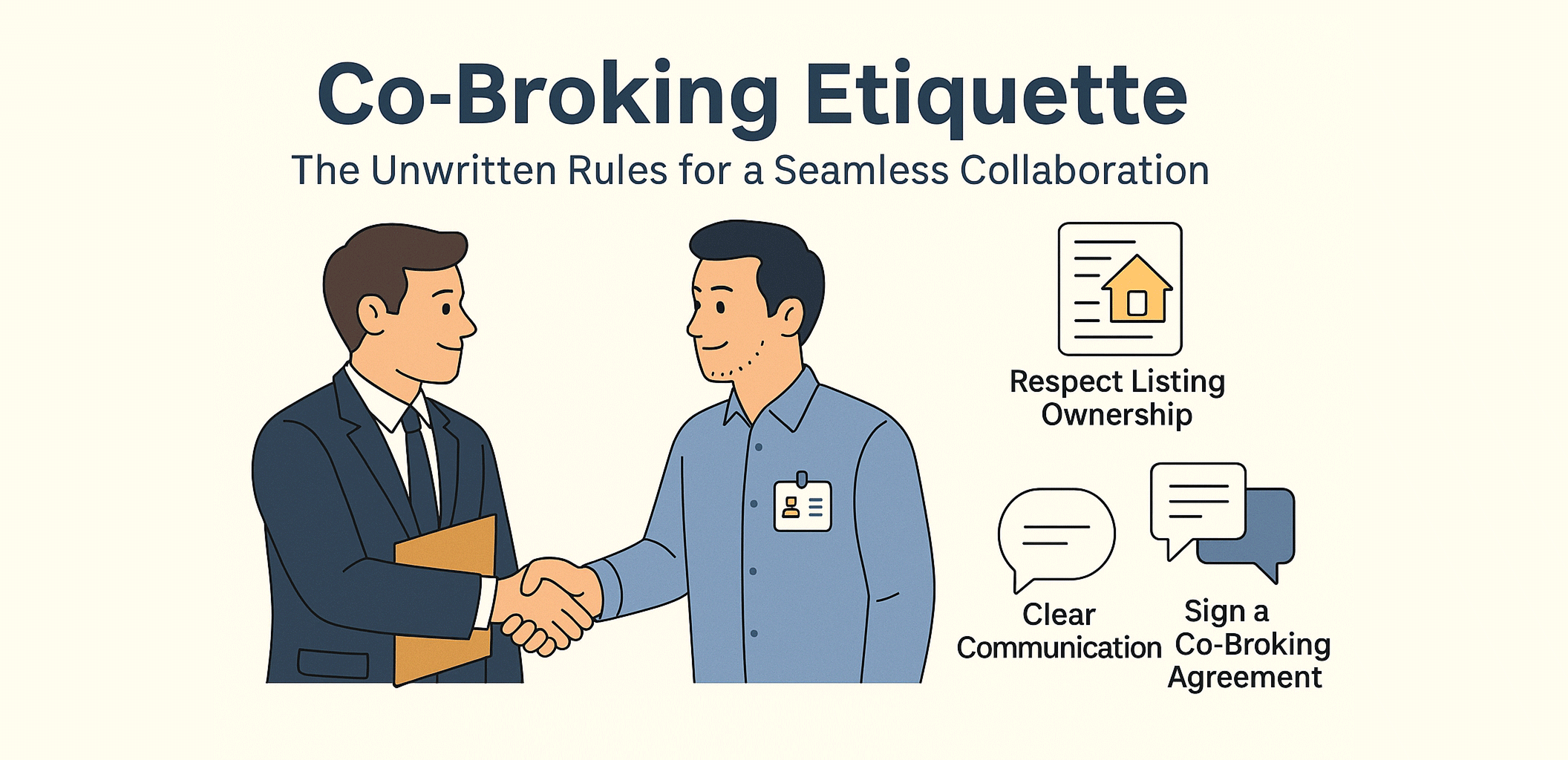
1. Respect Listing Ownership — and Earn That Respect Through Professionalism
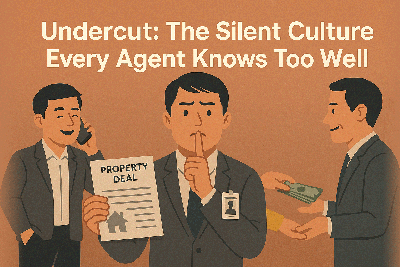
Temptation often strikes when a buyer’s agent recognises a property and happens to know the owner personally. It can feel natural to bypass the listing agent and contact the owner directly — especially when the relationship seems “close.” But that’s exactly where professionalism is tested.
Respecting listing ownership isn’t just about courtesy; it’s about competence. If you don’t know your listing details well, give wrong information, or lack proper appointment documents, do you really expect other agents to trust — let alone respect — your position? Respect is mutual: to be treated as the authorised listing agent, you must act like one.
To prevent undercutting and disputes:
- Verify ownership and data accuracy.
- Confirm the owner’s name, title details, and legal status before marketing the property. Conduct a quick title check when necessary.
- Secure an appointment letter.
- Have the owner sign to confirm you are the authorised listing agent.
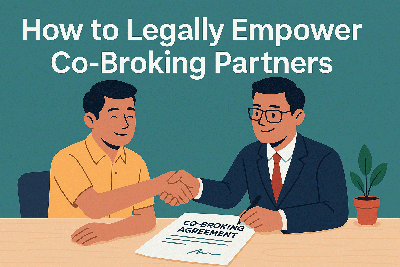
- Sign a co-broking agreement.
- Record the collaboration, commission split, and parties involved before any viewing or buyer disclosure.
- Use viewing or inspection logs.
- Each viewing should be documented with the owner’s acknowledgement to prove who introduced the buyer.
- Know when to say no.
- If your documentation is weak or your relationship uncertain, it’s reasonable to decline co-broking until your position is secure — especially under an exclusive appointment.
Before asking others to respect your listing, make sure you’ve earned that respect through accuracy, documentation, and professionalism.
2. Communicate Clearly, Confidently, and Fast
Co-broking is a partnership, not a race. Deals fail more often from poor communication than from commission disputes. Experienced agents can tell — within seconds — whether the person on the other end knows what they’re doing. Both sides need to communicate with confidence and clarity; nobody wants to work with someone uncertain or unprepared.
- Start with a proper introduction.
When contacting a listing agent — usually through property portals — identify yourself clearly by name, agency, and REN number. Since the portal already shows which agency the listing belongs to, you may also mention if you know a common friend, team leader, or boss. This instantly builds trust and shows you’re a genuine co-broker. - Speak with clarity and purpose.
Be direct, polite, and professional. Avoid vague requests like “still available ah?” or “can view later?” — instead, state your buyer’s needs, budget, and intended viewing time. Agents like working with people who sound competent and organised. - Provide accurate information.
Listing agents must supply clear, up-to-date details — price, size, condition, tenancy, and viewing readiness. Inaccurate or outdated data wastes everyone’s time. - Set appointments through the seller’s agent.
The buyer’s agent should always coordinate viewings, access, and follow-ups directly with the seller’s agent — not the property owner. This keeps communication professional and avoids confusion. - Be punctual and responsive.
Late arrivals, slow replies, or ignored calls cost deals. Buyers move fast; co-brokers must move faster.
Good communication isn’t just about being polite — it’s about demonstrating professionalism. The more confident and prepared you sound, the more seriously other agents will take you.
3. Keep Buyer and Seller Roles Separate
Boundaries make co-broking work.
- The buyer’s agent deals only with the buyer.
- The seller’s agent deals only with the owner.
- Neither side should contact the other’s client directly — not to negotiate, not to follow up, and not to “double-check.” All substantive communication should flow through the respective agents to maintain accountability and avoid confusion.
When everyone stays in their lane, trust stays intact and disputes never start.
4. Uphold Professional Conduct
Co-broking is built on reputation.
- Don’t copy listings, misrepresent facts, or take shortcuts that erode trust.
- Give credit where it’s due, thank collaborators, and close every transaction with your integrity intact.
Professional respect today builds tomorrow’s partnerships — and in this industry, your name is your currency.
Final Thought
In a fragmented market, co-broking remains the most effective way to close more deals and grow faster — but only when done with discipline, confidence, and integrity.
When agents act like partners, not rivals, everyone wins — the seller, the buyer, and both professionals in between.