The Unspoken War Between RENs and REAs
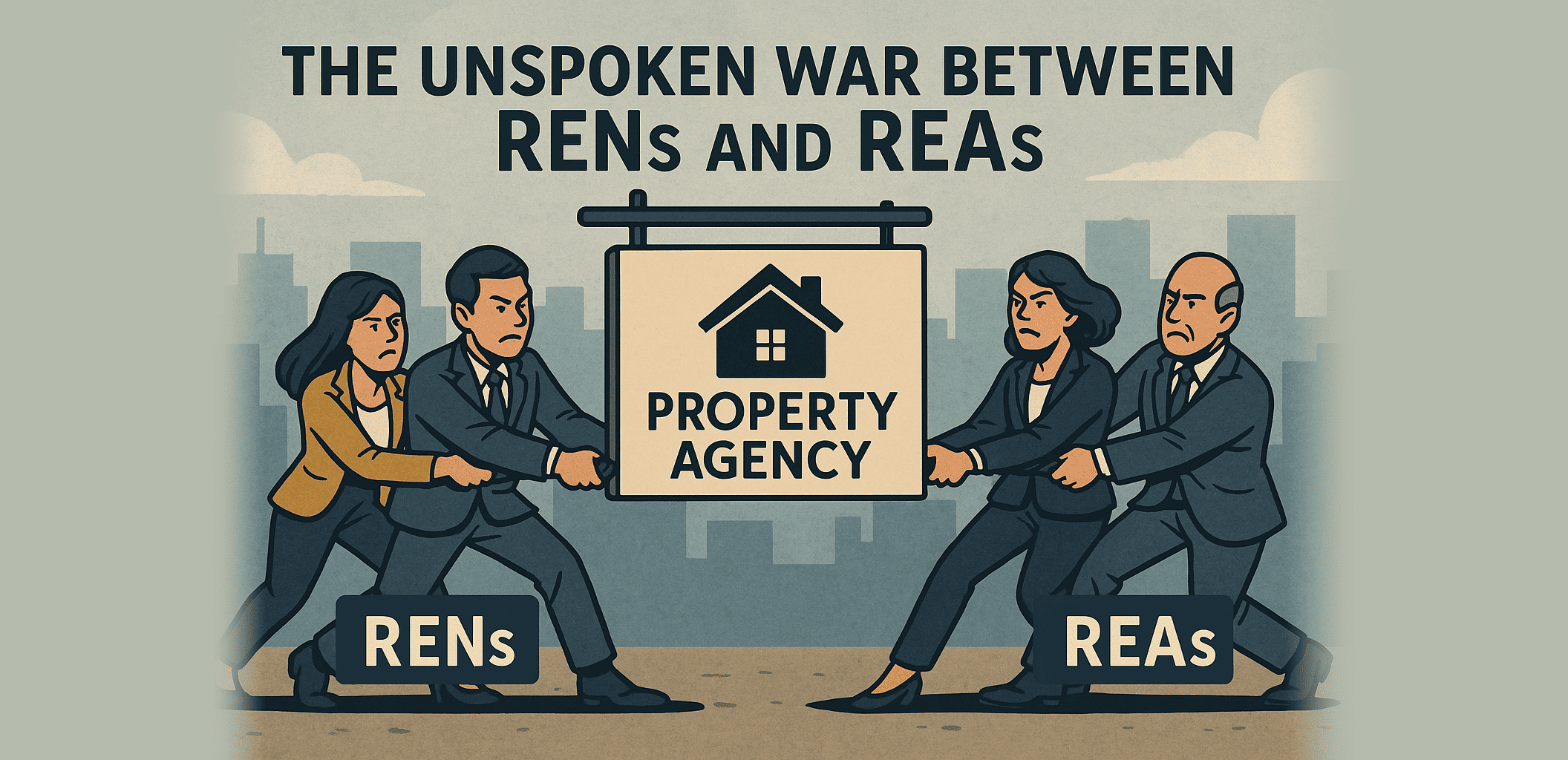
On paper, Malaysia’s property industry looks neatly structured. Real Estate Agents (REAs) hold licenses. Real Estate Negotiators (RENs) work under them. But in practice, a quiet war simmers beneath the surface—one that shapes how agencies grow, fracture, and often collapse.
This is the unspoken war between RENs and REAs.
The Source of Tension
At its core, the conflict stems from economics and accountability:
- REAs (License Holders): They carry the license, and under Act 242, they are the first line of enforcement when regulators come knocking. They are accountable for compliance, office operations, and brand reputation.
- RENs (Negotiators): Also governed by Act 242, but without a license, their responsibilities are often viewed as lighter. They carry the market, the clients, and increasingly, the revenue.
The imbalance? The ones holding the regulatory risk often earn less than the ones bringing in the sales.
Team Leaders as “Mini-Bosses”
The rise of team leaders with high payouts has blurred the line between REN and REA.
- With payouts reaching 80–100%, team leaders effectively operate their own business without carrying the costs of licensing, compliance, or infrastructure.
- In many cases, they earn more than the agency principal who holds the license.
- While they may not use their own brand legally, the group name branding (e.g., “Team XYZ”) carries just as much weight as the agency brand in the eyes of negotiators and clients.
This creates a shadow hierarchy: the agency name is the roof, but the real loyalty sits with the group.
Why REAs Feel Squeezed
For REAs, the imbalance is stark:
- All risk, less reward. As the enforcers under Act 242, they are the first to be held accountable if a REN missteps, yet their margins keep shrinking.
- Brand dilution. Clients may not remember the agency—they remember the team.
- Fragile loyalty. Leaders can uproot their entire group and switch agencies overnight, taking revenue and brand equity with them.
In effect, many REAs feel like landlords whose tenants (the team leaders) make more profit running businesses inside their property.
Why RENs Push Back
From the REN and team leader perspective, the argument is just as strong:
- Value for effort. If they are the ones closing deals, why shouldn’t they keep the lion’s share?
- Perception of limited support. Many agencies offer little beyond compliance and a brand name, while team leaders provide actual leads, training, and culture.
- Market reality. Buyers and tenants care more about the negotiator they deal with, not the firm on the letterhead.
For RENs, agency bosses who insist on tighter splits look like dinosaurs clinging to outdated models.
The Silent War That Shapes the Industry
This tug-of-war plays out daily across Malaysia:
- REAs worry about losing control of their business to leaders who can walk away with entire revenue streams.
- RENs feel limited by licenses they see as gatekeeping, even as they shoulder the pressure of generating sales.
It is a war without open confrontation, but one that quietly decides who thrives and who fades.
The Future: Alliance or Attrition?
If this gap continues to widen, the industry risks splitting into two extremes:
- Agencies as shells. REAs provide little beyond licenses, while REN groups run the real business.
- REN-led outfits. Leaders formalizing their own agencies once eligible, creating a constant churn of new firms.
The alternative is alliance: REAs leveraging systems, technology, and transparent structures to give value beyond licenses—so that leaders see partnership, not conflict.
Final Word
The war between RENs and REAs is unspoken, but its effects are everywhere—high turnover, constant rebranding, and fragile business models. Until the relationship shifts from adversarial to collaborative, agencies will keep looking big on the outside while battling fractures on the inside.
Both RENs and REAs are bound by Act 242, but only one side carries the license—and the burden of enforcement. That reality is at the heart of the war.