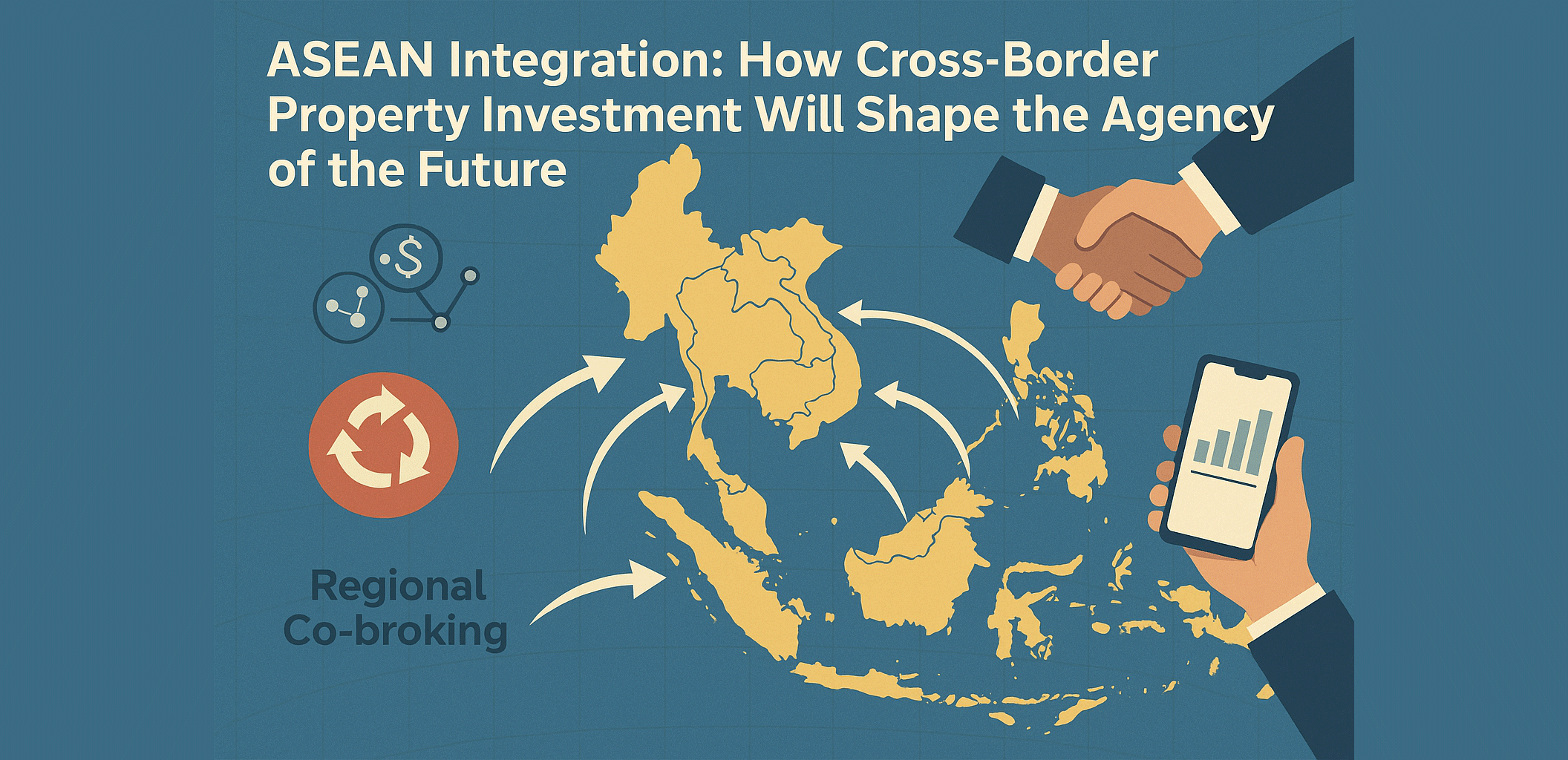
ASEAN integration can increase cross-border property interest, relocation, and investor movement. Future agencies may need regional knowledge and international cooperation capability.
The next big property wave won’t come from new launches or domestic upgrades — it will come from borders disappearing.
As ASEAN economies integrate through trade, infrastructure, and digital finance, property is becoming a regional asset class. Developers are going regional, buyers are going international, and agencies are quietly being forced to evolve from local sales teams into cross-border transaction networks.
This shift won’t just change what agents sell — it’ll redefine how agencies are structured, trained, and trusted.
ASEAN’s free-movement frameworks — like the ASEAN Comprehensive Investment Agreement (ACIA) and Mutual Recognition Arrangements (MRAs) — are paving the way for simpler capital flows and cross-border ownership.
Meanwhile, lifestyle and tax dynamics are driving regional mobility:
The idea that “foreign buyers are just Chinese” is outdated — ASEAN is building its own intra-regional investment ecosystem.
Tomorrow’s successful agent won’t be limited by national borders. They’ll be what we call Transnational Agents — fluent in cross-border financing, foreign ownership regulations, tax regimes, and residency programs.
For example:
Instead of competing, regional agents will co-broke across borders — mirroring how capital, buyers, and developers already do.
Infrastructure integration is the silent driver behind property globalization.
Projects like:
These corridors create property gravity zones where demand clusters around logistics, digital commerce, and hybrid living.
For example:
The future ASEAN agent must be able to read corridors like markets — understanding that infrastructure equals investment flow.
Property has always been constrained by legal friction — borders, ownership rules, and slow banking systems. Now, fintech and tokenization are rewriting that playbook.
Cross-border platforms like Wise, Instarem, and digital escrow wallets enable faster capital movement. Meanwhile, blockchain-led initiatives (like tokenized REITs and digital fractional ownership) allow investors in Bangkok to co-own Malaysian retail lots or serviced apartments with traceable returns.
The ASEAN property market is digitizing, and agents who can operate across both financial and regulatory boundaries will lead this transformation.
Large Malaysian developers (like EcoWorld, Mah Sing, Sime Darby) and Singaporean groups (like CapitaLand, UOL, GuocoLand) are expanding across Southeast Asia.
That means they don’t just need local agents — they need regional distribution partners who can coordinate:
This will blur the line between agency, distributor, and investment advisor — creating multi-market “super-agencies.”
The agency of the next decade won’t be a single office in one city — it’ll be a cloud network of regionally integrated professionals, with:
The agent of the future won’t ask, “Which project do I sell?” They’ll ask, “Which market needs me next?”
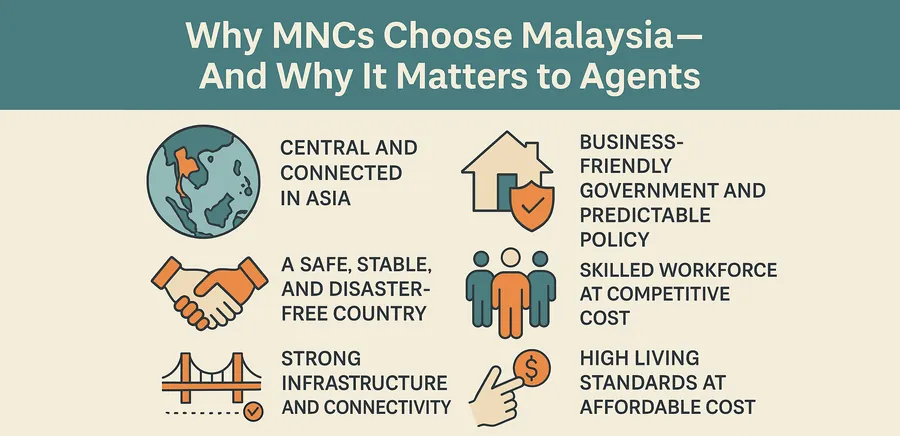
Malaysia sits at the center of ASEAN — geographically, linguistically, and financially. It has:
That makes Malaysian agencies natural gateways for cross-border collaboration. Agencies that master compliance (BOVAEP + PDPA + AMLA) while integrating ASEAN-wide referral systems can become regional command centers for investment flow.
The next generation of real estate professionals won’t just manage listings — they’ll manage regional investment flows. They’ll understand not just what’s for sale, but where the capital is moving next — from Kuala Lumpur to Bangkok, Manila, and Hanoi.
ASEAN integration won’t erase national agencies — it will upgrade them into cross-border ecosystems. And the future of property in Southeast Asia will belong to those who build trust across borders, not just sales within them.

Founder of ListingMine and author of Agent for Life. Building ERP for Malaysian real estate agencies since 2008 — and writing to reshape how agencies grow.
More about Marvin Foong →More articles in this topic