The Real Challenges of Starting a Real Estate Agency
In short
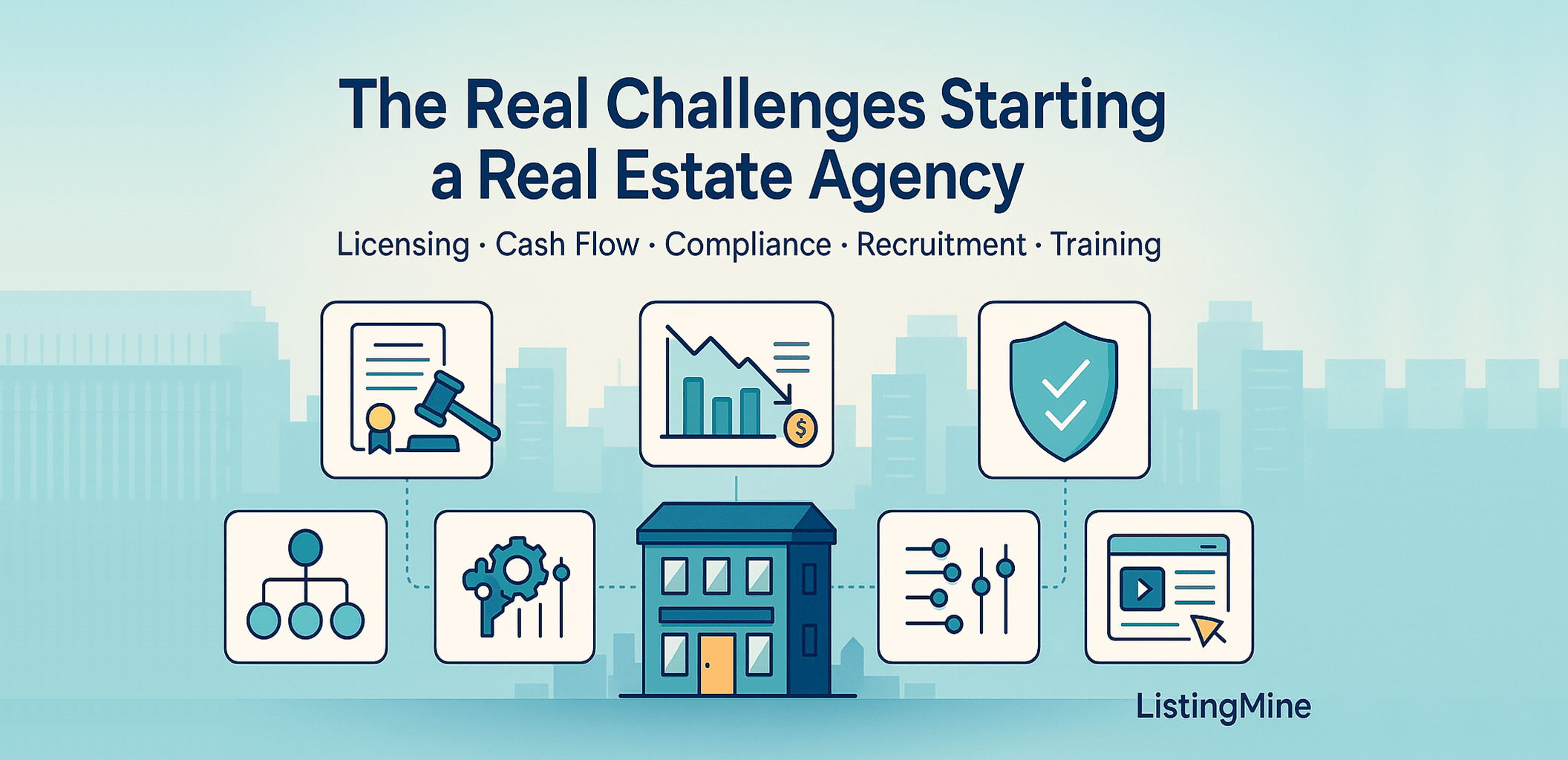
Starting a property agency involves recruitment, compliance, cash flow, systems, leadership, and retention challenges. Opening an agency is much harder than simply getting a licence or office.
Many top-performing real estate agents dream of starting their own agency, expecting more freedom and money. Instead, they often find themselves buried under new operational, legal, and financial problems. Yet, for the right person, building a successful, lasting company is the ultimate professional achievement. The key is going in with your eyes wide open.
Here are the 10 most common and serious challenges you must be prepared to face.
1. Regulatory and Licensing Rules
This is the foundation of your business, and it's complex. You can't just set up and hope for the best; you must actively manage a web of compliance.
- The Principal License Holder: Your agency's legality hinges on this. If you are not one, you must form a genuine, compliant partnership with an active principal. Your entire operation depends on this.
- Client Trust Accounts: These require daily recording and strict monthly reconciliation by law.
- Ongoing Compliance: You must ensure all agents complete their mandatory CPD hours, comply with PDPA (data privacy) and AML/CFT (anti-money laundering) laws, and have written procedures to prevent costly legal mistakes.
2. Financial Management and Tax
The income volatility you knew as an agent is magnified tenfold at the agency level.
- Cash Flow Volatility: You must navigate unpredictable project payouts, commission clawbacks, and cancellations. Budgeting for months with no income and chasing overdue client payments become your new reality.
- Dispute Management: Be prepared for disputes with agents over commission splits—your files and records must be impeccable to prove your case.
- Full Financial Responsibility: You are now fully liable for staff payroll (EPF, SOCSO, EIS, PCB), corporate tax, annual audits, and securing the right business insurance.
3. Managing People
Your agents are your greatest asset and your biggest challenge.
- Hiring & Structure: You must hire the right balance of proactive "hunters" and relationship-based "farmers," and design a commission structure that motivates without bankrupting you.
- Retention & Culture: Retention requires more than money; you need to provide good leads, training, and support while managing internal competition and politics. Always have a backup plan for when a top team leader leaves.
4. Company Culture and Rules
You set the tone. This means clearly defining and enforcing your company's values and standards.
- Processes: You need written rules for co-broking and client negotiations, must actively check listing data for accuracy, and have a formal process to handle client complaints before they escalate.
5. Sales and Inventory
Diversification is key to survival. You need a healthy mix of sale, rental, and project business.
- Project Politics: Getting on a developer's panel involves quotas, politics, and demands for marketing funds.
- Strategic Focus: You must strategically decide your geographic and price focus and understand your competition.
- Inventory Management: Implementing a centralized system to manage inventory is essential to avoid duplicate work and errors.
6. Marketing and Lead Generation
This is a constant battle for attention and ROI.
Strategy & Cost: You must calculate your customer acquisition cost and balance paid ads with organic methods.
Brand Consistency: Maintaining a consistent brand across all agents is difficult, especially when they promote themselves individually.
Reputation & Content: You need a strategy to manage online reviews and respond to complaints, all while producing enough quality content with a small team.
7. Daily Operations
Efficiency is everything. Chaos is costly.
- Deal Process: You need a clear, tracked process for every deal from lead to closing.
- Document Control: You must control document versions, use e-signatures, and have a robust digital filing system.
- Cost Management: Managing office space, controlling unnecessary costs, and setting up service agreements with lawyers and valuers are all part of the daily grind.
8. Technology and Data
You cannot run a modern agency on WhatsApp and spreadsheets.
- Centralized System: You need one central software system (CRM/ERP) with security permissions and audit logs that connects to your accounting software.
- Security & Access: You are responsible for cybersecurity, data backups, and instantly revoking system access when agents leave.
- Actionable Data: This system must provide actionable reports on performance, leads, and forecasts to drive your decisions.
9. Legal Contracts
Your business relies on airtight contracts to protect itself.
- Co-Agency Agreements: These must clearly state terms for exclusivity and fees.
- Agent Contracts: Your agent contracts need enforceable rules on non-solicitation and data protection.
- Your Own Lease: Don't forget to thoroughly understand your own office lease terms, including rent increases and cancellation penalties.
10. Risk and Reputation
Your license and reputation are always on the line.
- Prevention: You must actively work to prevent illegal activity by agents, such as fake offers. A pre-deal checklist is essential to identify risky transactions.
- Crisis Management: Most importantly, you need a plan for the first 24 hours after a serious problem occurs.
CThe Stark Reality: Team Leader vs. Agency Owner
| Category |
Team Leader |
Agency Owner |
| Fixed Costs |
Low |
Very High (rent, staff, systems, insurance) |
| Cashflow Risk |
Medium |
Very High (payroll, clawbacks, no income months) |
| Main Duty |
Coaching and Sales |
All Operations, Compliance, and Management |
| Control |
Manages a team |
Manages the entire company |
| Reward |
Commissions from team + own sales |
Profit from the entire business |
The leap is enormous. It can cost at least RM300,000 per year just to run a compliant agency. Your first job is to ensure you can cover this fixed cost.
Final Advice
Think carefully. Are you prepared to stop being a salesperson and become a CEO? If you excel at sales and coaching but dislike managing paperwork, cash flow, and compliance, you will find this journey difficult. Remaining a team leader is a valid and often smarter form of entrepreneurship with significantly lower cost and risk.
P.S. Good software is a powerful tool for managing commissions, leads, and paperwork. But it cannot replace strong leadership and a healthy company culture. It is an amplifier, not a savior.