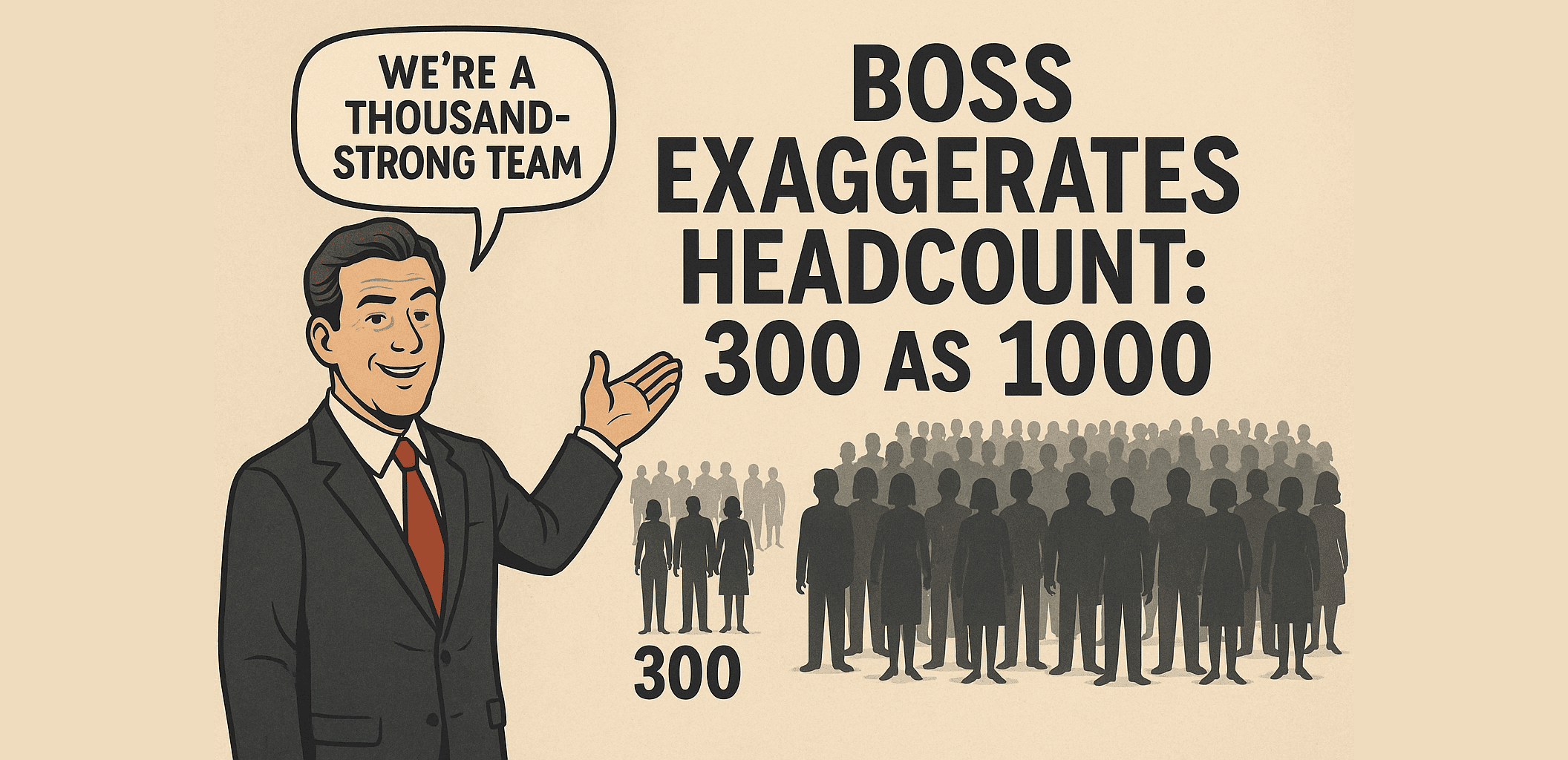
Inflated headcount creates false confidence and weakens trust. Real agency strength should be measured by active producers, productivity, systems, and profit, not exaggerated numbers.
If you’ve worked in real estate, you’ve heard the boast: “We’re a thousand-strong team.” It sounds impressive, commanding, and safe. But in the property agency world, numbers are often less a statistic and more a strategic weapon.
It’s an open secret that headcounts are routinely inflated. A boss might proudly claim the agency has 1,000 people. The reality? Maybe 300 are registered. Dig deeper, and you may find only 20 are consistent top performers. Yet this illusion transforms the agency into a formidable giant in the eyes of clients, recruits, and competitors.
The rule of thumb inside agencies is brutal but accurate: for every 10 agents, only 2 are serious closers while the other 8 are largely inactive. That means:
But when these figures are presented externally, they are artfully multiplied. Those 30–60 real performers are marketed as an unstoppable army of 300, 500, or even 1,000.
Exaggerated headcount is a clever branding tactic. It works because the market—recruits, developers, even agents themselves—wants to believe bigger means better.
But in the end, only one number truly matters: closed deals. Inflated numbers might open doors, but only performance keeps them open. The most successful agencies know the illusion must eventually give way to results.

Founder of ListingMine and author of Agent for Life. Building ERP for Malaysian real estate agencies since 2008 — and writing to reshape how agencies grow.
More about Marvin Foong →More articles in this topic
This article is one of the sources behind this assessment. Take it to see what you already know and what to read next.
Educational self-assessment. Not a licensing examination or professional certification.