| 1 |
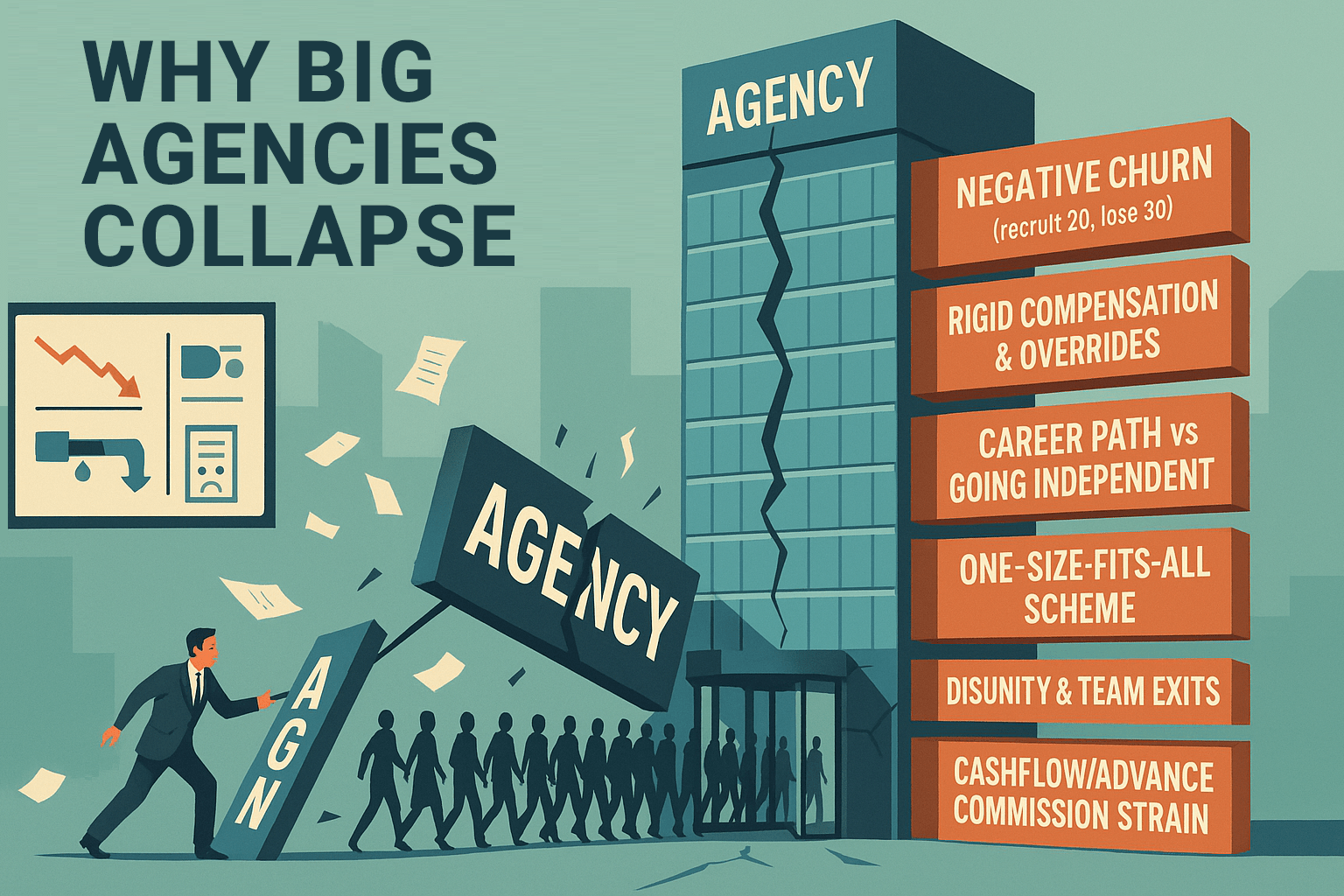
Why Big Agencies Suddenly Collapse - And Why It Keeps Happening |
Large property agencies can collapse suddenly when recruitment, retention, commission control, and operational systems fail together. Agency collapse is a structural problem, not merely a sales problem. |
Agency Leadership & Strategy |
Business Models & Scaling |
3 |
| 2 |
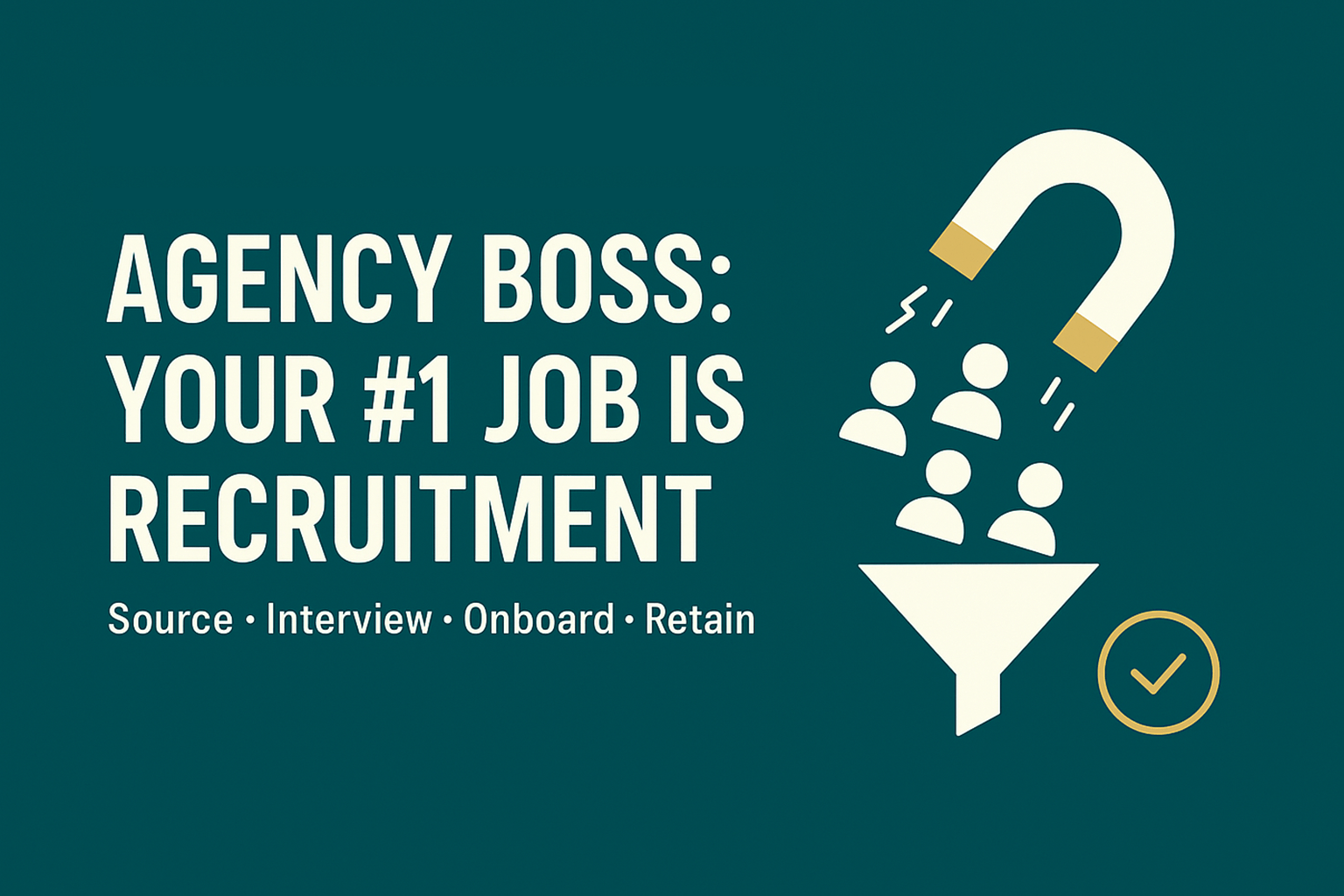
The Real Job of an Agency Boss: Recruitment & Retention |
The core job of an agency boss is not just closing deals, but continuously recruiting, retaining, and developing agents. Recruitment and retention are the foundation of agency scale. |
Recruitment, Retention & Culture |
Retention Psychology |
3 |
| 3 |
How Agency Bosses Can Save RM200,000/Year-Without Rebuilding Software |
Agency bosses can reduce operational cost by using flexible ERP systems instead of custom software development. ListingMine helps agencies avoid unnecessary customization and manual administration costs. |
Technology & Systems (ListingMine) |
System vs. Manual Chaos |
3 |
| 4 |
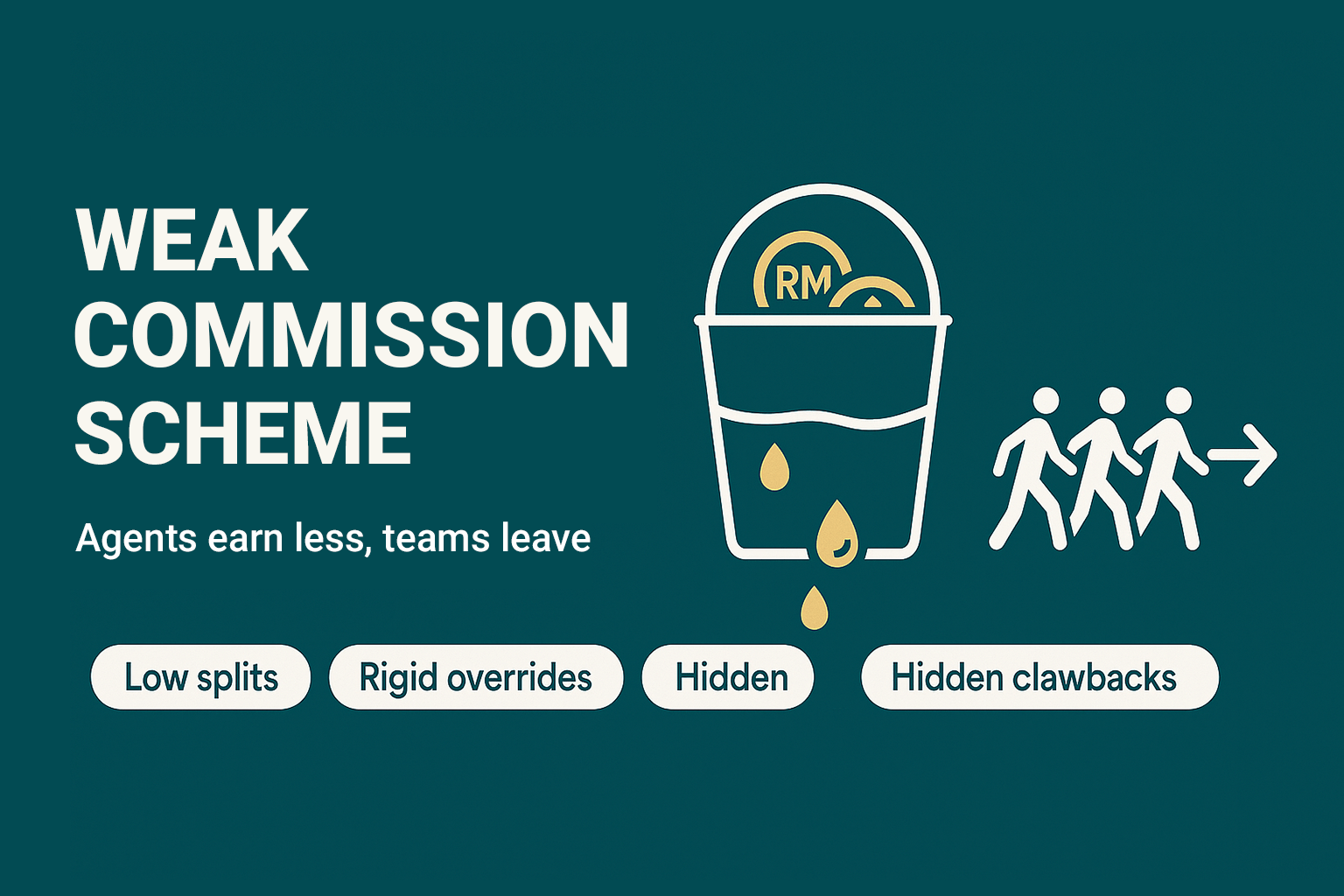
Why Most Agency Bosses Fail at Commission Schemes |
Many agency bosses struggle with commission schemes because real agency payout structures are more complex than simple percentage splits. Flexible commission logic is essential for agency control. |
Commission & Compensation Models |
Split Ratios (100% vs Splits) |
3 |
| 5 |
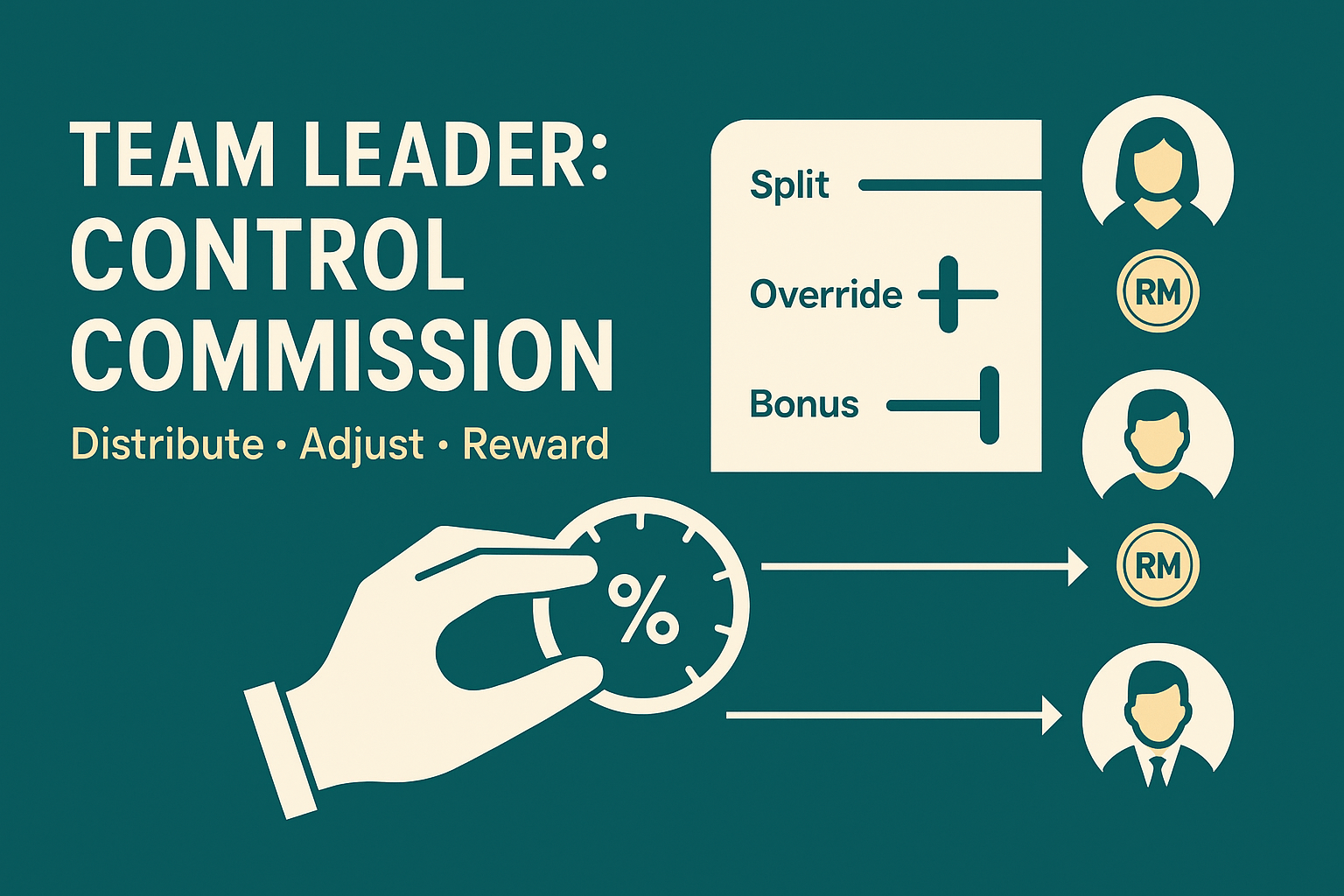
Team Leaders in Malaysia: Win with Wholesale Commissions |
Team leaders in Malaysia can use wholesale commission structures to build teams inside larger agency umbrellas. Team-level economics can create leverage without immediately starting a full agency. |
Team Leadership & Dynamics |
Upline/Downline Governance |
3 |
| 6 |
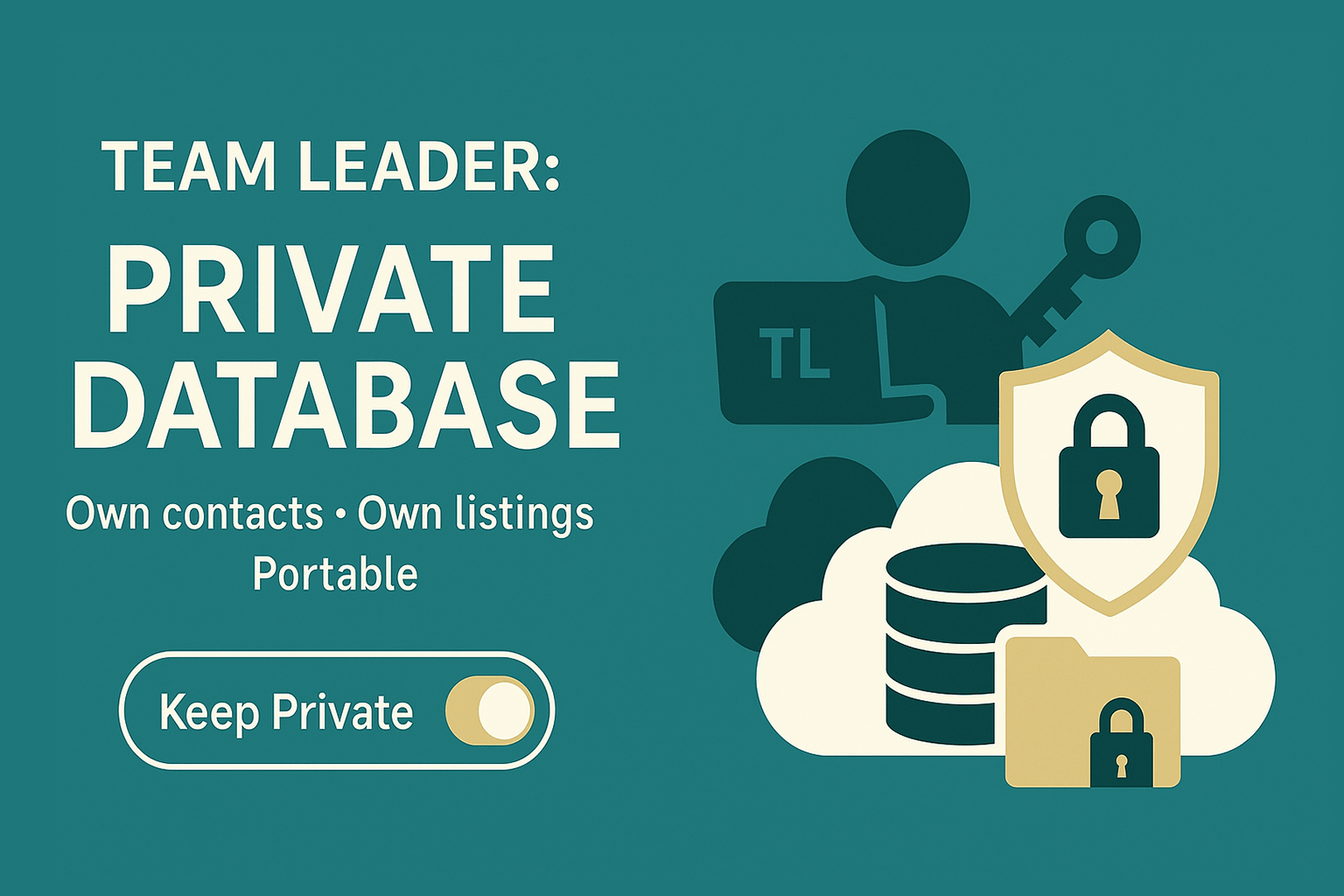
Why Malaysian Team Leaders Need Data Ownership |
Team leaders need control over team data, listings, leads, and performance records. Data ownership becomes a key factor in long-term leadership independence and bargaining power. |
Team Leadership & Dynamics |
Motivation vs. Accountability |
3 |
| 7 |
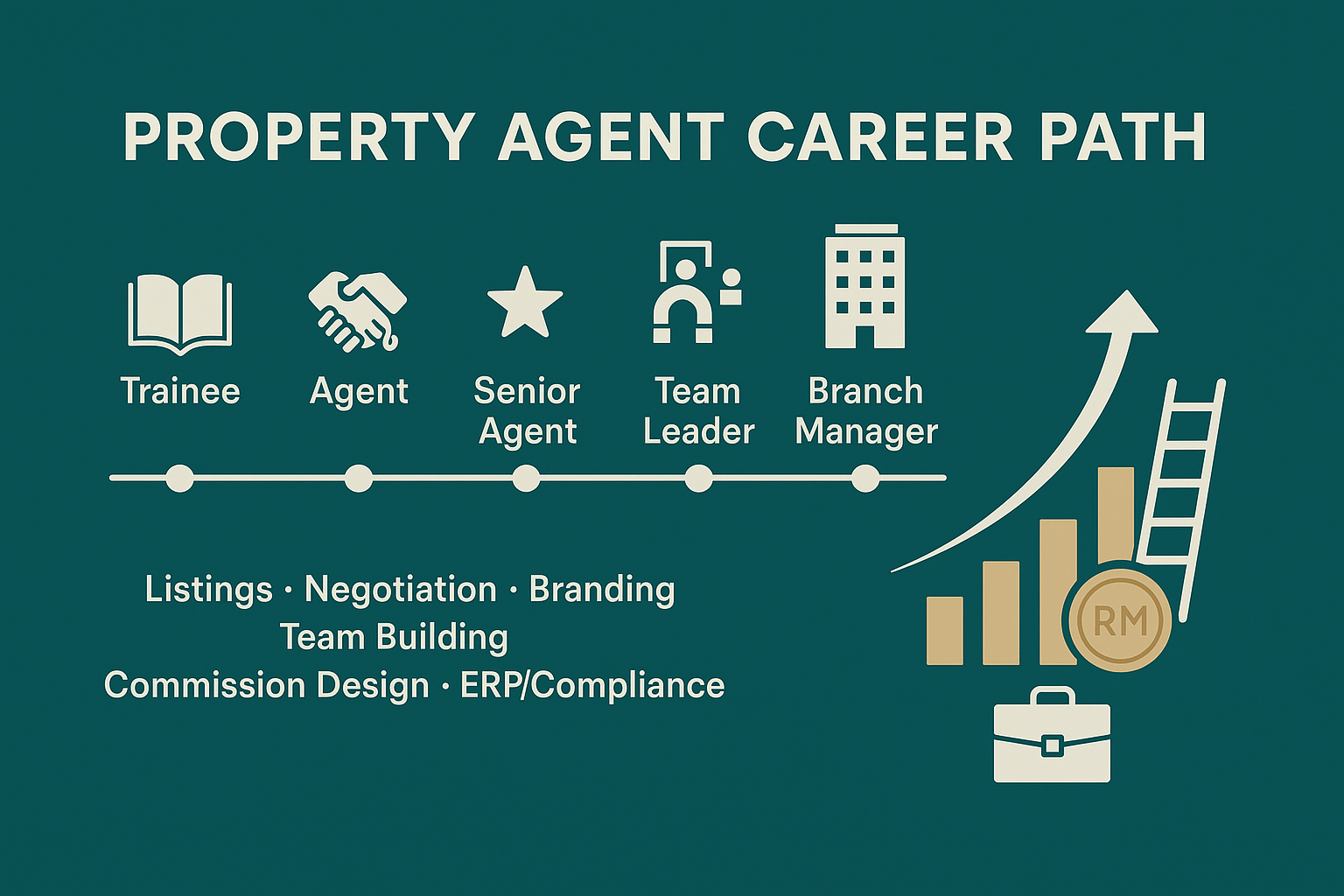
The Two-Stage Career Path for a Real Estate Negotiator (REN) in Malaysia |
A Malaysian REN usually goes through a two-stage journey: learning under support, then becoming more independent. The transition from beginner to self-sustaining professional requires preparation, pipeline, and discipline. |
The REN Career & Skills |
Career Stages (REN to REA) |
3 |
| 8 |
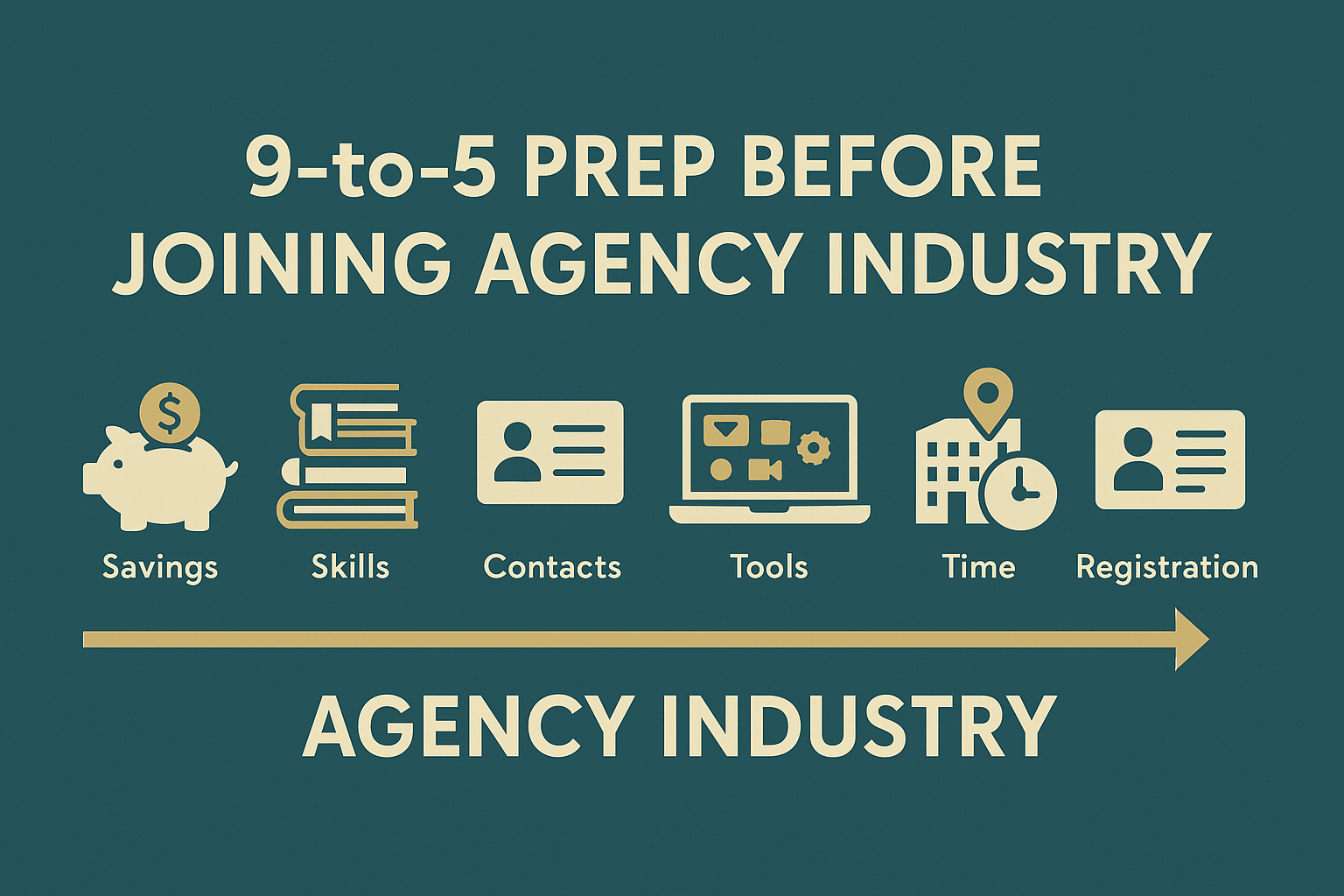
Before You Become an Agent in Malaysia: Why 8/10 Fail |
Many new agents fail because they enter without enough pipeline, skills, market knowledge, or financial preparation. Pre-agents should prepare listings, contacts, and buyer understanding before formally entering the industry. |
The REN Career & Skills |
New Agent Start-up |
3 |
| 9 |
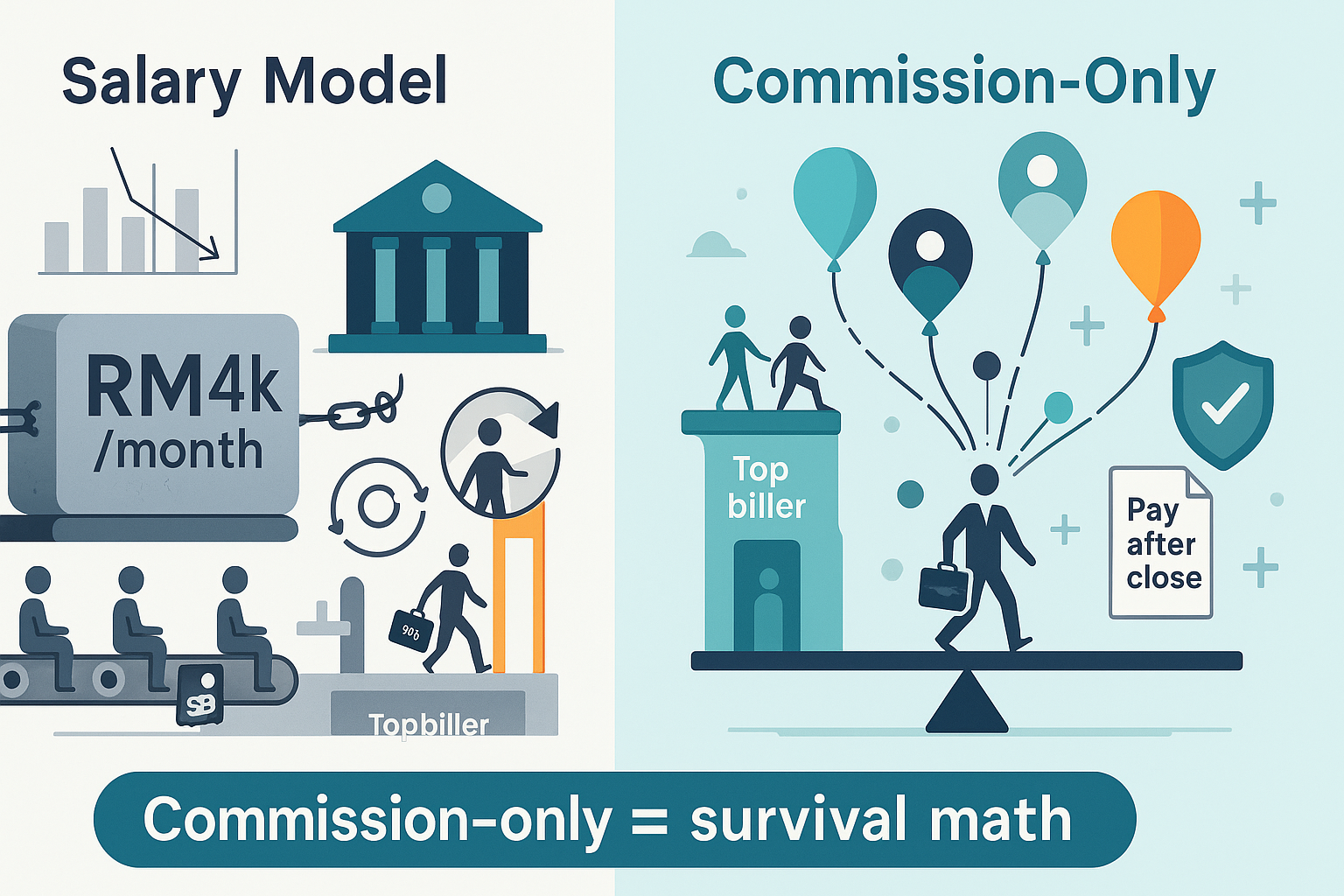
Why Most Real Estate Agencies Don’t Pay a Basic Salary |
Most real estate agencies use commission-based compensation because fixed salaries create high risk in a performance-driven sales business. Agency economics, uncertain deal flow, and agent productivity shape the payout model. |
Commission & Compensation Models |
Split Ratios (100% vs Splits) |
3 |
| 10 |
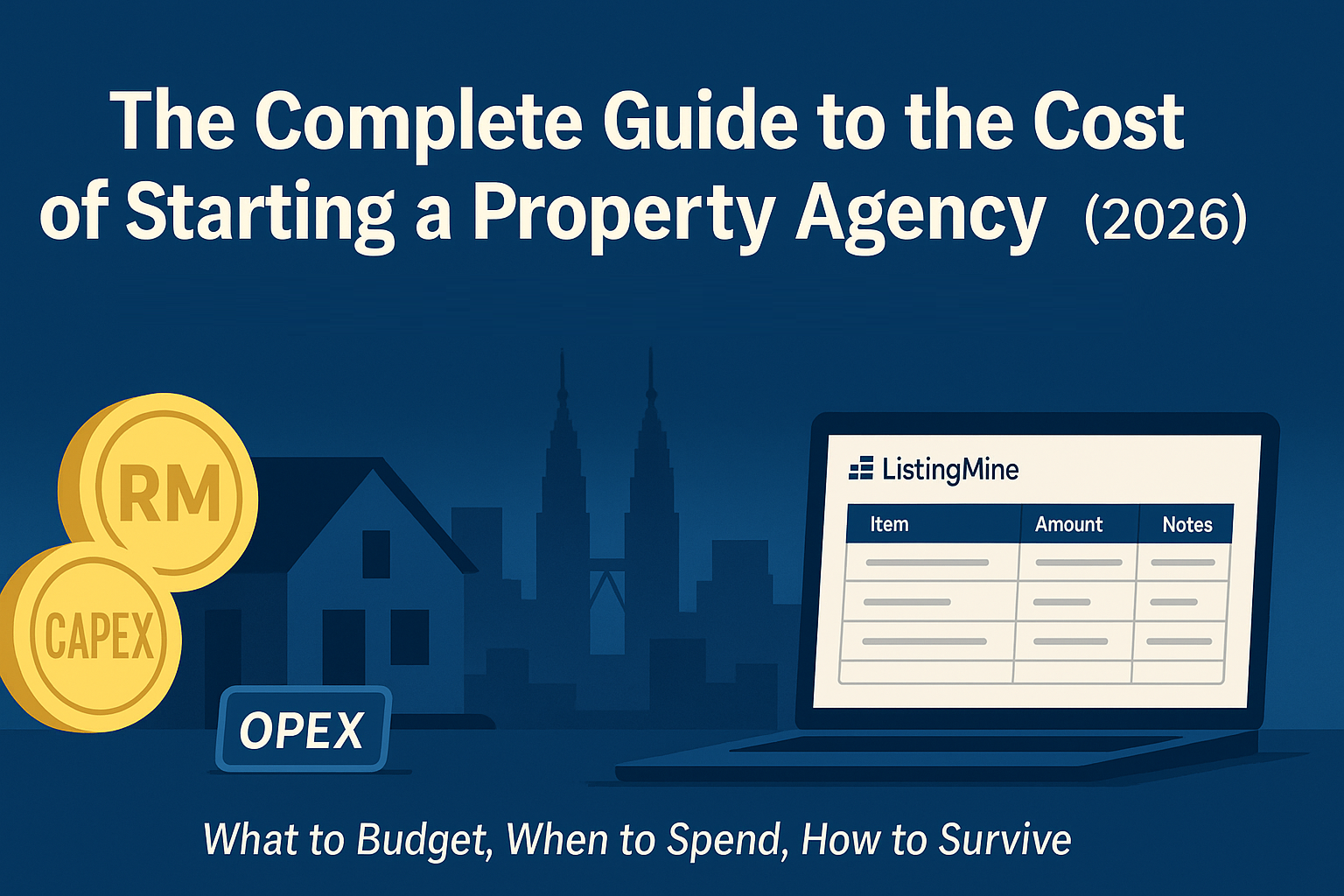
The Complete Guide to the Cost of Starting a Property Agency in Malaysia (2026) |
Starting a property agency in Malaysia requires serious financial and operational planning. Licensing, office setup, staffing, systems, compliance, cash flow, and recruitment all affect survival. |
Agency Leadership & Strategy |
Founding & Exit Strategies |
2 |
| 11 |
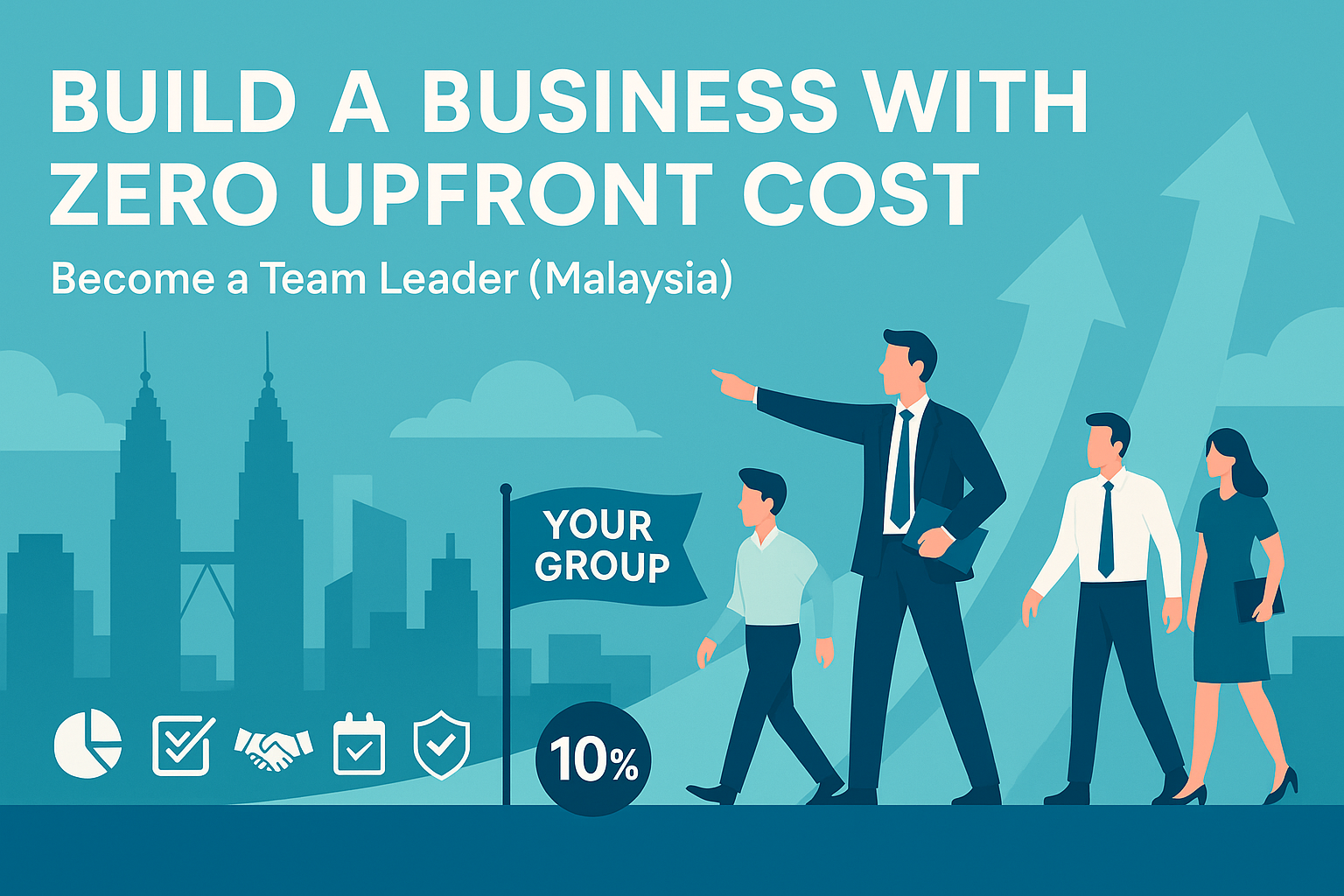
Build a Business with Zero Upfront Cost: Become a Team Leader (Malaysia) |
Becoming a team leader can be a lower-risk path to building a property business. Team leaders can grow influence, overrides, and internal systems without immediately opening their own agency. |
Team Leadership & Dynamics |
Team Leader Growth |
3 |
| 12 |
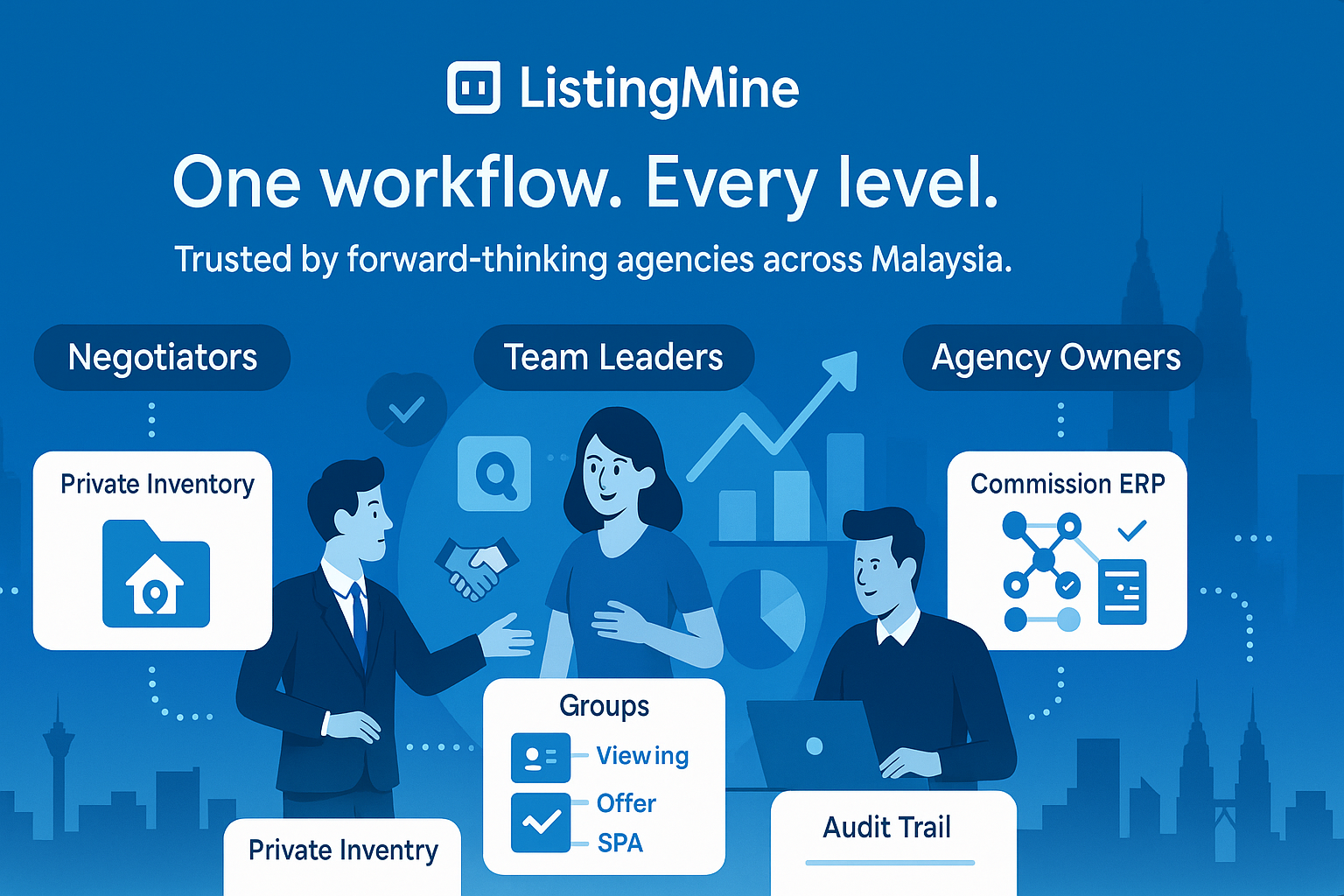
ListingMine — The Agent Operating System (Malaysia) |
ListingMine is positioned as an Agent Operating System for the Malaysian property market. It goes beyond CRM or listing tools by combining private listings, ERP, cooperation, and career-long data ownership. |
Technology & Systems (ListingMine) |
ERP Implementation |
2 |
| 13 |
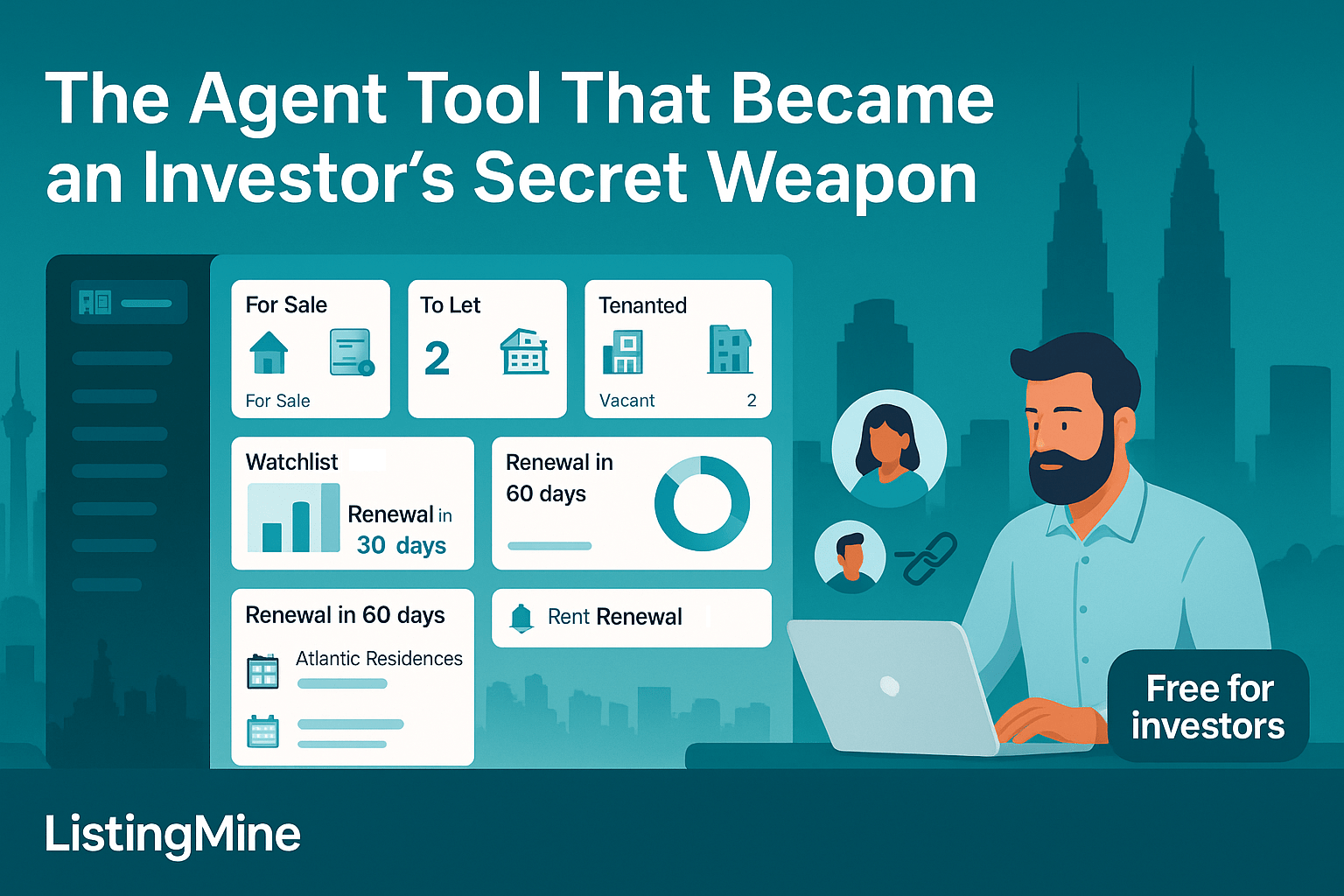
The Agent Tool That Became an Investor’s Secret Weapon |
Tools built for property agents can also become powerful assets for property investors. Listing data, buyer tracking, and market intelligence help investors identify opportunities earlier. |
Technology & Systems (ListingMine) |
Product Features & Workflow |
3 |
| 14 |
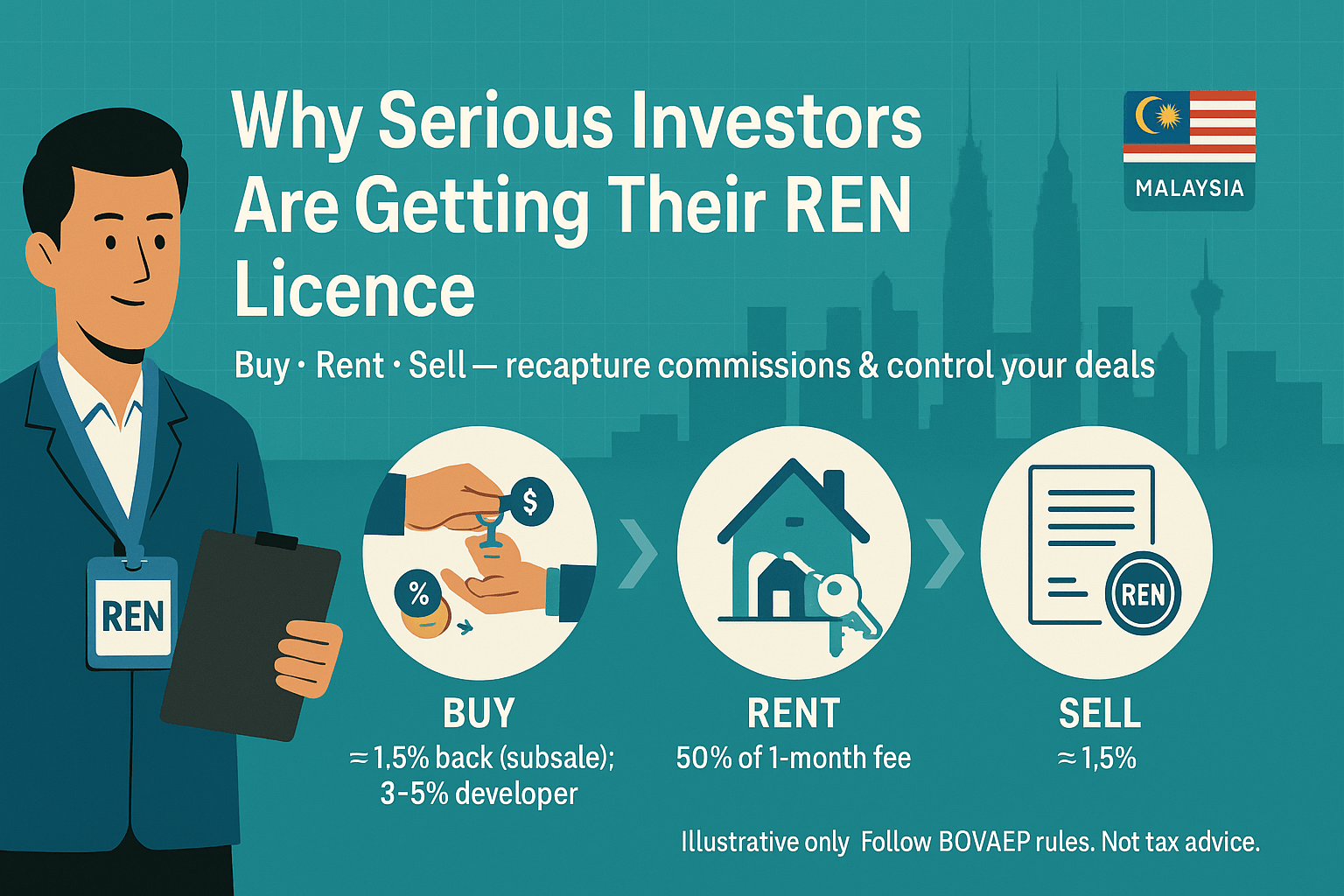
Why Serious Investors Are Getting Their REN Licence |
Some serious property investors pursue a REN licence for deeper market access, professional credibility, and transaction knowledge. The REN licence can become a strategic investment tool, not only a sales qualification. |
The REN Career & Skills |
Niche Specialization |
3 |
| 15 |
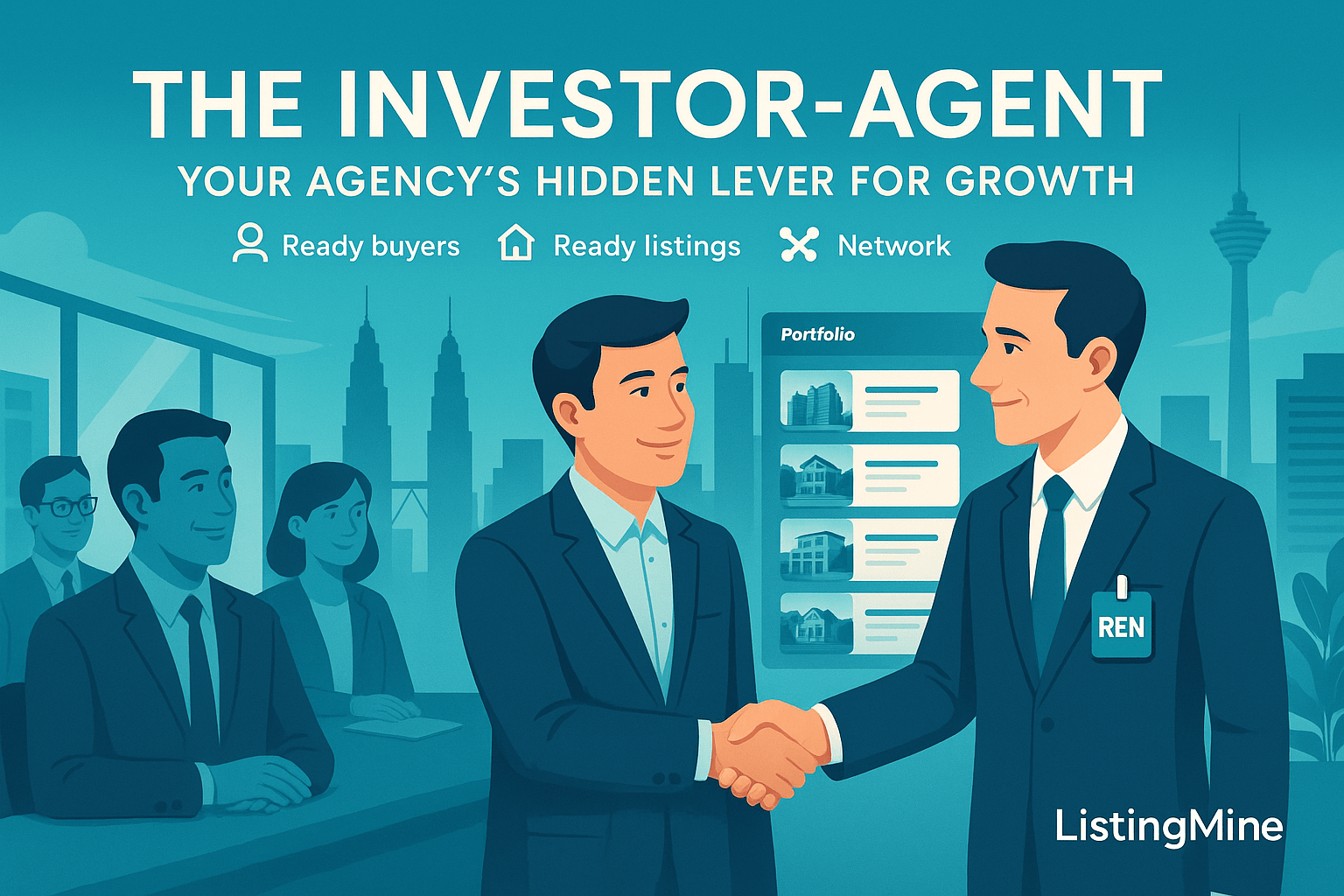
The Investor-Agent: Your Agency’s Hidden Lever for Growth |
Investor-agents can become valuable growth drivers for agencies. Agents with investor thinking bring stronger market insight, client trust, and transaction opportunities. |
The REN Career & Skills |
Niche Specialization |
3 |
| 16 |
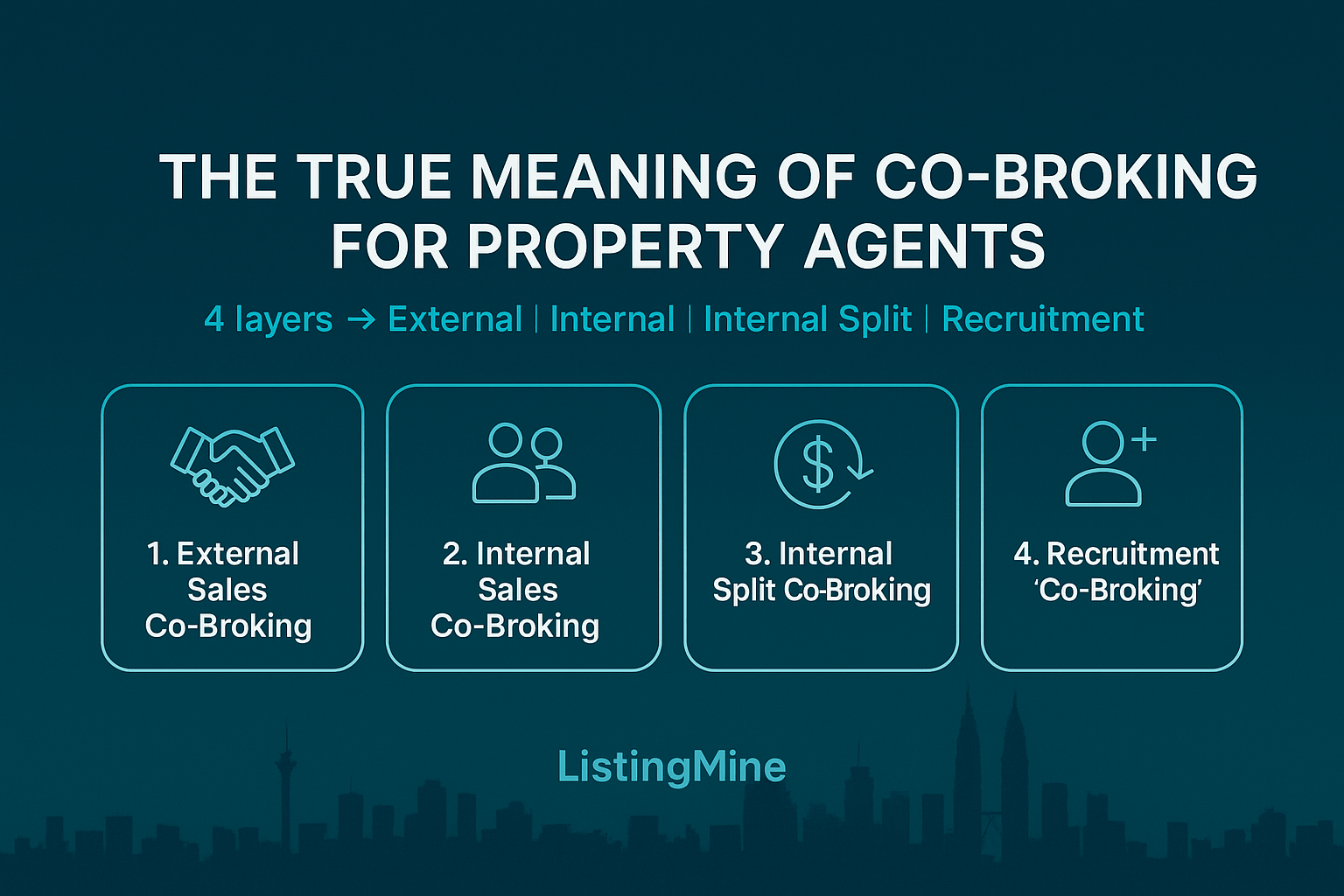
The True Meaning of Co-Broking for Property Agencies |
Co-broking is more than simple commission sharing between agents. A proper cooperation system can expand deal flow, improve matching, and create wider agency-level value. |
Co-Broking, ACN & Collaboration |
Co-broking Etiquette |
3 |
| 17 |
Alumni, Not Attrition: Co-Broke Beats Retention |
Departed agents should not always be treated as lost value. Agencies can preserve long-term cooperation by turning former agents into alumni partners through co-broking relationships. |
Co-Broking, ACN & Collaboration |
ACN Fundamentals |
3 |
| 18 |
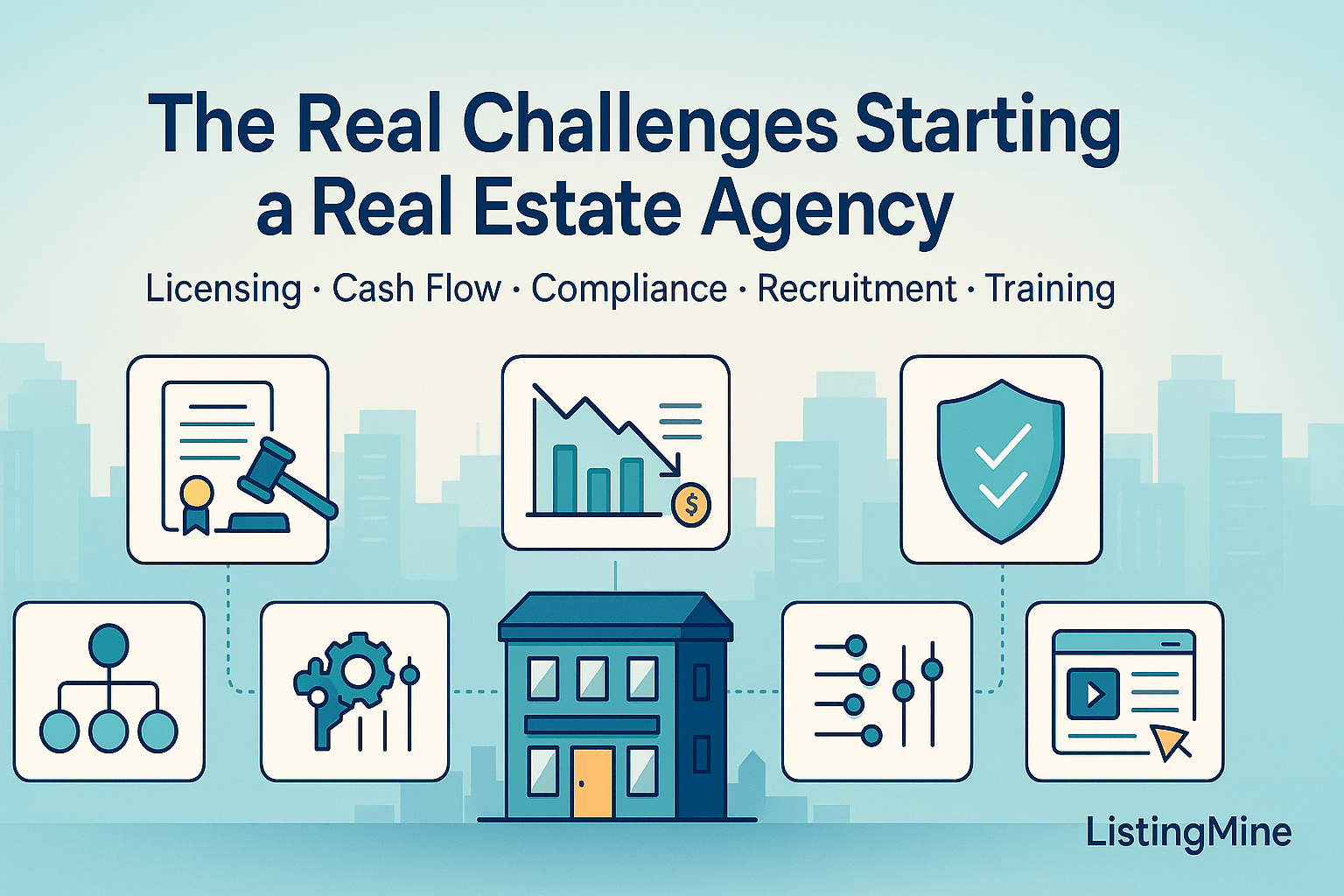
The Real Challenges of Starting a Real Estate Agency |
Starting a property agency involves recruitment, compliance, cash flow, systems, leadership, and retention challenges. Opening an agency is much harder than simply getting a licence or office. |
Agency Leadership & Strategy |
Founding & Exit Strategies |
3 |
| 19 |
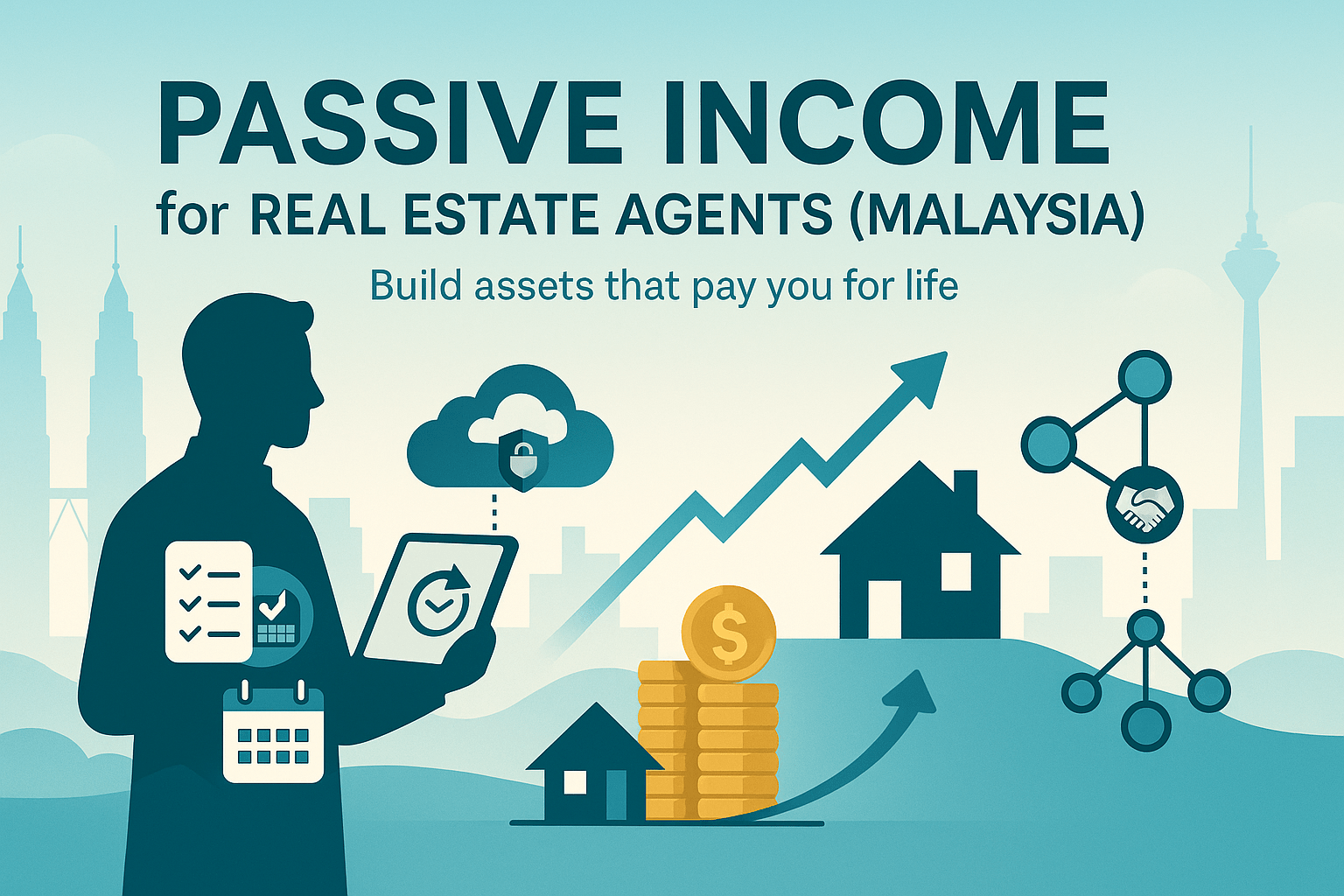
Passive Income for Real Estate Agents (Malaysia): Build Assets That Pay You for Life |
Property agents can build long-term assets beyond one-time commissions. Listings, relationships, buyer databases, referral networks, and market knowledge can support the Agent For Life concept. |
The REN Career & Skills |
Financial Planning for Agents |
3 |
| 20 |
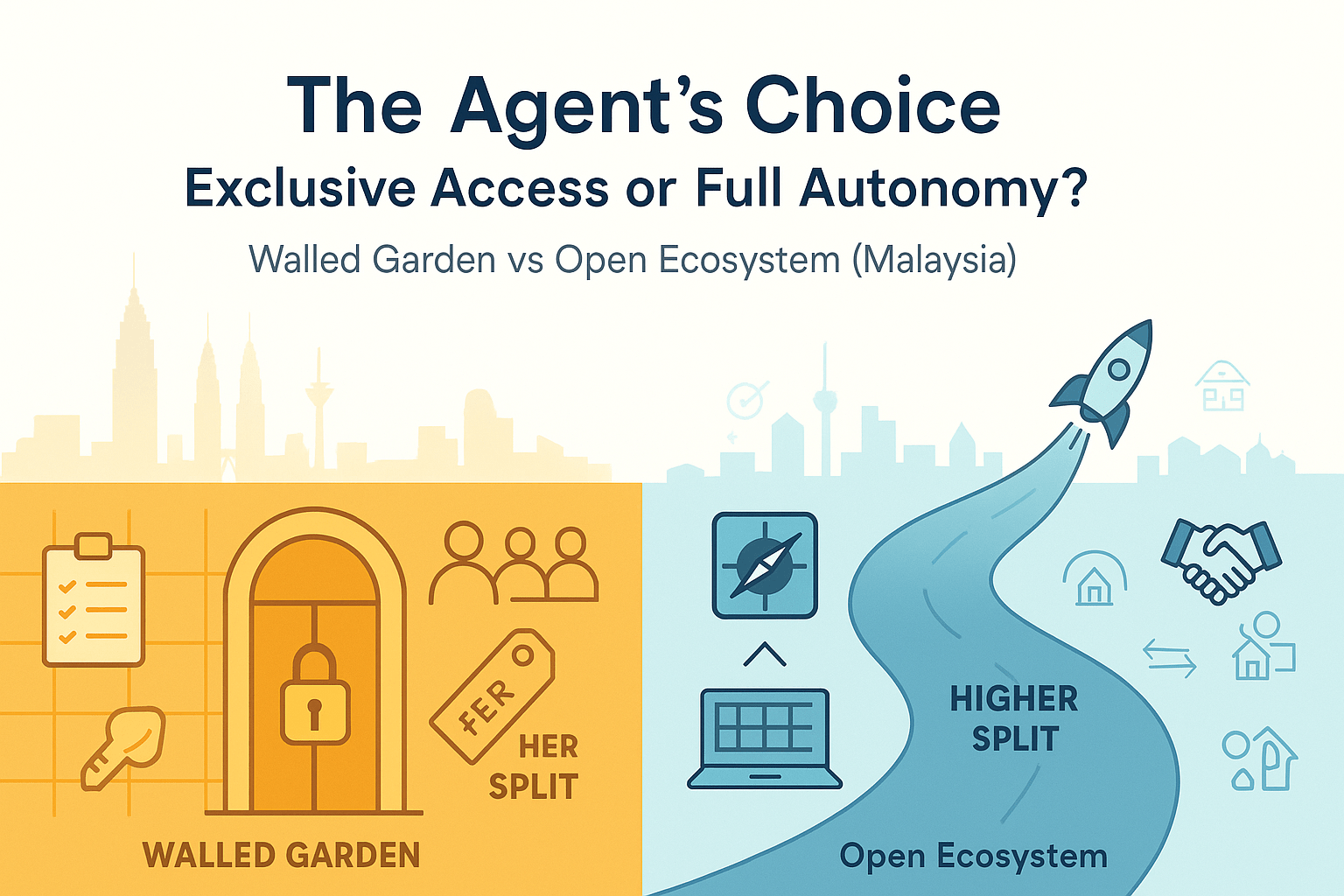
The Agent's Choice: Exclusive Access or Full Autonomy? |
Agents often face a trade-off between staying inside a controlled agency structure and maintaining personal autonomy. Long-term success depends on balancing agency support with data ownership and career independence. |
The REN Career & Skills |
Soft Skills & Psychology |
3 |
| 21 |
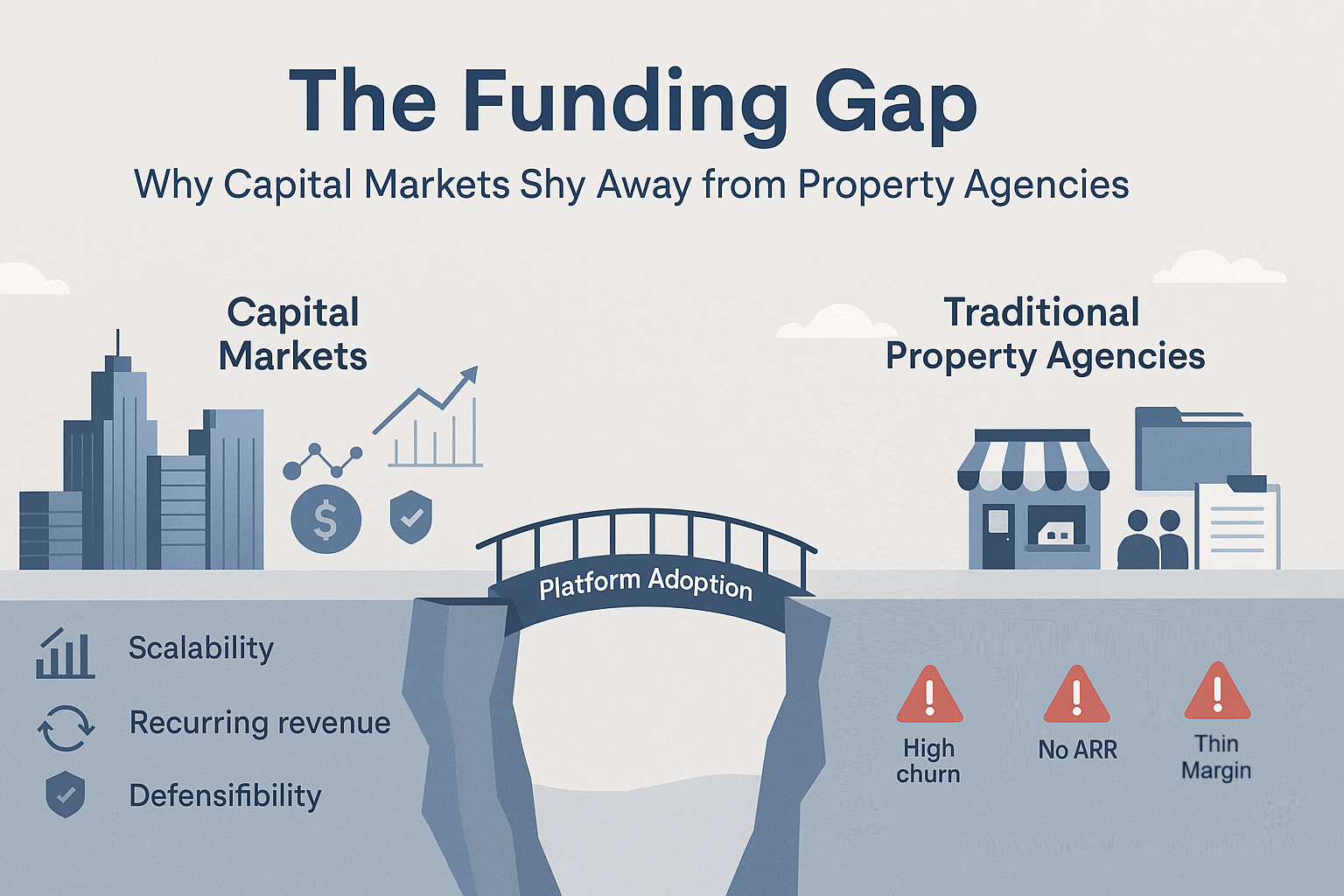
The Funding Gap: Why Capital Markets Shy Away from Property Agencies |
Property agencies often struggle to attract institutional funding because operations are difficult to measure and retain. Weak systems, unstable retention, and poor visibility reduce investor confidence. |
Industry Future & Big Picture |
Institutional Visibility |
3 |
| 22 |
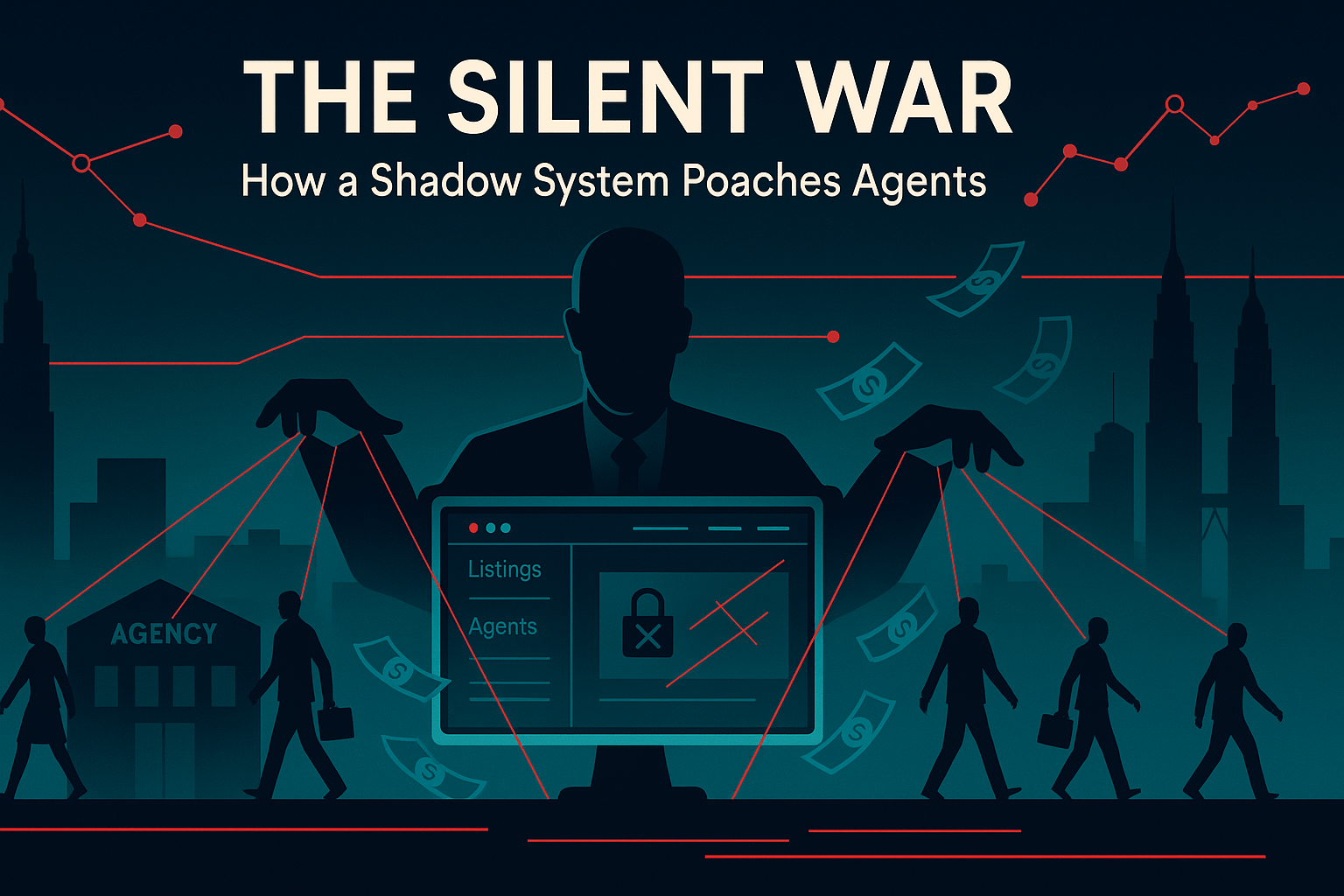
The Silent War: How a Shadow System Is Poaching Your Agents and Stealing Your Commissions |
Informal networks, outside alliances, and hidden systems can quietly pull agents and commissions away from agencies. Retention risk often begins before agency bosses can see it clearly. |
Recruitment, Retention & Culture |
Defection & Alliances |
3 |
| 23 |
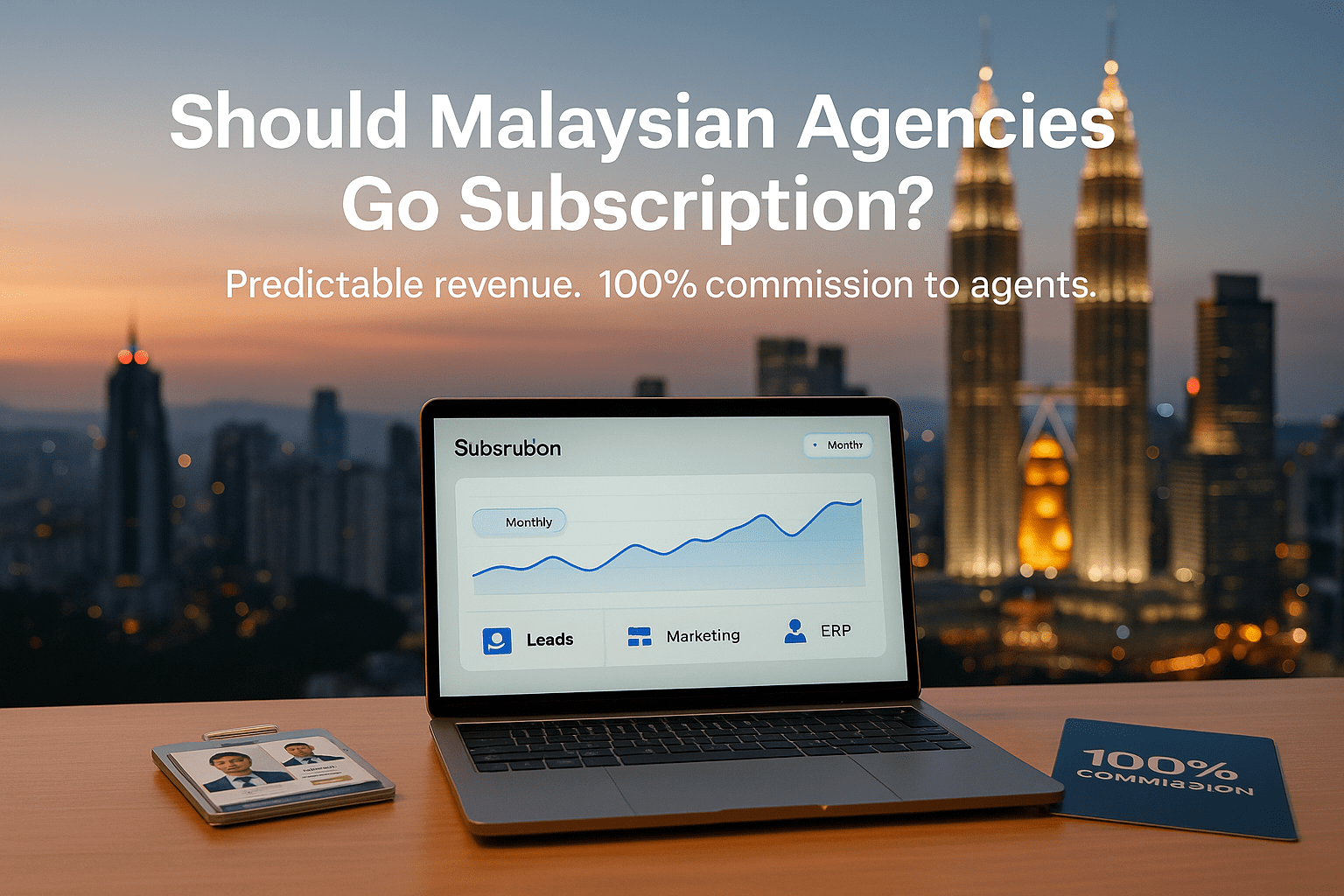
Should Malaysian Agencies Go Subscription? |
Subscription-based agency models may create more stable recurring revenue than pure commission splits. The challenge is whether Malaysian agents will accept monthly fees in exchange for stronger systems and support. |
Agency Leadership & Strategy |
Business Models & Scaling |
3 |
| 24 |
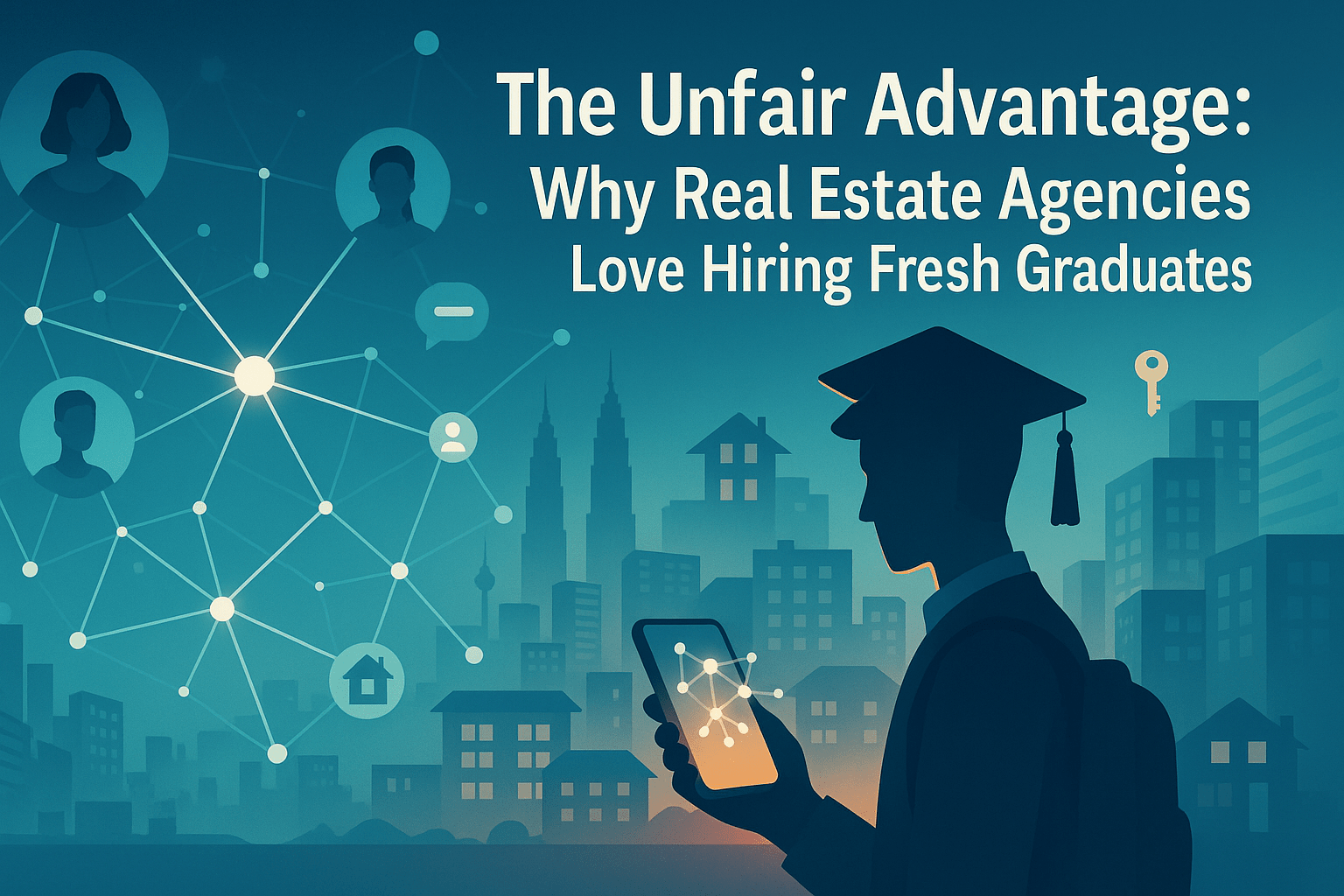
The Unfair Advantage: Why Real Estate Agencies Love Hiring Fresh Graduates |
Agencies often prefer fresh graduates because they are easier to train, shape, and absorb into company culture. The trade-off is lower experience but higher moldability and long-term potential. |
Recruitment, Retention & Culture |
Hiring Fresh vs. Experienced |
3 |
| 25 |
The Uneven Playing Field: Competing Against Malaysia’s 100,000 Illegal Property Agents |
Illegal property agents create unfair competition for licensed agencies and professional RENs. The problem affects trust, pricing, consumer protection, and the perceived value of professionalism. |
Industry Future & Big Picture |
Industry Structural Reform |
3 |
| 26 |
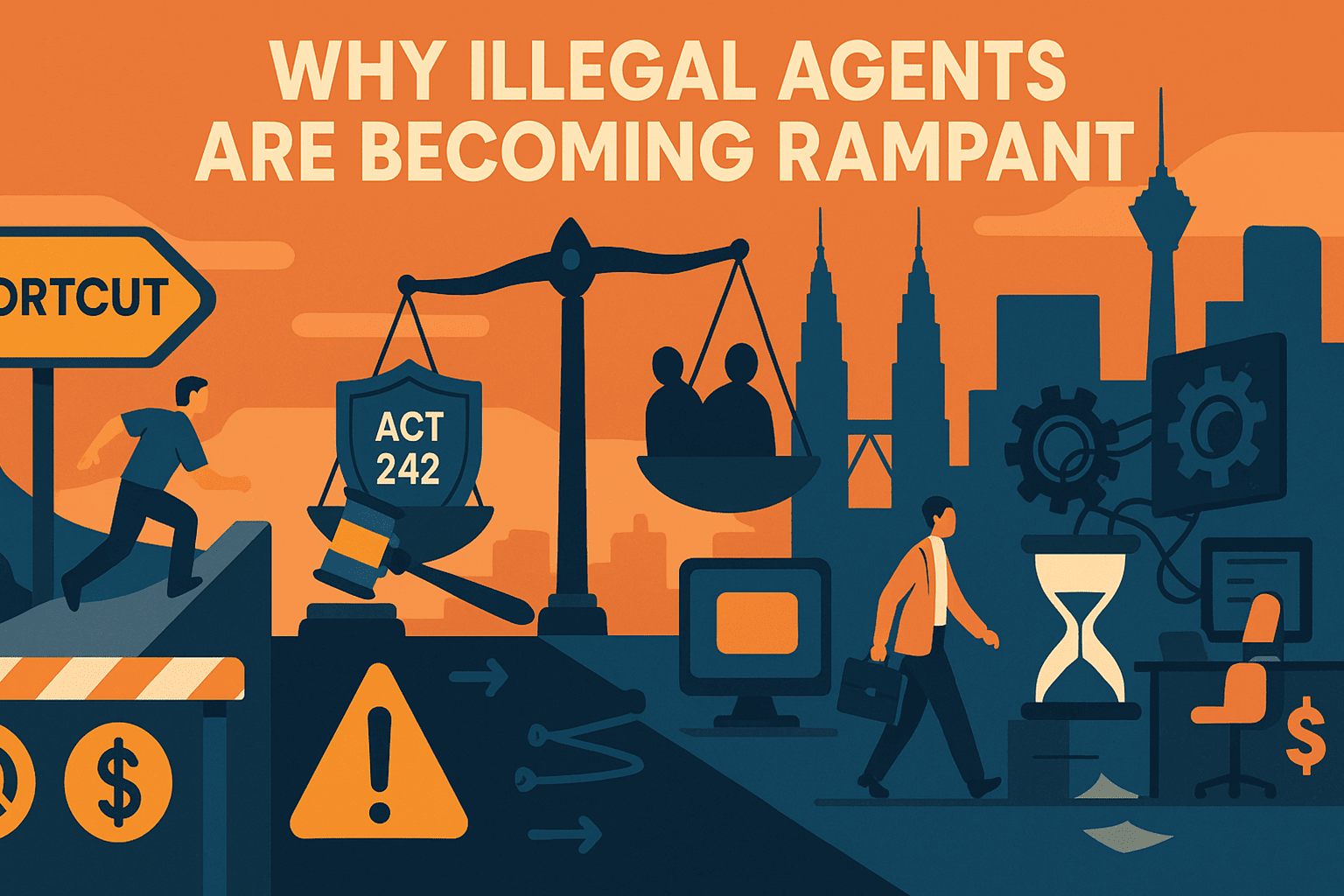
Why Illegal Agents Are Becoming Rampant: The Uncomfortable Truth |
Illegal agents continue to grow because market incentives, weak enforcement visibility, consumer behavior, and agency weaknesses allow them to survive. The issue is structural, not only legal. |
Industry Future & Big Picture |
Industry Structural Reform |
3 |
| 27 |
Why a Real Estate License Isn’t a Fee—It’s Your Greatest Asset |
A real estate licence should be treated as a professional asset, not merely a compliance cost. Licensing creates credibility, legal protection, market access, and long-term business value. |
Legal, Compliance & Ethics |
Act 242 & BOVAEP Rules |
3 |
| 28 |
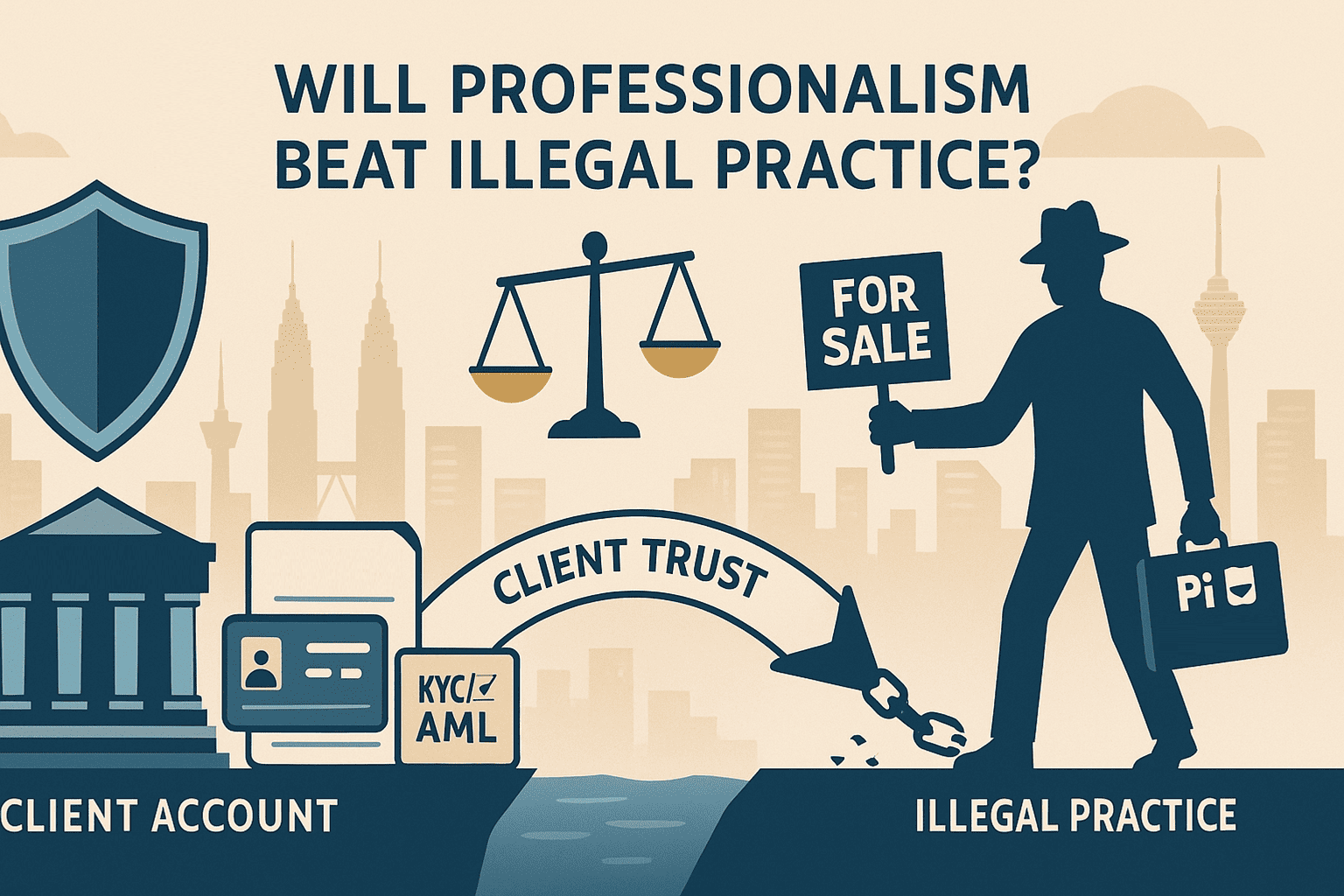
Will Professionalism Beat Illegal Practice? Only If You Change the Game |
Professionalism alone cannot defeat illegal practice if the industry operating model stays weak. Better systems, branding, cooperation, and consumer education are needed to raise the standard. |
Industry Future & Big Picture |
The Next Decade (2030-2035) |
3 |
| 29 |
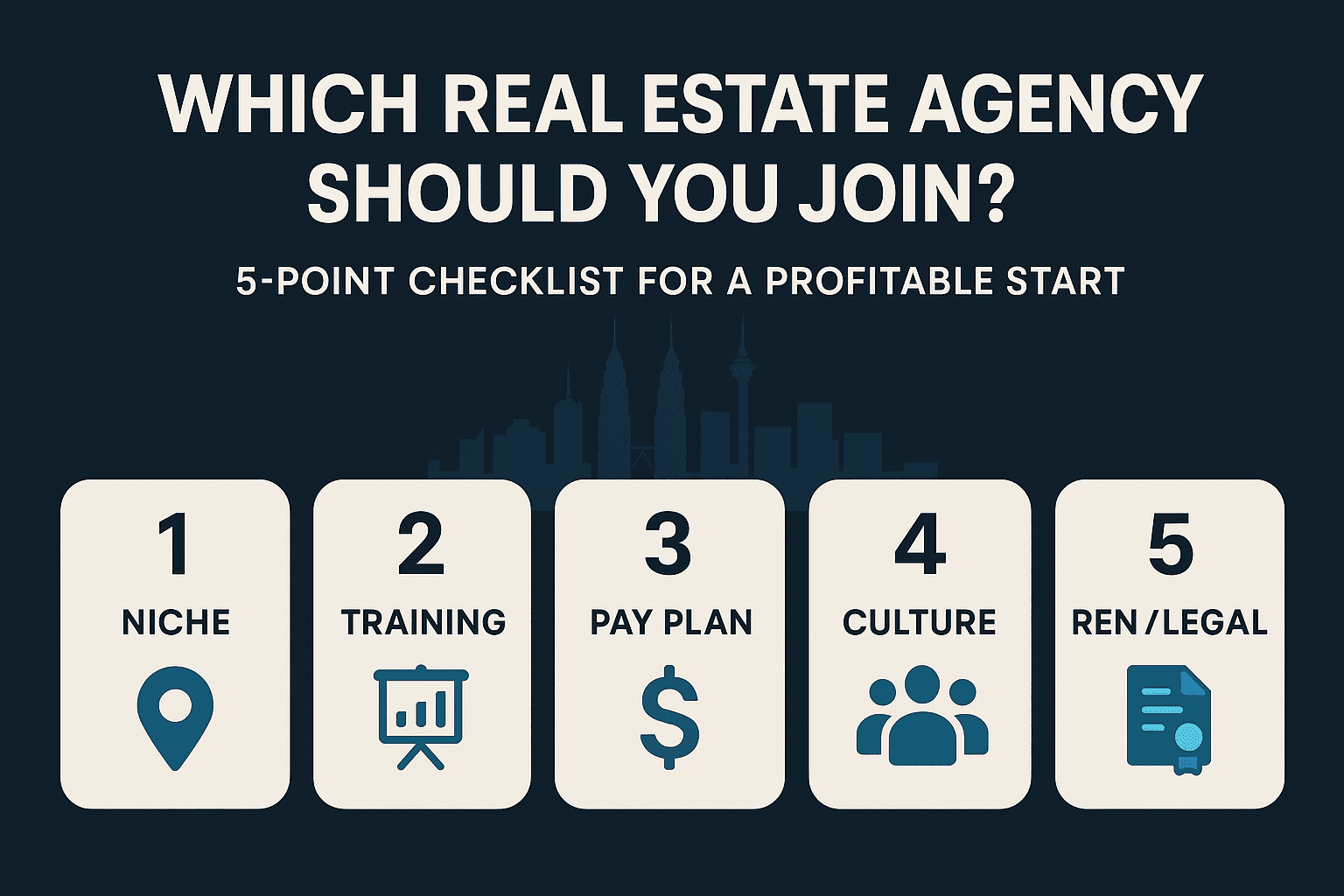
Which Real Estate Agency Should You Join? The 5-Point Checklist for a Profitable Start |
New agents need a practical checklist before choosing an agency. Leadership, training, commission structure, team support, lead flow, and long-term fit determine whether an agency is suitable. |
The REN Career & Skills |
New Agent Start-up |
3 |
| 30 |
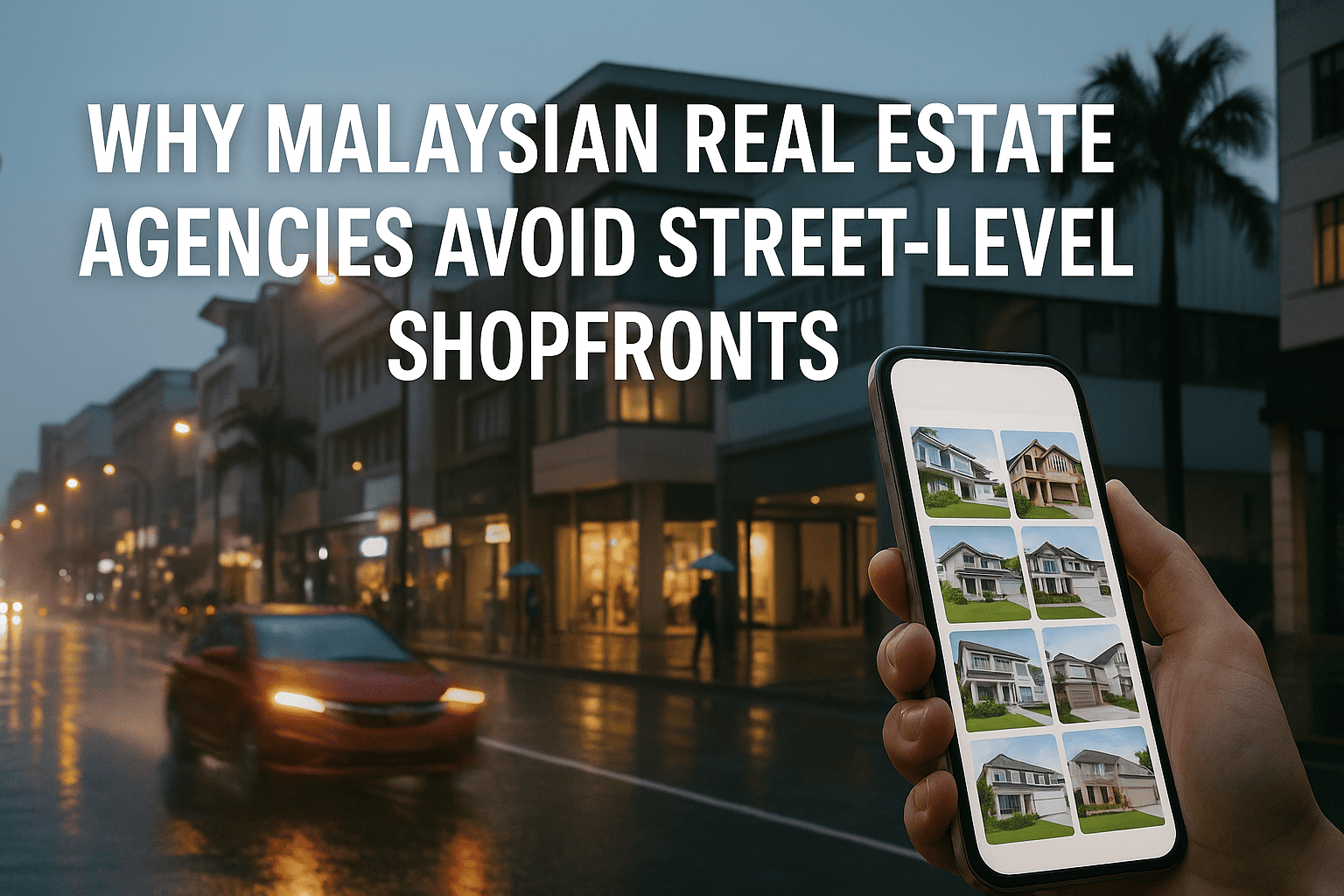
Why Malaysian Real Estate Agencies Avoid Street-Level Shopfronts |
Many Malaysian property agencies avoid expensive street-level offices because agency work does not depend heavily on walk-in traffic. Agents, networks, online channels, and flexible cost structures matter more. |
Agency Leadership & Strategy |
Operational SOPs |
3 |
| 31 |
The Legal Reading List Every Professional Real Estate Agent in Malaysia Must Know |
Malaysian property agents need basic legal and regulatory knowledge to work professionally. Legal awareness protects agents, clients, agencies, and the long-term credibility of the industry. |
Legal, Compliance & Ethics |
Act 242 & BOVAEP Rules |
3 |
| 32 |
Stop Drafting Tenancy Agreements: The New Rule Every Malaysian Property Agent Must Obey |
Property agents must be careful about preparing tenancy agreements and legal documents. The boundary between agency work and legal drafting affects compliance, liability, and professional risk. |
Legal, Compliance & Ethics |
Tenancy & Contract Law |
3 |
| 33 |
Stop: That Deposit Isn't Your Commission Yet. The Legal Risks of Direct Deduction. |
Client deposits should not be casually treated as agent commission. Direct deduction creates legal, ethical, and client-account risks if not handled properly. |
Legal, Compliance & Ethics |
Disbursement & Clients Account |
3 |
| 34 |
You Are an AMLA Enforcer: The Non-Negotiable Duty of Every Malaysian Property Agent |
Malaysian property agents have anti-money laundering responsibilities as part of their professional duties. AMLA compliance is a serious obligation, not just administrative paperwork. |
Legal, Compliance & Ethics |
AMLA & PDPA Compliance |
3 |
| 35 |
Buyer Representation in Malaysia: How Agencies Win More Deals |
Buyer representation can help agencies create stronger deal flow and client loyalty. Agencies should not focus only on listings, because professional buyer service can become a major advantage. |
Sales, Marketing & Lead Generation |
Exclusive vs Open Listings |
3 |
| 36 |
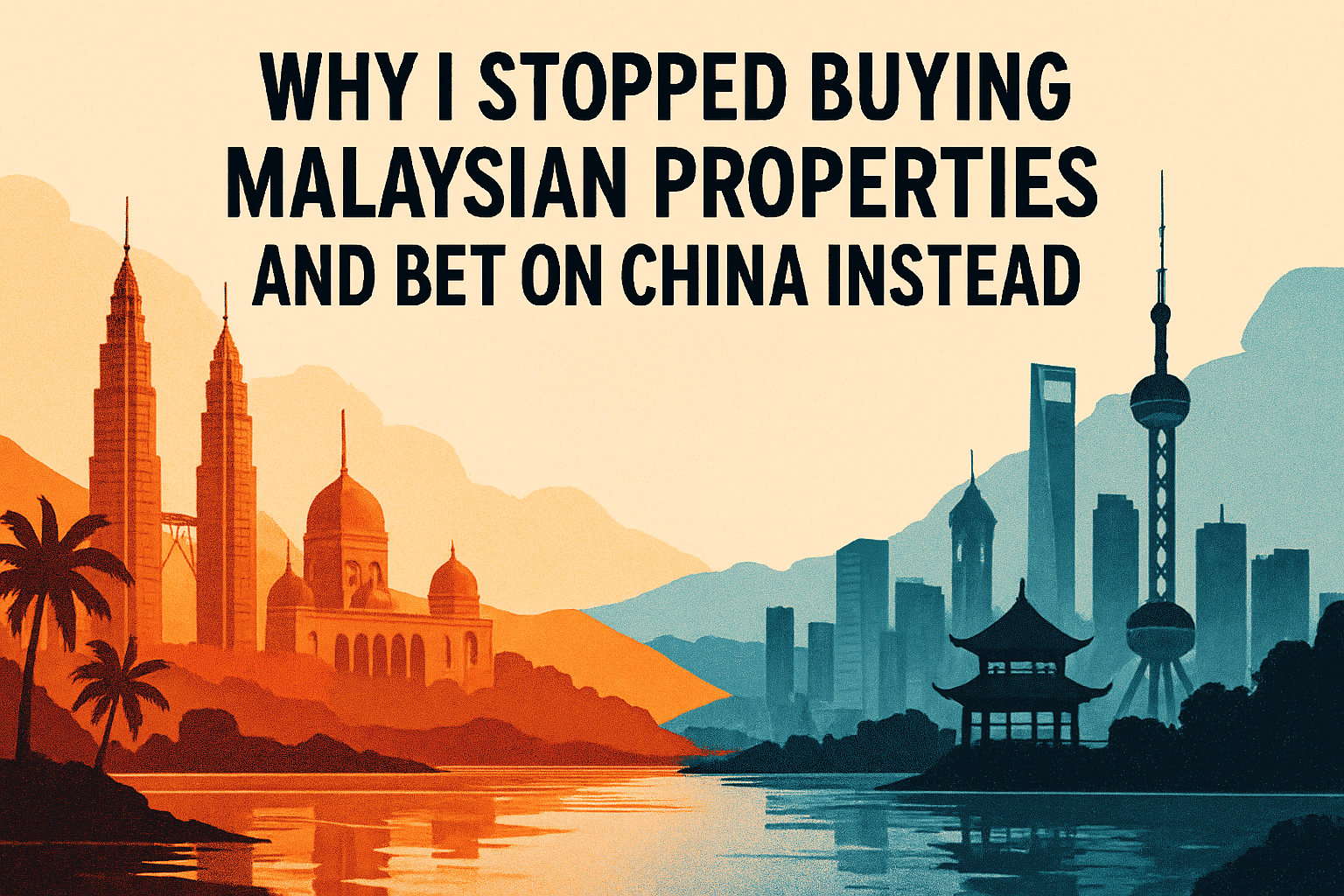
Why I Stopped Buying Malaysian Properties and Bet on China Instead |
A personal investment shift from Malaysian properties to China reflects differences in market perception, opportunity, and strategic confidence. Investor experience can reveal how property markets are judged beyond local assumptions. |
Market Trends & Economics |
Regional Trends |
3 |
| 37 |
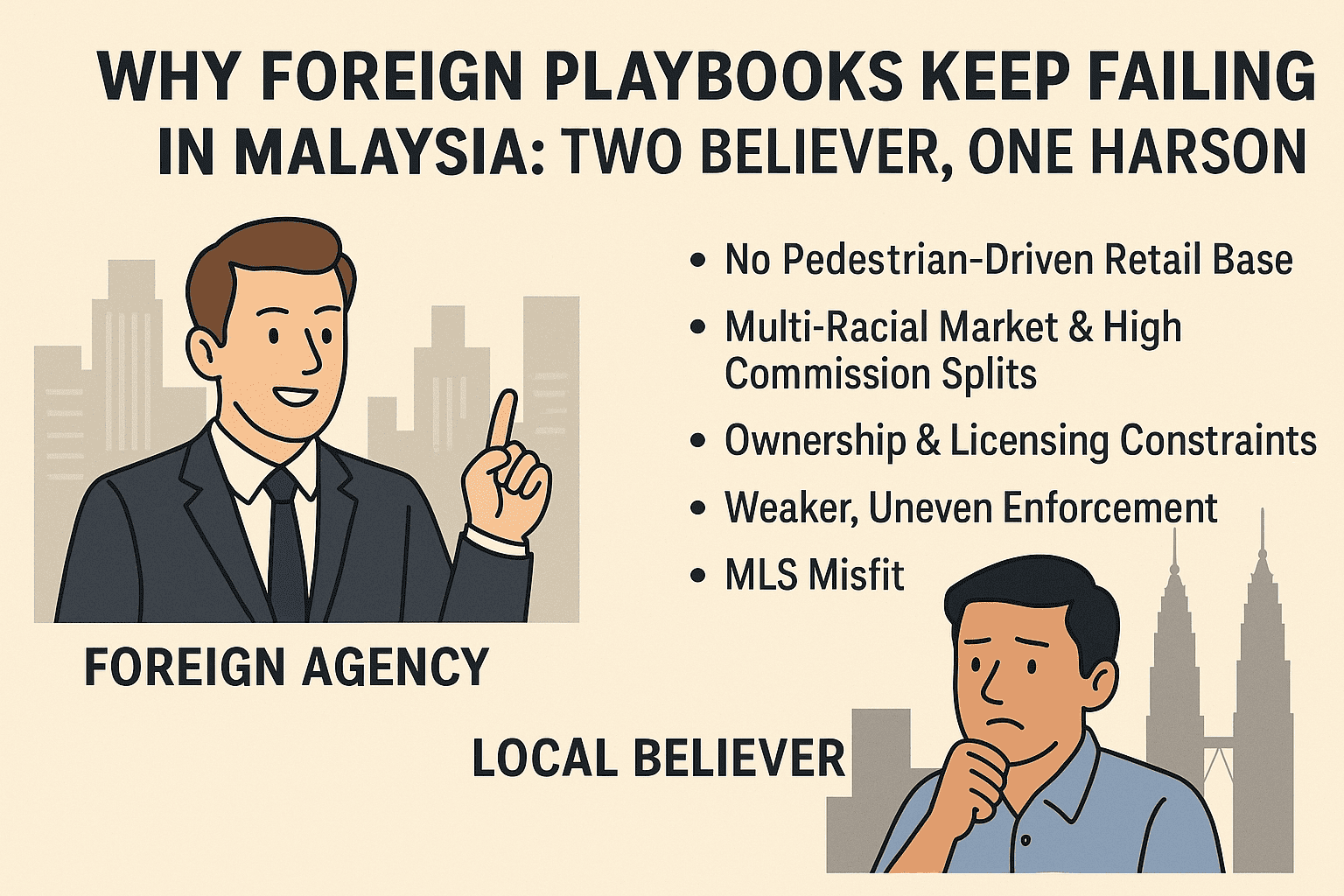
Why Foreign Playbooks Keep Failing in Malaysia: Two Believers, One Hard Lesson |
Foreign real estate models often fail in Malaysia when they ignore local culture, agent behavior, regulation, and market structure. Property strategy must be localized to survive. |
Industry Future & Big Picture |
Global Comparisons (MLS vs ACN) |
3 |
| 38 |
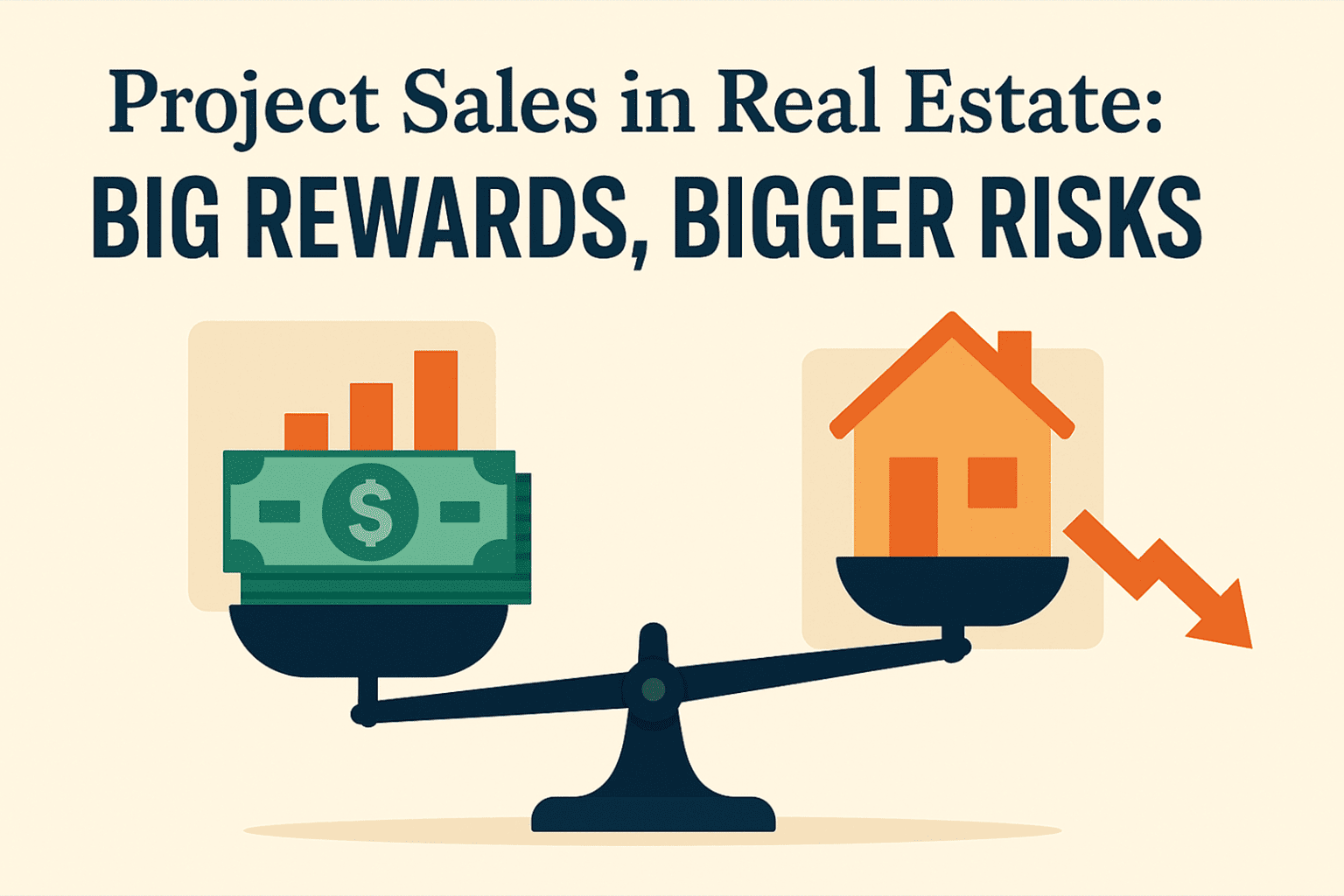
Project Sales in Real Estate: Big Rewards, Bigger Risks |
Project sales can offer large rewards but also carry major risks. Developer dependence, payment delays, competition, cash flow issues, and long sales cycles make project sales difficult to manage. |
Developer Relations & Project Sales |
Project Marketing Strategies |
3 |
| 39 |
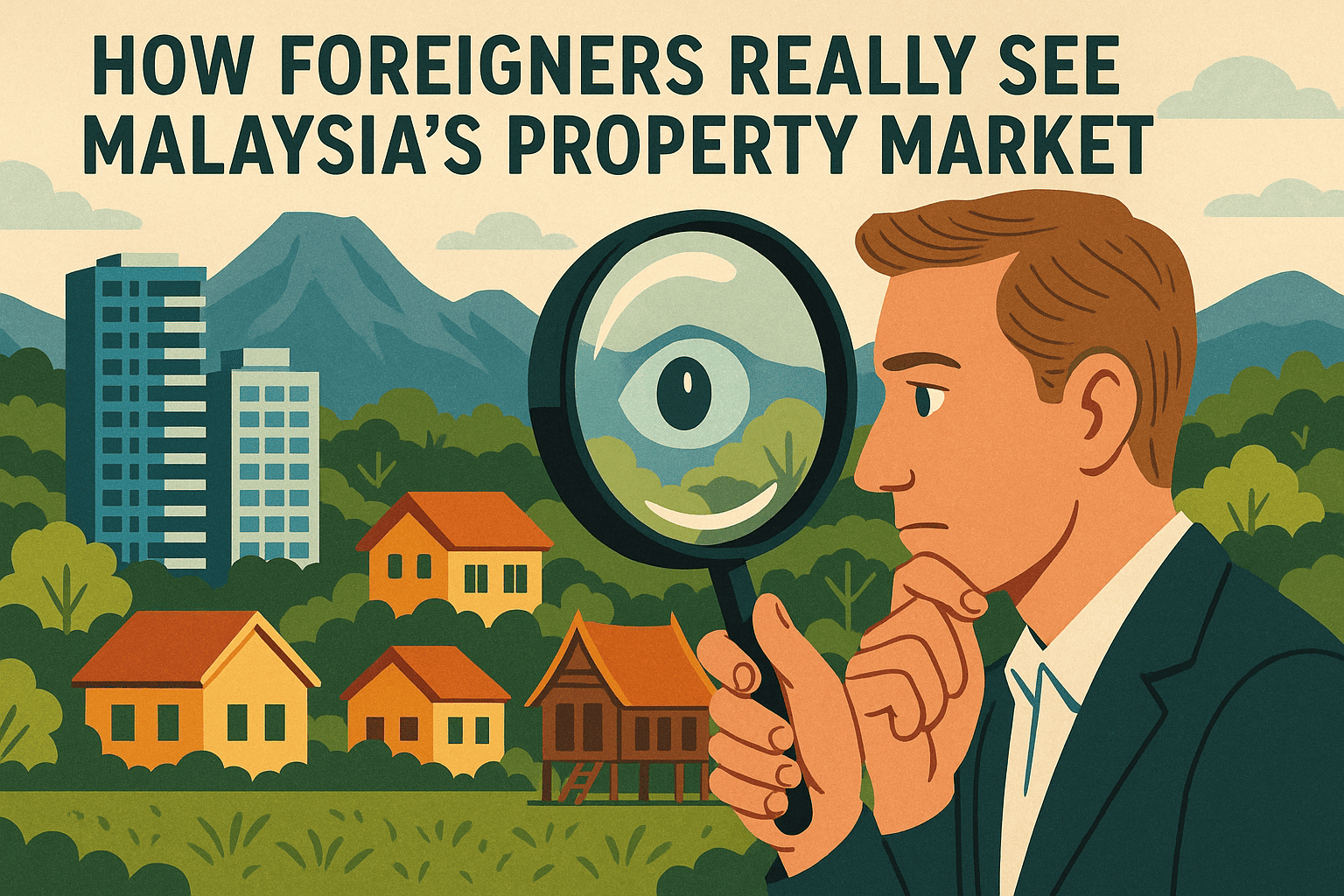
How Foreigners Really See Malaysia’s Property Market |
Foreign buyers and investors may see Malaysia differently from local agents. Value perception, lifestyle appeal, currency advantage, safety, and investment confidence shape foreign demand. |
Market Trends & Economics |
Buyer/Investor Psychology |
3 |
| 40 |
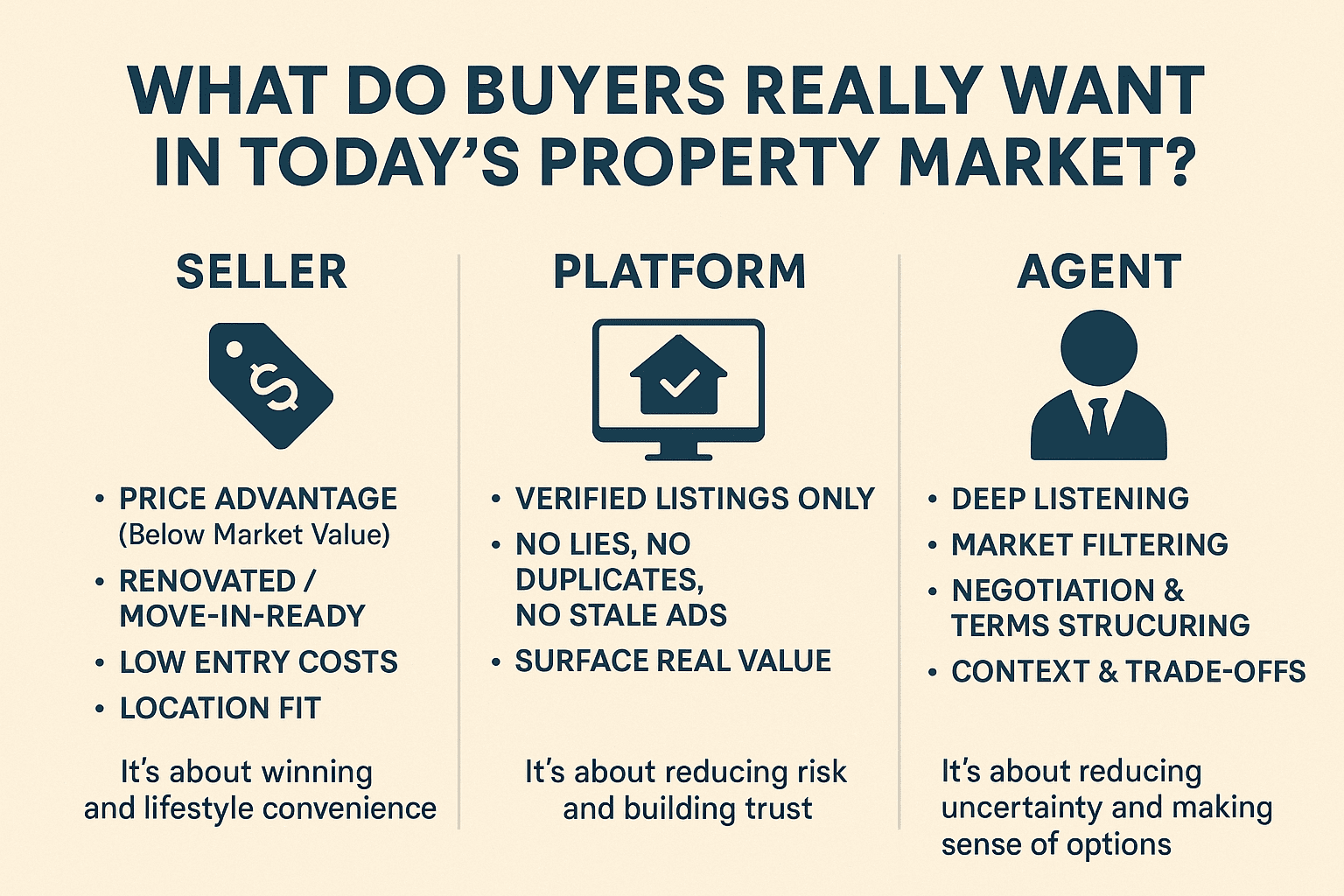
What Do Buyers Really Want in Today’s Property Market? |
Modern buyers care about affordability, practical value, location, financing comfort, lifestyle needs, and confidence. Agents must understand buyer psychology instead of only pushing listings. |
Market Trends & Economics |
Buyer/Investor Psychology |
3 |
| 41 |
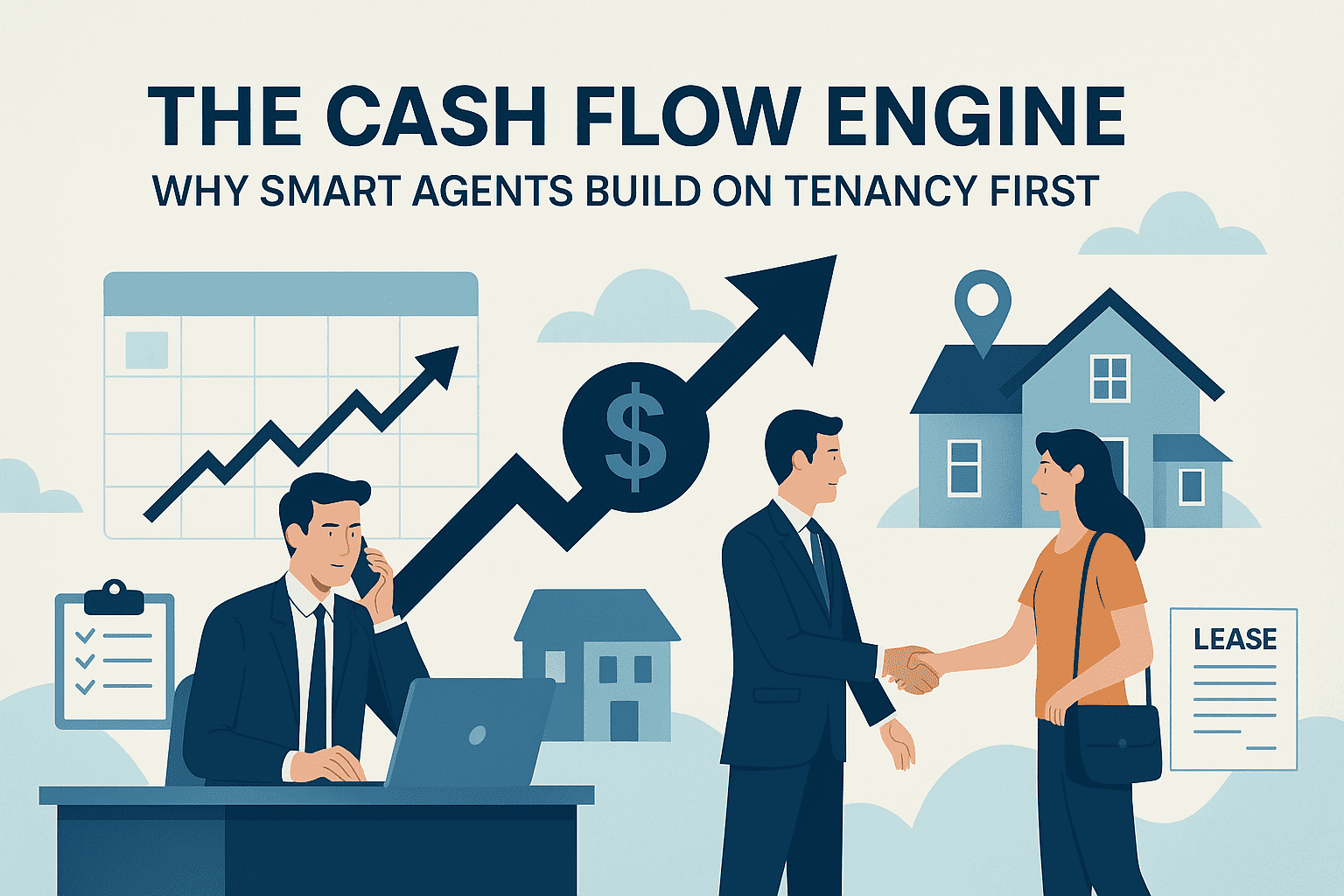
The Cash Flow Engine: Why Smart Agents Build on Tenancy First |
Tenancy transactions can become a training ground and cash flow engine for property agents. Rental work builds owners, tenants, listings, repeat relationships, and market confidence. |
The REN Career & Skills |
Financial Planning for Agents |
3 |
| 42 |
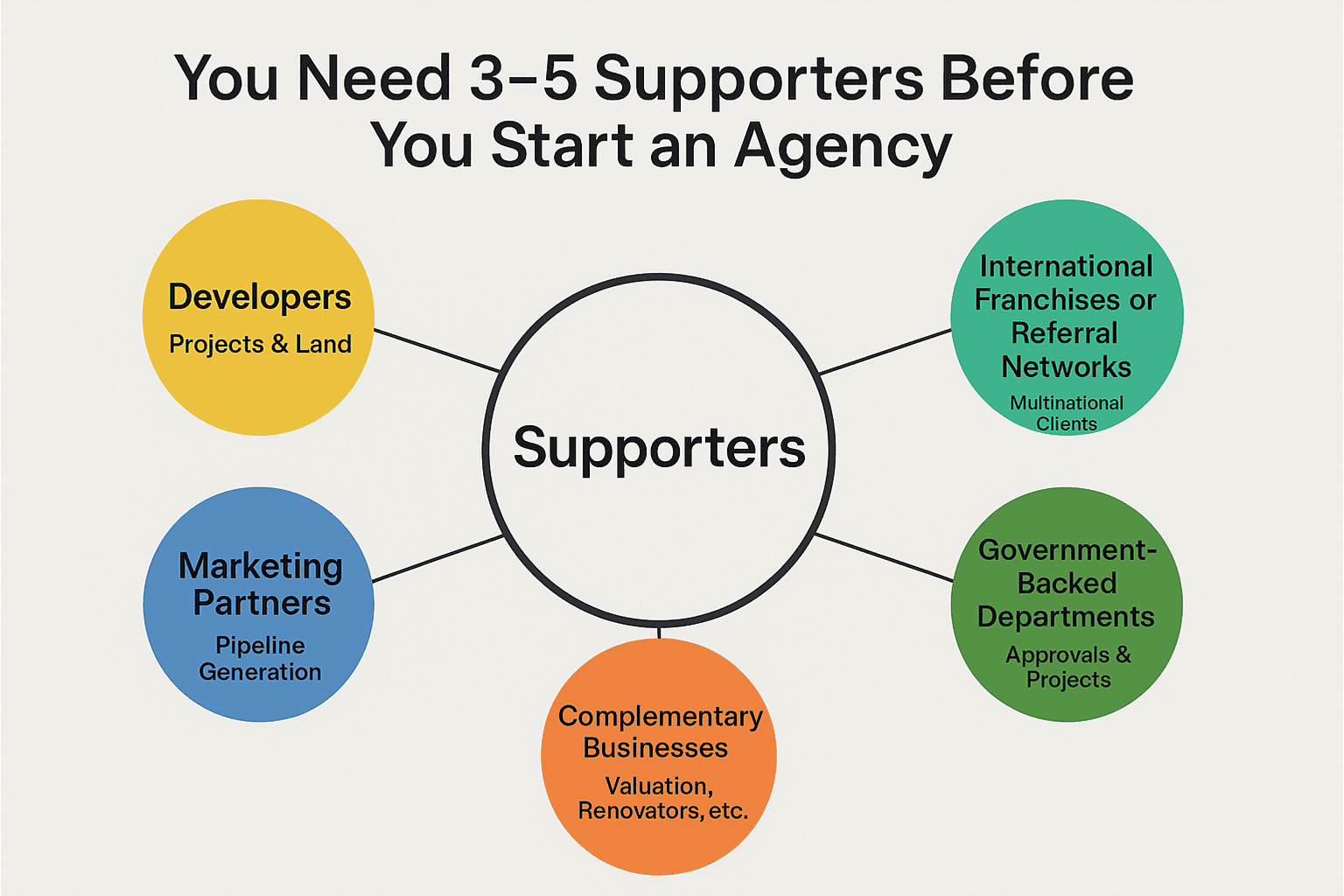
You need 3 to 5 supporters before starting an agency |
Future agency bosses should secure a small group of committed supporters before launching. Early team support is a survival factor, not merely a growth advantage. |
Agency Leadership & Strategy |
Founding & Exit Strategies |
3 |
| 43 |
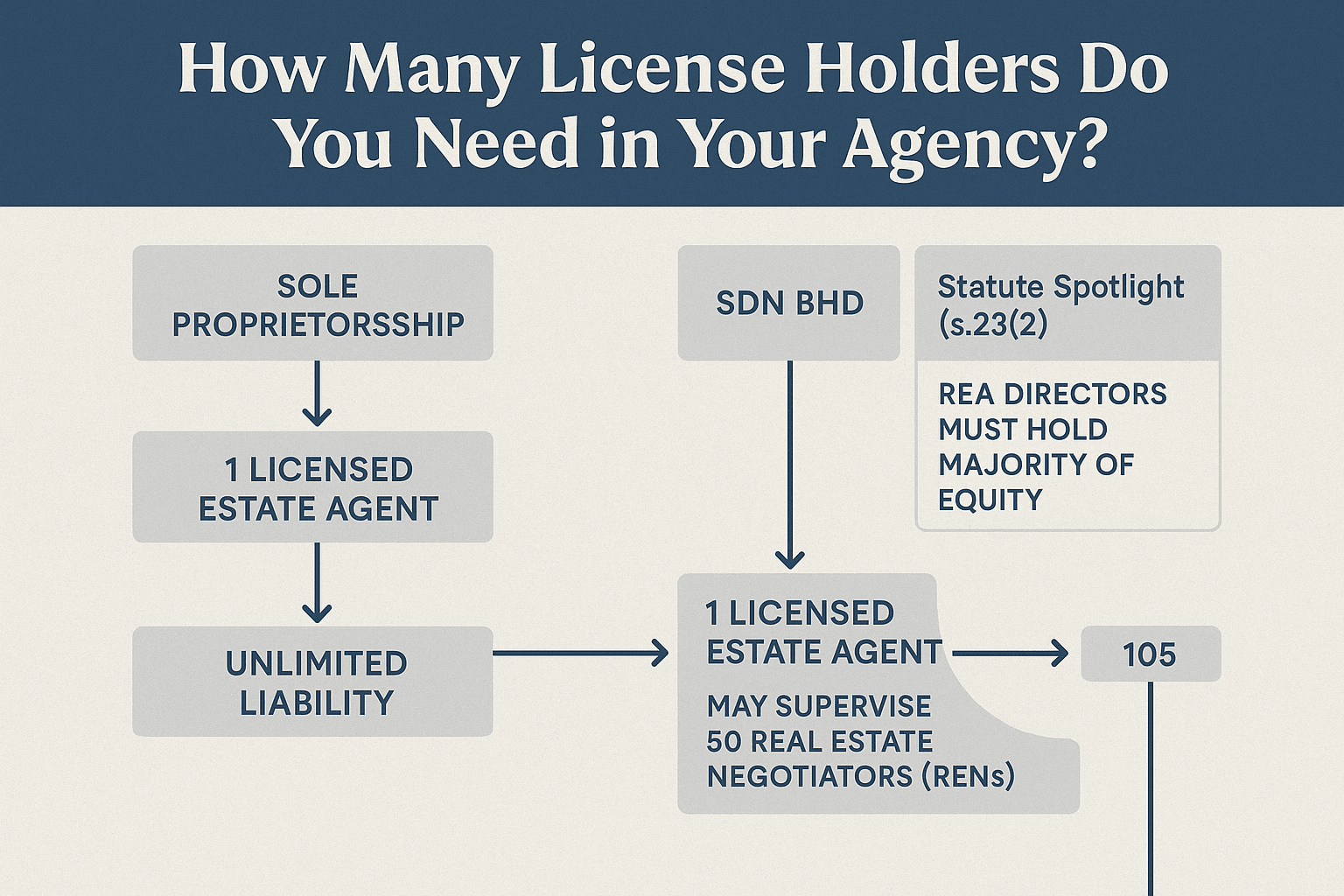
How Many License Holders Do You Need in Your Agency? |
Agency owners must understand licence holder requirements, compliance, supervision, and operational scale. Licensing structure affects how safely and legally an agency can grow. |
Agency Leadership & Strategy |
Operational SOPs |
3 |
| 44 |
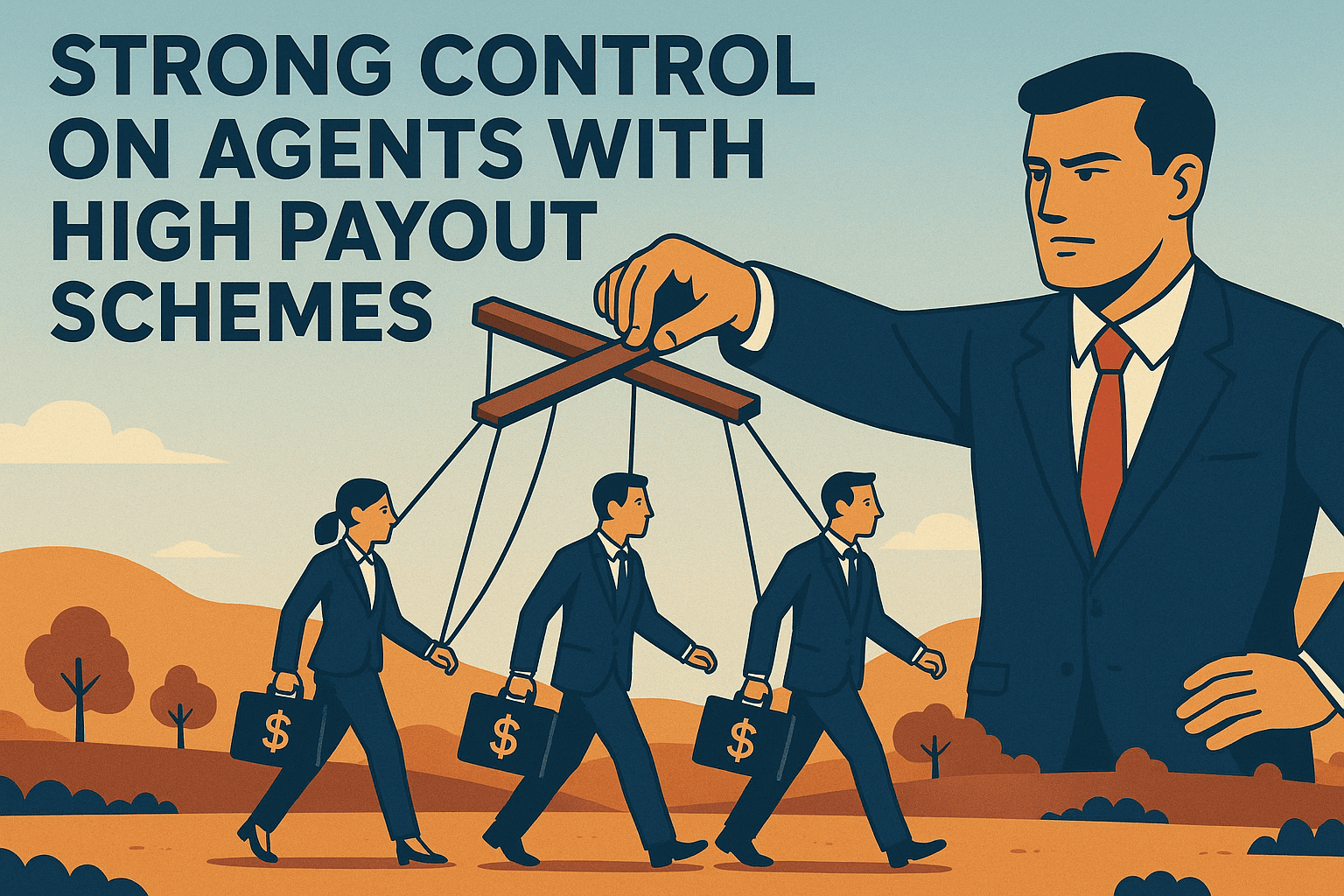
Strong control on agents with high payout schemes? |
High commission payout schemes can weaken agency control if there are no systems behind them. Agencies need transparency, structure, and operational discipline to make high-payout models work. |
Commission & Compensation Models |
Split Ratios (100% vs Splits) |
3 |
| 45 |
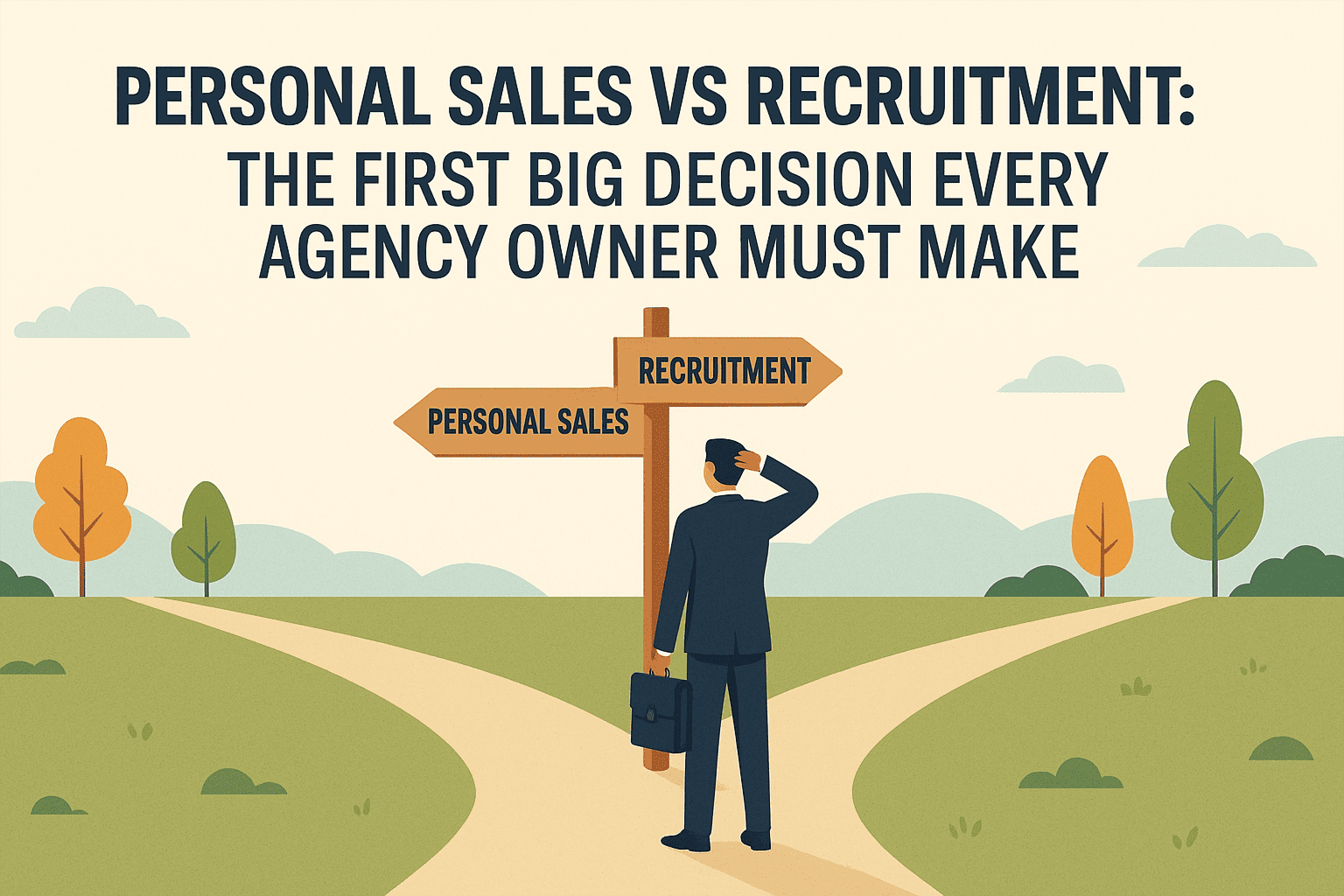
Personal Sales vs Recruitment: The First Big Decision Every Agency Owner Must Make |
Agency owners must decide whether to focus on personal sales or recruitment-driven scale. This choice shapes the agency’s business model, income ceiling, and long-term direction. |
Agency Leadership & Strategy |
Business Models & Scaling |
3 |
| 46 |
Your Best Agents Will Become Competitors. Here’s How to Make Them Allies Instead |
Top agents often leave to become competitors, but agencies can preserve value through alliances, co-broking, and system-based cooperation. Agent departure can become partnership instead of pure loss. |
Recruitment, Retention & Culture |
Defection & Alliances |
3 |
| 47 |
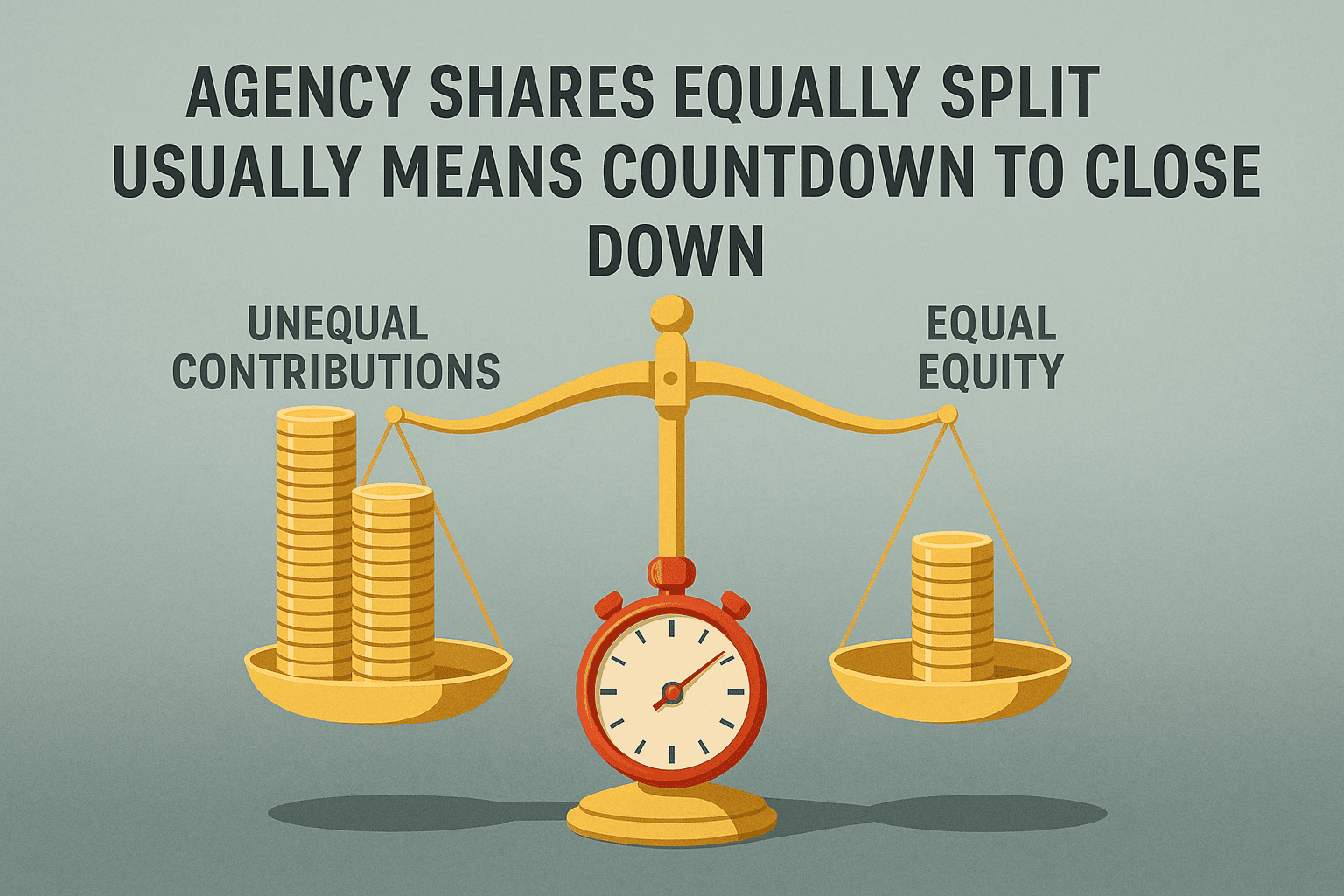
Agency shares equally split usually means countdown to close down |
Equal shareholding among agency partners can create conflict, slow decisions, and weak accountability. Unclear ownership structure often becomes a hidden countdown to agency failure. |
Agency Leadership & Strategy |
Financial Management & Profitability |
3 |
| 48 |
Is a property agency a sunset business? |
Property agency is not necessarily a sunset business, but the old model is weakening. Agencies with infrastructure, data, and cooperation systems can still grow while manual agencies struggle. |
Industry Future & Big Picture |
Industry Structural Reform |
3 |
| 49 |
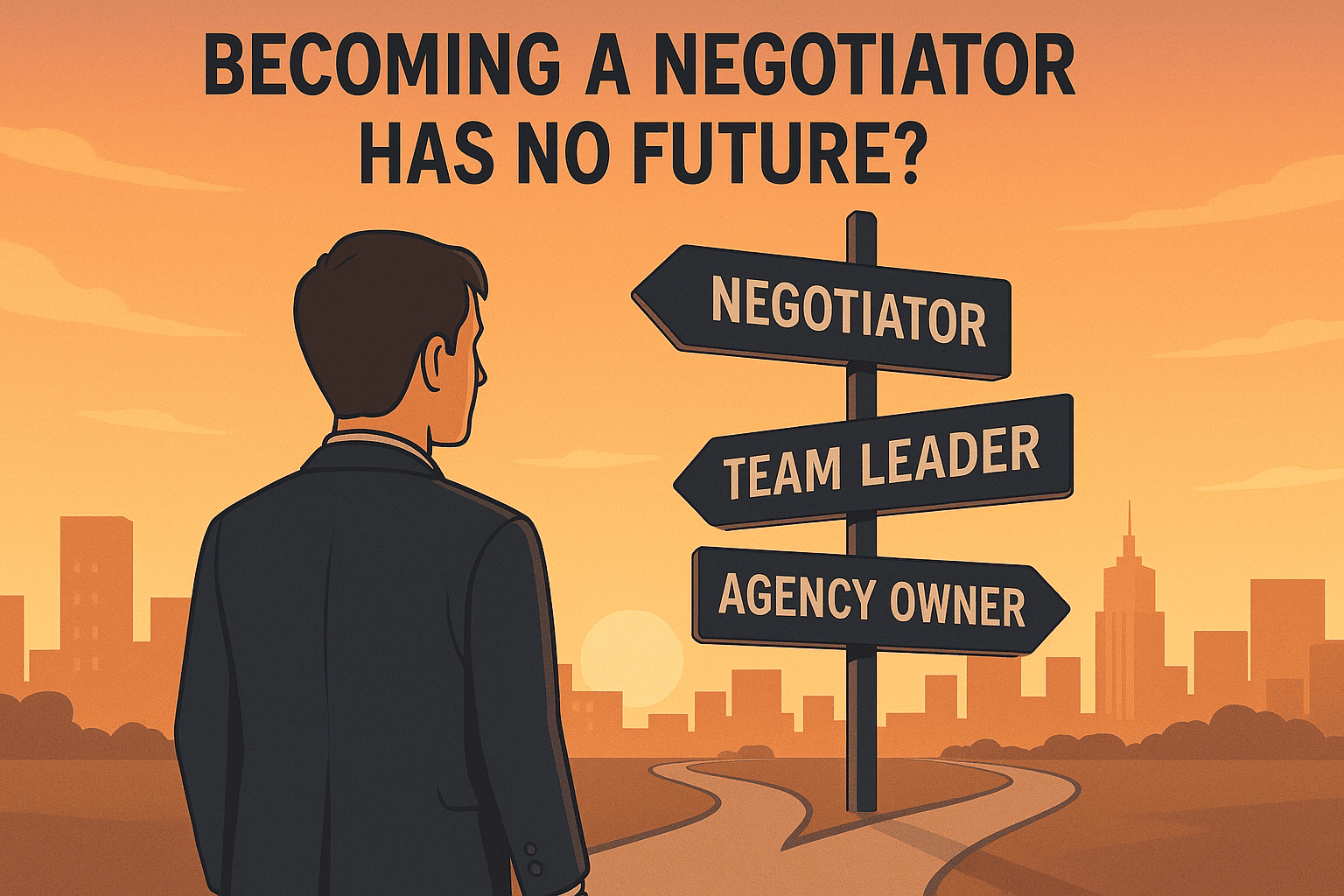
Becoming a negotiator has no future? |
Property negotiation can still have a future when agents build skills, relationships, data, and market assets. The career becomes weak only when agents depend solely on one-time commissions. |
The REN Career & Skills |
Career Stages (REN to REA) |
3 |
| 50 |
Property agents are for school dropouts? |
Property agency is wrongly stereotyped as a career for school dropouts. Modern agents need sales ability, legal awareness, market knowledge, discipline, communication skill, and entrepreneurial thinking. |
The REN Career & Skills |
Soft Skills & Psychology |
3 |
| 51 |
Property agency has no moat |
Property agencies are easy to copy when they rely only on agents, branding, and commission splits. A real moat must come from systems, data, cooperation structure, and operational infrastructure. |
Agency Leadership & Strategy |
Brand vs. Infrastructure |
3 |
| 52 |
Your License is Your Shield: How to Legally Protect Yourself and Your Clients. |
A real estate licence protects both agents and clients when used properly. Legal compliance, proper procedures, and professional boundaries help agents avoid career-damaging risks. |
Legal, Compliance & Ethics |
Act 242 & BOVAEP Rules |
3 |
| 53 |
Why We're Losing: The Real Reasons Illegal Agents Are Thriving |
Illegal agents thrive because the formal industry often fails to offer stronger speed, trust, visibility, or consumer education. Professional agencies need better systems and clearer value to compete. |
Industry Future & Big Picture |
Industry Structural Reform |
3 |
| 54 |
Your Agency's MoAT: How to Build a Business That Can't Be Copied |
A strong agency moat is built through infrastructure, data, leadership, culture, systems, and cooperation design. Branding alone is too easy to imitate. |
Agency Leadership & Strategy |
Brand vs. Infrastructure |
3 |
| 55 |
The High-Payout Illusion: Why 100% Commission Doesn't Solve Your Retention Problem |
High commission payouts do not automatically retain agents. Agents stay when the agency provides value, transparency, support, systems, and long-term opportunity. |
Commission & Compensation Models |
Split Ratios (100% vs Splits) |
3 |
| 56 |
The Scalability Ceiling: Why Your Agency Stopped Growing (And How to Fix It) |
Agencies stop growing when recruitment exceeds leadership, admin capacity, commission control, and system maturity. Scaling requires infrastructure, not just more agents. |
Agency Leadership & Strategy |
Business Models & Scaling |
3 |
| 57 |
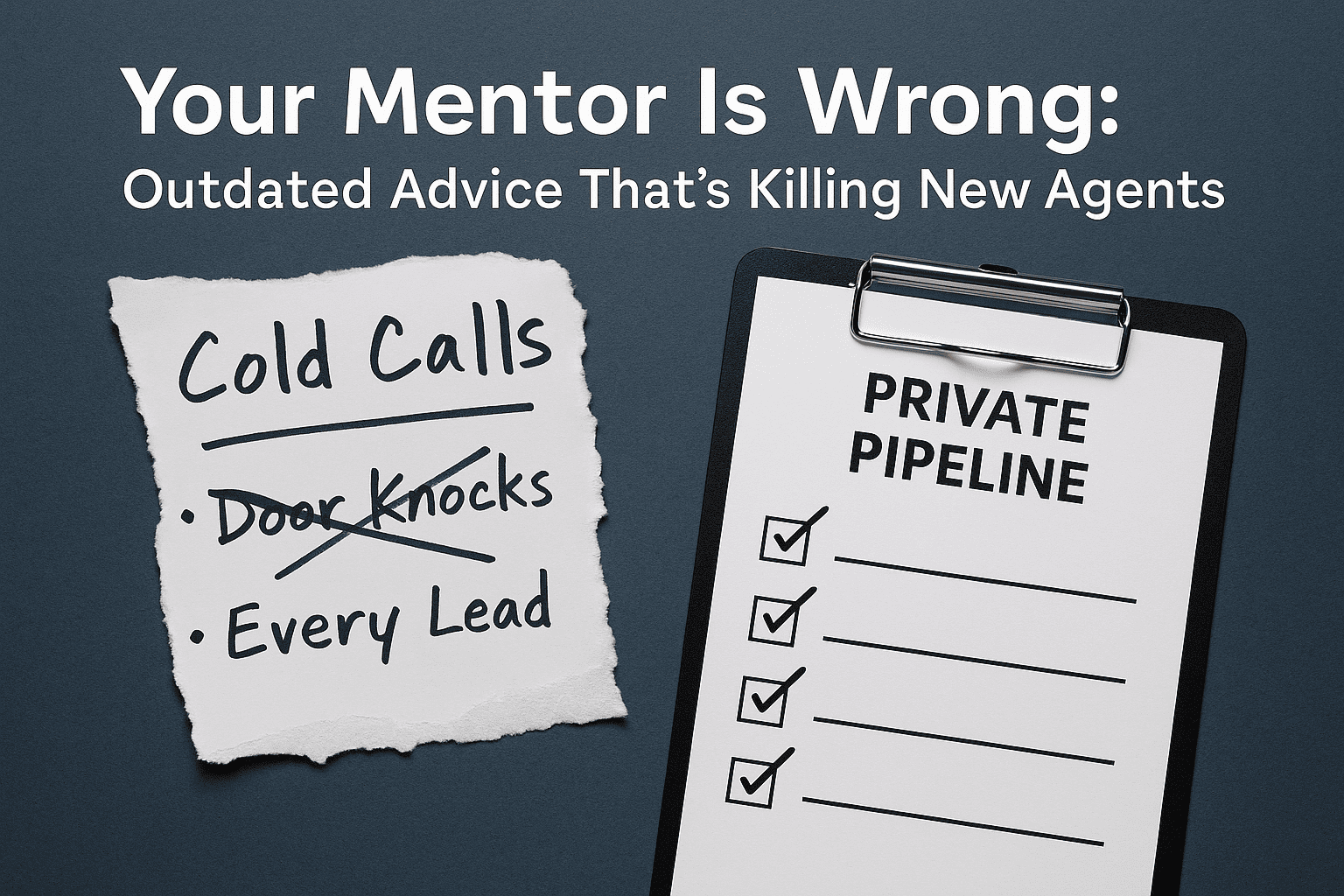
Your Mentor is Wrong: Outdated Advice That's Killing New Agents |
New agents can fail when they follow outdated advice that no longer matches today’s market. Modern agents need pipeline discipline, digital tools, buyer understanding, and realistic survival strategy. |
The REN Career & Skills |
New Agent Start-up |
3 |
| 58 |
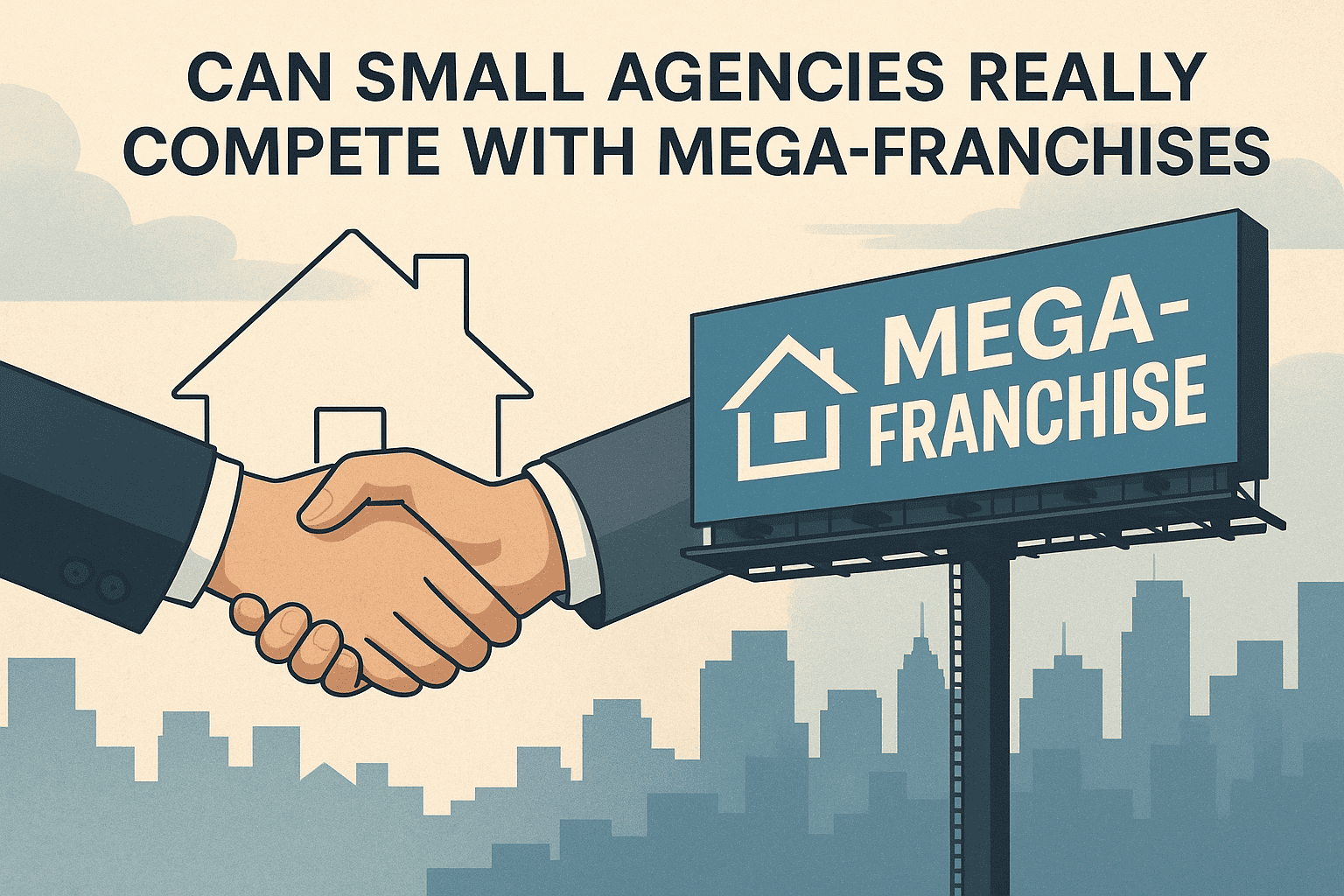
Can Small Agencies Compete with Mega-Franchises? |
Small agencies can compete with mega-franchises when they are faster, more focused, more systemized, and closer to their agents. Agility can beat size when the operating model is strong. |
Agency Leadership & Strategy |
Mergers & Acquisitions |
3 |
| 59 |
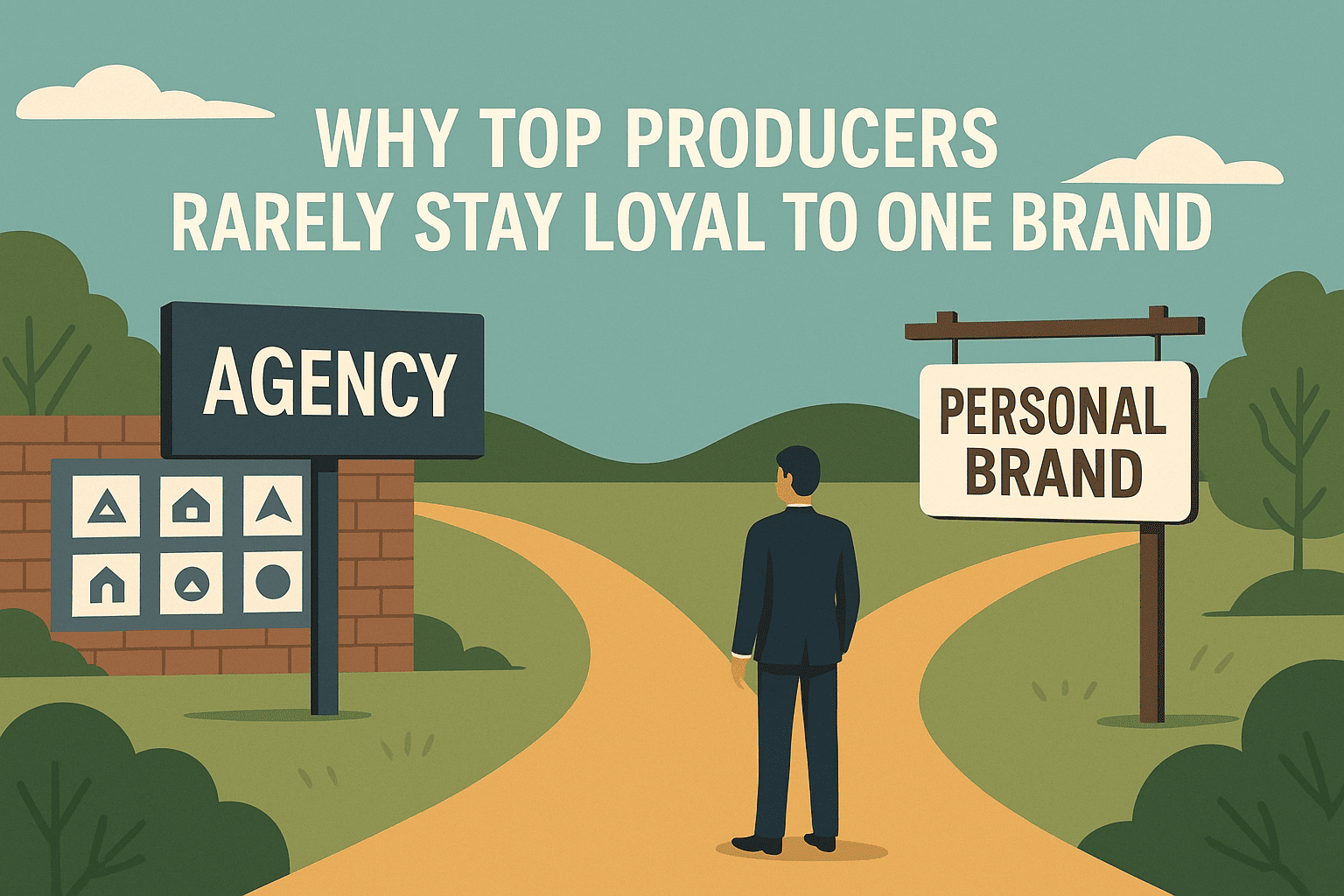
Why Top Producers Rarely Stay Loyal to One Brand |
Top producers often outgrow brands because their personal market value becomes stronger than agency dependency. Agencies must offer real infrastructure and partnership value to keep them. |
Recruitment, Retention & Culture |
Retention Psychology |
3 |
| 60 |
Why Your Agency’s Branding Doesn’t Matter as Much as You Think |
Agency branding has limited power if agents lack tools, listings, leads, systems, and operational support. Infrastructure often matters more than image. |
Agency Leadership & Strategy |
Brand vs. Infrastructure |
3 |
| 61 |
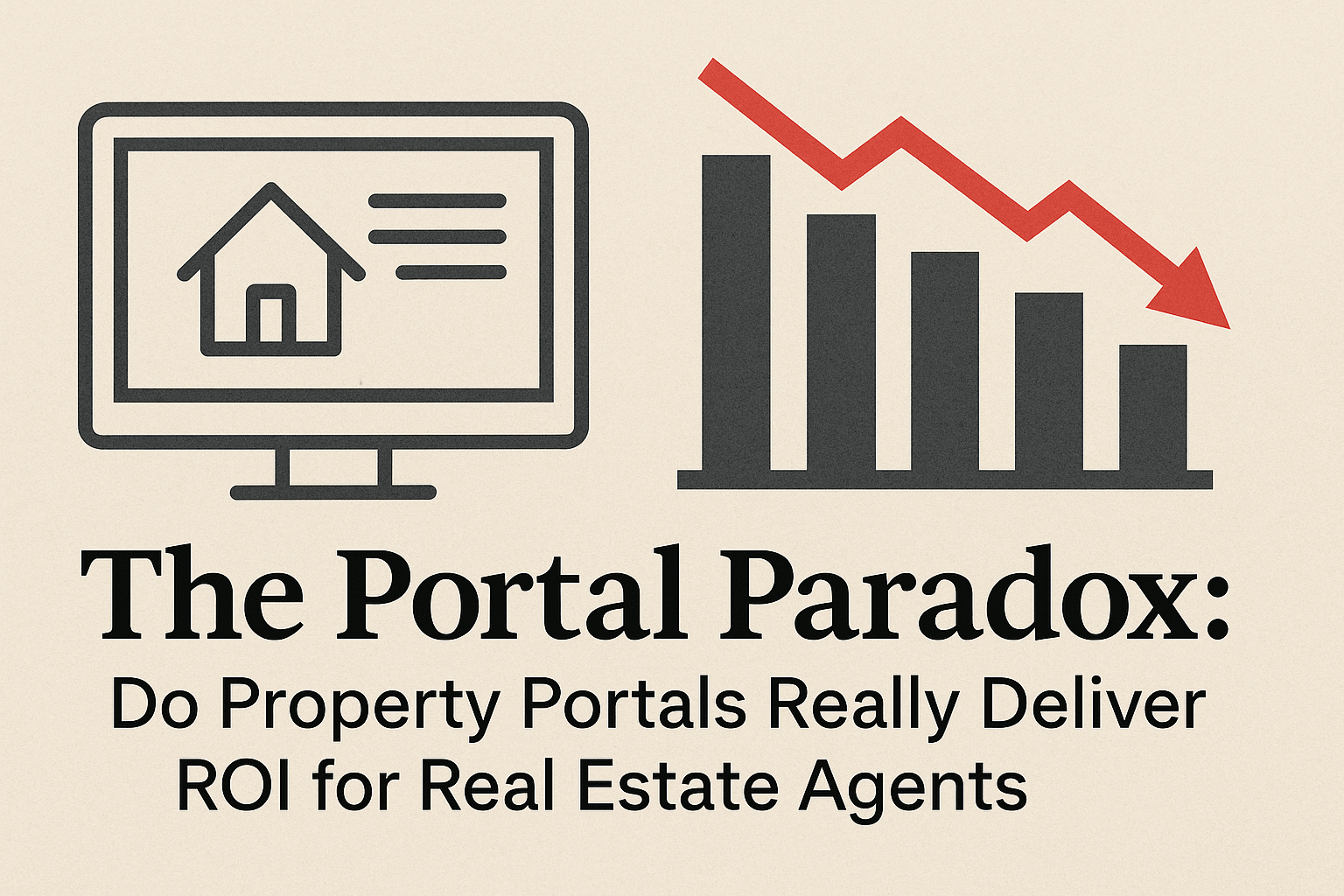
Do Property Portals Really Deliver ROI for Agents? |
Property portals can generate exposure, but ROI depends on lead quality, conversion ability, cost, competition, and follow-up discipline. Agents should measure portal spending against real closings, not vanity leads. |
Sales, Marketing & Lead Generation |
Paid Ads vs Organic (SEO) |
3 |
| 62 |
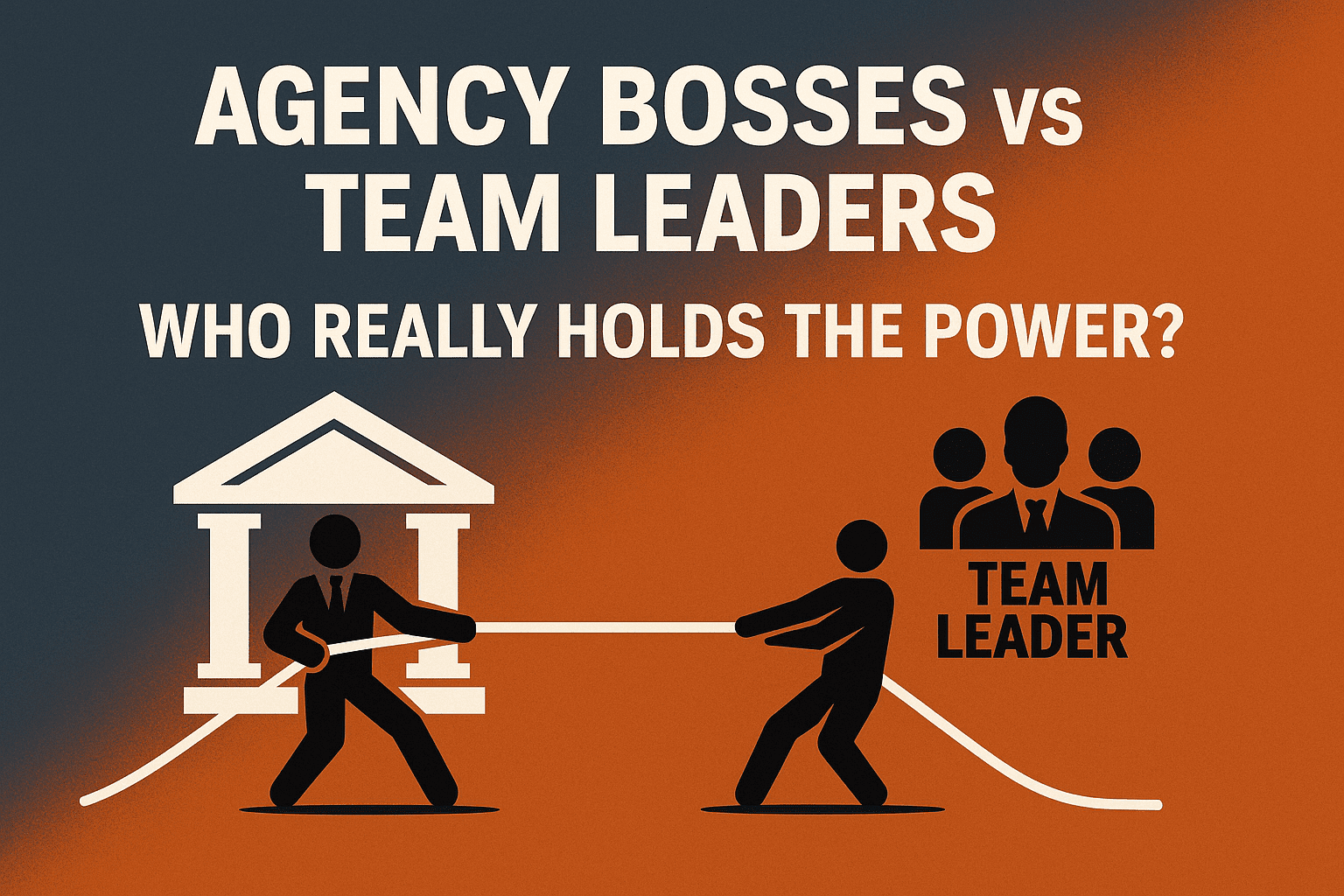
Agency Bosses vs Team Leaders: Who Really Holds the Power? |
Power inside an agency often depends on who controls agents, leads, listings, relationships, and commission influence. Team leaders may hold more practical power than the agency boss expects. |
Team Leadership & Dynamics |
Conflict & Politics |
3 |
| 63 |
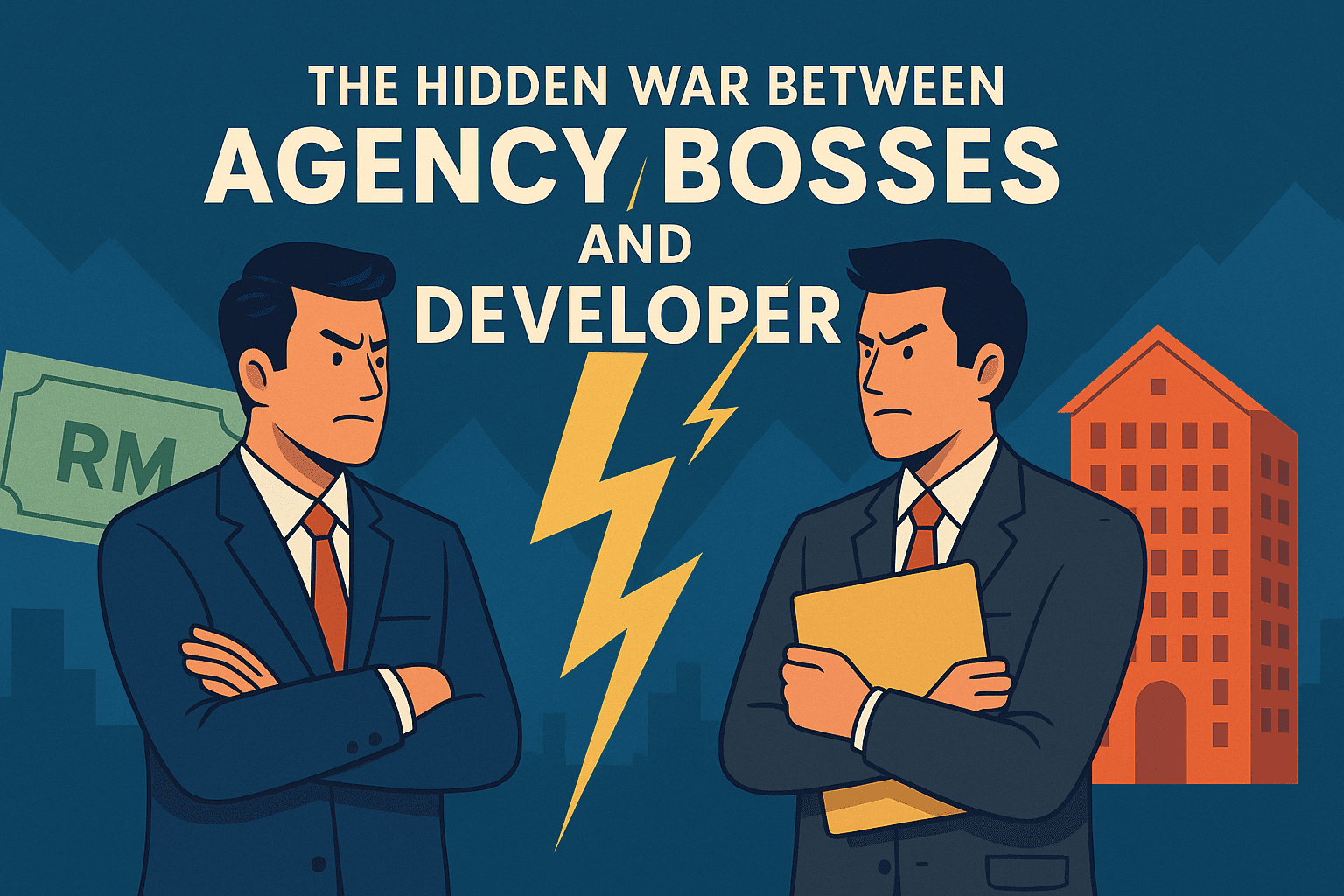
The Hidden War Between Agency Bosses and Developers |
Agency bosses and developers depend on each other but often clash over payout timing, control, performance, and project risk. Project sales can create hidden tension beneath the partnership. |
Developer Relations & Project Sales |
Developer Payouts & Risks |
3 |
| 64 |
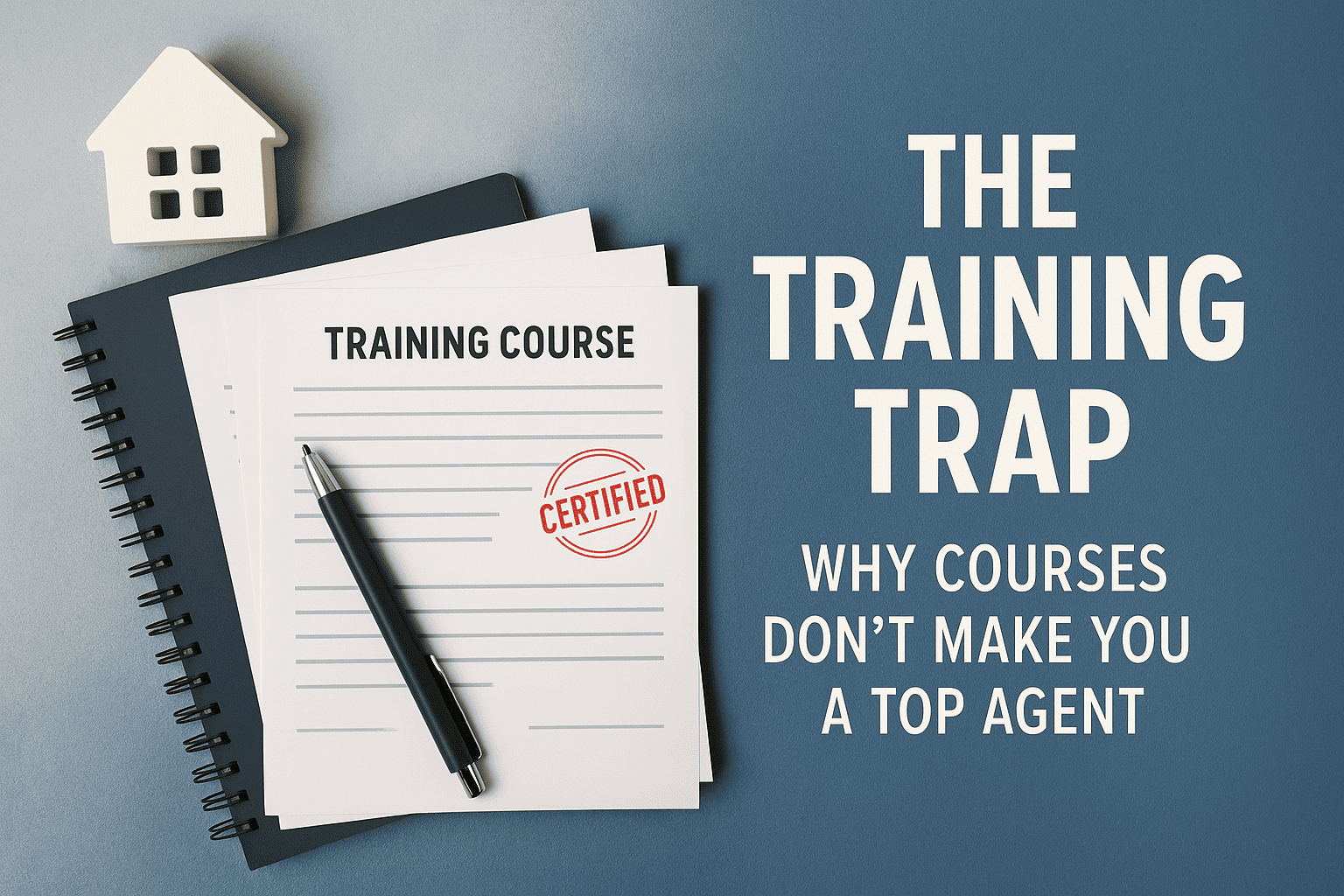
The Training Trap: Why Courses Don’t Make You a Top Agent |
Courses alone do not create top agents. Real performance comes from daily execution, market contact, follow-up discipline, buyer understanding, and actual transaction experience. |
The REN Career & Skills |
Career Stages (REN to REA) |
3 |
| 65 |
Can AI Replace Agents? The Real Threat Behind Proptech |
AI may not fully replace agents, but it can expose weak agents who only provide basic information. Agents must move toward advice, trust, negotiation, local intelligence, and relationship value. |
Industry Future & Big Picture |
Proptech & AI Evolution |
3 |
| 66 |
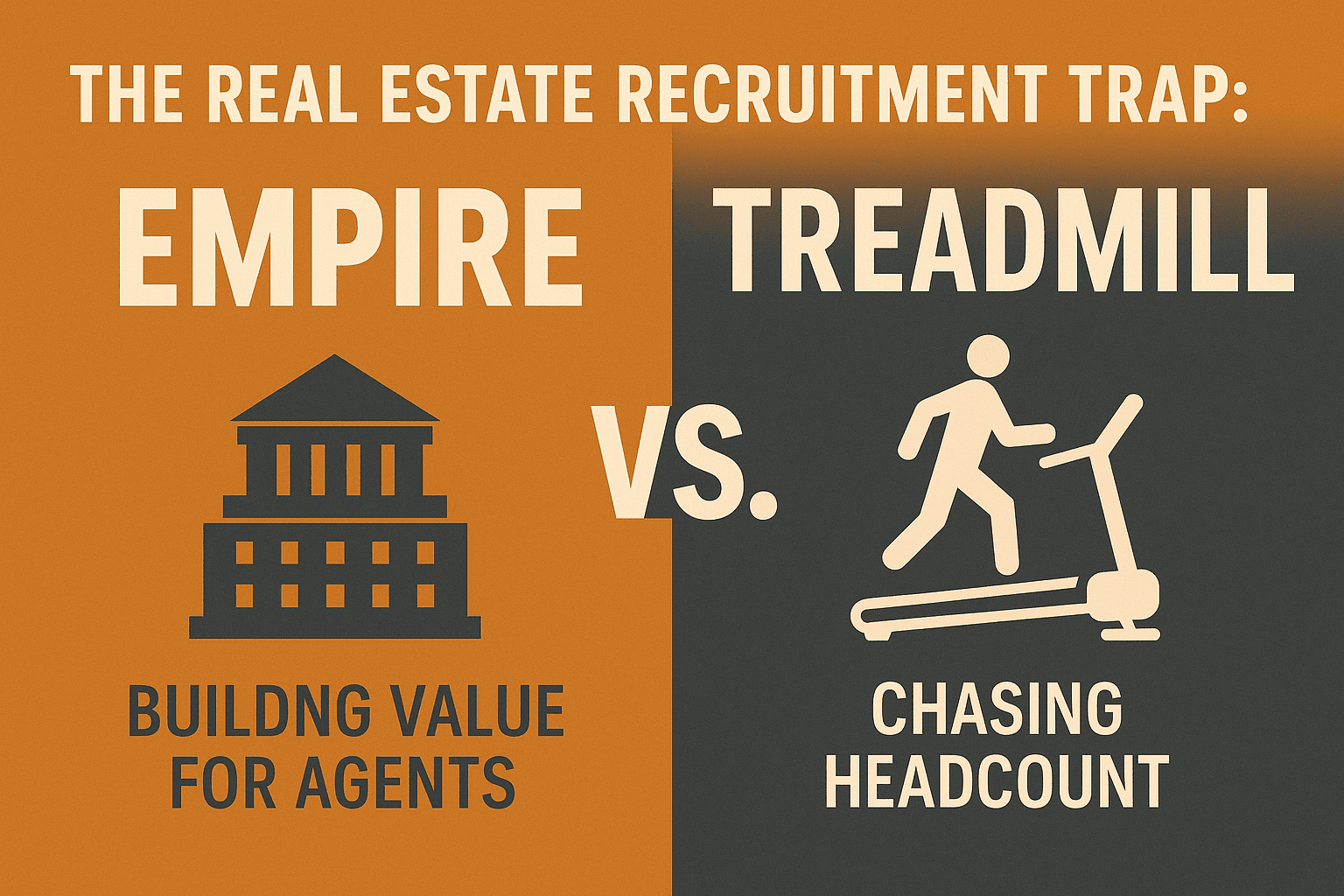
The Real Estate Recruitment Trap: Empire vs. Treadmill |
Recruitment can build an agency empire or become an endless treadmill. Without activation, retention, leadership, and systems, constant recruitment only replaces agents who keep leaving. |
Recruitment, Retention & Culture |
Hiring Fresh vs. Experienced |
3 |
| 67 |
The Commission Mirage: Why Splits Alone Don’t Motivate Agents |
Commission splits alone do not create lasting motivation. Agents also need fairness, clarity, recognition, support, opportunity, and confidence that the system rewards real contribution. |
Commission & Compensation Models |
Incentives & Rewards |
3 |
| 68 |
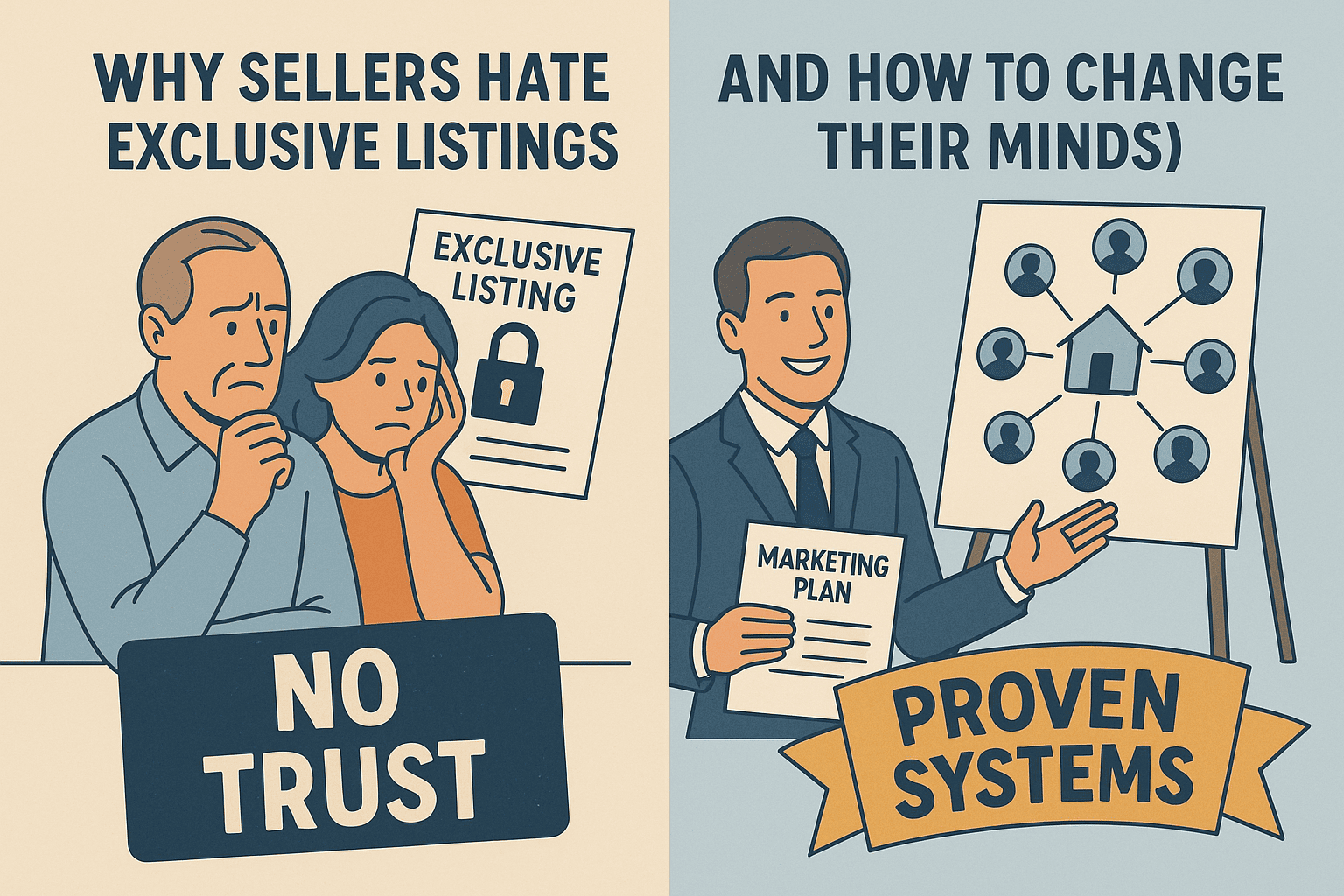
Why Sellers Hate Exclusive Listings (And How to Change Their Minds) |
Sellers often dislike exclusive listings because they fear limited exposure, weak effort, or being trapped. Agents must prove trust, accountability, marketing strength, and service value to win exclusivity. |
Sales, Marketing & Lead Generation |
Exclusive vs Open Listings |
3 |
| 69 |
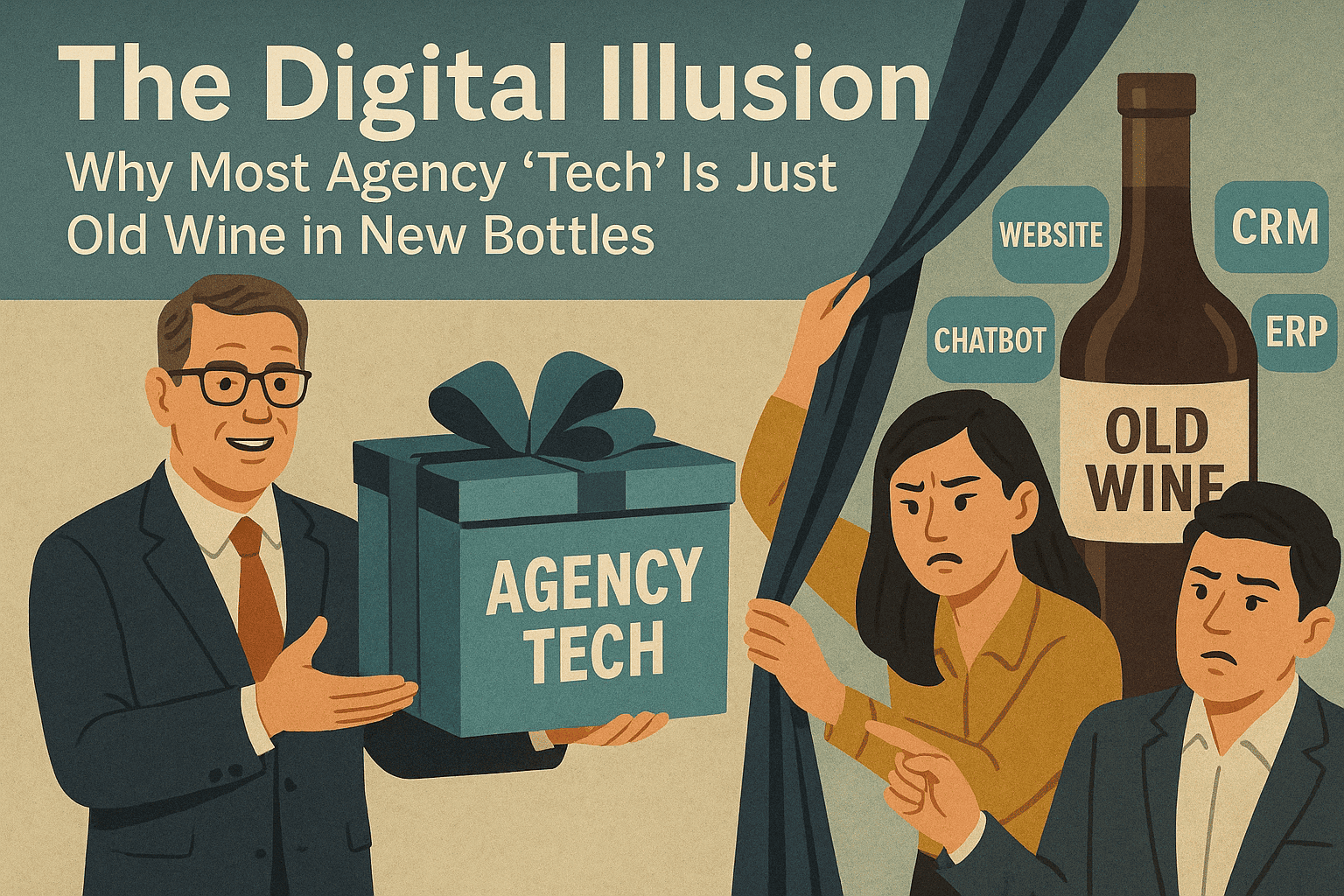
The Digital Illusion: Why Most Agency “Tech” Is Just Old Wine in New Bottles |
Many agency tech tools only digitize old manual workflows without solving real operational problems. True technology should reduce admin burden, improve traceability, and create better control. |
Technology & Systems (ListingMine) |
System vs. Manual Chaos |
3 |
| 70 |
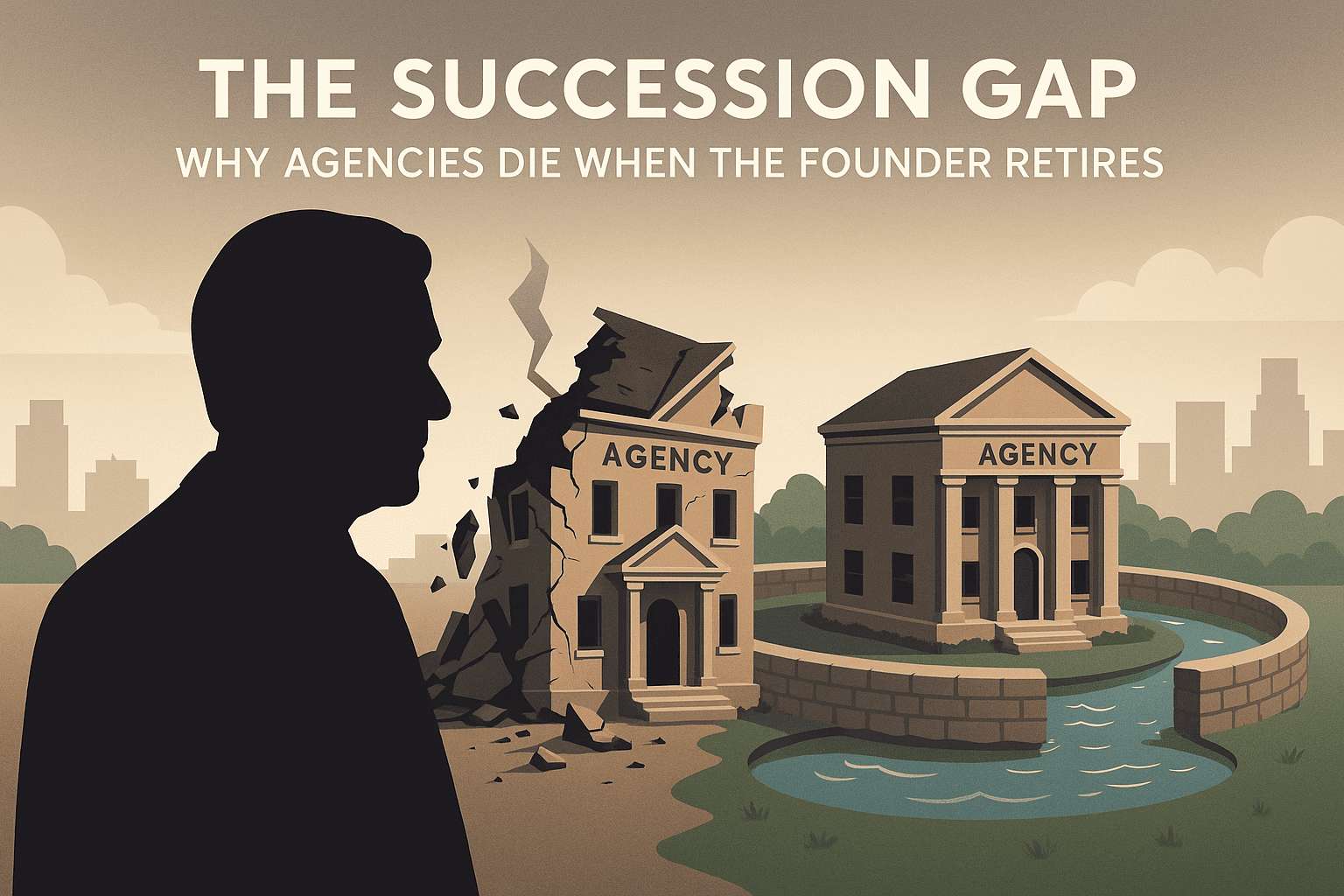
The Succession Gap: Why Agencies Die When the Founder Retires |
Agencies often collapse after the founder retires because leadership, client relationships, culture, and decision-making were never institutionalized. Succession requires systems and second-layer leadership. |
Agency Leadership & Strategy |
Founding & Exit Strategies |
3 |
| 71 |
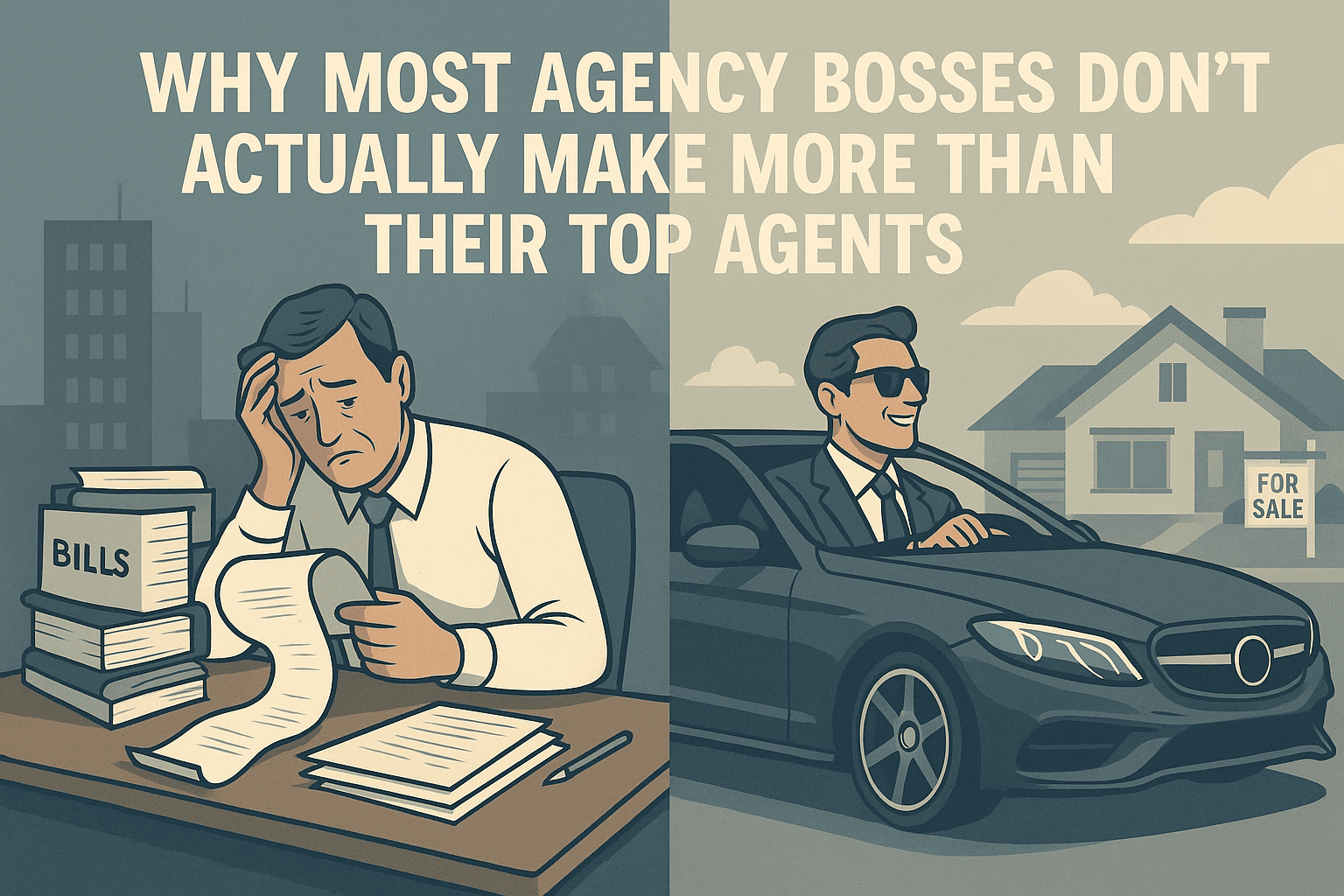
Why Most Agency Bosses Don’t Actually Make More Than Their Top Agents |
Agency bosses may earn less than top agents when overhead, overrides, rent, admin costs, incentives, and poor margins absorb revenue. Headcount does not always equal profit. |
Agency Leadership & Strategy |
Financial Management & Profitability |
3 |
| 72 |
Should you recruit part-time agents? |
Part-time agents can expand reach but may weaken culture, accountability, and productivity if unmanaged. Agencies need clear expectations before treating part-time recruitment as growth. |
Recruitment, Retention & Culture |
Hiring Fresh vs. Experienced |
3 |
| 73 |
Recruitment and retention is not enough. Start thinking ally and integrate. |
Agencies should think beyond recruiting and retaining agents. Long-term strength comes from building allies, integrations, cooperation systems, and alumni relationships. |
Recruitment, Retention & Culture |
Defection & Alliances |
3 |
| 74 |
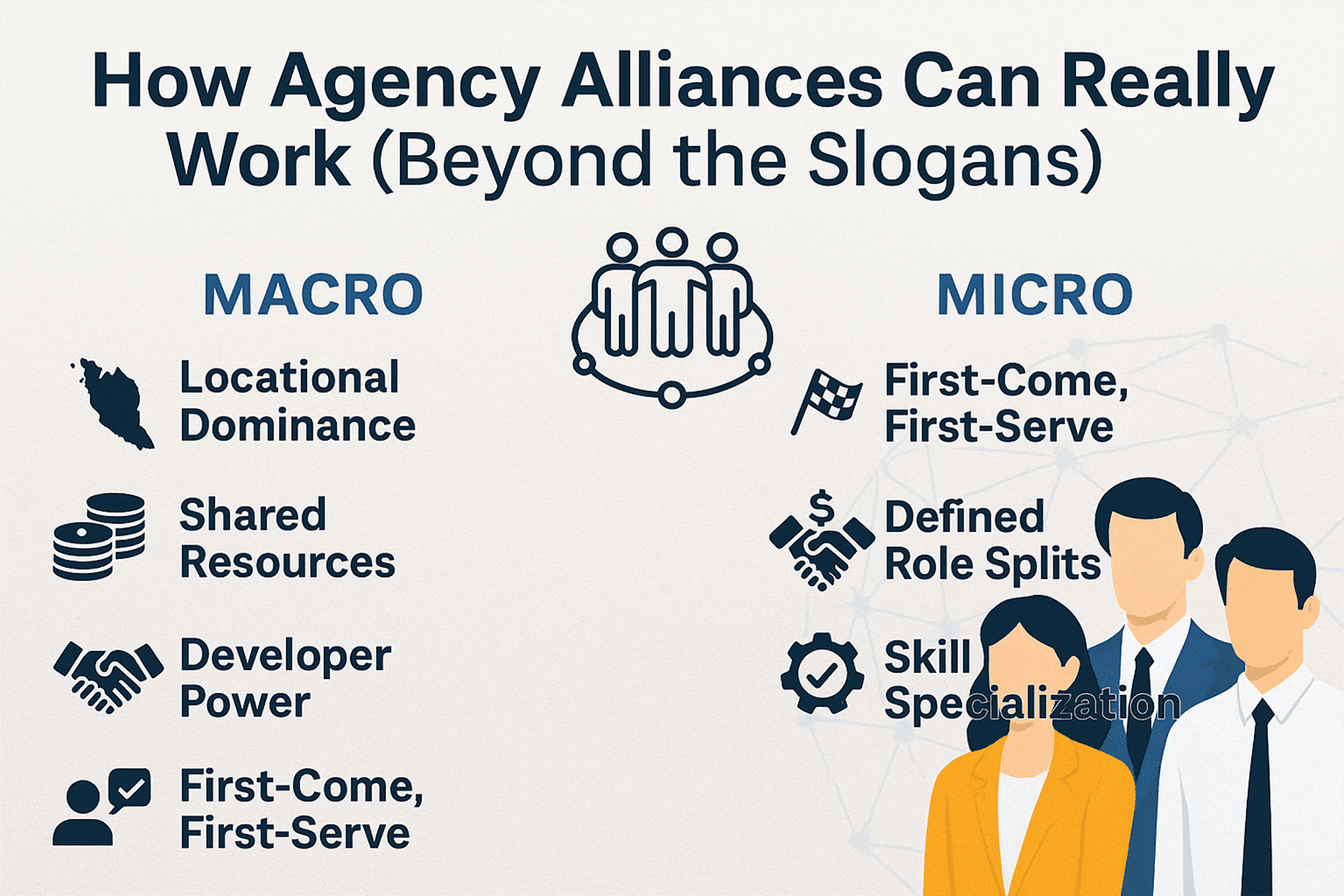
How Agency Alliances Can Really Work (Beyond the Slogans) |
Agency alliances only work when cooperation rules, data sharing, commission logic, trust boundaries, and dispute handling are clearly structured. Slogans are not enough. |
Co-Broking, ACN & Collaboration |
ACN Fundamentals |
3 |
| 75 |
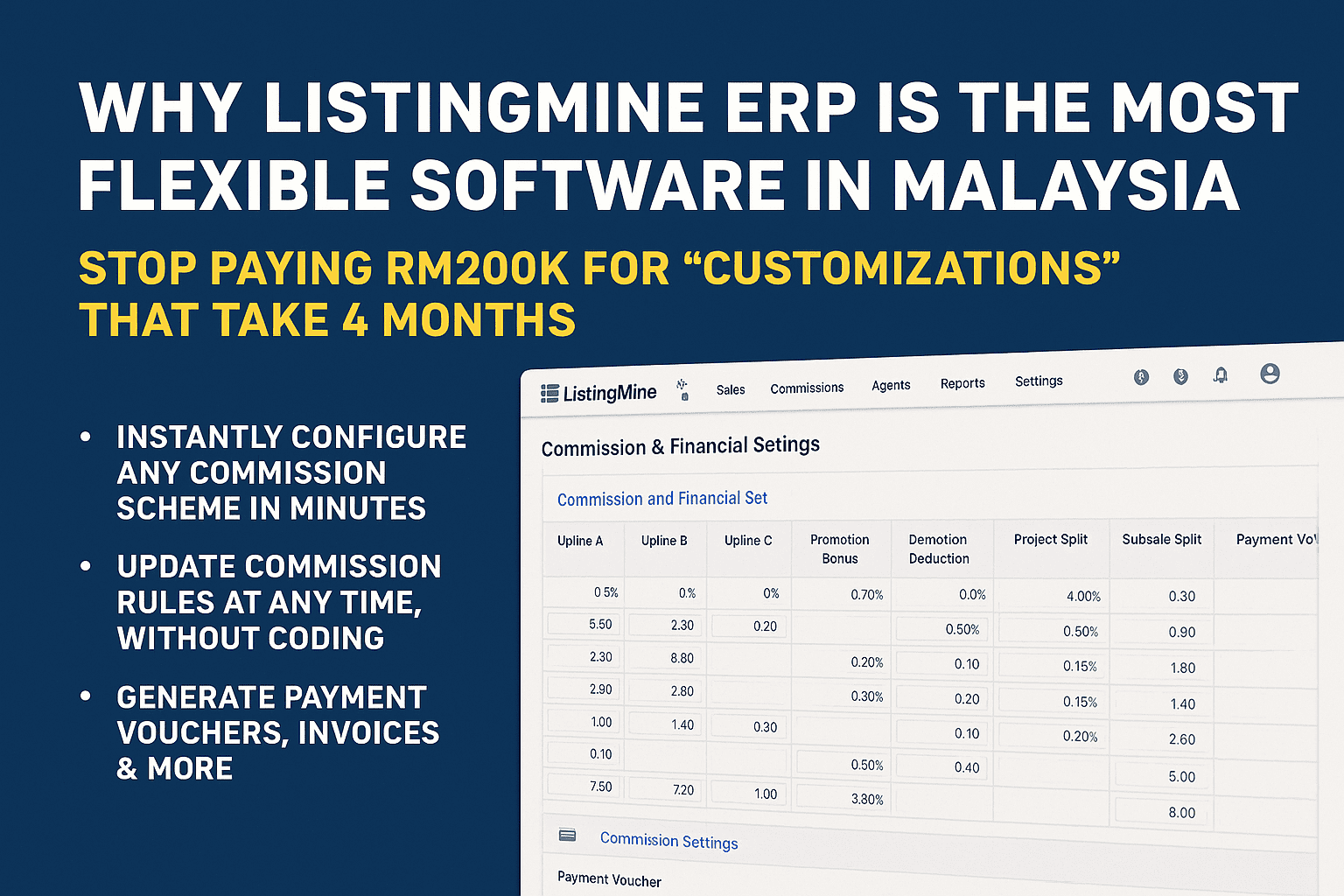
Why the Listingmine ERP is the most flexible software in Malaysia |
ListingMine ERP is positioned around flexibility in commission schemes, workflows, reporting, and real agency operations. The key value is reducing custom software dependence and Excel workarounds. |
Technology & Systems (ListingMine) |
Product Features & Workflow |
3 |
| 76 |
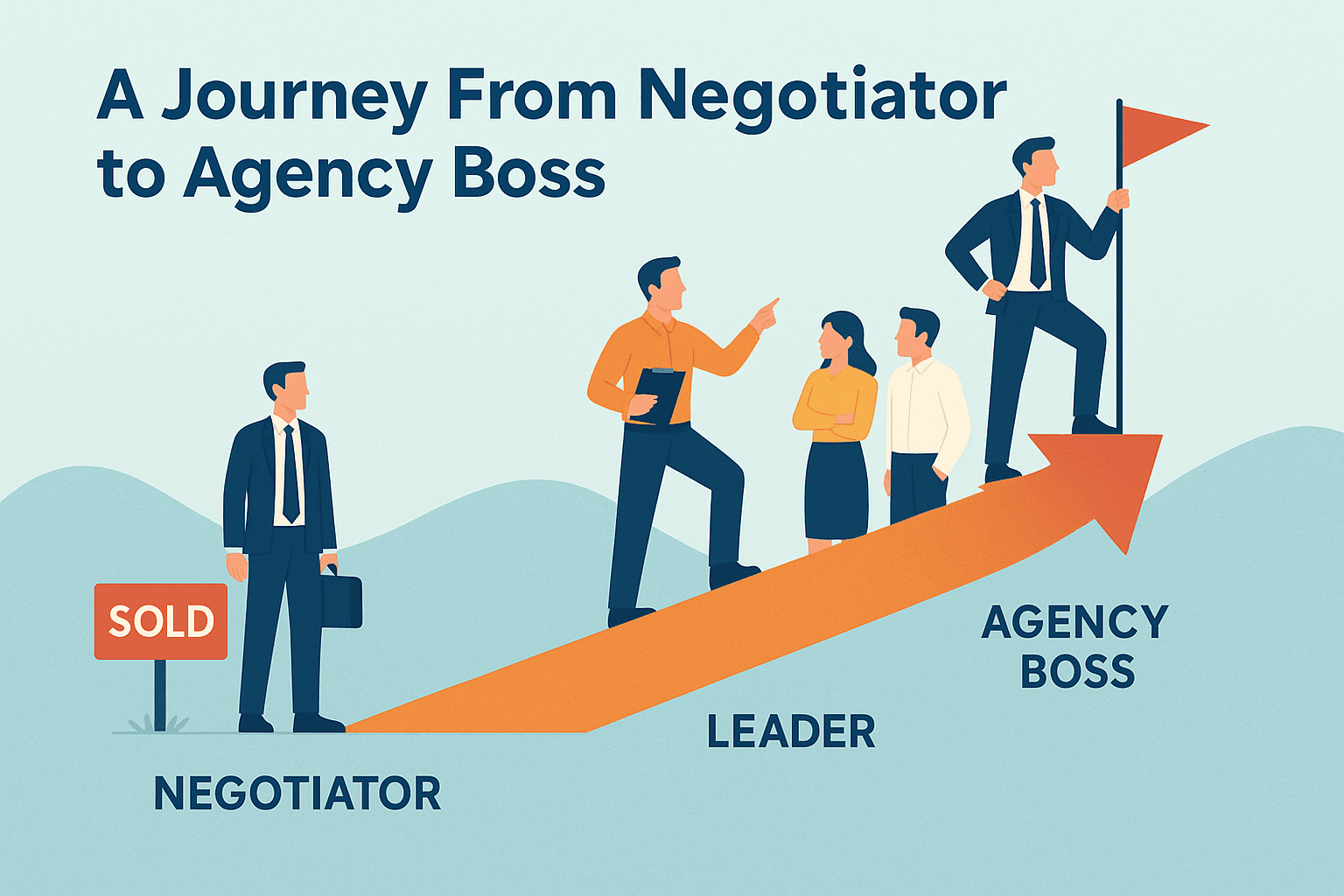
A journey from negotiator to agency boss |
The path from negotiator to agency boss requires a shift from personal selling to recruitment, systems, leadership, finance, compliance, and long-term business building. |
The REN Career & Skills |
Career Stages (REN to REA) |
3 |
| 77 |
Amla and Your Clients Account |
AMLA duties and client account handling are serious responsibilities for agencies and agents. Poor handling of client money or compliance can create major legal and career risk. |
Legal, Compliance & Ethics |
AMLA & PDPA Compliance |
3 |
| 78 |
Agency Travel Incentives: Motivator or Mirage? |
Travel incentives can motivate agents, but they may become superficial if they do not improve real productivity, loyalty, or agency economics. Incentives must be tied to sustainable performance. |
Commission & Compensation Models |
Incentives & Rewards |
3 |
| 79 |
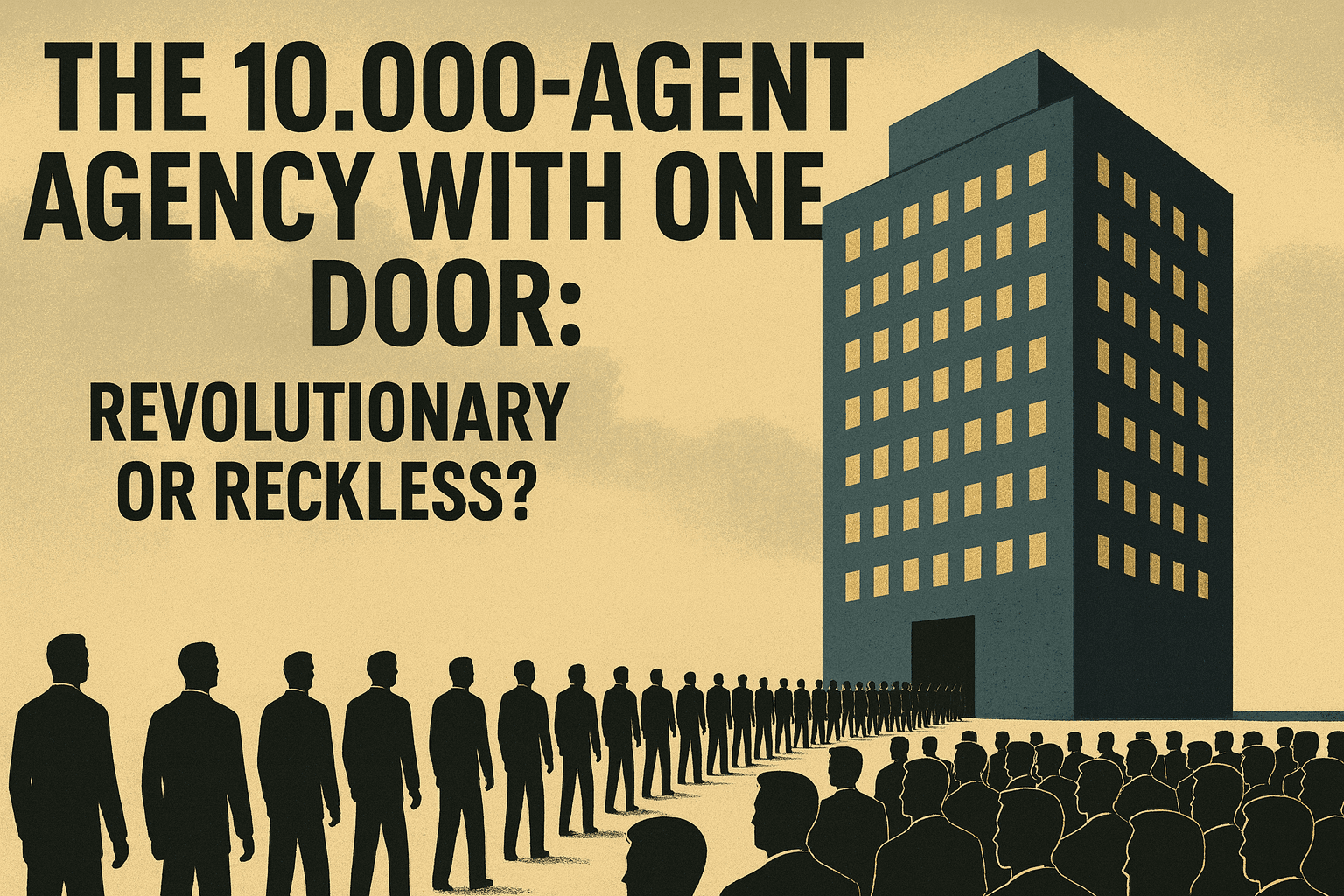
The 10,000-Agent Agency With One Door: Revolutionary or Reckless? |
A massive virtual or centralized agency model can look revolutionary but may create supervision, compliance, culture, and control risks. Scale without structure can become reckless. |
Industry Future & Big Picture |
Industry Structural Reform |
3 |
| 80 |
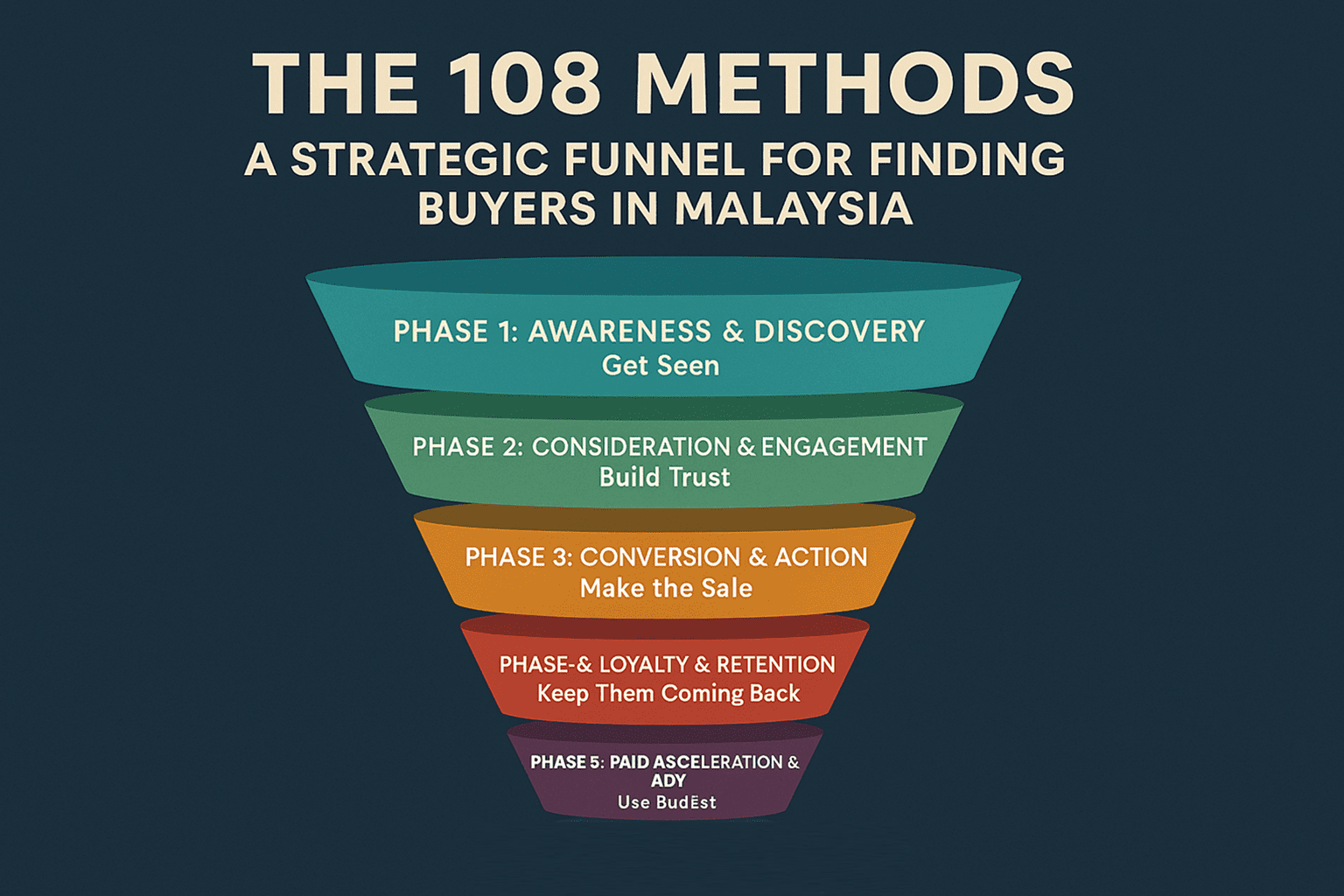
The 108 Methods: A Strategic Funnel for Finding Buyers in Malaysia |
Buyer finding should be treated as a systematic funnel, not random luck. Multiple channels, follow-up methods, and buyer nurturing strategies increase the chance of closing. |
Sales, Marketing & Lead Generation |
Lead Nurturing & CRM |
3 |
| 81 |
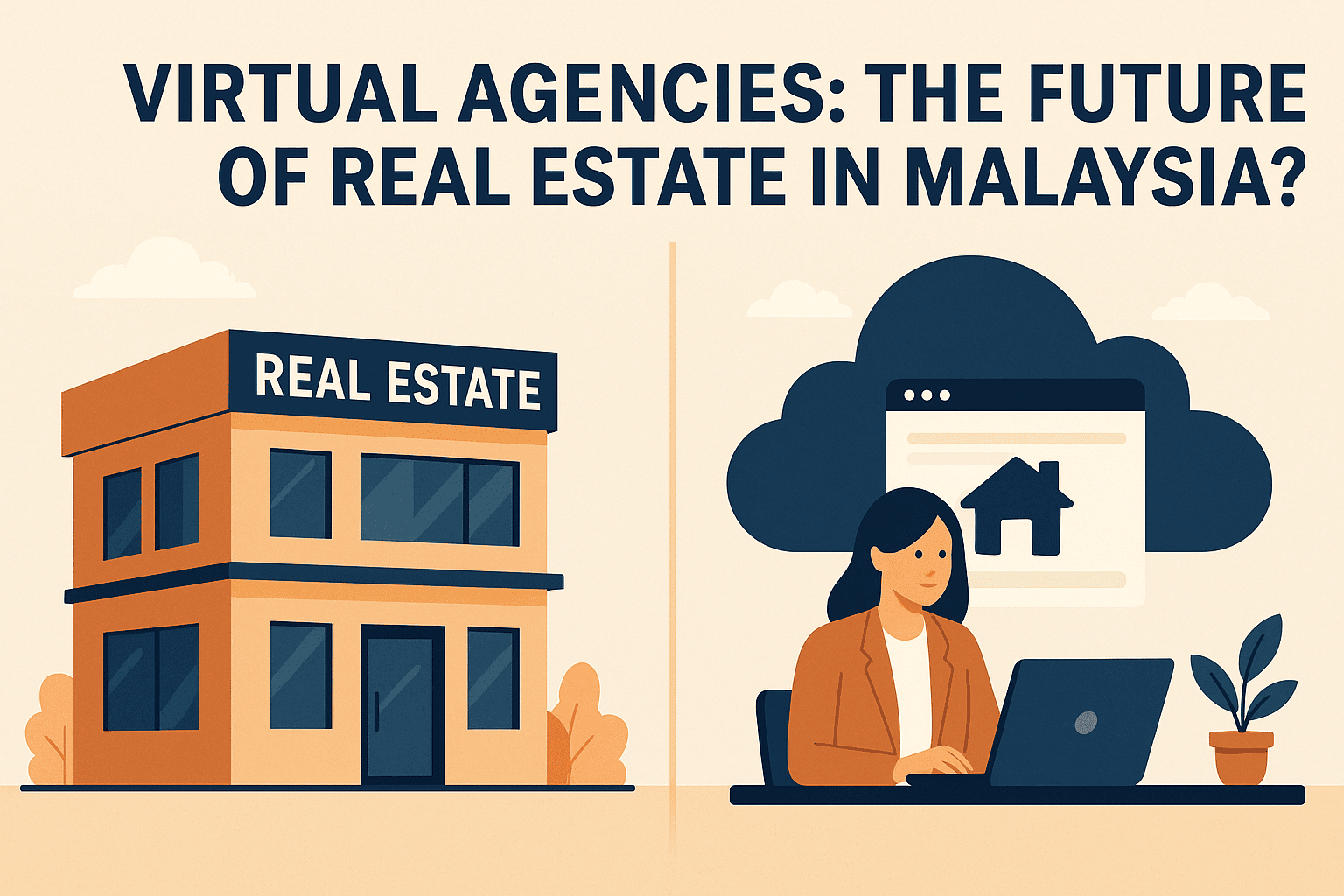
Virtual Agencies: The Future of Real Estate in Malaysia? |
Virtual agencies can reduce overhead and expand reach, but they need strong systems for compliance, supervision, culture, training, and accountability. Remote structure alone is not enough. |
Industry Future & Big Picture |
The Next Decade (2030-2035) |
3 |
| 82 |
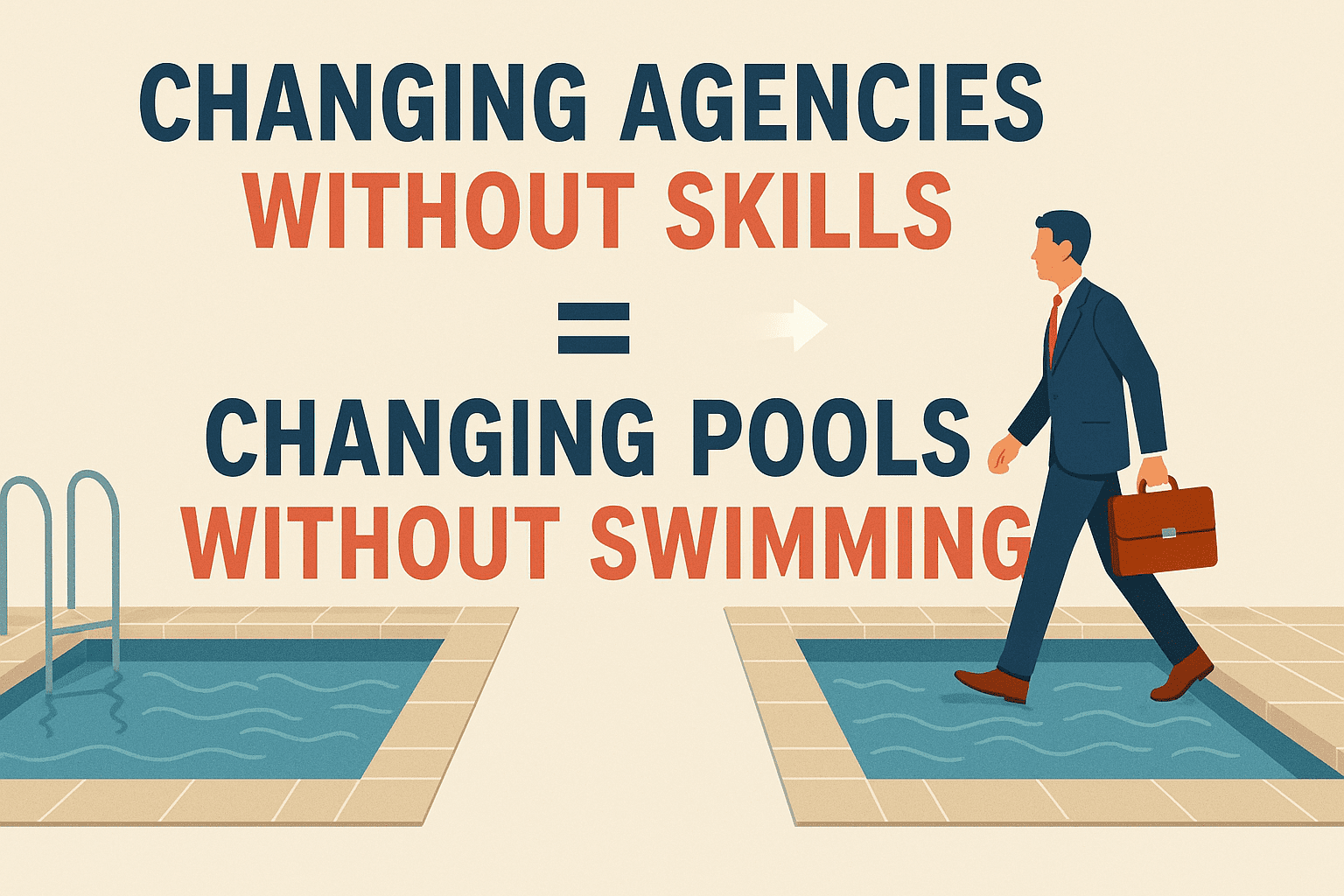
Changing Agencies Without Skills = Changing Pools Without Swimming |
Changing agencies does not solve failure if the agent lacks core skills. Agents need prospecting, follow-up, negotiation, market knowledge, and discipline before blaming the environment. |
The REN Career & Skills |
Soft Skills & Psychology |
3 |
| 83 |
The Lonely Road of Leadership: What Every Boss Faces But Rarely Admits |
Agency leadership can be lonely because bosses carry pressure, risk, payroll, retention, decisions, and responsibility that agents rarely see. Leadership requires emotional resilience and system support. |
Agency Leadership & Strategy |
Leadership Philosophy |
3 |
| 84 |
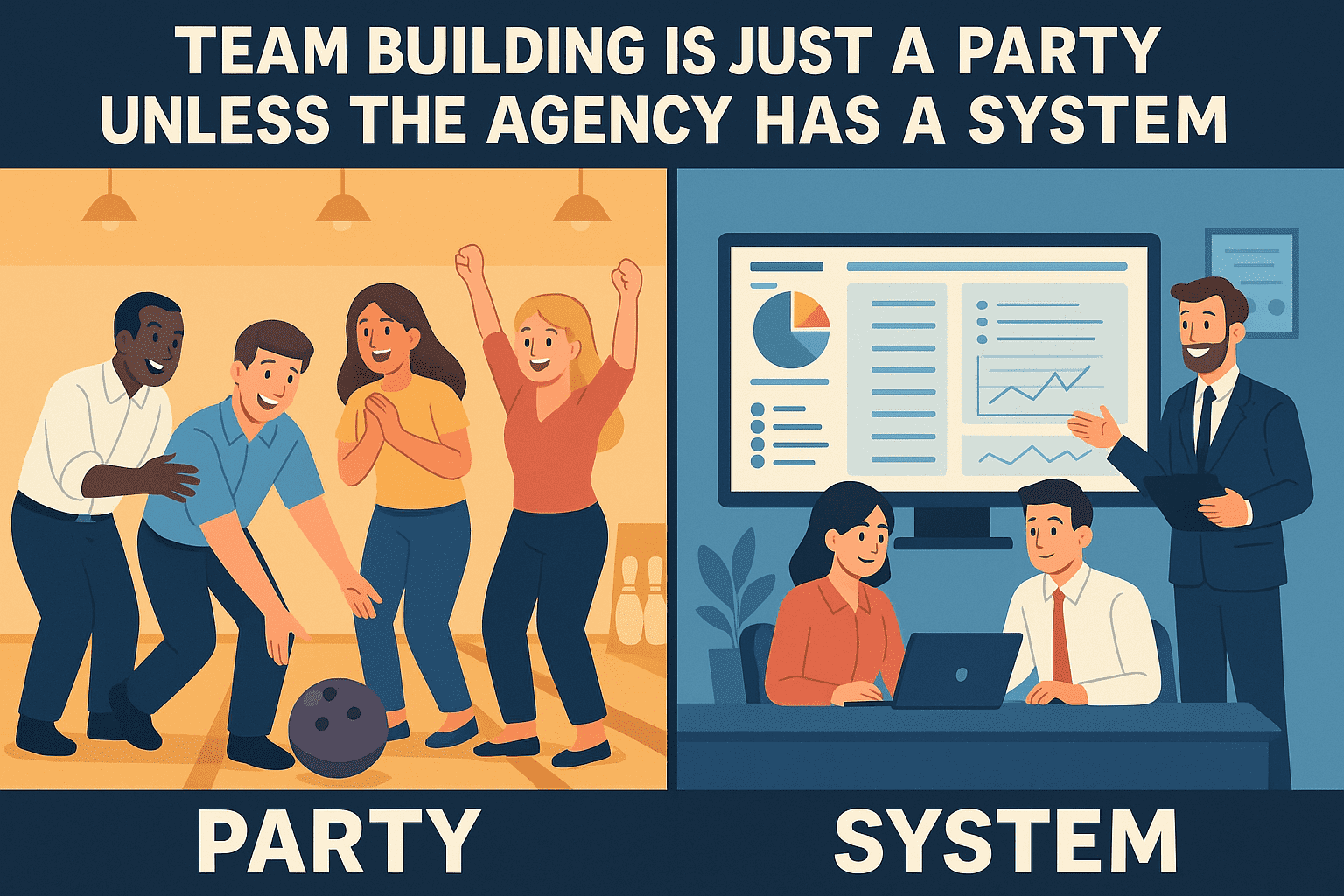
Team building is useless unless the agency has a system |
Team building cannot fix weak operations. Without systems for leads, commissions, accountability, communication, and tracking, team motivation fades quickly. |
Team Leadership & Dynamics |
Motivation vs. Accountability |
3 |
| 85 |
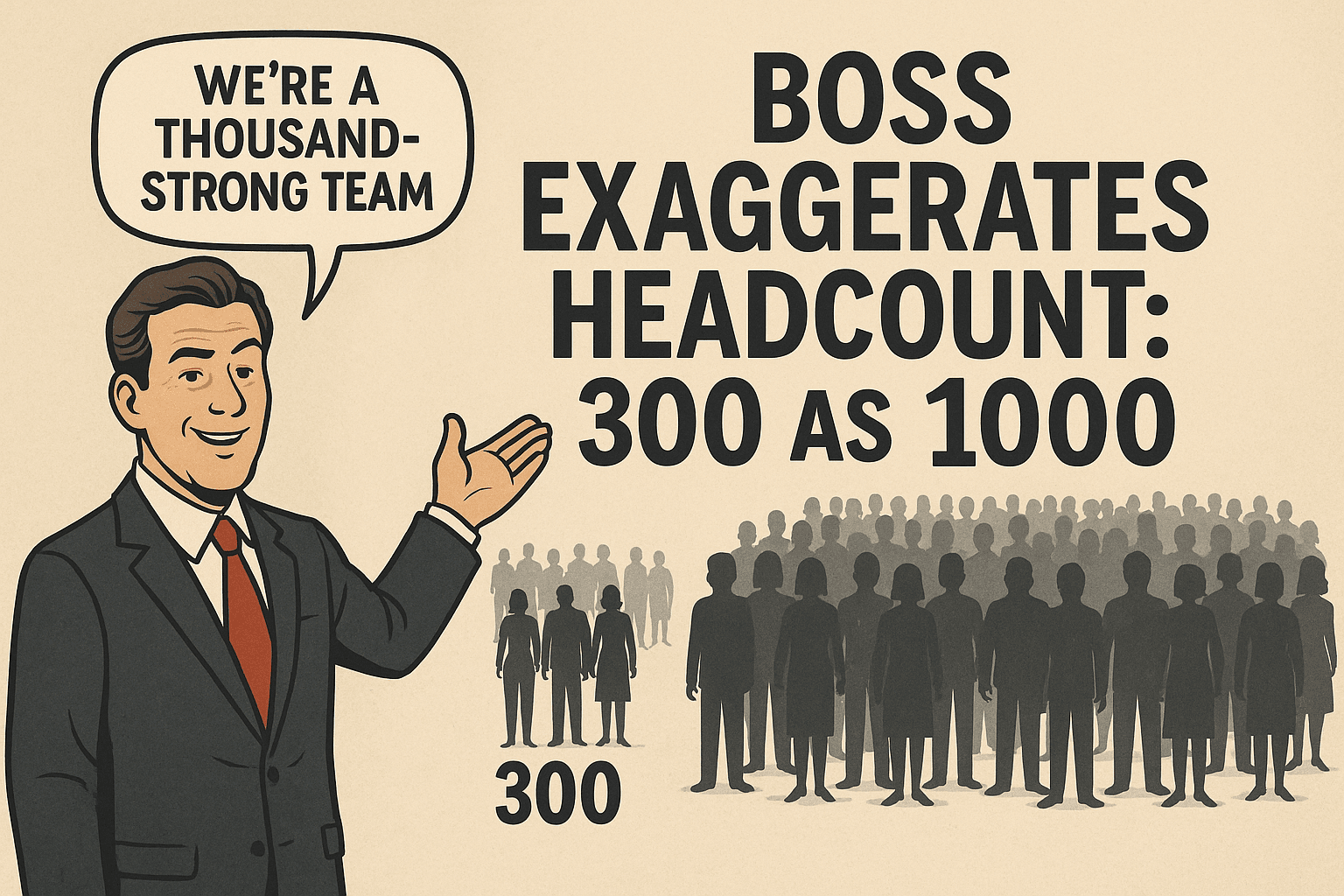
Boss exaggerates headcount : 300 as 1000. |
Inflated headcount creates false confidence and weakens trust. Real agency strength should be measured by active producers, productivity, systems, and profit, not exaggerated numbers. |
Agency Leadership & Strategy |
Leadership Philosophy |
3 |
| 86 |
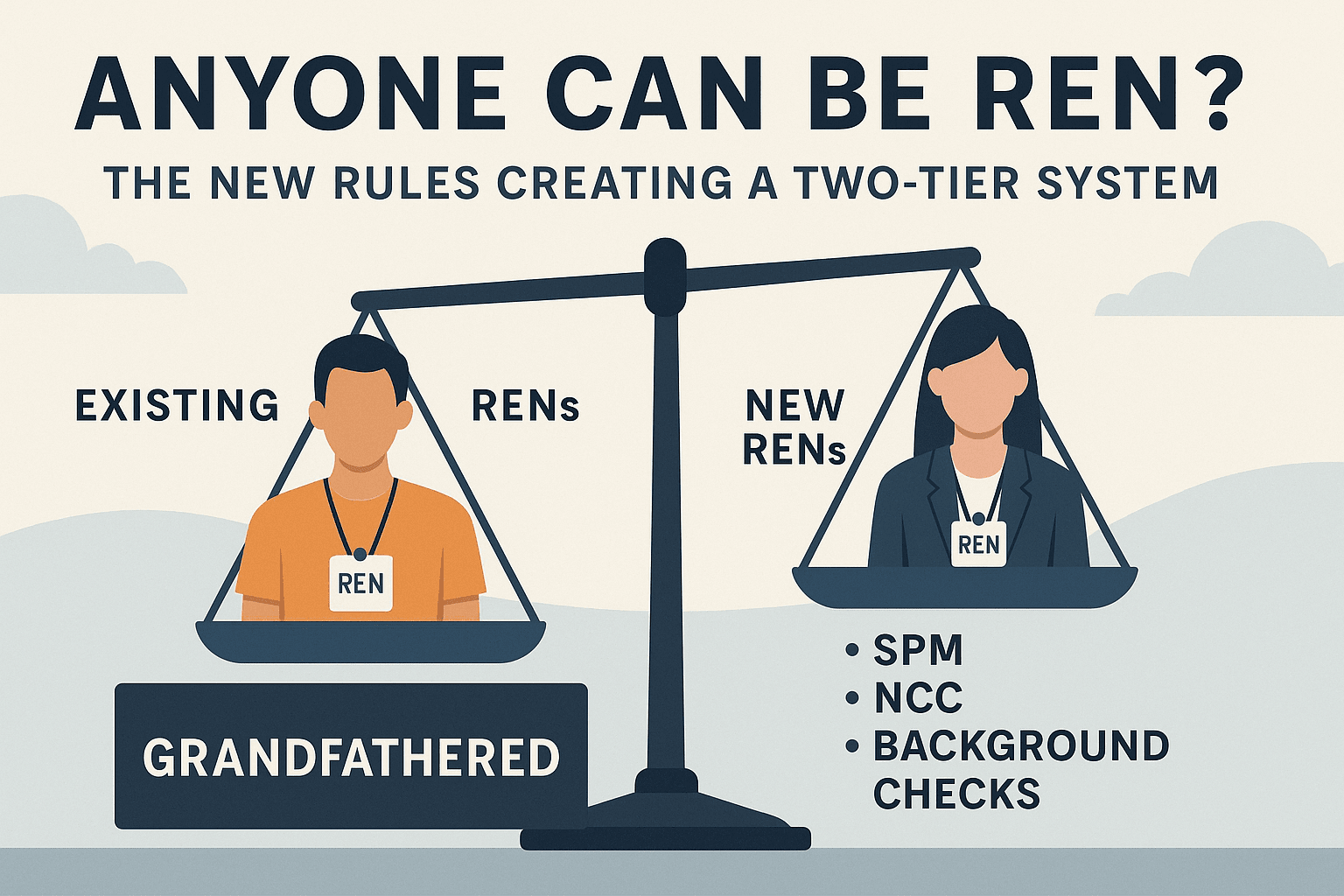
Anyone Can Be REN? The New Rules Creating a Two-Tier System |
Easier entry into the REN market can create a two-tier industry of serious professionals and casual participants. Agencies must distinguish quality, training, supervision, and commitment. |
Industry Future & Big Picture |
Industry Structural Reform |
3 |
| 87 |
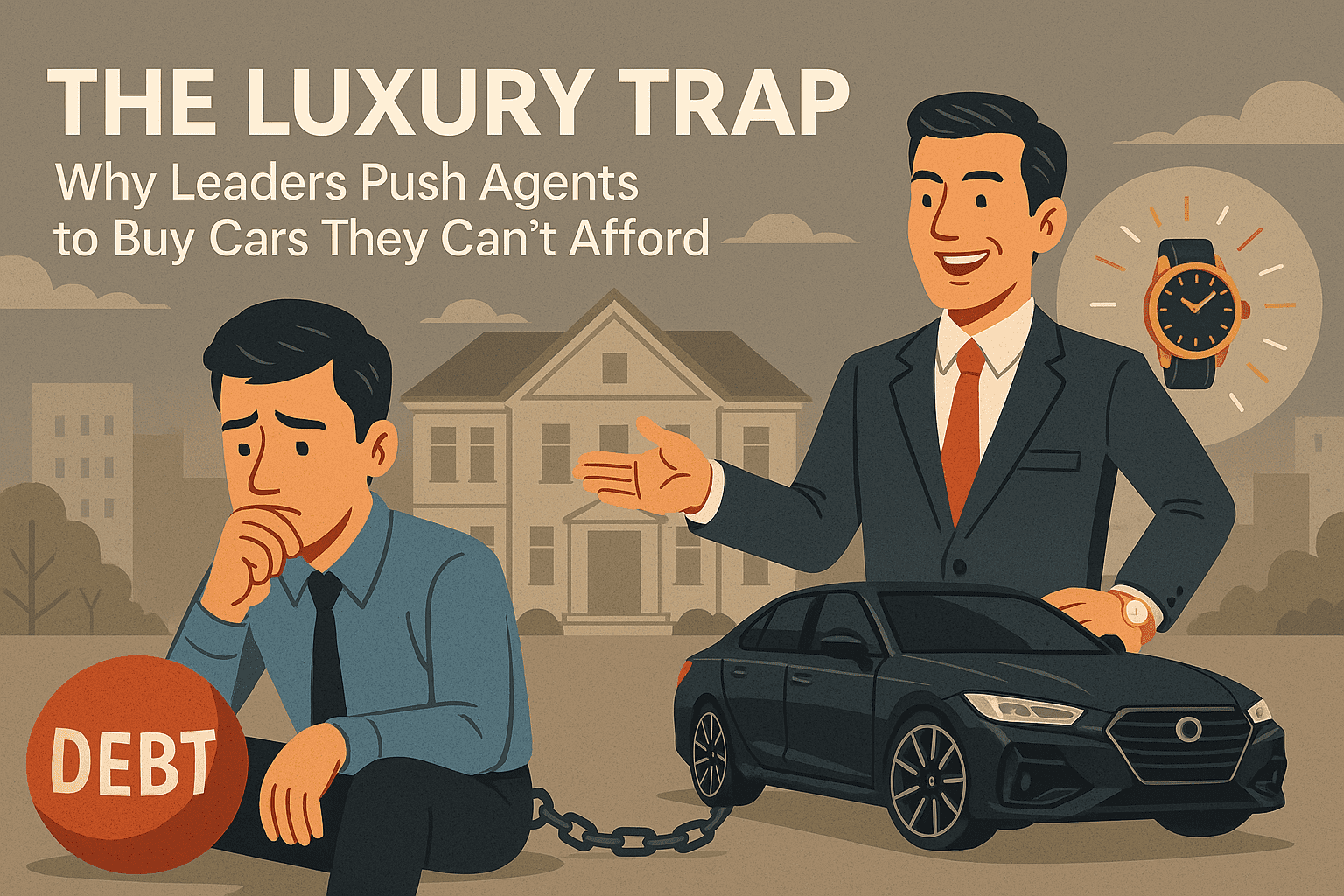
The Luxury Trap: Why Leaders Want Agents to Buy Cars They Can’t Afford |
Luxury signals can trap agents into financial pressure and image-driven decisions. Leaders should not confuse lifestyle display with real productivity or professional growth. |
Team Leadership & Dynamics |
Upline/Downline Governance |
3 |
| 88 |
3 Types of Recruits That Can Destroy Your Agency Culture |
Certain recruits can damage agency culture through negativity, politics, poor ethics, or low accountability. Recruitment quality matters more than filling seats. |
Recruitment, Retention & Culture |
Culture & Ethics |
3 |
| 89 |
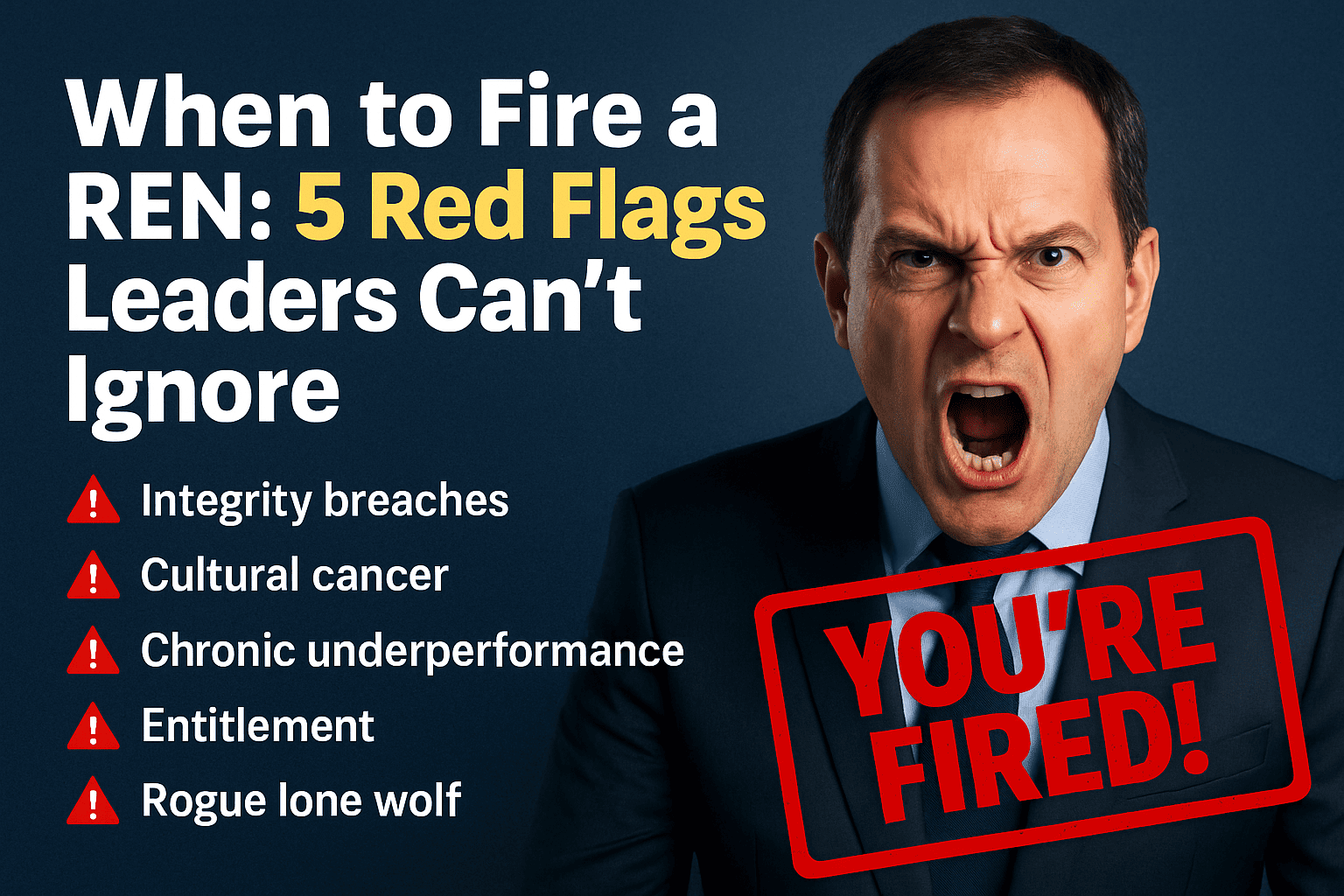
When to Fire a REN: 5 Red Flags Leaders Can’t Ignore |
Leaders must act when a REN creates ethical, cultural, compliance, or performance risks. Keeping the wrong agent can damage the whole team. |
Recruitment, Retention & Culture |
Retention Psychology |
3 |
| 90 |
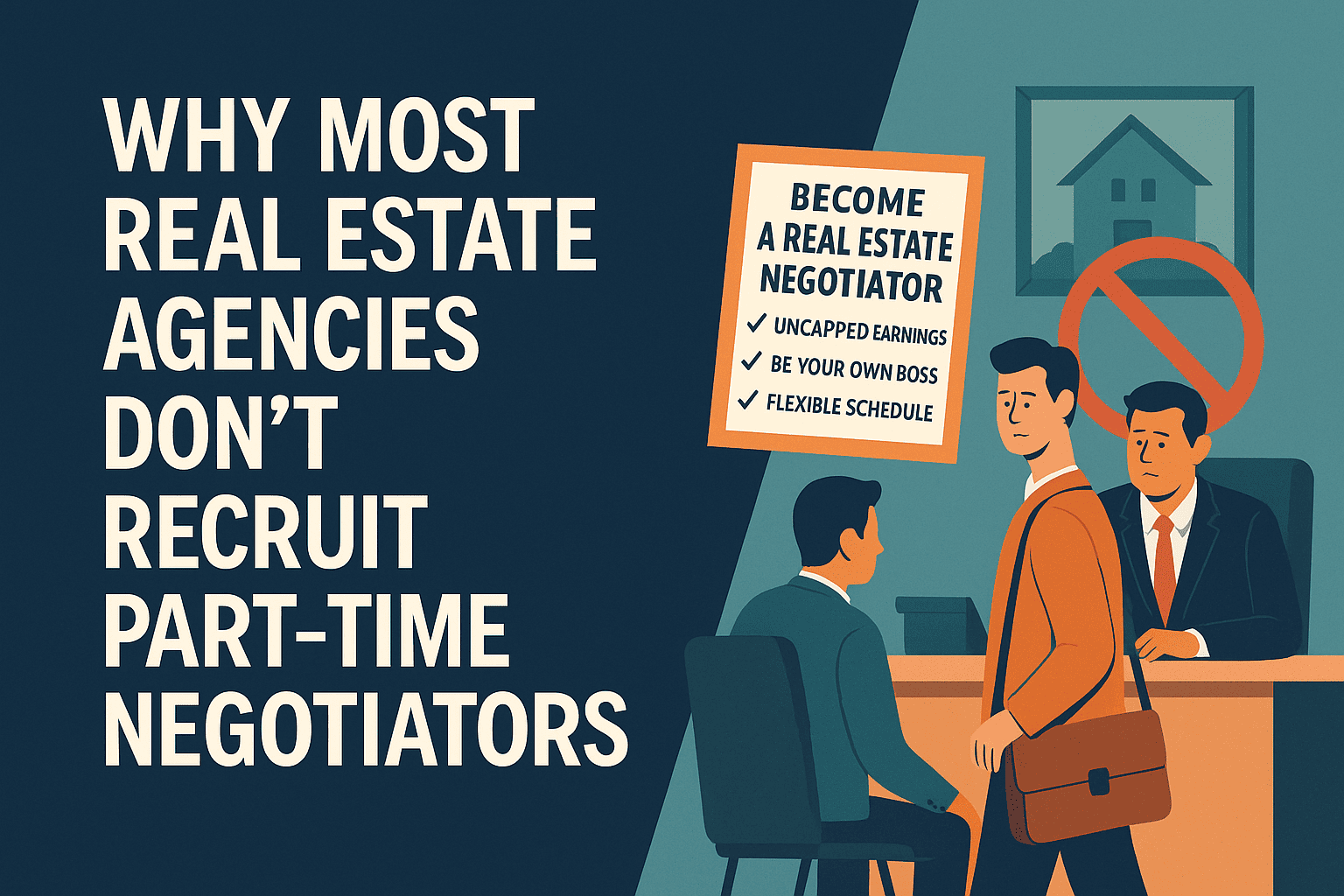
Why Most Real Estate Agencies Don’t Recruit Part-Time Negotiators |
Many agencies avoid part-time negotiators because they may lack focus, accountability, availability, and long-term commitment. Part-time recruitment requires careful structure to work. |
Recruitment, Retention & Culture |
Hiring Fresh vs. Experienced |
3 |
| 91 |
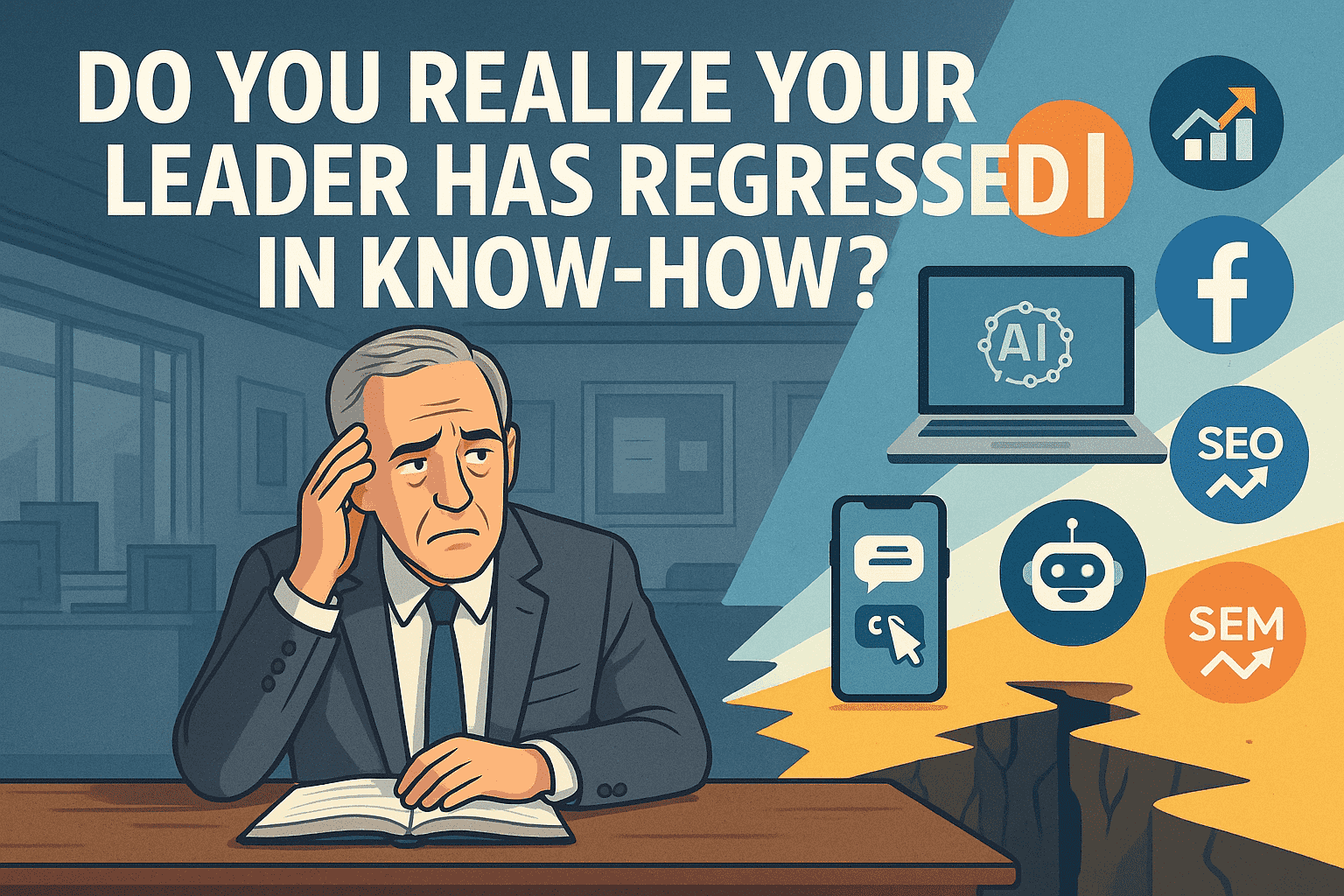
Do you realize your leader has regressed in know how? |
Some leaders stop learning after achieving early success. When leaders regress in knowledge, the team becomes outdated, less competitive, and less prepared for market change. |
Team Leadership & Dynamics |
Team Leader Growth |
3 |
| 92 |
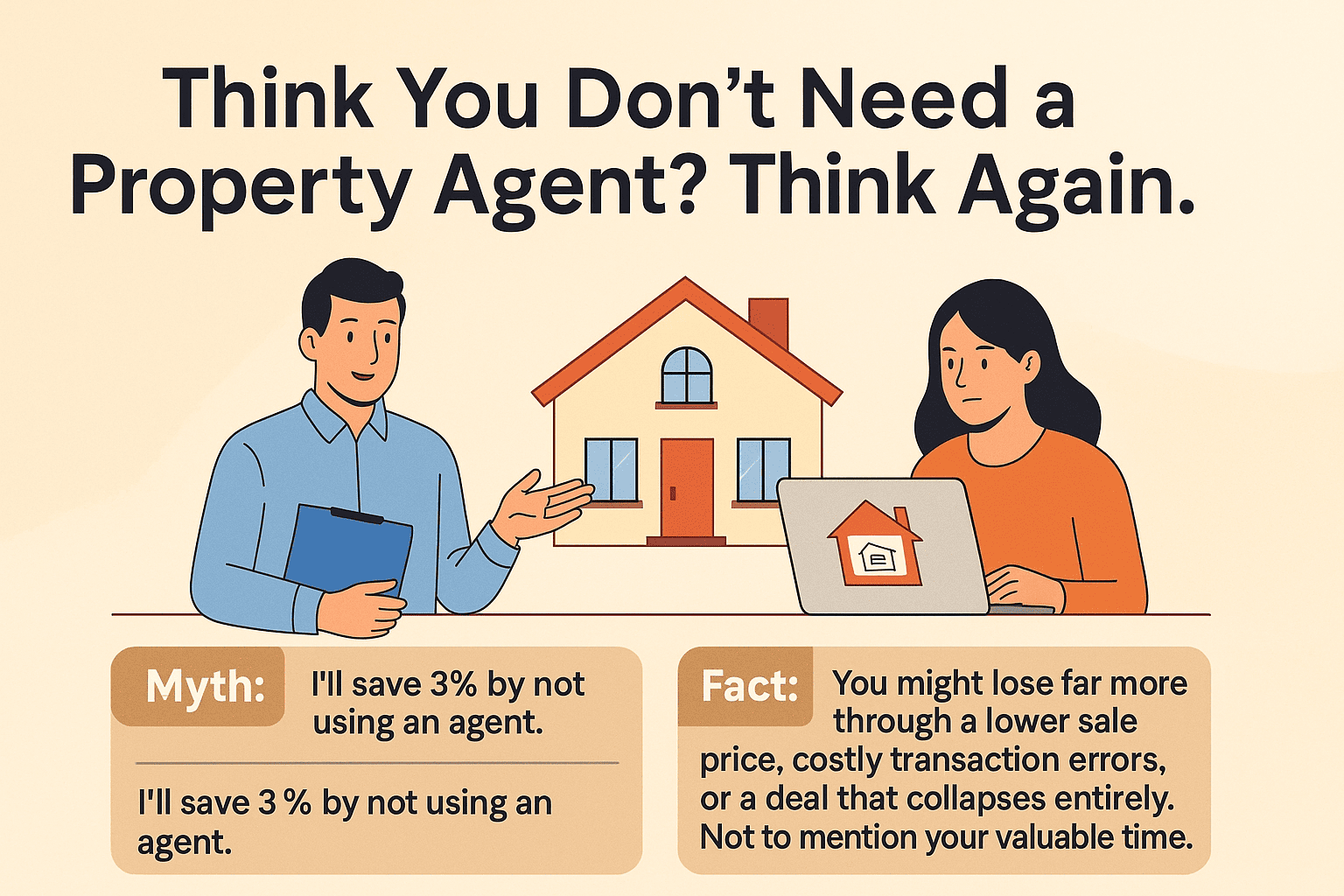
Think You Don’t Need a Property Agent? Think Again |
Property agents still provide value through market knowledge, negotiation, filtering, documentation coordination, and risk reduction. Good agents reduce friction that buyers and sellers often underestimate. |
Sales, Marketing & Lead Generation |
Exclusive vs Open Listings |
3 |
| 93 |
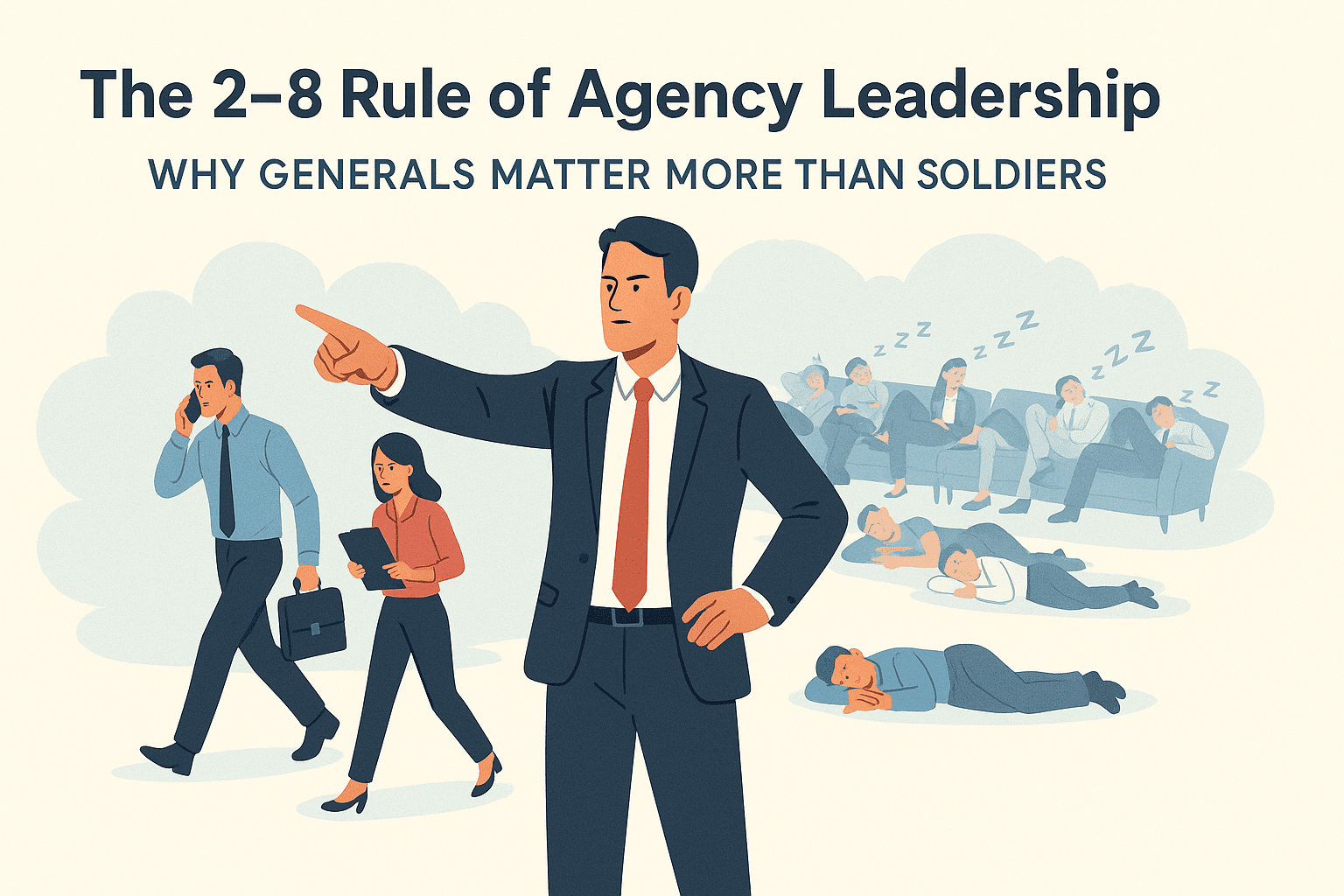
The 2–8 Rule of Agency Leadership: Why Generals Matter More Than Soldiers |
Agency growth depends heavily on strong leaders and team builders, not only large numbers of ordinary agents. A few capable generals can shape the performance of many soldiers. |
Team Leadership & Dynamics |
Team Structure (Pods/Groups) |
3 |
| 94 |
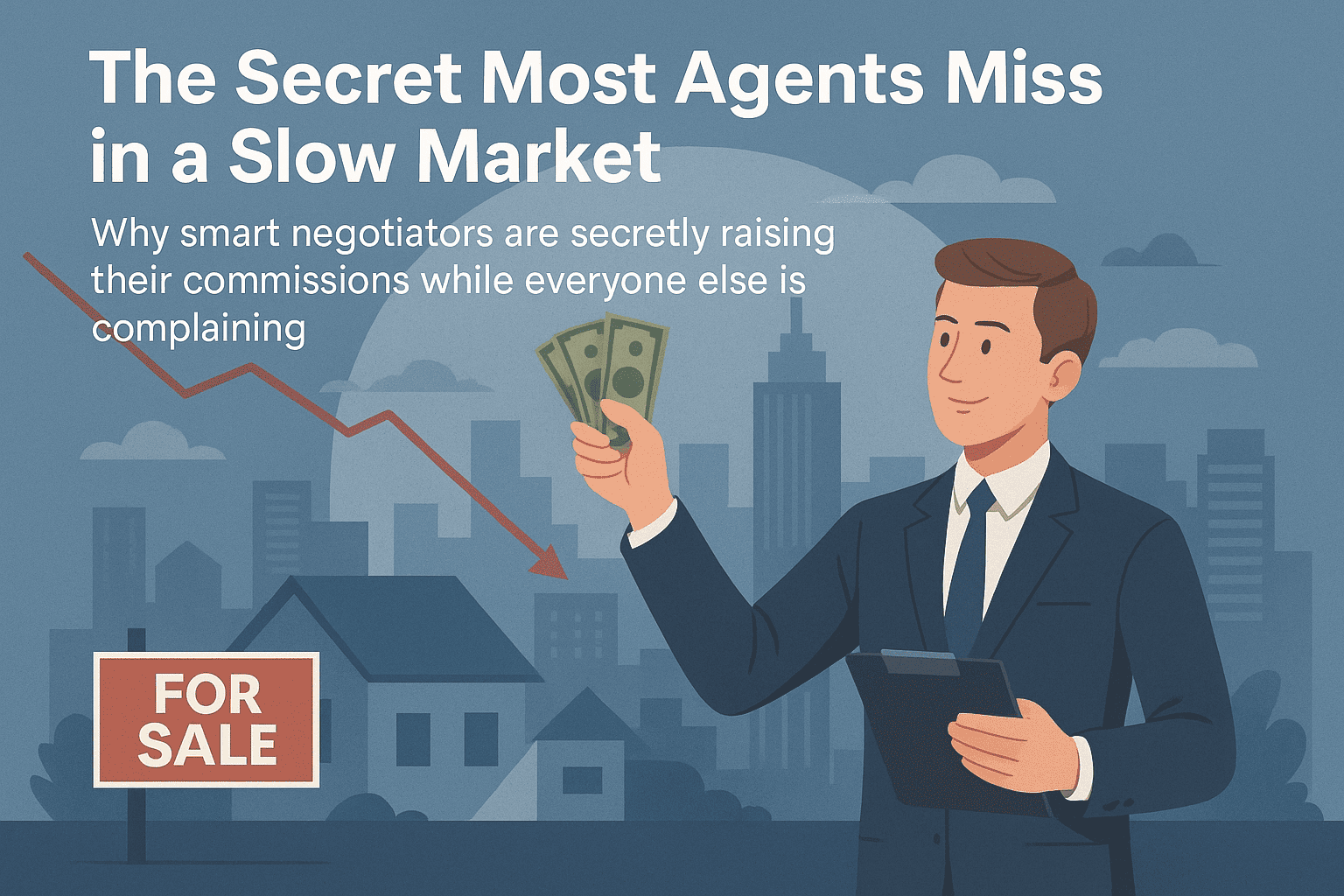
The Secret Most Agents Miss in a Slow Market |
Slow markets reward agents who build relationships, follow up consistently, educate clients, and prepare future pipelines. The opportunity is often hidden in discipline, not quick closing. |
Sales, Marketing & Lead Generation |
Lead Nurturing & CRM |
3 |
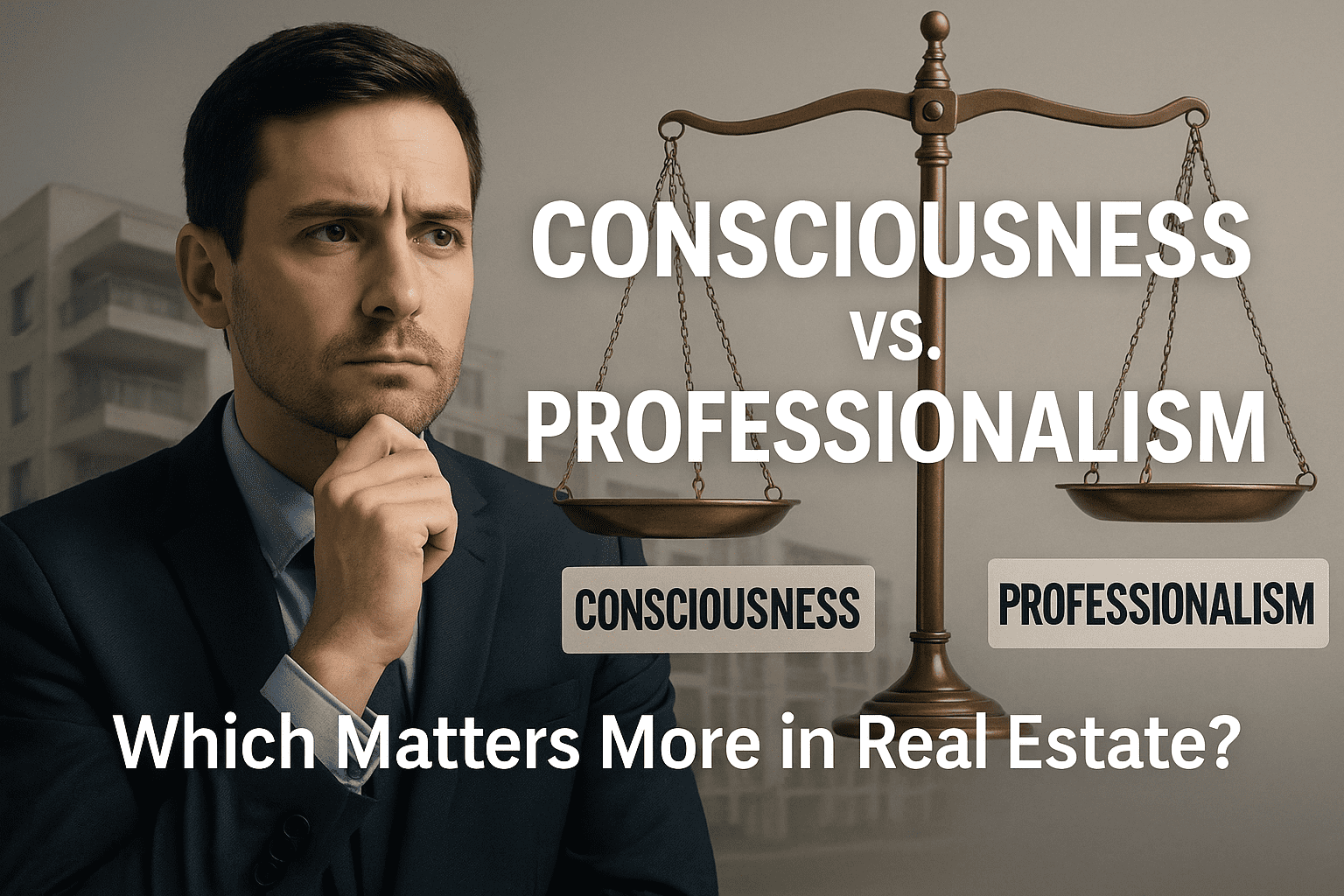
| 95 |
Consciousness vs. Professionalism: Which Matters More in Real Estate? |
Real estate success requires both awareness and professionalism. Agents need the right mindset, but also proper conduct, knowledge, discipline, and ethical execution. |
The REN Career & Skills |
Soft Skills & Psychology |
3 |
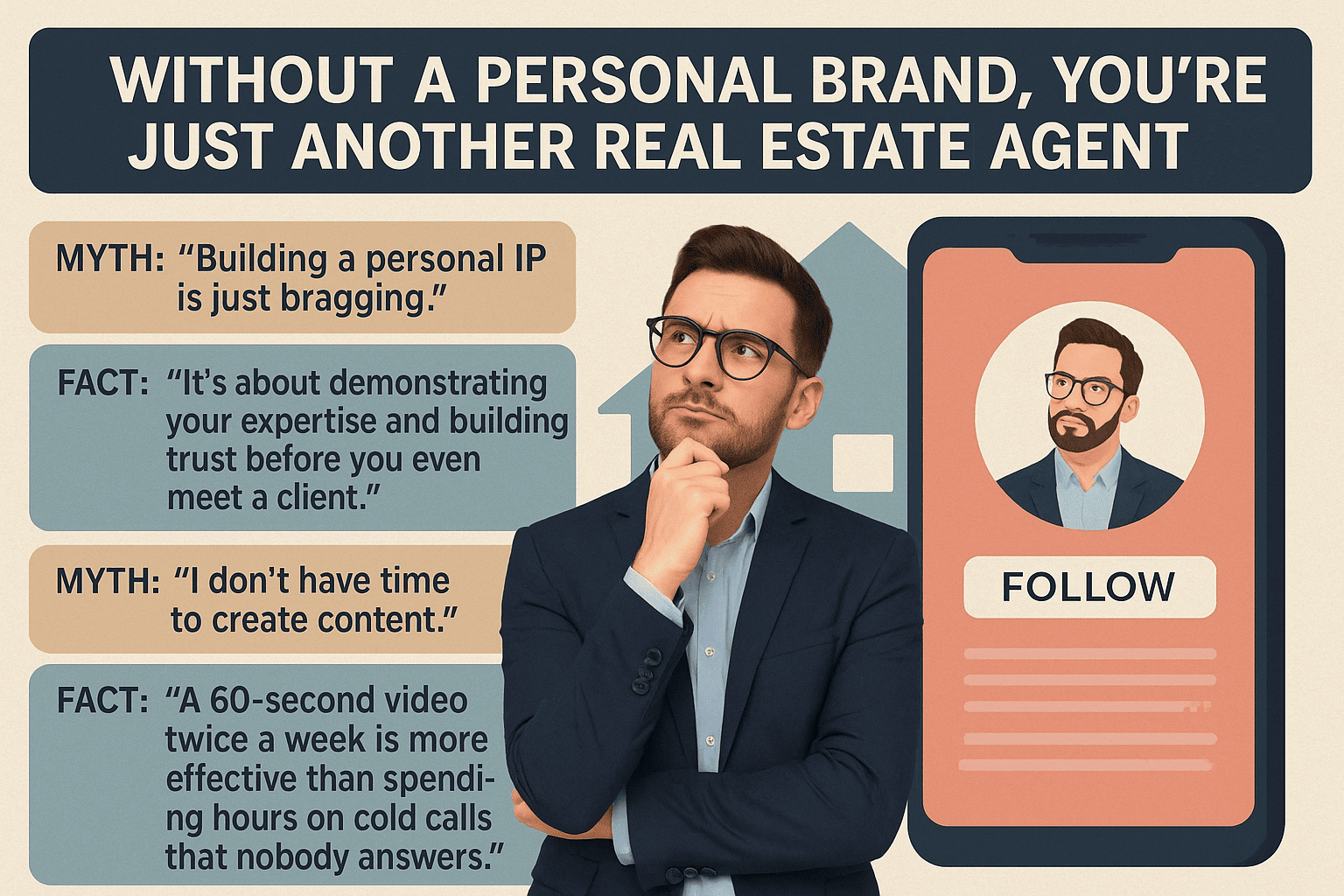
| 96 |
Without a Personal Brand, You're Just Another Real Estate Agent |
Personal branding helps agents stand out in a crowded market. Without a clear identity, expertise, and trust signal, agents become easily replaceable. |
Sales, Marketing & Lead Generation |
Personal Branding & Self-Media |
3 |
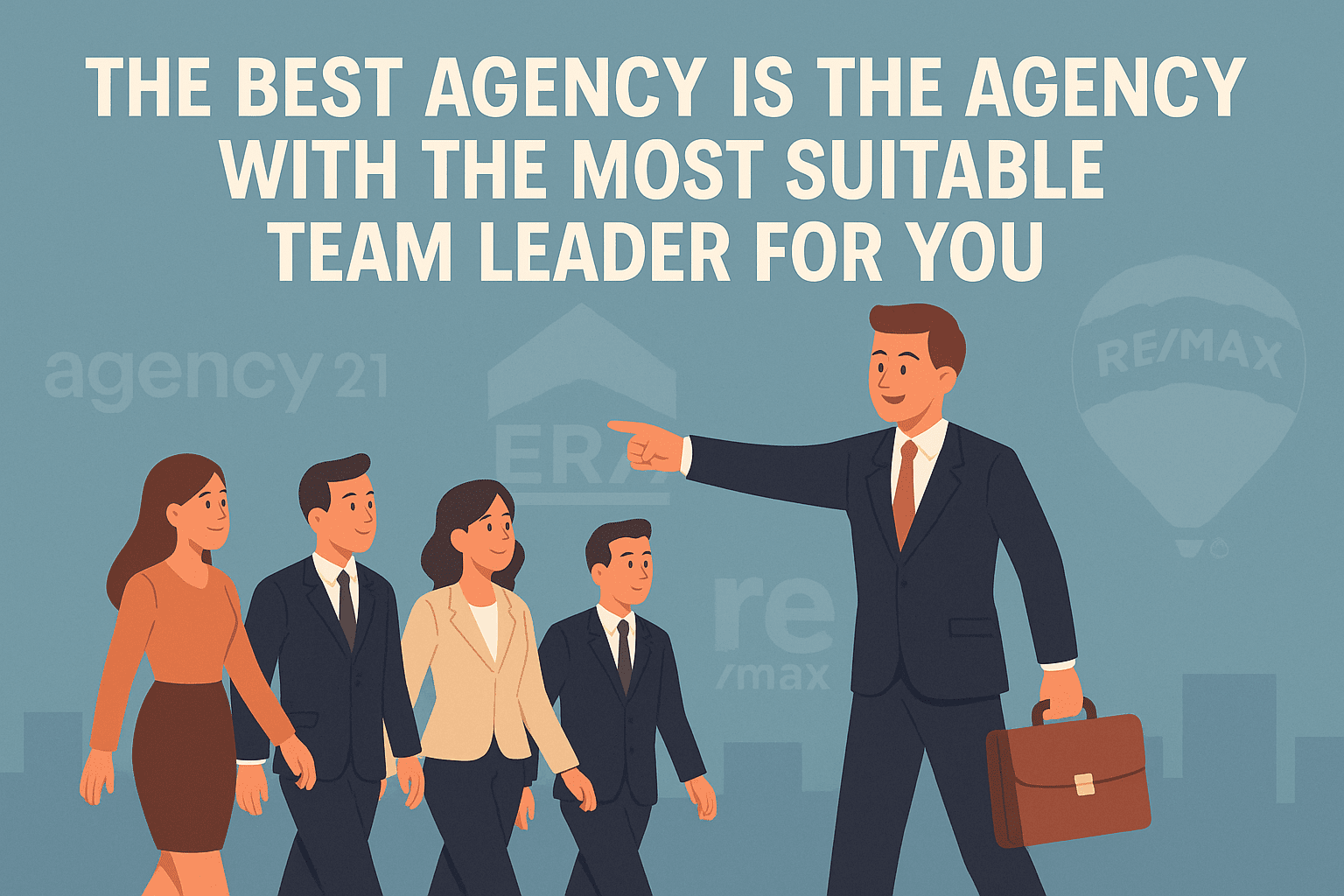
| 97 |
The Best Agency Is the Agency With the Most Suitable Team Leader for You |
The best agency for a new agent may depend more on the team leader than the brand. Daily guidance, culture, support, and leadership fit strongly affect survival. |
The REN Career & Skills |
New Agent Start-up |
3 |
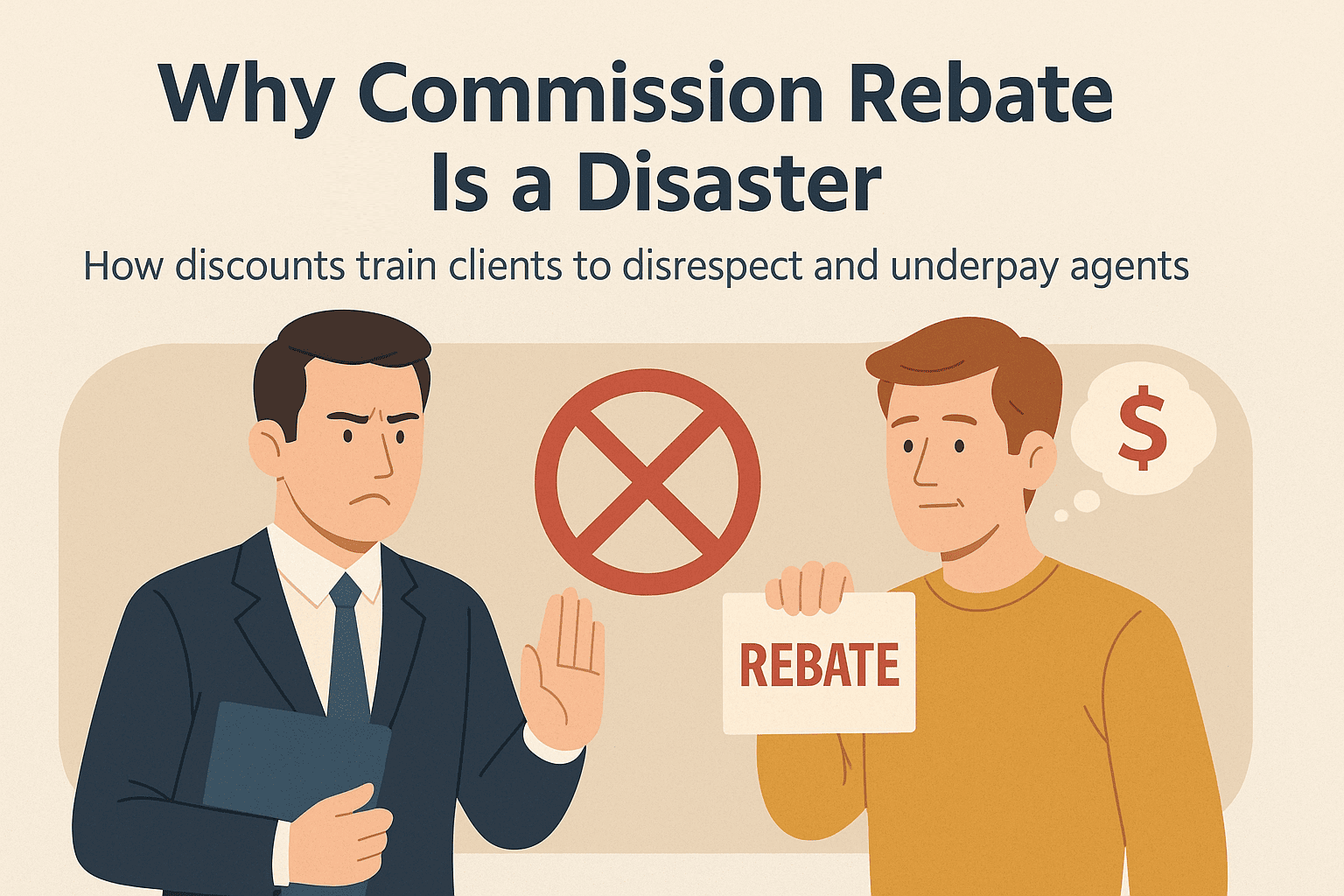
| 98 |
Why commission rebate is a disaster |
Commission rebates can damage professionalism, margins, trust, and service quality. Competing mainly on rebate trains clients to undervalue the agent’s work. |
Commission & Compensation Models |
Commission Ethics & Disputes |
3 |
| 99 |
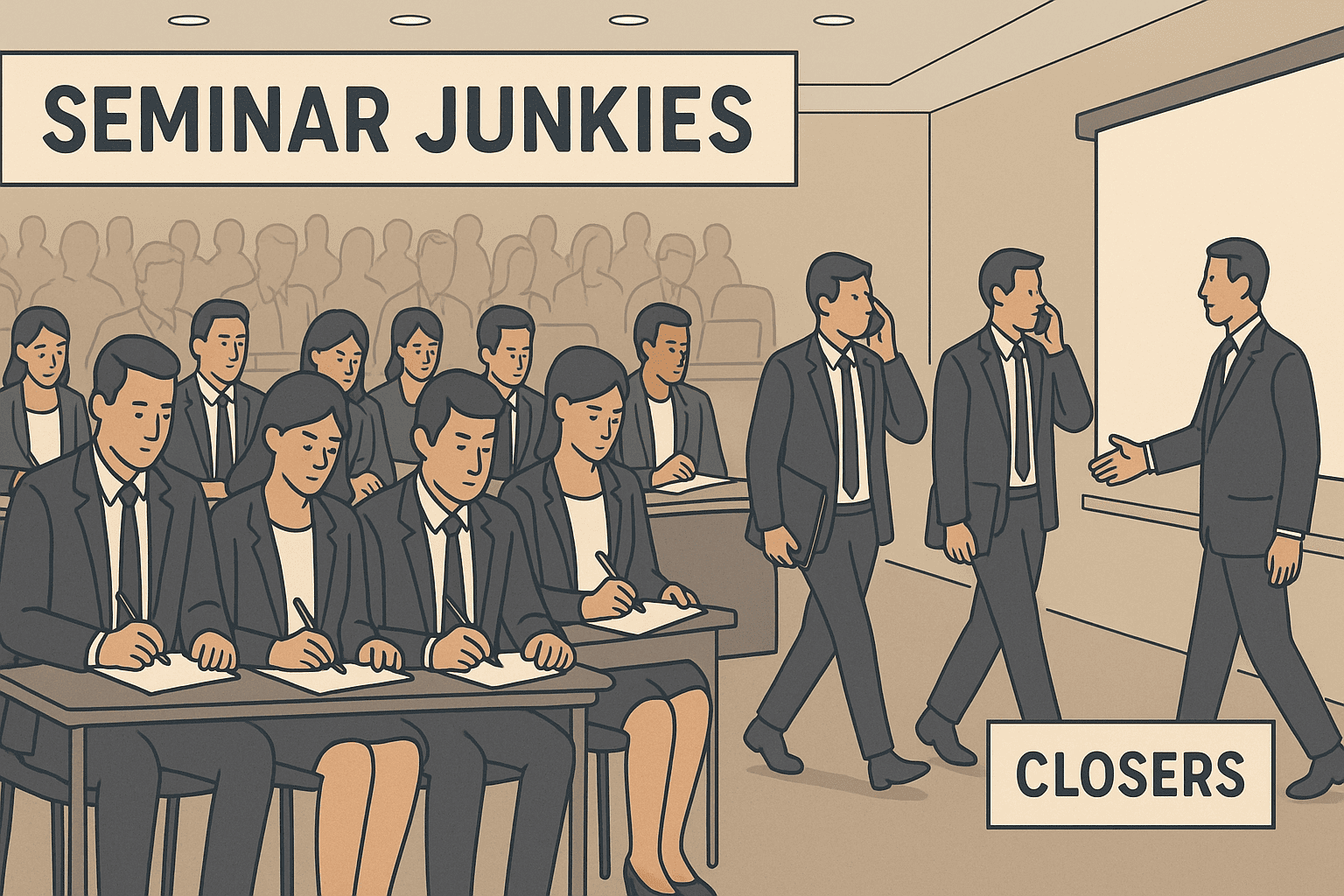
The Illusion of Training: Why Most Agencies Produce Seminar Junkies |
Too much training without execution creates agents who attend seminars but do not close deals. Real learning must be connected to prospecting, follow-up, and field experience. |
The REN Career & Skills |
Career Stages (REN to REA) |
3 |
| 100 |
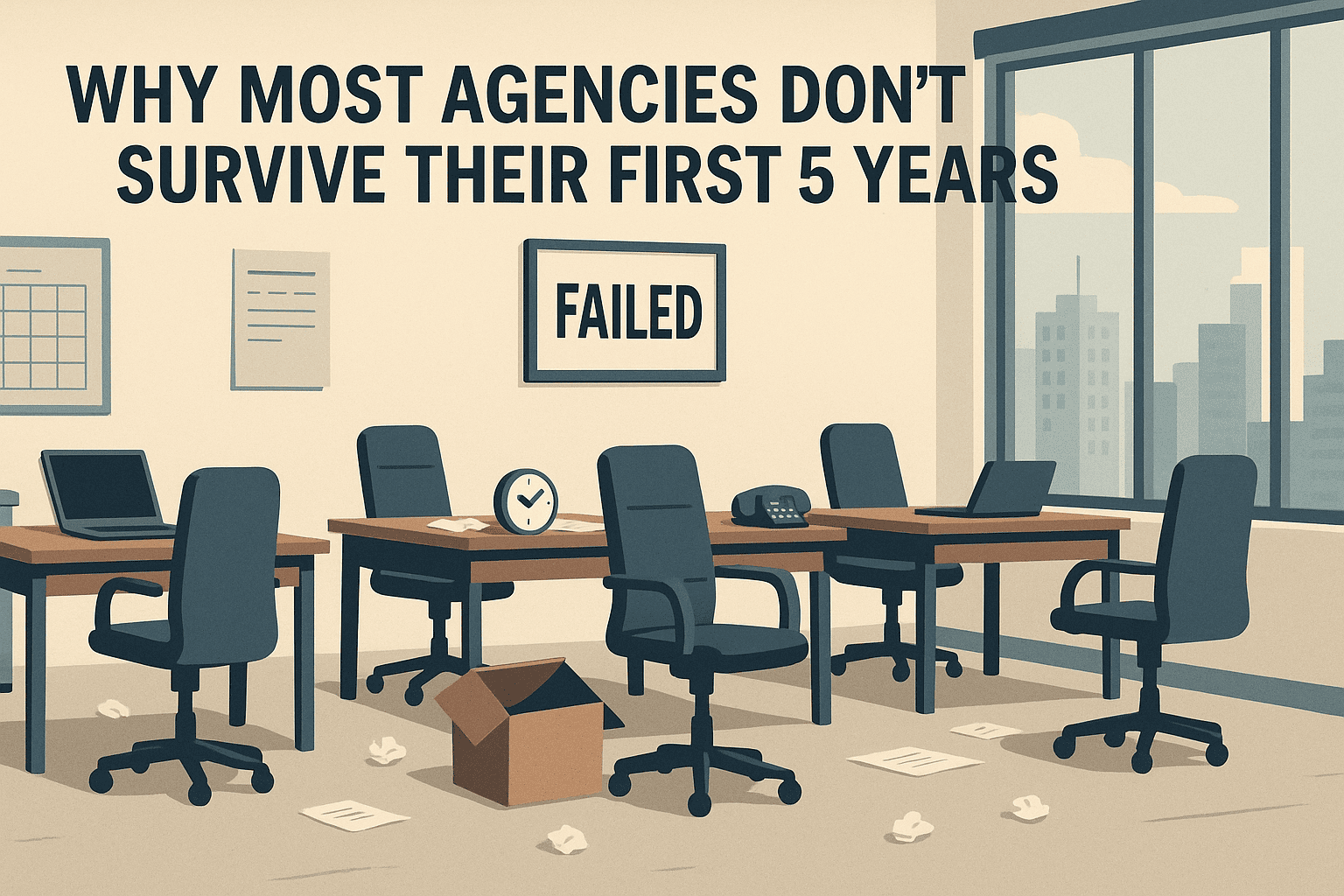
Why Most Agencies Don’t Survive Their First 5 Years |
Many agencies fail in the first five years because recruitment, cash flow, retention, compliance, leadership, and systems are weaker than expected. Survival requires structure, not optimism alone. |
Agency Leadership & Strategy |
Business Models & Scaling |
3 |
| 101 |
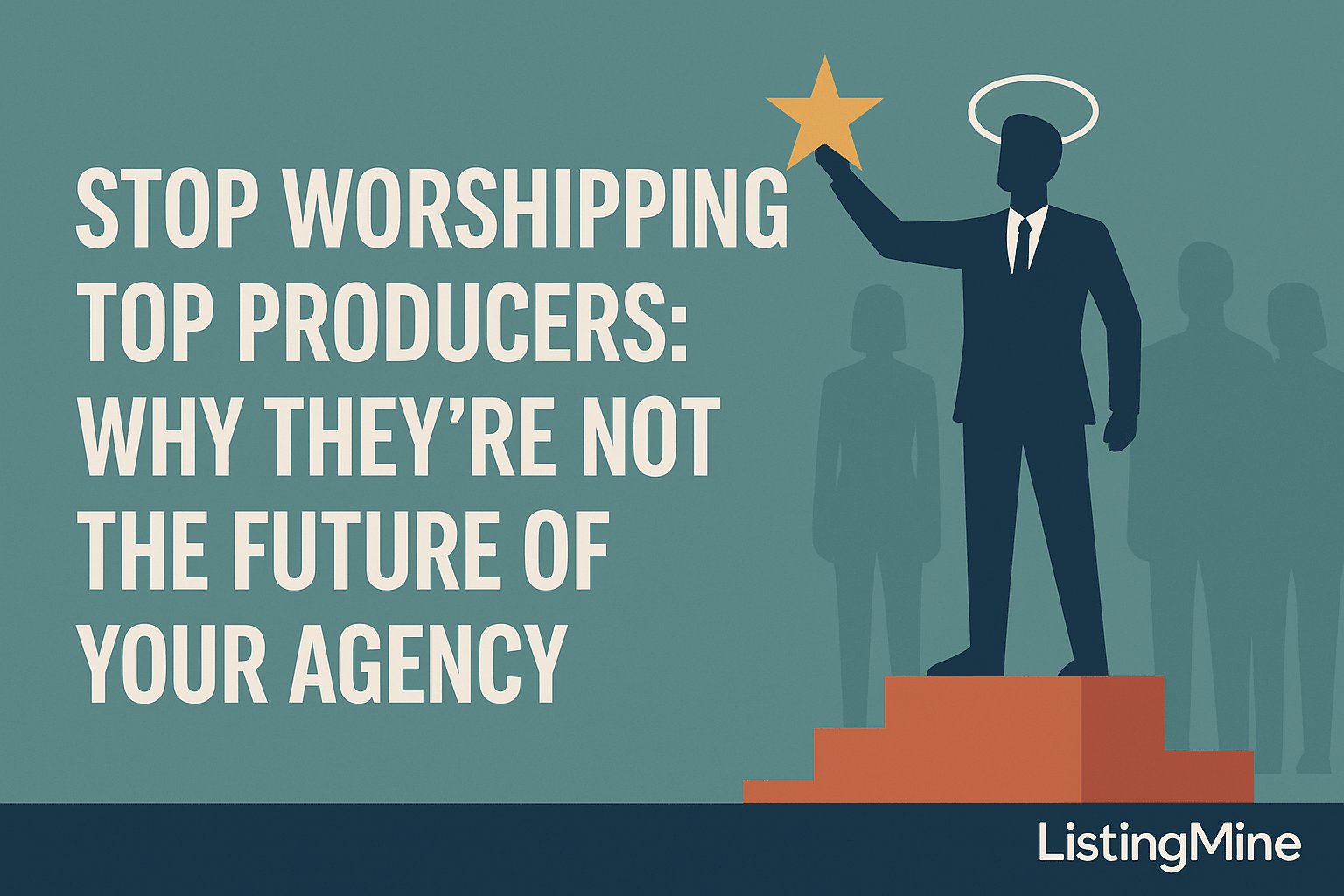
Stop Worshipping Top Producers: Why They’re Not the Future of Your Agency |
Top producers bring revenue, but they are not always scalable agency foundations. Future agency strength depends on systems, leadership layers, recruitment quality, and repeatable operating models. |
Recruitment, Retention & Culture |
Retention Psychology |
3 |
| 102 |
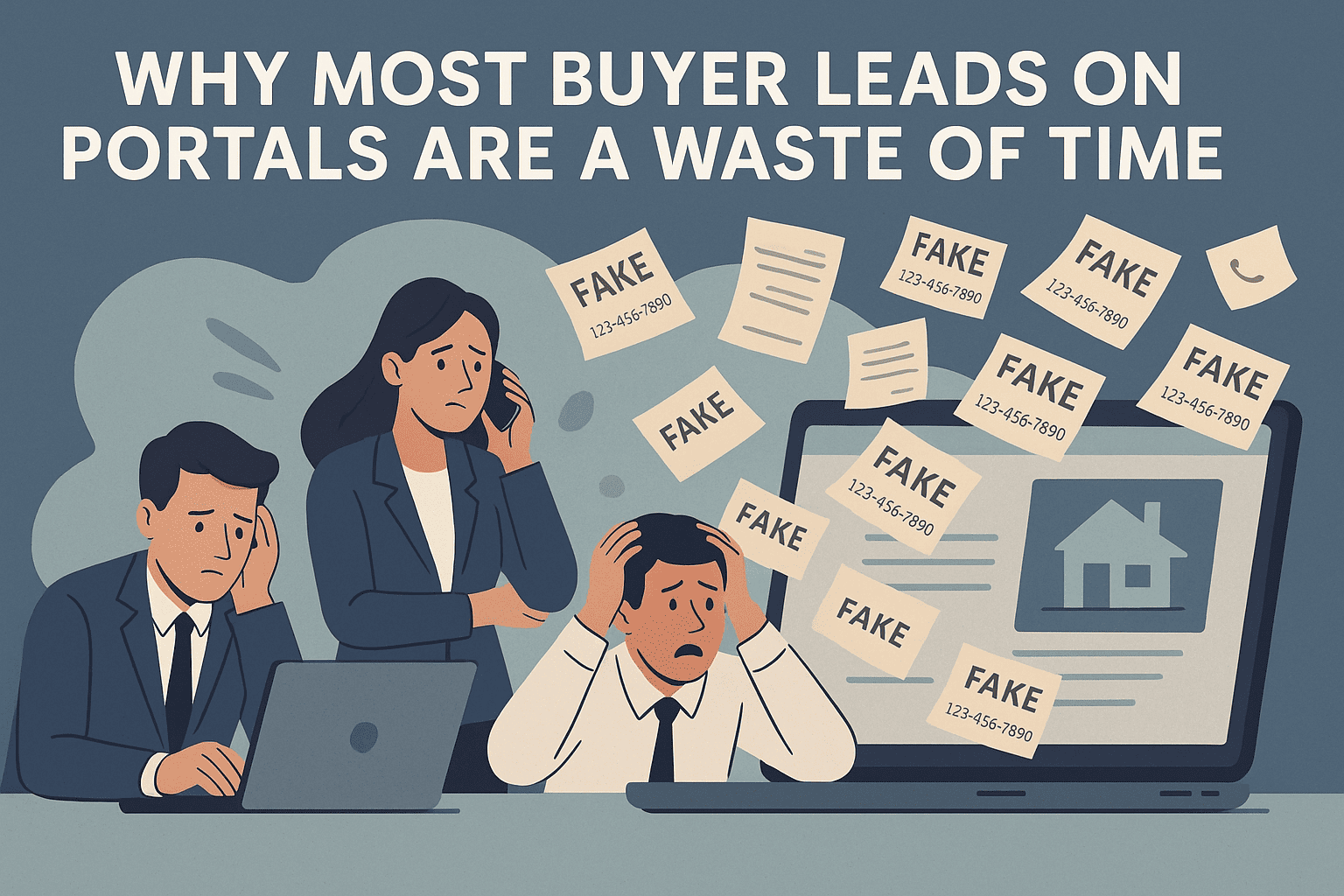
Why Most Buyer Leads on Portals Are a Waste of Time |
Portal buyer leads often look attractive but may be low-intent, duplicated, price-sensitive, or difficult to convert. Agents need better filtering, follow-up discipline, and lead quality control. |
Sales, Marketing & Lead Generation |
Paid Ads vs Organic (SEO) |
3 |
| 103 |
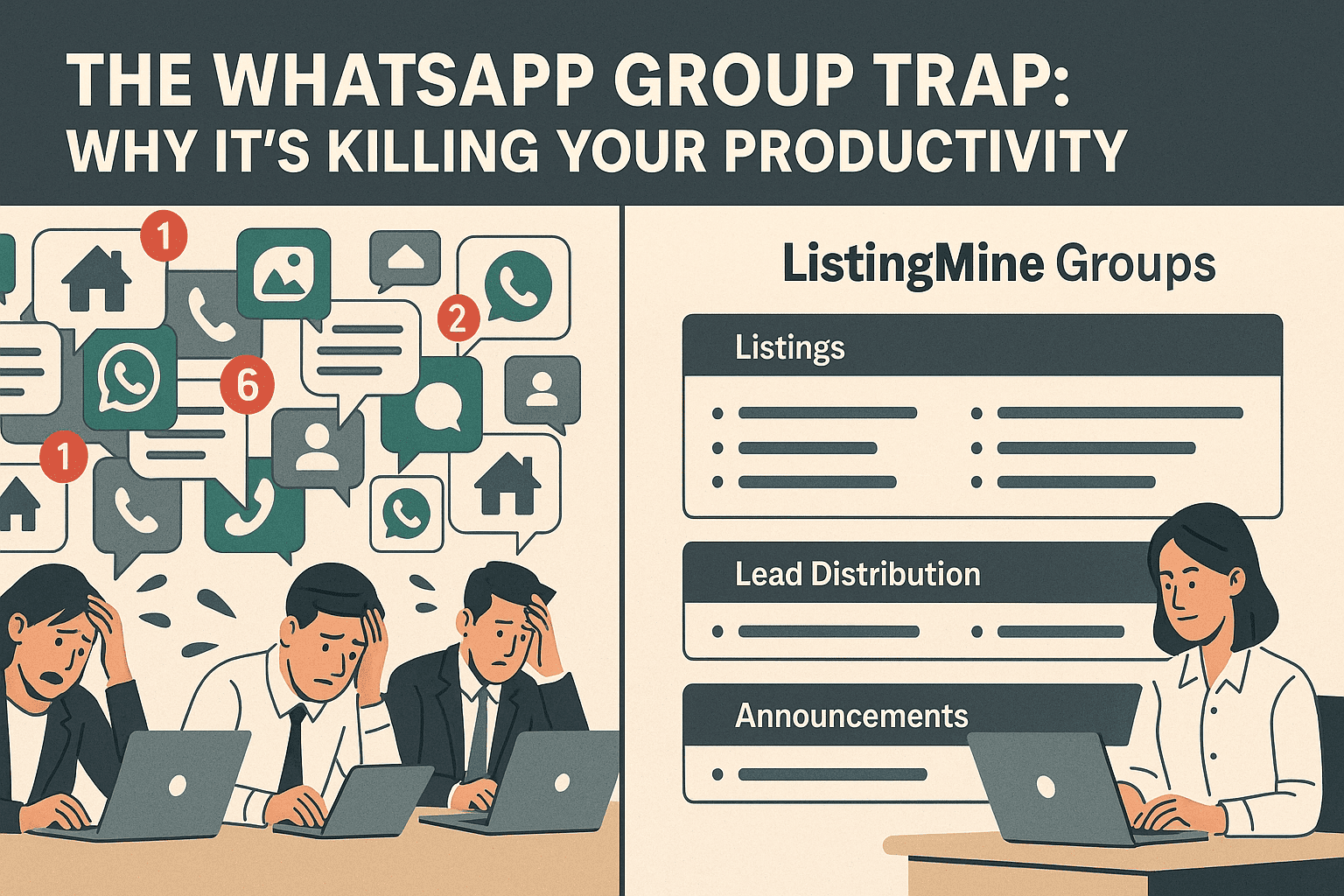
The WhatsApp Group Trap: Why It’s Killing Your Productivity |
WhatsApp groups create speed but also chaos, missed information, duplicated work, and poor accountability. Agencies need searchable, structured systems instead of relying only on chat history. |
Technology & Systems (ListingMine) |
System vs. Manual Chaos |
3 |
| 104 |
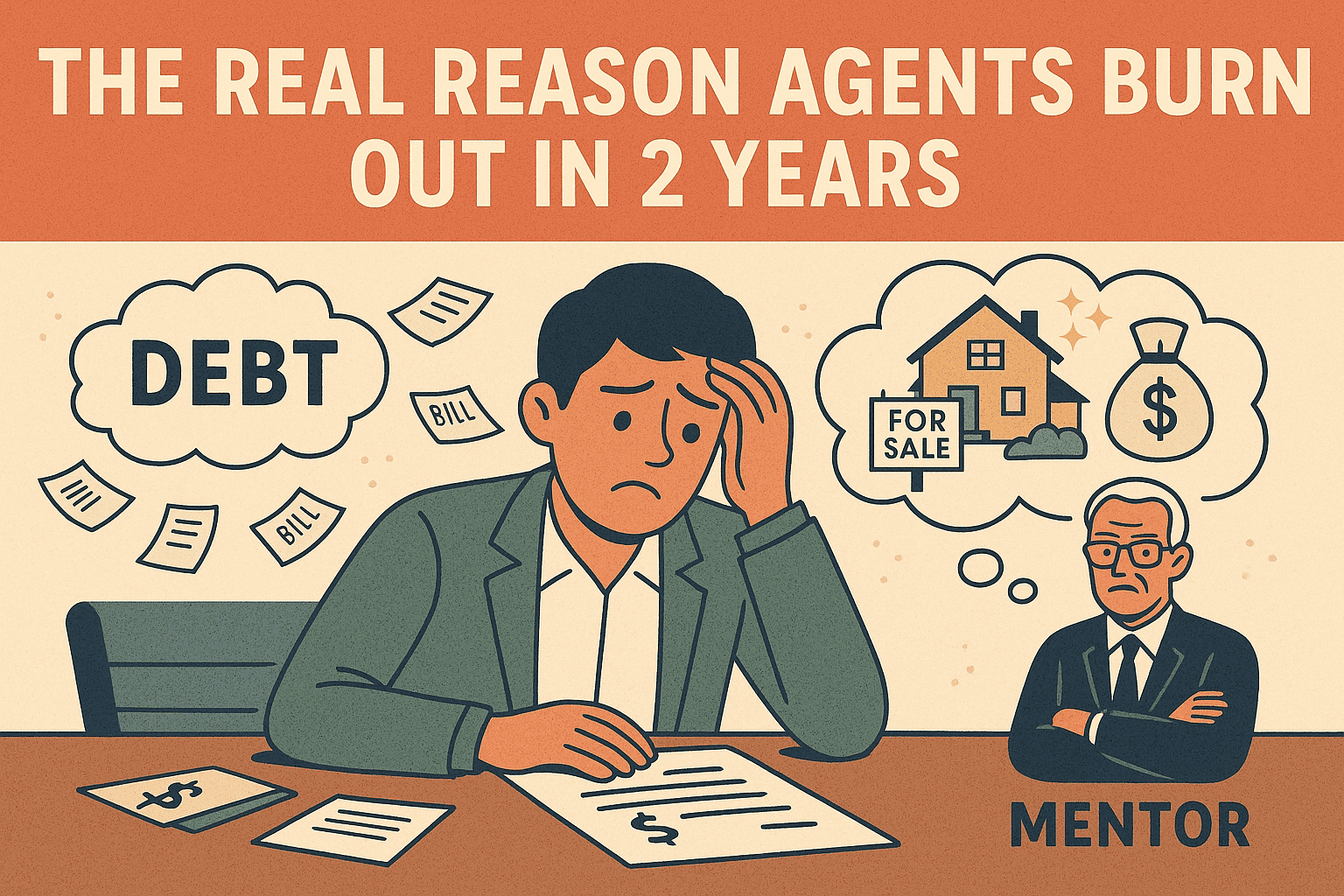
The Real Reason Agents Burn Out in 2 Years |
Many agents burn out because they face unstable income, constant rejection, weak pipeline, poor support, and unclear systems. Burnout is often caused by structural pressure, not lack of motivation alone. |
The REN Career & Skills |
Mental Health & Burnout |
3 |
| 105 |
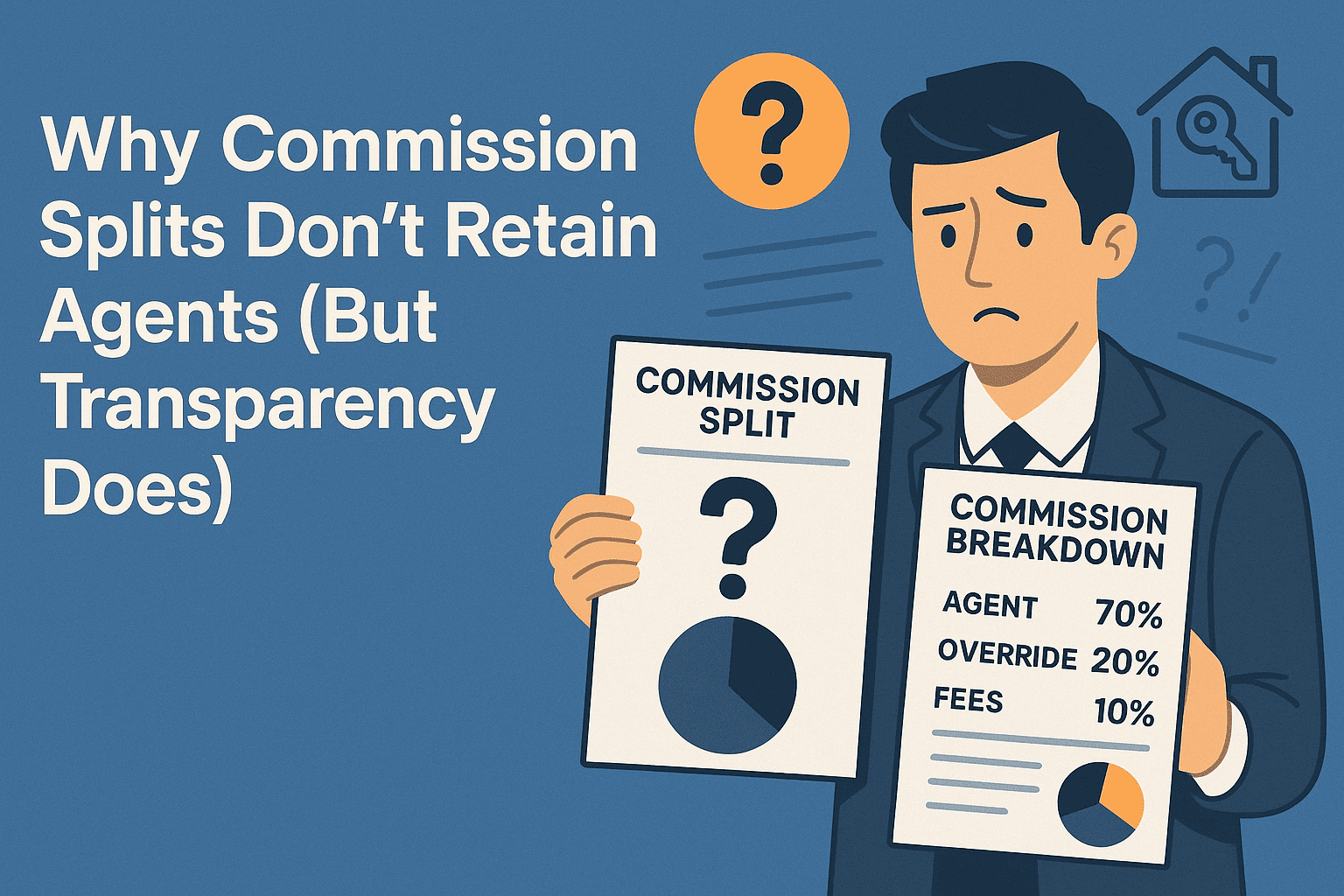
Why Commission Splits Don’t Retain Agents (But Transparency Does) |
Commission splits alone do not create loyalty when agents distrust calculations, timing, or fairness. Transparency in commission rules and payout tracking can retain agents better than high percentages alone. |
Commission & Compensation Models |
Split Ratios (100% vs Splits) |
3 |
| 106 |
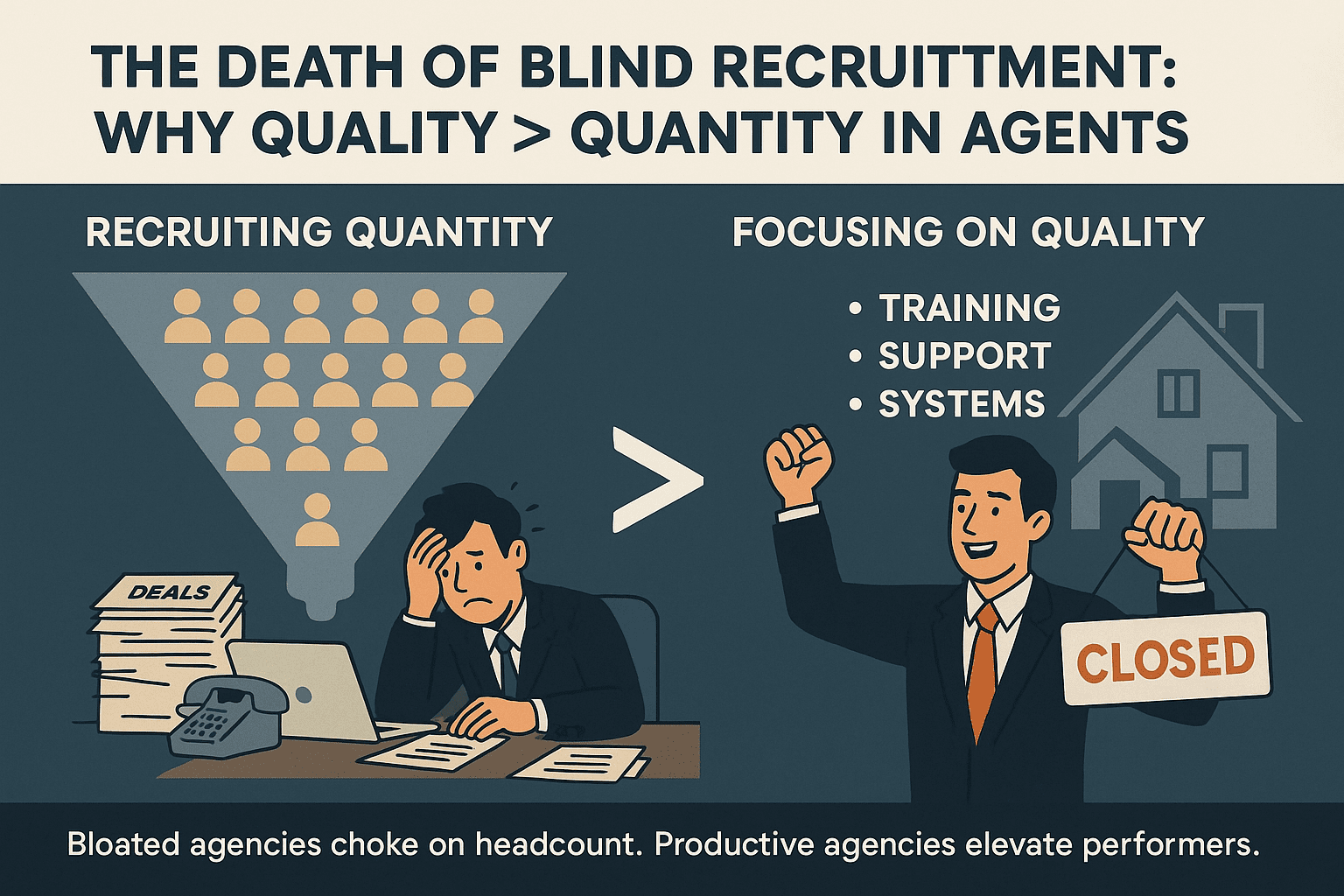
The Death of Blind Recruitment: Why Quality > Quantity in Agents |
Recruiting large numbers blindly creates inactive agents, cultural problems, and admin burden. Strong agencies focus on suitable recruits, activation, supervision, and long-term productivity. |
Recruitment, Retention & Culture |
Onboarding & Activation |
3 |
| 107 |
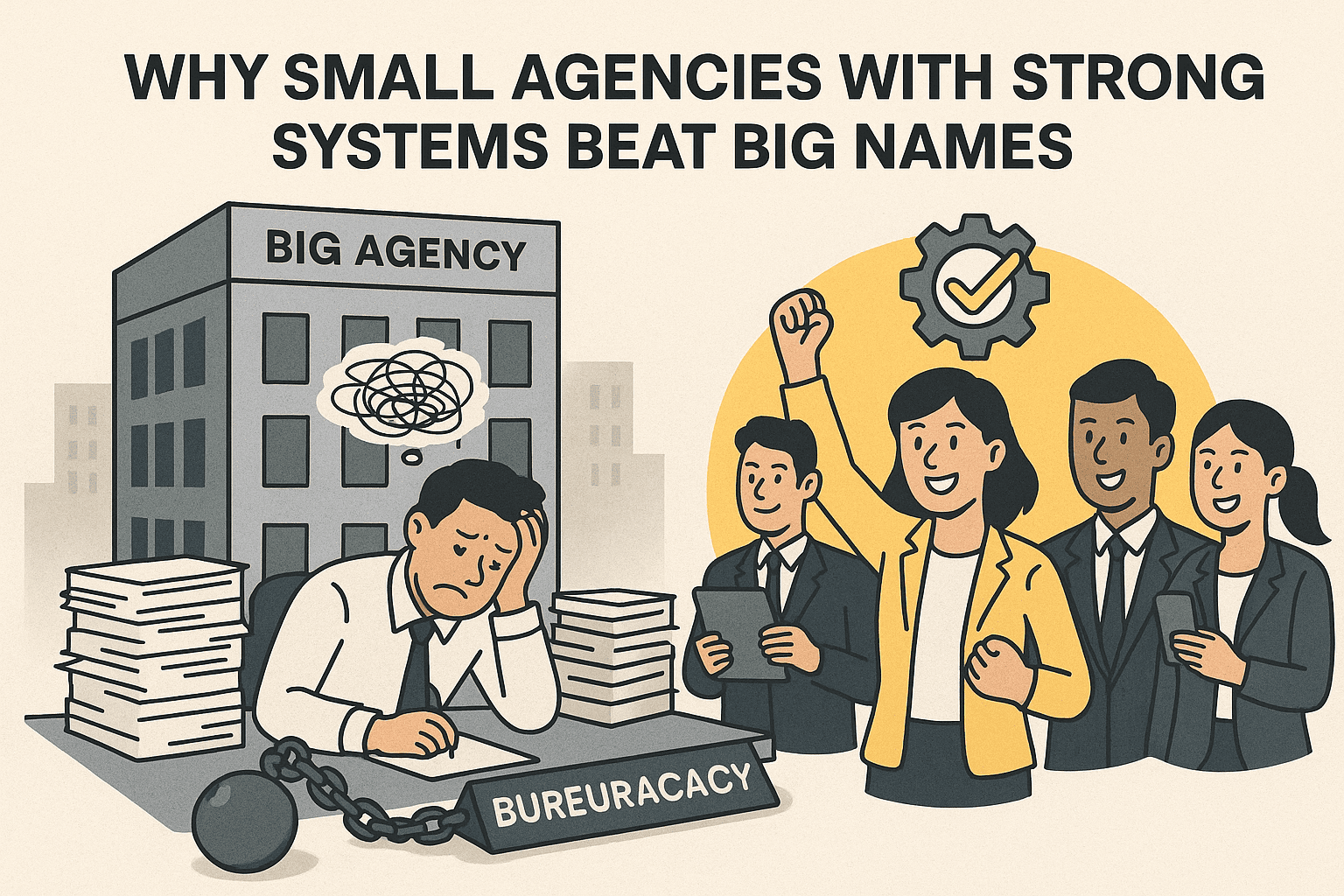
Why Small Agencies With Strong Systems Beat Big Names |
Small agencies can outperform big brands when their systems are faster, clearer, and more supportive. Operational discipline can beat size when agents receive better tools and leadership. |
Agency Leadership & Strategy |
Brand vs. Infrastructure |
3 |
| 108 |
The Ethics Premium: Why Honest Agents Close More in the Long Run |
Honest agents build trust that compounds across referrals, repeat clients, and reputation. Ethical conduct becomes a long-term business asset, not just a moral choice. |
The REN Career & Skills |
Soft Skills & Psychology |
3 |
| 109 |
The Flawed Logic of Agency Incentives: Unpacking the Hidden Costs |
Agency incentives can create hidden costs when they reward the wrong behaviour or damage margins. Incentive design must support sustainable productivity, not just short-term excitement. |
Commission & Compensation Models |
Incentives & Rewards |
3 |
| 110 |
The Necessary Risk: Why Developers Can't Live With or Without Agencies |
Developers need agencies for market reach and buyer conversion, but agency dependence creates cost, control, and payout risks. The developer-agency relationship is necessary but structurally tense. |
Developer Relations & Project Sales |
Developer Payouts & Risks |
3 |
| 111 |
The Commission Black Hole: Why Most Bosses Don’t Know Where the Money Goes |
Agency bosses often lose visibility when commission flows, overrides, incentives, and deductions become too complex. Without proper systems, money leaks through confusion and weak reporting. |
Commission & Compensation Models |
Commission Ethics & Disputes |
3 |
| 112 |
Why Property Negotiators Need to Think Like Entrepreneurs, Not Employees |
Property negotiators need ownership thinking because income depends on initiative, pipeline, relationships, and personal discipline. Employee thinking limits growth in a commission-based career. |
The REN Career & Skills |
Soft Skills & Psychology |
3 |
| 113 |
The Real Reason So Many Agencies Look Big But Earn Small |
Large agency headcount does not guarantee profit. High overhead, low active productivity, weak margins, and poor commission control can make big agencies financially weak. |
Agency Leadership & Strategy |
Financial Management & Profitability |
3 |
| 114 |
Bosses Sacrifice Margin for Headcount |
Some agency bosses sacrifice profit margin to attract more agents and appear larger. Headcount without profitability creates fragile growth and weak long-term business value. |
Agency Leadership & Strategy |
Financial Management & Profitability |
3 |
| 115 |
Why Tenancy Is the Best Training Ground for New Agents |
Tenancy work helps new agents learn owners, tenants, viewings, negotiation, documentation, and follow-up. Rental transactions build confidence, contacts, and cash flow before larger sales deals. |
The REN Career & Skills |
New Agent Start-up |
3 |
| 116 |
The Unspoken War Between RENs and REAs |
Tension between RENs and REAs comes from licensing, control, supervision, income, and career progression. The industry needs clearer pathways and stronger systems to reduce conflict. |
Industry Future & Big Picture |
Industry Structural Reform |
3 |
| 117 |
Why Handling a Client’s Money Directly is a Career-Ending Mistake for Agents |
Handling client money personally creates major legal, ethical, and trust risks. Agents should protect themselves by following proper client account and agency procedures. |
Legal, Compliance & Ethics |
Disbursement & Clients Account |
3 |
| 118 |
The 3 Lies Every New Recruit Is Told |
New recruits are often sold unrealistic promises about income, leads, and easy success. Survival requires honest expectations, training, pipeline building, and real market discipline. |
Recruitment, Retention & Culture |
Onboarding & Activation |
3 |
| 119 |
Why Your Agency’s Tech Stack Is Slowing You Down |
Too many disconnected tools can slow an agency instead of improving it. Agencies need integrated systems that reduce admin work, not scattered apps that create more manual checking. |
Technology & Systems (ListingMine) |
ERP Implementation |
3 |
| 120 |
Why Letting Leaders “Run Their Own Business” Helps You Keep Them Longer |
Team leaders stay longer when they are given autonomy, ownership, and room to build inside the agency. Controlled independence can retain leaders better than rigid top-down control. |
Team Leadership & Dynamics |
Motivation vs. Accountability |
3 |
| 121 |
Why Branding Without Distribution Is Useless |
Branding has little value if it does not reach buyers, sellers, recruits, or agents consistently. Distribution turns brand identity into actual market power. |
Sales, Marketing & Lead Generation |
Personal Branding & Self-Media |
3 |
| 122 |
Why Agents Should Care About AMLA (Even If They Hate It) |
AMLA compliance protects agents from serious legal and career risks. Even agents who dislike compliance need to understand suspicious transactions, documentation, and reporting responsibilities. |
Legal, Compliance & Ethics |
AMLA & PDPA Compliance |
3 |
| 123 |
The Real Moat: Why Relationships Outlast Commission Splits |
Long-term relationships create stronger career value than temporary commission advantages. Trust with owners, buyers, agents, and team members becomes a durable professional moat. |
The REN Career & Skills |
Soft Skills & Psychology |
3 |
| 124 |
The Recruiter’s Dilemma: Empire vs. Efficiency |
Recruiters must choose between growing headcount quickly and building a more efficient, productive team. Real agency growth needs quality, activation, and margin, not numbers alone. |
Recruitment, Retention & Culture |
Hiring Fresh vs. Experienced |
3 |
| 125 |
Why Most Agency Bosses Confuse Revenue with Profit |
Revenue can look impressive while profit remains weak after payouts, rent, admin, incentives, and hidden costs. Agency bosses need clear financial reporting to know real performance. |
Agency Leadership & Strategy |
Financial Management & Profitability |
3 |
| 126 |
The Endgame Question: What Happens to Your Agency When You Retire? |
Agencies need succession planning before the founder exits. Without systems, second-line leadership, and institutionalized relationships, the agency may decline when the boss steps back. |
Agency Leadership & Strategy |
Founding & Exit Strategies |
3 |
| 127 |
Why property agencies like to sell Below RM500k properties? |
Below RM500k properties attract wider buyer demand and faster affordability matching. Agencies often prefer them because transaction volume and buyer pool can be more practical. |
Market Trends & Economics |
Housing Supply & Overhang |
3 |
| 128 |
Agents are digging their own grave? |
Agents can weaken their own future by undercutting, rebating, ignoring professionalism, or failing to build systems. Short-term behaviour can damage long-term industry value. |
The REN Career & Skills |
Career Stages (REN to REA) |
3 |
| 129 |
Big Brands Don’t Close Deals—Agents Do |
Agency brands help create confidence, but individual agents still drive trust, follow-up, negotiation, and closing. Deal success depends on agent execution more than brand name alone. |
The REN Career & Skills |
Soft Skills & Psychology |
3 |
| 130 |
How does an agency make money when payout is 100%? |
A 100% payout model needs alternative revenue sources such as fees, subscriptions, volume, services, or internal cost control. Without a clear business model, high payout can destroy margins. |
Commission & Compensation Models |
Split Ratios (100% vs Splits) |
3 |
| 131 |
Can I list my Agency? |
Agency owners need to understand whether their business is structured enough to be sold, merged, or listed. Transferable value depends on systems, profit, leadership, and recurring operational strength. |
Agency Leadership & Strategy |
Founding & Exit Strategies |
3 |
| 132 |
10 Exit Paths for Property Agency Owners in Malaysia |
Agency owners have multiple exit paths, including merger, sale, succession, partnership, specialization, or platform integration. Planning the exit early improves long-term enterprise value. |
Agency Leadership & Strategy |
Founding & Exit Strategies |
3 |
| 133 |
The Agility Edge How Small Agencies Can Outmaneuver Giants (And Make a Comeback) |
Small agencies can move faster than large competitors when they use flexible systems and sharper strategy. Agility becomes a competitive edge when the market changes quickly. |
Agency Leadership & Strategy |
Business Models & Scaling |
3 |
| 134 |
The Silent Killer: Why Middle Management Can Make or Break an Agency |
Middle management determines whether agency strategy reaches agents effectively. Weak team leaders or managers can silently damage culture, productivity, retention, and execution. |
Team Leadership & Dynamics |
Team Structure (Pods/Groups) |
3 |
| 135 |
The Override Addiction: Why Agencies Overpay Leaders Who Underperform |
Override structures can become dangerous when leaders are rewarded without real contribution. Agencies need performance-based leadership rewards, not automatic payouts that drain margins. |
Commission & Compensation Models |
Override Structures |
3 |
| 136 |
Why Most Agencies Don’t Survive Scaling Beyond 50 Agents |
Scaling beyond 50 agents exposes weaknesses in admin, leadership, reporting, training, compliance, and commission systems. Growth without infrastructure creates operational breakdown. |
Agency Leadership & Strategy |
Business Models & Scaling |
3 |
| 137 |
The Real Cost of Free Desks: Hidden Subsidies That Drain Agencies |
Free desks and facilities may look like support, but they become hidden subsidies when agents are inactive. Agencies must measure whether physical overhead produces real productivity. |
Agency Leadership & Strategy |
Financial Management & Profitability |
3 |
| 138 |
The Franchise Illusion: Why Copying International Models Rarely Works in Malaysia |
International franchise models often fail when copied without adapting to Malaysian agent behaviour, culture, regulation, and market structure. Local execution matters more than foreign branding. |
Industry Future & Big Picture |
Global Comparisons (MLS vs ACN) |
3 |
| 139 |
Why Most RENs Never Graduate to REA Status |
Many RENs never progress to REA because the jump requires legal knowledge, capital, leadership, compliance, and business-building ability. Sales success alone is not enough. |
The REN Career & Skills |
Career Stages (REN to REA) |
3 |
| 140 |
The Career Half-Life of a REN: Why So Many Quit Before Year 1 |
Many RENs quit in the first year because income, rejection, learning curve, and pipeline pressure are harder than expected. Early survival requires preparation and support. |
The REN Career & Skills |
Career Stages (REN to REA) |
3 |
| 141 |
Side Hustles vs. Real Hustle: Why Agents Lose Focus and Fail |
Agents lose momentum when side hustles distract them from prospecting, follow-up, and transaction discipline. Property agency requires focused execution before it can produce stable income. |
The REN Career & Skills |
Soft Skills & Psychology |
3 |
| 142 |
From Closer to Builder: The Skillset Shift Agents Ignore |
Agents who want to become leaders must shift from closing personal deals to building people, systems, and repeatable operations. The builder mindset is different from the closer mindset. |
The REN Career & Skills |
Career Stages (REN to REA) |
3 |
| 143 |
Why Independent Agents Secretly Outperform Agency-Bound Agents |
Independent agents may outperform when they control their data, clients, decisions, and personal brand. Autonomy can create speed and ownership when supported by proper systems. |
Industry Future & Big Picture |
Industry Structural Reform |
3 |
| 144 |
The Auction Tsunami: How Distressed Sales Are Reshaping Market Pricing |
Distressed sales and auctions can influence market pricing, buyer expectations, and negotiation psychology. Agents need to understand forced-sale signals when advising clients. |
Market Trends & Economics |
Market Cycles & Valuations |
3 |
| 145 |
The Supply Illusion: Why More Listings Doesn’t Mean More Sales |
More listings do not automatically create more transactions. Listing quality, pricing accuracy, seller motivation, buyer matching, and marketing execution determine sales performance. |
Sales, Marketing & Lead Generation |
Listing Quality & Presentation |
3 |
| 146 |
Co-Broking 2.0: From Broken Chains to Fair Play |
Co-broking needs clearer rules, traceability, and fair contribution recognition. A structured cooperation model can reduce disputes and improve deal matching. |
Co-Broking, ACN & Collaboration |
Co-broking Etiquette |
2 |
| 147 |
Why Malaysia Isn’t Ready for a True MLS (And What Agents Should Do Instead) |
Malaysia lacks the industry structure, trust, and standardization needed for a true MLS. Agents may need ACN-style cooperation as a more practical local alternative. |
Co-Broking, ACN & Collaboration |
ACN Fundamentals |
2 |
| 148 |
The Foreign Buyer Mirage: Why Agents Overestimate This Segment |
Foreign buyers can be valuable but are often overestimated as a mass solution. Agents need realistic targeting, financing awareness, and local buyer strategy. |
Market Trends & Economics |
Buyer/Investor Psychology |
3 |
| 149 |
21 Legal Mistakes That Sink Malaysian Property Agencies |
Legal mistakes can damage agencies through compliance breaches, poor documentation, client-money issues, and improper marketing. Agency owners need stronger legal awareness and internal controls. |
Legal, Compliance & Ethics |
Act 242 & BOVAEP Rules |
3 |
| 150 |
Why Most RENs Don’t Actually Understand Act 242 |
Many RENs work under Act 242 without fully understanding its limits, duties, and professional boundaries. Weak legal knowledge creates avoidable compliance and career risk. |
Legal, Compliance & Ethics |
Act 242 & BOVAEP Rules |
3 |
| 151 |
The Compliance Gap: How Agencies Risk Suspension Without Knowing |
Agencies can face suspension risk when compliance gaps remain hidden in daily operations. Weak supervision, documentation, client account handling, and internal procedures create serious exposure. |
Legal, Compliance & Ethics |
Act 242 & BOVAEP Rules |
3 |
| 152 |
Why BOVAEP Compliance is Your Secret Weapon Against Illegal Agents |
BOVAEP compliance can become a competitive advantage against illegal agents. Professional agencies can use legality, trust, and proper process as market differentiation. |
Legal, Compliance & Ethics |
Act 242 & BOVAEP Rules |
3 |
| 153 |
AMLA Audits: What Every Agency Boss Should Fear (and Prepare For) |
AMLA audits can expose weak documentation, poor screening, and careless transaction monitoring. Agency bosses need systems and procedures before regulators ask questions. |
Legal, Compliance & Ethics |
AMLA & PDPA Compliance |
3 |
| 154 |
Why Most Agency CRMs End Up as Expensive Address Books |
Many CRMs fail because agents only store contacts without turning data into action. A useful system must drive follow-up, listings, leads, cooperation, and reporting. |
Technology & Systems (ListingMine) |
Product Features & Workflow |
3 |
| 155 |
What Agencies Think They Automate vs. What They Actually Do |
Agencies often believe they are automated when they are only digitizing manual steps. True automation removes repetitive work, reduces errors, and improves decision-making. |
Technology & Systems (ListingMine) |
Automation & AI Strategy |
3 |
| 156 |
Virtual Reality Viewings: Gimmick or the Next Standard? |
Virtual reality viewings can improve property presentation, but only if they solve real buyer, agent, or developer problems. Technology must support trust and decision-making, not just novelty. |
Industry Future & Big Picture |
Proptech & AI Evolution |
3 |
| 157 |
From Admin Records to Upsell Engines: How Agencies Can Monetize Data the Smart Way |
Agency data can become an upsell engine when structured properly. Records on clients, tenancy dates, listings, and transactions can create future revenue opportunities. |
Technology & Systems (ListingMine) |
Data Ownership & Portability |
3 |
| 158 |
The Coming AI Divide: Agencies That Adapt vs. Agencies That Vanish |
AI will widen the gap between agencies that use data and automation and agencies that stay manual. Adaptation will become a survival issue, not just a productivity upgrade. |
Industry Future & Big Picture |
Proptech & AI Evolution |
3 |
| 159 |
The Ego Tax: Why Bosses Lose Agents Without Realizing It |
Agency bosses can lose agents when ego blocks listening, fairness, transparency, or leader development. Poor leadership behaviour creates hidden retention costs. |
Agency Leadership & Strategy |
Leadership Philosophy |
3 |
| 160 |
Why Leadership Training Fails in Agencies |
Leadership training fails when it is not tied to real team management, accountability, systems, and daily execution. Leaders need practical operating tools, not motivational theory alone. |
Team Leadership & Dynamics |
Team Leader Growth |
3 |
| 161 |
The Real Culture Test: How Agencies Treat Failing Agents |
Agency culture is revealed by how leaders treat struggling agents. Support, fairness, and clear standards matter more than slogans about teamwork. |
Recruitment, Retention & Culture |
Culture & Ethics |
3 |
| 162 |
Loyalty vs. Dependency: Knowing the Difference in Your Team |
Loyalty is built on trust and value, while dependency is created by control and weakness. Agencies must avoid confusing trapped agents with loyal agents. |
Team Leadership & Dynamics |
Motivation vs. Accountability |
3 |
| 163 |
Why Transparency Is the New Currency of Leadership |
Transparent leadership builds trust through clear rules, visible numbers, fair payouts, and honest communication. In modern agencies, opacity creates suspicion and turnover. |
Team Leadership & Dynamics |
Leadership Philosophy |
3 |
| 164 |
Does Loyalty in Agency Exist? |
Loyalty exists only when agents believe the agency creates real value, fairness, opportunity, and protection. Without those foundations, loyalty becomes temporary convenience. |
Recruitment, Retention & Culture |
Retention Psychology |
3 |
| 165 |
How Manipulation Became a Sales Strategy |
Manipulative sales tactics may produce short-term results but damage trust and reputation. Sustainable real estate careers require persuasion with integrity, not pressure or deception. |
The REN Career & Skills |
Soft Skills & Psychology |
3 |
| 166 |
The Most Successful Real Estate Salespeople in Malaysia Might Be Breaking the Law |
Some high-performing salespeople may succeed through practices that cross legal or regulatory boundaries. Agencies must not confuse sales volume with professional compliance. |
Legal, Compliance & Ethics |
Illegal Agent Practices |
3 |
| 167 |
Why Do Many Agencies Charge New Recruits a Small Admin Fee? |
Small admin fees can filter commitment, cover onboarding costs, and reduce casual recruits. The fee must be transparent and justified to avoid damaging trust. |
Agency Leadership & Strategy |
Operational SOPs |
3 |
| 168 |
Why are there so few talents who know tech and property at the same time? |
The property industry lacks people who understand both real agency operations and technology. This talent gap slows innovation and creates weak software solutions. |
Industry Future & Big Picture |
Industry Structural Reform |
3 |
| 169 |
The Hidden Risks of Agencies That Sell Only Foreign Properties |
Agencies focused only on foreign properties face risks in trust, after-sales support, legal complexity, currency exposure, and buyer confidence. Diversification and due diligence are important. |
Market Trends & Economics |
Buyer/Investor Psychology |
3 |
| 170 |
Barking Up the Wrong Tree: The Hidden Dangers of Unverified Listings |
Unverified listings waste time, mislead buyers, damage trust, and create disputes between agents. Verified inventory is essential for professional property marketing. |
Sales, Marketing & Lead Generation |
Listing Quality & Presentation |
3 |
| 171 |
Why 3 or 4 ways co-broking hardly works |
Multi-party co-broking becomes difficult when roles, contributions, and commission splits are unclear. Structured role-based cooperation is needed to make complex deals fair. |
Co-Broking, ACN & Collaboration |
Co-broking Etiquette |
3 |
| 172 |
What Is ACN (Agent Cooperation Network) — The Future of Co-Broking in Malaysia |
ACN is a structured cooperation model for property agents using defined roles, traceable actions, and transparent split logic. It can become Malaysia’s practical alternative to informal co-broking. |
Co-Broking, ACN & Collaboration |
ACN Fundamentals |
2 |
| 173 |
12 Common Questions (and Objections) About the ACN Co-Broking System — Answered |
Common concerns about ACN include fairness, trust, role recognition, payout logic, and dispute handling. Clear rules and traceable contribution can make cooperation easier to accept. |
Co-Broking, ACN & Collaboration |
ACN Fundamentals |
2 |
| 174 |
The Moat Before the Rules: Why Demerit Systems Backfire on Most Real Estate Agencies |
Demerit systems fail when agencies do not first build trust, culture, and operational value. Rules without a strong moat can push agents away instead of improving discipline. |
Agency Leadership & Strategy |
Operational SOPs |
3 |
| 175 |
Too Many Hats, Too Little Time: Why Modern Property Agents Can’t Do It All Anymore |
Modern agents are expected to handle sales, marketing, content, compliance, admin, and client service. Systems and specialization are needed because one agent cannot do everything well. |
The REN Career & Skills |
Career Stages (REN to REA) |
3 |
| 176 |
Why Most Property Agents Can’t Consistently Create Short Videos |
Agents struggle with short videos because content creation requires planning, scripting, confidence, editing, and consistency. Without a system, social media becomes another abandoned task. |
Sales, Marketing & Lead Generation |
Personal Branding & Self-Media |
3 |
| 177 |
From Views to Buyers: How to Turn Attention into Appointments |
Online attention only matters when it converts into real conversations, appointments, and buyer qualification. Agents need follow-up systems to turn content views into transactions. |
Sales, Marketing & Lead Generation |
Lead Nurturing & CRM |
3 |
| 178 |
Bumiputera Buyer’s Psychology: What Agents and Developers Must Understand |
Bumiputera buyers may have specific concerns around affordability, trust, location, financing, family needs, and product fit. Agents and developers must understand buyer psychology before selling. |
Market Trends & Economics |
Buyer/Investor Psychology |
3 |
| 179 |
Why Operating as an Illegal Agent Is a Dangerous Business Model |
Illegal agency work creates legal exposure, income insecurity, trust problems, and long-term career risk. The business model may look easy but is structurally dangerous. |
Legal, Compliance & Ethics |
Illegal Agent Practices |
3 |
| 180 |
Why Top Sales Ability Doesn’t Automatically Mean Entrepreneurship |
Strong sales ability does not automatically create business-building skill. Entrepreneurship requires systems, people management, finance, risk control, and long-term strategy. |
The REN Career & Skills |
Soft Skills & Psychology |
3 |
| 181 |
Why using personal account for deposit collecting is illegal |
Collecting deposits through personal accounts creates legal, ethical, and trust risks. Proper client account procedures protect agents, agencies, buyers, sellers, landlords, and tenants. |
Legal, Compliance & Ethics |
Disbursement & Clients Account |
3 |
| 182 |
The Double-Edged Sword of the Monthly Top Performers Board |
Top performer boards can motivate agents but also create pressure, comparison, resentment, or unhealthy competition. Recognition systems must reward the right behaviour. |
Commission & Compensation Models |
Incentives & Rewards |
3 |
| 183 |
The Hidden Traps in Rich Dad Poor Dad: What Malaysian Agents Often Misunderstand |
Popular financial advice can be misunderstood when applied blindly to Malaysian property reality. Agents need local context, cash flow discipline, and practical risk awareness. |
The REN Career & Skills |
Financial Planning for Agents |
3 |
| 184 |
The 5 Career Stages of a Malaysian Property Agent |
A Malaysian property agent’s career can progress through stages from beginner to producer, leader, agency builder, and long-term asset owner. Each stage requires different skills and systems. |
The REN Career & Skills |
Career Stages (REN to REA) |
3 |
| 185 |
The Retirement Problem: Why Agents Can’t Stop Working |
Many agents struggle to retire because they did not convert career activity into assets, systems, or recurring opportunities. Long-term planning is needed before energy and deal flow decline. |
The REN Career & Skills |
Financial Planning for Agents |
3 |
| 186 |
Common Legal Loopholes That Kill Agent Commissions |
Weak paperwork, unclear instructions, verbal agreements, and poor documentation can cause agents to lose commission. Legal protection starts before the deal is completed. |
Legal, Compliance & Ethics |
Tenancy & Contract Law |
3 |
| 187 |
Why Property Portals No Longer Guarantee Leads |
Property portals no longer guarantee quality leads because competition, duplicate listings, buyer fatigue, and rising costs reduce effectiveness. Agents need their own channels and database strategy. |
Sales, Marketing & Lead Generation |
Paid Ads vs Organic (SEO) |
3 |
| 188 |
The Power of the Digital Business Card |
A digital business card can become more than contact information when it includes credibility, testimonials, listings, and personal branding. It helps agents present trust quickly. |
Technology & Systems (ListingMine) |
Product Features & Workflow |
3 |
| 189 |
Why Overrides Can Destroy Team Culture. |
Overrides can damage team culture when leaders earn from agents without providing real support. Fair contribution and transparent value are needed to prevent resentment. |
Commission & Compensation Models |
Override Structures |
3 |
| 190 |
The Death of Cold Pushing: Why Modern Buyers Don’t Need You Anymore (Unless You Have IP) |
Modern buyers can access listings and information without agents, so cold pushing is weaker than before. Agents need unique insight, trust, and intellectual property to stay relevant. |
Sales, Marketing & Lead Generation |
Lead Nurturing & CRM |
3 |
| 191 |
The Myth of “High Payout = High Retention” Why people leave even at 98%. |
Even very high payout does not retain agents if they lack trust, support, growth, fairness, or belonging. Retention depends on value beyond commission percentage. |
Commission & Compensation Models |
Split Ratios (100% vs Splits) |
3 |
| 192 |
The Future of Commission in Malaysia: Role-Based Splits (ACN) |
Malaysian property commission may evolve toward role-based splits where contribution is rewarded more precisely. ACN provides a framework for fairer and more traceable commission allocation. |
Commission & Compensation Models |
Role-Based Splits (ACN) |
3 |
| 193 |
Investor Psychology: Why Malaysian Buyers Fear Negative Cash Flow |
Malaysian property buyers often fear negative cash flow because monthly holding costs feel more immediate than long-term appreciation. Agents must understand risk psychology when advising investors. |
Market Trends & Economics |
Buyer/Investor Psychology |
3 |
| 194 |
Why Buyers Don’t Trust Property Ads Anymore |
Buyers distrust property ads when listings are outdated, exaggerated, misleading, or unverified. Better listing quality and transparency are needed to rebuild buyer confidence. |
Sales, Marketing & Lead Generation |
Listing Quality & Presentation |
3 |
| 195 |
Why a Free ERP Can Be Your Agency’s Most Profitable Investment |
A free or low-cost ERP can create major value if it reduces admin work, improves reporting, and controls commissions. System adoption can be more profitable than cutting software cost. |
Technology & Systems (ListingMine) |
ERP Implementation |
3 |
| 196 |
The True Cost of an Agency Without a System |
Agencies without systems pay hidden costs through errors, disputes, lost leads, slow reporting, admin overload, and weak control. Manual operations become expensive as the agency grows. |
Technology & Systems (ListingMine) |
System vs. Manual Chaos |
3 |
| 197 |
Abortive Fees: How Agents Can Protect Their Interests When Deals Collapse |
Abortive fees help protect agents when deals collapse after meaningful work has been done. Clear agreements and documentation reduce the risk of unpaid effort. |
Legal, Compliance & Ethics |
Tenancy & Contract Law |
3 |
| 198 |
What Commission Scheme Should Your Real Estate Agency Adopt? A 2026 Guide for Malaysia |
Agency commission schemes should match business model, leadership structure, agent maturity, and profitability goals. The right scheme balances attraction, retention, fairness, and financial control. |
Commission & Compensation Models |
Split Ratios (100% vs Splits) |
1 |
| 199 |
What Recruitment Co-broking Actually Means |
Recruitment co-broking treats agent recruitment as a cooperation opportunity where different parties may contribute to successful onboarding. Clear rules prevent conflict over recruitment credit. |
Co-Broking, ACN & Collaboration |
ACN Fundamentals |
2 |
| 200 |
Act 242 After 2018: The Law Updated the Players—But Not the Playbook |
Act 242 updates changed the legal recognition of industry players, but many agency practices remain outdated. Agencies need modern systems and compliance habits to match the updated framework. |
Legal, Compliance & Ethics |
Act 242 & BOVAEP Rules |
2 |
| 201 |
The 2%-3% Real Estate Fee: Why Commissions Aren't Set by Law (It's Pure Economics) |
Real estate commission rates are shaped by market economics, risk, workload, and industry practice rather than fixed legal pricing. Agents and clients need to understand the commercial logic behind professional fees. |
Commission & Compensation Models |
Commission Ethics & Disputes |
3 |
| 202 |
The Economic Flaw: Why "Skipping the Agent" Always Fails for Proptech Startups |
Proptech startups often underestimate the human trust, negotiation, and transaction coordination role of agents. Removing agents may look efficient on paper but usually fails against real market behaviour. |
Industry Future & Big Picture |
Proptech & AI Evolution |
3 |
| 203 |
Why Malaysia’s “Next Big Property Portal” Always Fails: Two Fatal Mistakes No Proptech Learns From |
New property portals often fail because they underestimate supply quality, agent adoption, buyer behaviour, and distribution cost. Portal strategy must solve real market liquidity, not only build another listing website. |
Industry Future & Big Picture |
Proptech & AI Evolution |
3 |
| 204 |
Portfolio Sharing: The Professional Way to Send Listings |
Portfolio sharing gives agents a cleaner way to present multiple listings instead of sending messy WhatsApp messages. Professional presentation improves trust, clarity, and buyer decision-making. |
Co-Broking, ACN & Collaboration |
Co-broking Etiquette |
3 |
| 205 |
Co-Broking Without Fear: How ListingMine Protects Agents When Sharing Listings |
ListingMine helps agents share listings while protecting data ownership, attribution, and cooperation records. Safer sharing reduces fear of being bypassed or losing control of listings. |
Technology & Systems (ListingMine) |
Data Ownership & Portability |
3 |
| 206 |
The Testimonial Function: Turning Your Digital Namecard into Proof of Credibility |
Testimonials turn a digital namecard from basic contact information into proof of trust. Visible client feedback helps agents build credibility before the first conversation. |
Technology & Systems (ListingMine) |
Product Features & Workflow |
3 |
| 207 |
Stop Losing Money: Why Tenancy Expiry Dates Are the Easiest Goldmine in Your Database |
Tenancy expiry dates create repeat business opportunities when tracked properly. Agents can use expiry reminders to reconnect with owners, tenants, and future rental or sale opportunities. |
Sales, Marketing & Lead Generation |
Lead Nurturing & CRM |
3 |
| 208 |
Your Property Website. Done in Minutes. |
Agents can create a property website quickly without technical knowledge. A simple web presence improves professionalism, listing exposure, and personal branding. |
Technology & Systems (ListingMine) |
Product Features & Workflow |
3 |
| 209 |
Your Secret Weapon: The “Potential” Listing Goldmine Most Agents Ignore |
Potential listings are hidden opportunities that may not be ready today but can become future transactions. Agents who track early owner signals can build stronger pipelines. |
Sales, Marketing & Lead Generation |
Listing Quality & Presentation |
3 |
| 210 |
How Deals You Never See Get Done |
Many property deals happen through hidden networks, relationships, and cooperation channels outside public listings. Agents need access to structured cooperation systems to capture unseen opportunities. |
Co-Broking, ACN & Collaboration |
Shadow Market Integration |
3 |
| 211 |
Copy of Replace Empty Greetings with Real Client Value |
Client communication should provide useful value instead of empty greetings. Better follow-up content helps agents stay relevant and build trust with prospects. |
Sales, Marketing & Lead Generation |
Lead Nurturing & CRM |
3 |
| 212 |
ACN: Turn Every Outstation Lead Into Guaranteed Profit |
Outstation leads can become income opportunities when routed through trusted cooperating agents. ACN creates a structured way to monetize leads outside an agent’s own area. |
Co-Broking, ACN & Collaboration |
ACN Fundamentals |
3 |
| 213 |
Get Free, Google-Indexed Exposure on PropertySifu.com |
PropertySifu.com gives agents free search-indexed listing exposure when connected to the ListingMine ecosystem. Organic visibility can reduce dependence on expensive paid portal leads. |
Sales, Marketing & Lead Generation |
Paid Ads vs Organic (SEO) |
3 |
| 214 |
Stop Losing Your Commission: How to Prevent Clients from Cutting You Out |
Agents can lose commission when clients bypass them after receiving information or introductions. Clear documentation, proper authorization, and professional follow-up help protect entitlement. |
Legal, Compliance & Ethics |
Tenancy & Contract Law |
3 |
| 215 |
Smarter Co-Broking: How ListingMine Makes Every Listing Clear, Fair, and Worth Your Time |
ListingMine improves co-broking by making listing information, cooperation terms, and agent roles clearer. Structured sharing makes collaboration fairer and more efficient. |
Technology & Systems (ListingMine) |
Product Features & Workflow |
3 |
| 216 |
Automate Your Agency in 3 Steps: The ListingMine ERP Setup Guide |
ListingMine ERP can help agencies move from manual workflows to structured automation. Setup should focus on commission schemes, users, cases, reporting, and operational rules. |
Technology & Systems (ListingMine) |
ERP Implementation |
3 |
| 217 |
The Easiest Way to Know What Everyone Thinks: ListingMine’s Voting Function |
ListingMine’s voting function helps agencies and groups collect feedback quickly. Structured voting improves decision-making compared with scattered chat replies. |
Technology & Systems (ListingMine) |
Product Features & Workflow |
3 |
| 218 |
From Motivation to Automation: How ListingMine’s Top Sales Function Transforms Recognition into Results |
Top sales recognition becomes more useful when connected to real performance data. ListingMine turns motivation into trackable, transparent, and automated recognition. |
Technology & Systems (ListingMine) |
Product Features & Workflow |
3 |
| 219 |
How ListingMine Handles Hierarchies with Double or Triple Uplines — No Customization, No Headache |
ListingMine supports complex agency hierarchies such as double or triple uplines without expensive customization. Flexible structure reduces manual calculation and admin confusion. |
Technology & Systems (ListingMine) |
Product Features & Workflow |
3 |
| 220 |
Why Every Agency Needs ListingMine’s Lead Management System |
Lead management helps agencies distribute, track, and follow up leads properly. Without a system, leads are easily wasted, forgotten, or mishandled. |
Technology & Systems (ListingMine) |
Product Features & Workflow |
3 |
| 221 |
Member Listing vs Official Listing: Understanding the Difference in ListingMine Groups |
Member listings and official listings serve different purposes inside ListingMine Groups. Clear distinction helps agencies control inventory, cooperation, and internal listing visibility. |
Technology & Systems (ListingMine) |
Product Features & Workflow |
3 |
| 222 |
Why Every Agency Should Use ListingMine’s Announcement Feature |
Announcements give agencies a structured way to communicate important updates beyond noisy WhatsApp groups. Centralized notices improve clarity, accountability, and information retention. |
Technology & Systems (ListingMine) |
Product Features & Workflow |
3 |
| 223 |
The Better Scoreboard: Performance Points, Not Sales RM |
Performance points can measure contribution more fairly than sales amount alone. A points-based system can reward effort, role contribution, and behaviour that supports agency growth. |
Technology & Systems (ListingMine) |
Product Features & Workflow |
3 |
| 224 |
Why Most Agency Bosses Still Don’t Know Their Real Numbers |
Many agency bosses lack accurate visibility into profit, payouts, cases, agent activity, and operational leakage. Better reporting is needed for real decision-making. |
Agency Leadership & Strategy |
Financial Management & Profitability |
3 |
| 225 |
The Malaysian Agent’s Core Dilemma: Listing Focus vs. Buyer Focus |
Malaysian agents often struggle between building listing inventory and serving buyers directly. A balanced strategy needs both supply control and buyer relationship management. |
The REN Career & Skills |
New Agent Start-up |
3 |
| 226 |
Should Agents Perform a Title Check Before Selling? |
Title checks help agents avoid marketing properties with hidden legal, ownership, or transaction problems. Basic verification protects agents, clients, and deal certainty. |
Legal, Compliance & Ethics |
Tenancy & Contract Law |
3 |
| 227 |
Selling the wrong property: The Hidden Danger of Skipping a “Pelan Akui” Check |
Skipping a Pelan Akui check can lead agents to market or sell the wrong property details. Proper plan verification reduces disputes, mistakes, and transaction risk. |
Legal, Compliance & Ethics |
Tenancy & Contract Law |
3 |
| 228 |
Undercut: The Silent Culture Every Agent Knows Too Well |
Undercutting damages trust between agents and weakens professional cooperation. Clear rules, documentation, and role recognition are needed to reduce this hidden culture. |
Co-Broking, ACN & Collaboration |
Dispute Resolution & Arbitration |
3 |
| 229 |
The Verbal Deal Trap: Why Handshake Agreements Can Cost Agents Their Commission |
Verbal agreements are weak protection when commission disputes arise. Written confirmation and proper appointment records are essential for protecting agent entitlement. |
Legal, Compliance & Ethics |
Tenancy & Contract Law |
3 |
| 230 |
When Owners Change Their Minds: How Agents Get Blamed for Unsigned Agreements |
Agents can be blamed when owners reverse decisions before proper agreements are signed. Clear documentation and owner confirmation reduce misunderstanding and commission risk. |
Legal, Compliance & Ethics |
Tenancy & Contract Law |
3 |
| 231 |
The WhatsApp Paper Trail: Can Chat Logs Protect Your Commission in Court? |
WhatsApp chats may help show communication history but are not a perfect substitute for proper documents. Agents should treat chat logs as support, not primary protection. |
Legal, Compliance & Ethics |
Tenancy & Contract Law |
3 |
| 232 |
The Hidden Danger of Marketing Without Consent: What Act 242 Really Says |
Marketing property without proper consent can create legal and professional risk. Agents need clear authority before advertising listings. |
Legal, Compliance & Ethics |
Act 242 & BOVAEP Rules |
3 |
| 233 |
How to Legally Empower Co-Broking Partners to Market |
Co-broking partners need proper authorization and clear marketing rights before promoting a property. Legal empowerment protects the listing agent, cooperating agent, and client. |
Co-Broking, ACN & Collaboration |
Co-broking Etiquette |
3 |
| 234 |
Why is getting an appointment letter so difficult? |
Appointment letters are difficult because owners may hesitate, agents may avoid formalities, and trust may not be established yet. Proper explanation and professionalism can improve acceptance. |
The REN Career & Skills |
New Agent Start-up |
3 |
| 235 |
How Smart Agents Handle Office Politics |
Office politics can distract agents from production and damage relationships. Smart agents protect their reputation, stay professional, and focus on long-term career value. |
The REN Career & Skills |
Soft Skills & Psychology |
3 |
| 236 |
Why Most Agents Fail on Social Media |
Agents fail on social media because they post inconsistently, lack clear positioning, and do not convert attention into follow-up. Content needs strategy, not random posting. |
Sales, Marketing & Lead Generation |
Personal Branding & Self-Media |
3 |
| 237 |
Your Client’s Account Isn’t Optional: Why PDPA and AMLA Require One |
Proper client account and data handling are part of professional compliance. PDPA and AMLA responsibilities require agencies to treat client information and money seriously. |
Legal, Compliance & Ethics |
AMLA & PDPA Compliance |
3 |
| 238 |
How money laundering works with Property transaction |
Property transactions can be misused for money laundering through suspicious funding, ownership structures, or transaction behaviour. Agents need basic AMLA awareness to detect risk signs. |
Legal, Compliance & Ethics |
AMLA & PDPA Compliance |
3 |
| 239 |
The Myth of Loyalty: Why Agent Turnover Is a System Problem, Not a Moral One |
Agent turnover is usually caused by weak systems, unclear value, poor support, or better outside opportunities. Loyalty should be designed structurally, not demanded emotionally. |
Recruitment, Retention & Culture |
Retention Psychology |
3 |
| 240 |
Base Salary + Commission: The Slow Poison in Entrepreneurial Agencies |
Salary plus commission can weaken entrepreneurial behaviour if agents become dependent but still expect upside. Agencies must balance security, motivation, accountability, and cost. |
Commission & Compensation Models |
Split Ratios (100% vs Splits) |
3 |
| 241 |
From Fear to Framework: How Transparency Outperforms Threats in Compliance |
Compliance improves when agencies use clear frameworks instead of fear-based threats. Transparent rules and systems create better discipline than intimidation. |
Legal, Compliance & Ethics |
Act 242 & BOVAEP Rules |
3 |
| 242 |
Why Blaming Agents Won’t Fix Agency Leaks — But Systems Might |
Agency leaks often come from weak processes, unclear ownership, and poor tracking rather than individual bad behaviour alone. Systems can reduce leakage more effectively than blame. |
Agency Leadership & Strategy |
Operational SOPs |
3 |
| 243 |
Why Malaysia’s Next Real Estate Boom Depends on Verified Inventory |
Verified inventory improves trust, pricing accuracy, buyer confidence, and market efficiency. A healthier property boom requires real listings, not fake or duplicated supply. |
Market Trends & Economics |
Housing Supply & Overhang |
3 |
| 244 |
Why Malaysia’s Property Market Can’t Boom on Phantom Listings |
Phantom listings distort market perception and waste buyer attention. Sustainable market growth requires accurate, verified, and available property inventory. |
Market Trends & Economics |
Housing Supply & Overhang |
3 |
| 245 |
The Developer's Dilemma: We Have JPPH Data Aad Market Studies. So Why The Overhang? |
Developers may still create overhang despite data and market studies because pricing, product fit, timing, and buyer psychology are misread. Data alone does not guarantee demand. |
Developer Relations & Project Sales |
Inventory & Pricing Control |
3 |
| 246 |
Why Many Quality Developers Lose In Sales To Inferior New Launches |
Quality developers can lose sales when weaker competitors offer better incentives, stronger agent channels, or sharper marketing. Product quality alone does not guarantee absorption. |
Developer Relations & Project Sales |
Project Marketing Strategies |
3 |
| 247 |
The Developer Buyer Grab: Why Winning the Agent War is Your Only Strategy |
Developers compete for buyers through agents as much as through product. Winning agent attention, trust, and motivation can decide project sales performance. |
Developer Relations & Project Sales |
Project Marketing Strategies |
3 |
| 248 |
The Developer’s Commission Playbook: How 5% Beats 2% Every Time |
Higher commission can shift agent attention and improve sales momentum when projects compete for the same buyers. Developer payout strategy directly affects channel motivation. |
Developer Relations & Project Sales |
Developer Payouts & Risks |
3 |
| 249 |
The RFB Trap: How Developers Profit While Agents Wait |
RFB or delayed commission structures can leave agents carrying sales effort while developers control cash flow. Agents and agencies must understand payout timing before committing. |
Developer Relations & Project Sales |
Developer Payouts & Risks |
3 |
| 250 |
Your Commission Is Not Their Loan: Knowing When to Fire a Developer |
Agents should not allow developers to use unpaid commission as free financing. Slow or unfair payout behaviour may justify ending the developer relationship. |
Developer Relations & Project Sales |
Developer Payouts & Risks |
3 |
| 251 |
The Developer Commission Playbook: Combining Forces to Maximize Tiering |
Agencies can improve project commission outcomes by coordinating sales volume to reach better tier structures. Collective strategy can outperform scattered individual selling. |
Developer Relations & Project Sales |
Developer Payouts & Risks |
3 |
| 252 |
The Agent is the New Developer: Why Power Has Shifted |
Agents increasingly control buyer access, trust, and market distribution. Developers need strong agent channels because product alone no longer guarantees sales. |
Developer Relations & Project Sales |
Project Marketing Strategies |
3 |
| 253 |
Agency Bosses: Stop Donating Your Gold — End the Free Consultancy Trap |
Agency bosses often give developers valuable market advice without compensation or commitment. Consultancy value should be protected, priced, or tied to real agency benefit. |
Developer Relations & Project Sales |
Developer Payouts & Risks |
3 |
| 254 |
The Agency Boss's Vetting Guide: Should You Take That Developer Job? |
Agency bosses should evaluate developer projects based on payout timing, product fit, pricing, stock quality, support, and risk. Not every project is worth taking. |
Developer Relations & Project Sales |
Project Marketing Strategies |
3 |
| 255 |
Hostage Money: Why Developers Engineer Slow Commission Payouts |
Slow commission payout can function as a control tool that keeps agents and agencies dependent. Agencies need clear terms before accepting developer jobs. |
Developer Relations & Project Sales |
Developer Payouts & Risks |
3 |
| 256 |
The 50% Drop-Off Crisis: Why Half Your Project Sales Are Fake |
Many project bookings fail before completion due to financing, weak buyer commitment, poor qualification, or speculative reservations. Agencies need stronger buyer screening and realistic conversion tracking. |
Developer Relations & Project Sales |
Inventory & Pricing Control |
3 |
| 257 |
The Fatal Shortcut: Why Selling Without APDL Betrays Your Agency |
Selling without proper APDL creates legal, trust, and professional risk. Agencies should not sacrifice compliance for short-term project sales. |
Legal, Compliance & Ethics |
Act 242 & BOVAEP Rules |
3 |
| 258 |
Institutionalized Deception: How Developers Enable Dirty Sales Tactics |
Some developer sales environments encourage misleading tactics through pressure, incentives, or weak controls. Agencies must protect reputation by rejecting dirty sales culture. |
Developer Relations & Project Sales |
Inventory & Pricing Control |
3 |
| 259 |
The Myth of Self-Sufficiency: Why Top Developers Still Need Agents |
Even strong developers still need agents for buyer access, trust-building, follow-up, and market reach. Direct sales alone rarely replaces a motivated agency channel. |
Developer Relations & Project Sales |
Project Marketing Strategies |
3 |
| 260 |
The Cost of Control: Why Developers Demand a Cash Downpayment for Exclusivity |
Developer exclusivity arrangements may require cash commitments that shift risk to agencies. Agencies must calculate whether control rights justify the financial exposure. |
Developer Relations & Project Sales |
Developer Payouts & Risks |
3 |
| 261 |
The Era of Developer Arrogance is Over: Market Maturity Demands Humility |
Developers can no longer assume buyers and agents will accept weak terms or poor products. A mature market demands humility, better cooperation, and realistic pricing. |
Developer Relations & Project Sales |
Project Marketing Strategies |
3 |
| 262 |
Half Understanding Isn't Enough: Why Developers Still Misread the Agency Channel |
Developers often partially understand agencies but miss the real incentives, risks, and field behaviour of agents. Misreading the channel leads to poor sales strategy. |
Developer Relations & Project Sales |
Project Marketing Strategies |
3 |
| 263 |
The Strategic Edge: Why Developer-Backed Agencies Grow Faster, Stronger, and Smarter |
Developer-backed agencies can grow faster when they combine product access, capital, data, and sales channel control. The advantage depends on structure, not ownership alone. |
Agency Leadership & Strategy |
Mergers & Acquisitions |
3 |
| 264 |
Beyond Sales: Why Every Agency Should Add Valuation and Property Management |
Agencies can strengthen enterprise value by adding valuation and property management instead of relying only on transaction commissions. Diversified services create more stable income and client retention. |
Agency Leadership & Strategy |
Business Models & Scaling |
3 |
| 265 |
The Legal Trap: Why 'Real Estate Consultant' is a Dangerous Title for Property Agents in Malaysia |
Using the wrong professional title can create legal and regulatory risk for property agents. Agents should be careful with labels that imply unauthorized services or status. |
Legal, Compliance & Ethics |
Act 242 & BOVAEP Rules |
3 |
| 266 |
The Hidden Gatekeeper: Why Agencies Struggle to Launch a Valuation Department |
Valuation departments are difficult to build because they require qualified professionals, regulatory structure, and different operating discipline. Agencies cannot add valuation casually. |
Agency Leadership & Strategy |
Operational SOPs |
3 |
| 267 |
The Corporate Hangover: Why Corporate Agencies Keep Losing the Retail War |
Corporate agencies may lose retail market share when they move too slowly, lack field energy, or underestimate agent-driven sales culture. Retail competition rewards speed and relationships. |
Industry Future & Big Picture |
Industry Structural Reform |
3 |
| 268 |
The Hidden Hand: Why Valuation Firms Control Malaysia's Corporate Real Estate Agency |
Valuation firms influence corporate real estate agency through institutional relationships, professional credentials, and advisory access. This shapes the power structure of Malaysia’s agency market. |
Industry Future & Big Picture |
Industry Structural Reform |
3 |
| 269 |
The Power Equation: Merging to Conquer Malaysia's Real Estate Divide (1 + 1 = 11) |
Mergers can create outsized value when agencies combine complementary strengths such as retail sales, corporate access, systems, and leadership. The right merger can multiply capability. |
Agency Leadership & Strategy |
Mergers & Acquisitions |
3 |
| 270 |
Who’s the Boss? Why Corporate Agencies Must Treat Retail as Equal Partners — Before It’s Too Late |
Corporate agencies need to respect retail agency operators as equal partners because retail agents control ground-level transactions. Ignoring retail strength can weaken corporate relevance. |
Industry Future & Big Picture |
Industry Structural Reform |
3 |
| 271 |
Is Closing a Terrace House the Same as Closing a Big Factory? |
Different property segments require different knowledge, buyer handling, negotiation, and documentation skills. Residential and industrial deals should not be treated as the same sales process. |
The REN Career & Skills |
Niche Specialization |
3 |
| 272 |
Commission Chaos: Why Copying Payout Percentages is a Fast Track to Collapse |
Copying another agency’s payout percentages without understanding cost, culture, and structure can destroy margins. Commission schemes must fit the agency’s actual business model. |
Commission & Compensation Models |
Split Ratios (100% vs Splits) |
3 |
| 273 |
The Conscience of a Property Agent |
Professional agents need conscience, not only closing skill. Ethics, client care, honesty, and long-term reputation shape sustainable real estate careers. |
The REN Career & Skills |
Soft Skills & Psychology |
3 |
| 274 |
Migrating to ListingMine ERP: Keep Your Data, Cut Your Risk |
ERP migration should protect existing data while reducing operational risk. ListingMine positions migration as a controlled path away from manual or legacy systems. |
Technology & Systems (ListingMine) |
ERP Implementation |
3 |
| 275 |
How to Become a Registered Estate Agent (REA) |
Becoming an REA requires a formal professional path beyond ordinary sales activity. Agents need to understand education, experience, examination, compliance, and business responsibilities. |
The REN Career & Skills |
Career Stages (REN to REA) |
3 |
| 276 |
When Agents Resign: The Hidden Profit Opportunity Most Agency Bosses Overlook |
Resigned agents can still create value through alumni cooperation, referrals, listings, and future transactions. Agencies should design systems to preserve value after departure. |
Commission & Compensation Models |
Incentives & Rewards |
3 |
| 277 |
If Vacant: The Most Overlooked Profit Lever in Agency Commission Design |
Vacant roles in a commission scheme can become a hidden profit lever if redistribution is designed properly. Agencies should define how unused portions are handled before disputes arise. |
Commission & Compensation Models |
Incentives & Rewards |
3 |
| 278 |
Subsale vs Project Sales: The Two Operating Systems of Malaysian Real Estate |
Subsale and project sales operate with different incentives, cash flow, timelines, risks, and agent behaviour. Agencies need different systems for each model. |
Market Trends & Economics |
Housing Supply & Overhang |
3 |
| 279 |
The 9 Commission Models in Malaysia’s Real Estate Industry: What They Really Mean for Agents and Bosses |
Malaysia’s real estate commission models differ in payout, control, risk, and sustainability. Agents and bosses need to understand the trade-offs behind each structure. |
Commission & Compensation Models |
Split Ratios (100% vs Splits) |
1 |
| 280 |
Private CRM for Estate Agents: Turning Connections into Repeatable Opportunities |
A private CRM helps agents turn contacts, listings, owners, buyers, and follow-ups into repeatable opportunities. Personal data ownership is central to long-term agent value. |
Sales, Marketing & Lead Generation |
Lead Nurturing & CRM |
3 |
| 281 |
The Public Traffic Crisis: Why Real Estate Leads Are More Expensive Than Ever |
Public leads are becoming more expensive because competition, portal costs, and paid advertising saturation keep rising. Agents need private traffic, referrals, and owned databases. |
Sales, Marketing & Lead Generation |
Paid Ads vs Organic (SEO) |
3 |
| 282 |
The Power of Referrals: Why Trusted Leads Convert Faster and Cost Less for Real Estate Agents |
Referral leads usually convert better because trust is transferred from an existing relationship. Agents should build referral systems instead of relying only on paid traffic. |
Sales, Marketing & Lead Generation |
Lead Nurturing & CRM |
3 |
| 283 |
Redemption Sum and Negative Equity: The Hidden Property Traps Every Agent Must Master |
Redemption sum and negative equity can derail property transactions if agents do not identify them early. Financial understanding helps agents protect clients and prevent failed deals. |
The REN Career & Skills |
Financial Planning for Agents |
3 |
| 284 |
Private Traffic Pools: Where Agents Should Really Store Their Most Valuable Leads |
Agents should store valuable leads in a private, controlled database rather than leaving them scattered across platforms or chats. Private traffic becomes a long-term career asset. |
Sales, Marketing & Lead Generation |
Lead Nurturing & CRM |
3 |
| 285 |
Personal Branding and the Rise of Self-Media for Property Agents |
Self-media allows property agents to build trust, visibility, and niche authority without depending entirely on portals. Personal branding turns the agent into the channel. |
Sales, Marketing & Lead Generation |
Personal Branding & Self-Media |
3 |
| 286 |
When Developers Abandon Ship, Your Commission Sinks |
Developer instability can put agent commission at risk when projects slow, change direction, or fail. Agencies should assess developer reliability before investing sales effort. |
Developer Relations & Project Sales |
Developer Payouts & Risks |
3 |
| 287 |
Affordable Housing in Malaysia: Physical and Financial Schemes for the People |
Affordable housing in Malaysia includes both physical supply schemes and financial assistance mechanisms. Agents need to understand these schemes to advise suitable buyers properly. |
Market Trends & Economics |
Housing Supply & Overhang |
2 |
| 288 |
Explaining SJKP Financing to Your Buyer in 3 Minutes |
SJKP financing can help certain buyers access housing despite limited conventional loan eligibility. Agents should explain the basic purpose, buyer fit, and financing logic clearly. |
The REN Career & Skills |
Soft Skills & Psychology |
3 |
| 289 |
Agent OS vs. Agency ERP: The Two Systems Your Property Career Needs |
Agent OS and Agency ERP solve different problems: one supports the agent’s career, while the other manages agency operations. A complete property ecosystem needs both. |
Technology & Systems (ListingMine) |
ERP Implementation |
3 |
| 290 |
The Real Meaning of Freedom for Property Agents: Portability, Not Autonomy |
Real agent freedom comes from portable data, relationships, listings, and career assets, not just leaving a company. Portability creates lasting independence. |
The REN Career & Skills |
Soft Skills & Psychology |
3 |
| 291 |
From Motivation to Infrastructure: How Systems Replace Pep Talks |
Motivation fades when systems are weak. Agencies need infrastructure that makes performance, follow-up, reporting, and cooperation easier every day. |
Technology & Systems (ListingMine) |
Automation & AI Strategy |
3 |
| 292 |
The New Agency Ladder: From Group to Network to Marketplace |
Agency growth can evolve from small groups to wider networks and eventually marketplace-like cooperation. Structured systems are needed at each stage of expansion. |
Industry Future & Big Picture |
The Next Decade (2030-2035) |
3 |
| 293 |
WhatsApp Group vs ListingMine Group: Why One Chats and the Other Works |
WhatsApp groups are built for conversation, while ListingMine Groups are built for structured agency work. Listings, leads, announcements, and accountability need more than chat. |
Technology & Systems (ListingMine) |
Product Features & Workflow |
3 |
| 294 |
Before You Join Real Estate: The Three Truths Every New Agent Must Understand |
New agents should understand income uncertainty, pipeline pressure, and the need for self-discipline before joining real estate. Preparation improves survival chances. |
The REN Career & Skills |
New Agent Start-up |
3 |
| 295 |
When Property Agents Leave the Industry: What Happens Next — and How to Keep What You’ve Built |
Agents leaving the industry can still preserve listings, relationships, contacts, and market knowledge. A system can help turn past career effort into future cooperation value. |
The REN Career & Skills |
Career Stages (REN to REA) |
3 |
| 296 |
The Agent-Developer Leap: Temptation, Trap, and Triumph |
Moving from agent to developer can be attractive but risky. Development requires capital, timing, product strategy, financing, compliance, and risk control beyond sales skill. |
The REN Career & Skills |
Career Stages (REN to REA) |
3 |
| 297 |
The Financial Hybrid: Why Former Insurance Agents Are Dominating Property Sales |
Former insurance agents can perform well in property because they understand trust-building, financial products, referrals, and long-term client management. Cross-industry skills can become an advantage. |
The REN Career & Skills |
Niche Specialization |
3 |
| 298 |
Your Niche Is Your New Safety Net: Why the Generalist Agent Is Extinct |
Generalist agents face stronger competition and weaker differentiation. A clear niche helps agents build authority, referral memory, and targeted market value. |
The REN Career & Skills |
Niche Specialization |
3 |
| 299 |
Why the Subscription Agency Model is a Fantasy in the Malaysian Real Estate Market |
Subscription agency models may struggle in Malaysia because agent expectations, income uncertainty, and perceived value do not always support recurring fees. Local behaviour matters more than theory. |
Industry Future & Big Picture |
Global Comparisons (MLS vs ACN) |
3 |
| 300 |
How Profit Sharing Builds Real Enterprise Value in Real Estate |
Profit sharing can align agents, leaders, and agency owners around long-term enterprise value. Shared upside works best when supported by transparent numbers and strong systems. |
Commission & Compensation Models |
Incentives & Rewards |
3 |
| 301 |
The Acquisition Mindset: How to Value and Integrate a Small Real Estate Agency |
Small agency acquisition should be judged by systems, people, active production, data, culture, and integration difficulty. Buying an agency is not only buying headcount or a brand name. |
Agency Leadership & Strategy |
Mergers & Acquisitions |
3 |
| 302 |
Co-Broking Etiquette: The Unwritten Rules for a Seamless Collaboration |
Smooth co-broking depends on respect, clear communication, role boundaries, fair sharing, and proper follow-up. Good etiquette protects cooperation before disputes happen. |
Co-Broking, ACN & Collaboration |
Co-broking Etiquette |
3 |
| 303 |
How a Well-Built System Makes Your Agency More Valuable to a Buyer |
A well-built system increases agency value by making data, workflows, reporting, and operations transferable. Buyers pay more for businesses that can run beyond the founder. |
Technology & Systems (ListingMine) |
Data Ownership & Portability |
3 |
| 304 |
20 Years Later: Is Your Agency Worth RM100,000 or RM10 Million? |
Long-term agency value depends on whether the business builds systems, leaders, profit, data, and transferable operations. Hard work alone does not guarantee enterprise value. |
Agency Leadership & Strategy |
Founding & Exit Strategies |
3 |
| 305 |
Most Agency Bosses Work Hard — But Not Enough in Thinking |
Many agency bosses work hard operationally but do not spend enough time on strategy, systems, and structural design. Thinking quality determines whether effort compounds or repeats. |
Agency Leadership & Strategy |
Leadership Philosophy |
3 |
| 306 |
Are We Training AI, or Is AI Training Us? The Future of Agent Intelligence |
AI will reshape how agents learn, think, respond, and make decisions. The future belongs to agents who use AI to sharpen judgment instead of becoming dependent on it. |
Industry Future & Big Picture |
Proptech & AI Evolution |
3 |
| 307 |
Exclusive Listings Are Not a Moat — Not If They’re Hard to Sell, Low in Margin, or Slow to Pay |
Exclusive listings only create advantage when they are saleable, profitable, and worth agent effort. Bad exclusives can become dead inventory rather than a moat. |
Sales, Marketing & Lead Generation |
Exclusive vs Open Listings |
3 |
| 308 |
Why B2B Businesses Always Knock on Agents’ Doors |
Agents control valuable access to owners, buyers, tenants, and local property relationships. B2B businesses target agents because agents sit close to transaction intent. |
The REN Career & Skills |
Niche Specialization |
3 |
| 309 |
The Integration Paradox: Why Renovation Resists the Agency Playbook |
Renovation is harder to integrate into agencies because it involves operations, cost control, quality, delivery risk, and customer expectations. Sales logic alone cannot manage renovation work. |
Industry Future & Big Picture |
Industry Structural Reform |
3 |
| 310 |
Beyond Commission: The Profitable Rise of the Renovation-Integrated Agent |
Agents who integrate renovation can create income beyond commission and offer stronger client solutions. The model works only when cost, quality, responsibility, and appointment terms are controlled. |
The REN Career & Skills |
Niche Specialization |
3 |
| 311 |
The Renovation + Sales Appointment Letter: Protecting Cost, Commitment, and Exclusivity |
Renovation-linked sales work needs clear appointment terms to protect cost, commitment, exclusivity, and responsibility. Without documentation, agents risk unpaid effort and unclear obligations. |
Legal, Compliance & Ethics |
Tenancy & Contract Law |
3 |
| 312 |
Subsale Agent Loves Working on Newly Completed Properties |
Newly completed properties give subsale agents strong opportunities through vacant units, owner needs, rental demand, and buyer interest. Access and timing are major advantages. |
The REN Career & Skills |
Niche Specialization |
3 |
| 313 |
Post-Sale Commission vs Upfront Fee: The Commitment Contract That Changes Everything |
Upfront fees and post-sale commissions create different levels of client commitment and agent risk. The right structure affects seriousness, exclusivity, and willingness to work. |
Commission & Compensation Models |
Split Ratios (100% vs Splits) |
2 |
| 314 |
The Key Handover Partnership: How Developers Save Costs and Agents Gain Access |
Key handover partnerships can help developers reduce service burden while giving agents early access to owners and units. The model creates value when roles and responsibilities are clear. |
Developer Relations & Project Sales |
Project Marketing Strategies |
3 |
| 315 |
Hurdles and Hustles: How Agents Navigate Access in Newly Completed Properties |
Newly completed properties create access challenges involving guards, keys, owners, management, and competition. Agents who solve access problems gain a practical market advantage. |
The REN Career & Skills |
New Agent Start-up |
3 |
| 316 |
Should More Retail Agency Bosses Participate in Policy Making? |
Retail agency bosses understand ground-level agent behaviour, buyer reality, and operational problems. Their participation can make property agency policy more practical and industry-relevant. |
Industry Future & Big Picture |
Industry Structural Reform |
2 |
| 317 |
Why Real Estate Agency Policy Should Hear from the REN Bosses |
REN bosses and retail operators often understand agency economics better than policy discussions assume. Their input can improve rules around recruitment, commissions, cooperation, and compliance. |
Industry Future & Big Picture |
Industry Structural Reform |
3 |
| 318 |
The REN Boss Paradox: Why Real Power in Malaysian Real Estate Isn’t Where You Think |
Real power in Malaysian real estate may sit with team leaders and REN bosses who control agents, listings, and ground activity. Formal titles do not always reflect market influence. |
Industry Future & Big Picture |
Industry Structural Reform |
3 |
| 319 |
The Missing Course: Why REAs and RENs Never Learn the Economics of Commission Split in School |
Formal education often does not teach the real economics of commission splits, margins, overrides, and agency survival. Agents and bosses need practical agency economics education. |
Industry Future & Big Picture |
Industry Structural Reform |
3 |
| 320 |
The Missing Course 2: Why REAs Never Learn Complete Co-Broking in School |
Co-broking education is often incomplete because it misses real cooperation structures, disputes, roles, and commission logic. Malaysia needs deeper training on collaboration systems. |
Industry Future & Big Picture |
Industry Structural Reform |
3 |
| 321 |
The Next Step: Designing Malaysia’s First Course on Agency Economics and Commission Architecture |
Malaysia needs a practical course on agency economics, commission architecture, margin design, incentives, and sustainability. Better education can improve agency survival and professionalism. |
Industry Future & Big Picture |
Industry Structural Reform |
3 |
| 322 |
The Next Step: Designing Malaysia’s First Course on Co-Broking Systems and Agency Collaboration Design |
Malaysia needs formal training on co-broking systems, role-based cooperation, dispute prevention, and collaboration design. ACN-style thinking can make cooperation more teachable. |
Industry Future & Big Picture |
Industry Structural Reform |
3 |
| 323 |
How Trainers Can Lead Malaysia’s Next Agency Revolution with ListingMine |
Trainers can influence the next agency transformation by teaching systems, commission logic, ACN, and Agent OS thinking. ListingMine gives trainers a practical platform for industry education. |
Technology & Systems (ListingMine) |
ListingMine Manifesto |
3 |
| 324 |
The 40% Commission Dilemma: A Rule That Blocks Talent, Technology, and Tomorrow |
Rigid commission rules can limit innovation, talent attraction, and technology adoption if they do not reflect modern agency economics. The industry needs room for practical business models. |
Commission & Compensation Models |
Split Ratios (100% vs Splits) |
3 |
| 325 |
The Free Labour Trap: Why Malaysian Property Agents Are Undercharging for Management |
Agents often provide management, coordination, advice, and problem-solving without charging properly. Underpricing service work weakens income, professionalism, and client expectations. |
The REN Career & Skills |
Soft Skills & Psychology |
3 |
| 326 |
When Insurance Agents Pretend to Be Property Agents: The Hidden Shortcut in Malaysia’s Rental Market |
Non-property professionals entering rental work can create legal, ethical, and service-quality risks. The shortcut may look convenient but undermines proper agency practice. |
Legal, Compliance & Ethics |
Illegal Agent Practices |
3 |
| 327 |
Should Agents Work on Zero-Downpayment Property Projects? |
Zero-downpayment projects can attract buyers but may carry financing, commitment, pricing, and ethical risks. Agents should evaluate buyer quality and project structure before promoting them. |
The REN Career & Skills |
Niche Specialization |
3 |
| 328 |
Why the Airbnb Marketing Pitch No Longer Works |
Airbnb-style investment pitches are weaker when regulation, competition, occupancy risk, and operating costs change. Agents need more realistic short-stay investment advice. |
Market Trends & Economics |
Buyer/Investor Psychology |
3 |
| 329 |
Why Most Agents Avoid the Room-to-Let Market (Even Though Demand Is High) |
Room-to-let demand may be strong, but agents avoid it because management effort, tenant issues, small fees, and operational complexity are high. Demand alone does not make a niche attractive. |
The REN Career & Skills |
Niche Specialization |
3 |
| 330 |
Competing with Airbnb Operators: How Regulation Is Bringing the Market Back to Agents |
Regulation can reduce the advantage of informal short-stay operators and return demand to professional rental agents. Agents who understand compliance can regain market relevance. |
Market Trends & Economics |
Market Cycles & Valuations |
3 |
| 331 |
The Power of a Show Unit in Newly Completed Properties |
A show unit helps buyers visualize space, renovation potential, and lifestyle value. For newly completed properties, presentation can strongly influence buyer confidence and conversion. |
Developer Relations & Project Sales |
Project Marketing Strategies |
3 |
| 332 |
Who Pays Property Management Fees — Tenant or Landlord? |
Property management fees depend on the agreement, market practice, and service scope. Agents must clarify payment responsibility early to avoid disputes. |
The REN Career & Skills |
Financial Planning for Agents |
3 |
| 333 |
Why Rarely Do Agencies Sue Developers? |
Agencies rarely sue developers because litigation is costly, slow, relationship-damaging, and uncertain. Many agencies absorb losses instead of fighting delayed or unpaid commission. |
Developer Relations & Project Sales |
Developer Payouts & Risks |
3 |
| 334 |
90% of an Agent’s Time Is Wasted Every Year |
Agents waste large amounts of time on unqualified leads, poor listings, repeated admin, and weak follow-up systems. Better filtering and systems can recover lost productivity. |
The REN Career & Skills |
Career Stages (REN to REA) |
3 |
| 335 |
Can Independent Agents Still Survive in the Years to Come? |
Independent agents can still survive if they build personal data, niche authority, referral networks, and strong tools. Independence without systems becomes harder as the market matures. |
Industry Future & Big Picture |
The Next Decade (2030-2035) |
3 |
| 336 |
Regulator vs Association: Why Many Agency Bosses Still Confuse the Two |
Regulators and associations play different roles in the property agency industry. Confusing enforcement authority with member representation leads to wrong expectations and weak strategy. |
Legal, Compliance & Ethics |
Act 242 & BOVAEP Rules |
3 |
| 337 |
Cold Calling Isn’t ‘Hard Work,’ It’s Wasted Work: Why Modern Agents Quit the Phone |
Cold calling often produces low returns when buyers and owners no longer respond to interruption-based selling. Modern agents need warmer channels, content, referrals, and better targeting. |
Sales, Marketing & Lead Generation |
Lead Nurturing & CRM |
3 |
| 338 |
The Hidden Cost of Free Favors: Why Agents Must Stop Working for Nothing |
Free favors consume agent time, energy, and expertise without creating proper commitment. Agents should protect their value with clearer boundaries and service terms. |
The REN Career & Skills |
Financial Planning for Agents |
3 |
| 339 |
Should agent charge disbursement |
Disbursement charges may be reasonable when they reflect genuine out-of-pocket costs and are clearly explained. Agents should avoid unclear charges that create trust or compliance problems. |
The REN Career & Skills |
Financial Planning for Agents |
3 |
| 340 |
The Agency Academy Boom: How Training Became Real Estate’s New Powerhouse |
Agency academies have become powerful because training shapes recruitment, culture, branding, and perceived professionalism. Education is now part of agency competition. |
Industry Future & Big Picture |
Industry Structural Reform |
3 |
| 341 |
Singapore vs Malaysia: What Agent Density Reveals About Two Very Different Property Markets |
Agent density reveals differences in regulation, market structure, professionalism, and transaction behaviour between Singapore and Malaysia. The comparison highlights why Malaysia needs localized solutions. |
Market Trends & Economics |
Regional Trends |
3 |
| 342 |
Do We Really Need More Property Agents? |
More agents do not automatically improve the industry if quality, training, supervision, and transaction standards remain weak. The real question is agent productivity and professionalism. |
Industry Future & Big Picture |
Industry Structural Reform |
3 |
| 343 |
Digital Signing vs e-Signatures in Malaysia: What’s the Difference—and When to Use Which |
Digital signing and e-signatures are not always the same in legal effect, acceptance, or use case. Agents need to know which signing method fits each document. |
Legal, Compliance & Ethics |
Tenancy & Contract Law |
3 |
| 344 |
Why Land Offices in Malaysia Still Reject Digital or e-Signatures |
Land offices may reject digital or e-signatures due to statutory requirements, verification standards, and conservative document procedures. Agents should not assume every digital signature is acceptable. |
Legal, Compliance & Ethics |
Tenancy & Contract Law |
3 |
| 345 |
Without Prejudice” & “Subject to Contract”: How Offer Letters Protect Buyers and Sellers in Malaysia |
Offer letter wording can protect parties by clarifying negotiation status and contractual intent. Agents should understand how phrases like without prejudice and subject to contract affect risk. |
Legal, Compliance & Ethics |
Tenancy & Contract Law |
3 |
| 346 |
Avoiding Double Booking Why Every Developer Needs a Real-Time Booking System |
Double booking damages buyer trust, agent confidence, and developer operations. Real-time booking systems reduce errors, disputes, and inventory confusion. |
Developer Relations & Project Sales |
Inventory & Pricing Control |
3 |
| 347 |
Agent Helps Buyer Avoid a Trap—or Sets the Trap? |
Agents can protect buyers from bad decisions or push them into unsuitable deals. Professional ethics determine whether the agent becomes a safeguard or a source of risk. |
The REN Career & Skills |
Soft Skills & Psychology |
3 |
| 348 |
The Seller’s Illusion: “My Property Is Good, My Price Is Fair — So It Should Sell Fast” |
Sellers often overestimate their property’s market appeal and pricing fairness. Agents must reset expectations with data, buyer feedback, and honest positioning. |
Sales, Marketing & Lead Generation |
Exclusive vs Open Listings |
3 |
| 349 |
Working as an Auction Agent: Rewarding, Risky, and Rarely Easy |
Auction agency work can be rewarding but requires understanding bidding rules, buyer risk, financing, and distressed-sale dynamics. It is not an easy shortcut to commissions. |
The REN Career & Skills |
Niche Specialization |
3 |
| 350 |
Why MNCs Choose Malaysia — And Why It Matters to Agents |
MNC investment affects housing demand, rental markets, expatriate demand, and commercial activity. Agents who understand macro drivers can position themselves ahead of local demand shifts. |
Market Trends & Economics |
Regional Trends |
3 |
| 351 |
What Malaysia Still Lacks in Property Law — And How to Build a Developed Market |
Malaysia’s property market still needs stronger legal clarity, professional standards, verified data, and cooperation systems. A developed market requires better institutions, not only more transactions. |
Industry Future & Big Picture |
Industry Structural Reform |
2 |
| 352 |
MLS vs ACN: The Future Cooperation Model Malaysia Should Build |
MLS and ACN represent different cooperation models for property agents. Malaysia may need an ACN-style system that fits local trust, agency, and commission realities. |
Co-Broking, ACN & Collaboration |
ACN Fundamentals |
3 |
| 353 |
The “Specific Performance” Clause in a Malaysian Sales & Purchase Agreement (SPA) |
Specific performance can force a party to complete a contract instead of only paying damages. Agents should understand this clause because SPA obligations can become serious legal commitments. |
Legal, Compliance & Ethics |
Tenancy & Contract Law |
3 |
| 354 |
What Is the “Expat Clause” in a Malaysian Tenancy Agreement? |
An expat clause gives foreign tenants flexibility if employment or relocation circumstances change. Agents should understand when the clause is fair, relevant, and properly drafted. |
Legal, Compliance & Ethics |
Tenancy & Contract Law |
3 |
| 355 |
Financial Planner vs. Property Agent — Who Truly Helps You Build Wealth? |
Financial planners and property agents approach wealth from different angles. Property agents must improve financial understanding if they want to advise beyond transactions. |
The REN Career & Skills |
Financial Planning for Agents |
3 |
| 356 |
REA’s Academic Rigor vs. REN’s Market Hustle in Malaysia |
REAs and RENs bring different strengths: formal professional training and ground-level market hustle. The industry needs both academic rigor and practical execution. |
Industry Future & Big Picture |
Industry Structural Reform |
3 |
| 357 |
Pricing the Impossible: The Honest Approach to Selling a Rare Listing |
Rare listings are difficult to price because comparable evidence may be weak. Honest positioning, buyer testing, and seller education are better than unrealistic promises. |
Sales, Marketing & Lead Generation |
Listing Quality & Presentation |
3 |
| 358 |
Lifetime Overriding — The Hidden MLM Layer in Agency Recruitment |
Lifetime overriding can resemble MLM-style recruitment economics when rewards detach from real support. Agencies must ensure overrides reflect contribution, not passive extraction. |
Commission & Compensation Models |
Override Structures |
3 |
| 359 |
More Than Half of RENs Have Never Seen a Title |
Many RENs lack basic title exposure, creating risk in property advice and transaction handling. Practical document literacy is necessary for professional growth. |
The REN Career & Skills |
New Agent Start-up |
3 |
| 360 |
Female agents have the edge in doing Short videos |
Female agents may have an advantage in short videos when presentation, relatability, and audience trust are strong. Content success still depends on consistency and positioning. |
Sales, Marketing & Lead Generation |
Personal Branding & Self-Media |
3 |
| 361 |
What Every Real Estate Agency in Malaysia Must Know About WHT on Agent Commissions |
Withholding tax on agent commissions affects compliance, payout, and agency administration. Agencies must understand WHT obligations to avoid tax and reporting problems. |
Legal, Compliance & Ethics |
Taxes (WHT/CP58/RPGT) |
3 |
| 362 |
How Tech Platforms Are Powering Malaysian Real Estate |
Tech platforms improve real estate operations through listings, CRM, automation, reporting, data, and cooperation tools. Agencies that adopt platforms gain speed and visibility. |
Technology & Systems (ListingMine) |
Automation & AI Strategy |
3 |
| 363 |
Understanding the Role of a Project PIC in Real Estate Developer Sales |
A project PIC coordinates project information, agency communication, bookings, and sales support. Clear PIC roles reduce confusion between developers, agencies, and agents. |
Developer Relations & Project Sales |
Project PIC & Introducer Roles |
3 |
| 364 |
Understanding the Role of a Project Introducer in Real Estate Agency Networks |
A project introducer connects agencies or agents to developer opportunities and may deserve recognition or compensation. Clear terms prevent disputes over introduction value. |
Developer Relations & Project Sales |
Project PIC & Introducer Roles |
3 |
| 365 |
Selling Is All the Same — So Why Not Sell Property? |
Sales skills from other industries can transfer into property, but agents still need legal, market, financing, and transaction knowledge. Property selling has unique complexity. |
The REN Career & Skills |
Soft Skills & Psychology |
3 |
| 366 |
Becoming a Real Estate Agent — More Than a Career, It Shapes Who You Are |
Property agency changes a person’s mindset, discipline, communication, resilience, and financial habits. The career can shape identity beyond income. |
The REN Career & Skills |
Soft Skills & Psychology |
3 |
| 367 |
How Female Agents Can Protect Themselves — Safety Tips Every Real Estate Professional Should Know |
Female agents need practical safety awareness when meeting strangers, arranging viewings, and working irregular hours. Professional procedures reduce personal risk. |
The REN Career & Skills |
Mental Health & Burnout |
3 |
| 368 |
The Weekend Sacrifice — What It Really Means to Be a Real Estate Agent |
Real estate agents often sacrifice weekends because clients view and negotiate outside normal office hours. The career requires lifestyle adjustment, not only sales ambition. |
The REN Career & Skills |
Mental Health & Burnout |
3 |
| 369 |
Are Agents Physically Hardworking but Mentally Lazy? |
Agents may work hard physically while avoiding planning, analysis, learning, and strategic thinking. Long-term success requires both action and mental discipline. |
The REN Career & Skills |
Mental Health & Burnout |
3 |
| 370 |
The Team Leader’s Crossroads — When Success Creates Confusion |
Team leaders can become confused when personal success creates pressure to recruit, manage, or build structure. Growth requires clarity on whether to remain producer or become leader. |
Team Leadership & Dynamics |
Team Leader Growth |
3 |
| 371 |
What Property Agents Really Want: Cash Flow, Not Complexity |
Agents mainly want predictable cash flow, simple systems, and practical support. Overly complex structures fail if they do not solve immediate income pressure. |
The REN Career & Skills |
Financial Planning for Agents |
3 |
| 372 |
Why Team Leaders Lose Their Downlines |
Team leaders lose downlines when support, trust, value, communication, or opportunity weakens. Retention depends on real leadership, not only override structure. |
Team Leadership & Dynamics |
Motivation vs. Accountability |
3 |
| 373 |
The Single Ingredient You Need Before Launching an Agency |
A new agency needs a committed core before launch. Without early supporters, leadership trust, and business direction, the agency starts fragile. |
Agency Leadership & Strategy |
Founding & Exit Strategies |
3 |
| 374 |
Choosing the Right Office Location for Your Agency |
Agency office location affects cost, image, accessibility, recruitment, and team culture. The right location should support the business model, not just look impressive. |
Agency Leadership & Strategy |
Operational SOPs |
3 |
| 375 |
Why Every Agency Needs a Weekly Meeting |
Weekly meetings create rhythm, accountability, communication, and shared direction. Without structured meetings, teams drift into scattered activity and weak execution. |
Agency Leadership & Strategy |
Operational SOPs |
3 |
| 376 |
When Other Agents Ask for the Keys You’re Holding |
Key holders carry responsibility for access, trust, and cooperation boundaries. Agents should handle key requests with clear rules to avoid disputes and misuse. |
Co-Broking, ACN & Collaboration |
Co-broking Etiquette |
3 |
| 377 |
Why Merging Struggling Agencies Usually Fails |
Merging weak agencies often combines problems instead of solving them. Successful mergers need complementary strengths, clean finances, cultural fit, and system integration. |
Agency Leadership & Strategy |
Mergers & Acquisitions |
3 |
| 378 |
WhatsApp Is One Effort, Calling Is Two, Meeting Is Three |
Different communication methods show different levels of commitment and seriousness. Agents should understand when to move from message to call to meeting. |
Sales, Marketing & Lead Generation |
Lead Nurturing & CRM |
3 |
| 379 |
A Thousand Words from Yourself Are Worth Less Than One from a Client |
Client testimonials are more persuasive than self-promotion. Social proof helps agents build credibility faster than repeatedly claiming their own quality. |
Sales, Marketing & Lead Generation |
Personal Branding & Self-Media |
3 |
| 380 |
RENs Are Writing Books: A New Era of Professionalism in Real Estate |
RENs writing books signals a shift toward stronger personal branding, authority, and professional education. Content creation can elevate public perception of agents. |
Industry Future & Big Picture |
The Next Decade (2030-2035) |
3 |
| 381 |
Are Property Agent Jobs Really an Easy Way to Get Rich? |
Property agency is often marketed as easy wealth, but real success requires discipline, patience, skill, capital, and emotional resilience. The career is simple to enter but hard to master. |
The REN Career & Skills |
Soft Skills & Psychology |
3 |
| 382 |
The Real Cost of Being a REN: What They Don’t Tell You Before You Join |
RENs face hidden costs such as transport, marketing, training, unpaid time, irregular income, and emotional pressure. New agents should understand the true cost before joining. |
The REN Career & Skills |
Financial Planning for Agents |
3 |
| 383 |
What a Property Agent Really Does — The Professional Side People Don’t See |
Property agents handle research, filtering, negotiation, coordination, documentation, follow-up, and risk management. The public often sees only the closing, not the professional work behind it. |
The REN Career & Skills |
Soft Skills & Psychology |
3 |
| 384 |
Why Property Inspections Matter — From a Property Agent’s Perspective |
Property inspections reveal condition, defects, access issues, pricing clues, and buyer concerns. Agents who inspect properly give better advice and reduce transaction surprises. |
The REN Career & Skills |
Soft Skills & Psychology |
3 |
| 385 |
Modern Property Agents Now Manage 15+ Roles — Why No One Can Master Them Alone |
Modern agents juggle marketing, sales, compliance, admin, content, finance, negotiation, and client care. Systems and teamwork are needed because no one can master every role alone. |
The REN Career & Skills |
Career Stages (REN to REA) |
2 |
| 386 |
Explore How the ListingMine ACN Framework Can Work for Your Team |
ListingMine’s ACN framework helps teams define roles, contribution, cooperation rules, and commission logic. It turns informal teamwork into structured collaboration. |
Co-Broking, ACN & Collaboration |
ACN Fundamentals |
2 |
| 387 |
Stop Hiring “Heroes.” Start Building a System. |
Agencies should stop depending on heroic individuals to solve repeated problems. Strong systems create consistency, scalability, and lower operational risk. |
Recruitment, Retention & Culture |
Culture & Ethics |
3 |
| 388 |
Expert Team Leader: Small or Big Agency? The Ultimate Career Move |
Expert team leaders must decide whether a small or big agency better supports their growth. The right choice depends on autonomy, resources, brand, system support, and long-term leverage. |
Team Leadership & Dynamics |
Team Leader Growth |
3 |
| 389 |
Teamwork vs. Independent Agents: How New Agents Can Compete and Win |
New agents can compete through teamwork when they lack personal experience or inventory. Collaboration helps overcome the weakness of starting alone. |
Team Leadership & Dynamics |
Motivation vs. Accountability |
3 |
| 390 |
Teamwork Is Not About Taking — It’s About Exchange |
Real teamwork requires fair exchange of value, not one-sided taking. Agents cooperate better when contribution, benefit, and responsibility are balanced. |
Team Leadership & Dynamics |
Motivation vs. Accountability |
3 |
| 391 |
If Your Agency Lacks ACN, You Can’t Really Compete |
Agencies without ACN struggle to coordinate cooperation, role recognition, and commission sharing. Structured collaboration becomes a competitive necessity. |
Co-Broking, ACN & Collaboration |
ACN Fundamentals |
3 |
| 392 |
Before You Become a Team Leader, Ask Yourself Why |
Becoming a team leader requires clear motivation, responsibility, and willingness to support others. Leadership should not be pursued only for overrides or status. |
Team Leadership & Dynamics |
Team Leader Growth |
3 |
| 393 |
When a Team Leader Has No Resources to Lead |
Team leaders without listings, leads, knowledge, systems, or support struggle to create value for downlines. Leadership requires resources, not just title. |
Team Leadership & Dynamics |
Team Leader Growth |
3 |
| 394 |
When a Team Leader Stops Leading, the Team Stops Moving |
Teams lose momentum when leaders stop guiding, communicating, and creating direction. Leadership must remain active or the team becomes passive. |
Team Leadership & Dynamics |
Team Leader Growth |
3 |
| 395 |
When a Team Leader Should Remove a Team Member |
Removing a team member may be necessary when behaviour damages culture, trust, compliance, or productivity. Leadership includes protecting the team from destructive members. |
Team Leadership & Dynamics |
Conflict & Politics |
3 |
| 396 |
Why Every Agency Boss Needs SOPs to Scale Safely |
SOPs help agencies scale by making processes repeatable, trainable, and auditable. Without SOPs, growth depends too much on memory and personal supervision. |
Agency Leadership & Strategy |
Operational SOPs |
3 |
| 397 |
Trust Between Leaders and Agents: The Foundation of Real Success |
Trust between leaders and agents supports retention, cooperation, motivation, and transparency. Without trust, even strong commission schemes cannot hold teams together. |
Team Leadership & Dynamics |
Motivation vs. Accountability |
3 |
| 398 |
When Leadership Turns Into Micromanagement: The Death of Creativity |
Micromanagement kills initiative when leaders control too much and leave no room for ownership. Good leadership provides direction without suffocating creativity. |
Team Leadership & Dynamics |
Leadership Philosophy |
3 |
| 399 |
When Agents Rely Too Much on Their Leader: The Parasite Problem in Teams |
Agents who depend too heavily on leaders can drain team resources without growing. Healthy teams require members to develop independence and contribution. |
Team Leadership & Dynamics |
Conflict & Politics |
3 |
| 400 |
It’s Not the Lack of Resources — It’s the Lack of Resourcefulness |
Many agents blame lack of resources when the deeper issue is weak creativity, initiative, and problem-solving. Resourcefulness often matters more than perfect conditions. |
The REN Career & Skills |
Soft Skills & Psychology |
3 |
| 401 |
Your Best Mentors Might Be the Ones Who “Failed” or Retired |
Failed or retired agents often carry practical lessons that active top producers may not explain. Their experience can reveal mistakes, market cycles, burnout, and survival truths. |
The REN Career & Skills |
Soft Skills & Psychology |
3 |
| 402 |
Should You Buy a Present for Your Leader? |
Gifts to leaders can build goodwill, but they should not replace real trust, contribution, and professional respect. Healthy leader-agent relationships need value exchange, not symbolic gestures alone. |
Team Leadership & Dynamics |
Upline/Downline Governance |
3 |
| 403 |
Budgeting: Your Stress-Free December |
Agents need budgeting discipline because December and seasonal slowdowns can expose weak cash flow. Planning expenses ahead reduces stress during low-income months. |
The REN Career & Skills |
Financial Planning for Agents |
3 |
| 404 |
Why Every Agency Needs an In-House Designer |
An in-house designer helps agencies produce faster, more consistent, and more professional marketing materials. Design support improves branding, listing presentation, recruitment, and campaign execution. |
Agency Leadership & Strategy |
Operational SOPs |
3 |
| 405 |
Cold Calling: The Lowest ROI Lead Generation Method in Modern Real Estate |
Cold calling often produces weak returns because modern prospects ignore interruption-based selling. Agents need warmer channels, better targeting, referrals, content, and database nurturing. |
Sales, Marketing & Lead Generation |
Lead Nurturing & CRM |
3 |
| 406 |
Why Should a Stranger Trust You as Their Agent? |
Trust must be earned through credibility, proof, communication, knowledge, and professional behaviour. Agents cannot expect strangers to believe them without visible reasons. |
The REN Career & Skills |
Soft Skills & Psychology |
3 |
| 407 |
When Buyers Know More Than Agents: The End of the Gatekeeper |
Buyers now access more market information than before, reducing the agent’s role as a gatekeeper. Agents must add value through interpretation, negotiation, filtering, and judgment. |
Industry Future & Big Picture |
Proptech & AI Evolution |
3 |
| 408 |
Direct Talks Between Buyers & Sellers: How to Protect Your Commission |
Direct buyer-seller communication can bypass agents if commission protection is weak. Proper documentation, appointment authority, and follow-up discipline protect agent entitlement. |
Legal, Compliance & Ethics |
Tenancy & Contract Law |
3 |
| 409 |
Developer Theft: How to Stop Your Buyers From Being Stolen |
Developers may bypass agents after receiving buyer introductions. Agents and agencies need clear submission records, buyer registration, and payout protection before handing over prospects. |
Developer Relations & Project Sales |
Developer Payouts & Risks |
3 |
| 410 |
Learn From Your Customers: The Shortcut to Real Estate Wisdom |
Customers reveal real market objections, needs, pricing limits, and trust gaps. Agents who listen closely learn faster than those who rely only on training materials. |
The REN Career & Skills |
Soft Skills & Psychology |
3 |
| 411 |
Stop Calling Buyers Your “Clients”: The Most Common Mistake in Malaysian Real Estate |
Buyers are not always formal clients unless representation and obligations are clear. Agents should understand the difference between prospects, customers, clients, and represented parties. |
Sales, Marketing & Lead Generation |
Lead Nurturing & CRM |
3 |
| 412 |
Co-Agency vs Co-Broking: One Word, Two Professional Images |
Co-agency and co-broking create different professional impressions even when people use them loosely. Language affects trust, cooperation perception, and market positioning. |
Co-Broking, ACN & Collaboration |
Co-broking Etiquette |
3 |
| 413 |
Co-Broking vs. Co-Agency: When to Use the Market’s Language |
Agents should choose cooperation terms based on audience, context, and professional clarity. Using the right language helps avoid confusion and improves trust. |
Co-Broking, ACN & Collaboration |
Co-broking Etiquette |
3 |
| 414 |
How Real Estate Agents Can Conquer Inconsistent Income and Financial Stress |
Inconsistent income is part of the property agent career. Budgeting, emergency savings, pipeline planning, and disciplined follow-up reduce financial stress. |
The REN Career & Skills |
Financial Planning for Agents |
3 |
| 415 |
How Agents Can Win When Competition Gets Tough |
Tough competition rewards agents who sharpen niche focus, service quality, follow-up, pricing advice, and client trust. Survival depends on better execution, not louder claims. |
The REN Career & Skills |
Career Stages (REN to REA) |
3 |
| 416 |
Burnout & Mental Fatigue: How Real Estate Agents Can Protect Their Energy and Focus |
Agents need to manage energy because rejection, irregular hours, and income pressure can cause burnout. Sustainable routines and focus protect long-term performance. |
The REN Career & Skills |
Mental Health & Burnout |
3 |
| 417 |
Lack of Clarity & Direction: How Agents Can Regain Focus and Momentum |
Agents lose momentum when they lack clear goals, target markets, routines, and pipeline discipline. Direction turns daily activity into measurable progress. |
The REN Career & Skills |
Mental Health & Burnout |
3 |
| 418 |
When Sellers Lag: Resetting Expectations in a Shifting Market |
Sellers may resist market reality when prices soften or buyer demand changes. Agents must reset expectations with evidence, feedback, and honest communication. |
Sales, Marketing & Lead Generation |
Lead Nurturing & CRM |
3 |
| 419 |
The Irreplaceable Agent: Why Human Connection Still Trumps Tech in Real Estate |
Technology improves efficiency, but human trust, empathy, negotiation, and judgment remain central to real estate. Strong agents combine tech with relationship value. |
Industry Future & Big Picture |
Proptech & AI Evolution |
3 |
| 420 |
The Value of Training: Why Continuous Learning Defines the Modern Agent |
Continuous learning keeps agents relevant as markets, laws, tools, and buyer behaviour change. Training only matters when converted into field execution. |
The REN Career & Skills |
Career Stages (REN to REA) |
3 |
| 421 |
When People Don’t Value the Agent — Until They Need One |
Clients often undervalue agents until they face negotiation, documentation, risk, or conflict. Professional value becomes visible when transactions become difficult. |
The REN Career & Skills |
Soft Skills & Psychology |
3 |
| 422 |
The 100% Commission Trap: Why Paying Agents Everything Retains Almost No One |
Paying agents nearly everything does not create loyalty if the agency offers little support, structure, or future value. Retention requires more than payout percentage. |
Commission & Compensation Models |
Split Ratios (100% vs Splits) |
3 |
| 423 |
The New Recruitment War: Buying Influence, Not Just Talent |
Agencies increasingly recruit people for influence, followers, network access, and leadership pull. Recruitment is shifting from hiring producers to acquiring distribution power. |
Recruitment, Retention & Culture |
Hiring Fresh vs. Experienced |
3 |
| 424 |
When a Real Estate Negotiator Gambles Away the Buyer's Deposit: A Malaysian Nightmare |
Mishandling or misusing buyer deposits can destroy trust, careers, and agency reputation. Client money must be protected through proper accounts, controls, and supervision. |
Legal, Compliance & Ethics |
Disbursement & Clients Account |
3 |
| 425 |
Is a Seasoned Agent an Asset or a Liability? The Value Exchange Test |
Experienced agents are valuable only when their contribution exceeds the cost, politics, or independence risk they bring. Agencies should judge seasoned agents by value exchange. |
Recruitment, Retention & Culture |
Retention Psychology |
3 |
| 426 |
When Agencies Pay 100% Fast Commission: Rewriting the Rules of Malaysian Real Estate |
Fast commission changes agent cash flow but creates financing, risk, and operational pressure for agencies. Immediate payout must be supported by strong controls and capital planning. |
Commission & Compensation Models |
Split Ratios (100% vs Splits) |
3 |
| 427 |
Who Pays the Interest on Fast Commission? The Hidden Cost of Immediate Payouts |
Fast commission has a financing cost that someone must absorb. Agencies need clear rules on interest, risk, and repayment before offering immediate payouts. |
Commission & Compensation Models |
Advance Commission & Finance |
3 |
| 428 |
The Agency Borrowing Cycle: Why You Must Secure Credit When You Don’t Need It |
Agencies should secure credit facilities before cash flow pressure becomes urgent. Borrowing power is strongest when the business does not yet look desperate. |
Agency Leadership & Strategy |
Financial Management & Profitability |
3 |
| 429 |
The Missing Safety Net: Why Fast Commission Needs Specialized Insurance |
Fast commission creates default and timing risks that ordinary agency systems may not cover. Specialized insurance or risk protection can make immediate payout safer. |
Agency Leadership & Strategy |
Financial Management & Profitability |
2 |
| 430 |
Solving the Fast Commission Crisis: Stop Letting Developers Use You as Their Bank |
Agencies should not finance developers by waiting too long for unpaid commissions. Clear payout terms, credit control, and project vetting protect agency cash flow. |
Developer Relations & Project Sales |
Developer Payouts & Risks |
3 |
| 431 |
The Agent's True Wealth: Why Your Network Is Your Greatest Asset |
An agent’s real wealth is the network of owners, buyers, tenants, investors, and cooperating agents built over time. Relationships compound beyond single commissions. |
The REN Career & Skills |
Financial Planning for Agents |
3 |
| 432 |
From Commission to Capital: How Top Agents Transition from Income to Investment. |
Top agents should convert commission income into capital, assets, and long-term financial strength. Earning more matters less if income is not transformed into wealth. |
The REN Career & Skills |
Financial Planning for Agents |
3 |
| 433 |
Why Every Agent Needs 6 Months of Expenses Saved |
Agents need emergency savings because income is irregular and deals can collapse or delay. Six months of expenses gives breathing room and better decision-making. |
The REN Career & Skills |
Financial Planning for Agents |
3 |
| 434 |
Skill Stacking for Agents: Combining Real Estate with Digital Marketing, Content Creation, or Data Analysis |
Agents can become more valuable by combining real estate knowledge with digital marketing, content, finance, or data skills. Skill stacking creates differentiation and resilience. |
The REN Career & Skills |
Career Stages (REN to REA) |
3 |
| 435 |
Mental Health in the Gig Economy: Coping with Rejection and Uncertainty as a REN |
RENs face gig-economy pressure from rejection, uncertainty, and inconsistent income. Mental resilience and support systems are important for career survival. |
The REN Career & Skills |
Mental Health & Burnout |
3 |
| 436 |
Why Taking a Strategic Break Can Save Your Real Estate Career |
A strategic break can help agents recover, rethink positioning, and rebuild direction. Rest can be productive when used to prevent burnout and reset strategy. |
The REN Career & Skills |
Mental Health & Burnout |
3 |
| 437 |
From Hustle to Harmony: Designing a Sustainable Work-Life Balance in Real Estate |
Long-term agency careers need sustainable routines, not endless hustle. Work-life balance helps agents protect energy, relationships, and consistency. |
The REN Career & Skills |
Mental Health & Burnout |
3 |
| 438 |
The Senior Specialist: Tapping into Malaysia's Growing Retirement and Downsizing Market |
Senior owners and downsizers create a growing property niche. Agents who understand retirement needs, family dynamics, and practical housing transitions can serve this market better. |
The REN Career & Skills |
Niche Specialization |
3 |
| 439 |
The Expatriate Niche: A Masterclass in Servicing Foreign Tenants and Buyers |
Expatriate clients need guidance on location, tenancy terms, lifestyle, documentation, and relocation expectations. Agents who specialize in this niche can build strong repeat and referral business. |
The REN Career & Skills |
Niche Specialization |
3 |
| 440 |
Heritage Property Specialist: The Unique Challenges and Rewards of Selling Pre-War Shophouses. |
Heritage and pre-war shophouses require specialist knowledge of conservation, condition, title issues, renovation limits, and buyer psychology. The niche can be rewarding but complex. |
The REN Career & Skills |
Niche Specialization |
3 |
| 441 |
The Divorce & Probate Specialist: A Sensitive but Necessary Niche for Agents |
Divorce and probate cases require sensitivity, documentation awareness, family communication, and patience. Agents in this niche must balance transaction skill with emotional intelligence. |
The REN Career & Skills |
Niche Specialization |
3 |
| 442 |
The Medical District Specialist: Mastering the Dynamics of Properties Near Hospitals |
Properties near hospitals serve doctors, patients, staff, investors, and short-term accommodation demand. Medical districts require agents to understand niche demand drivers. |
The REN Career & Skills |
Niche Specialization |
3 |
| 443 |
Direct Mail Isn't Dead: How "Guerilla" Physical Mail Can Cut Through Digital Noise |
Physical mail can still work when digital channels are crowded. Targeted direct mail can reach owners in specific buildings or neighbourhoods with less competition. |
Sales, Marketing & Lead Generation |
Paid Ads vs Organic (SEO) |
3 |
| 444 |
The "Content Flywheel": How to Repurpose One Piece of Content Across 10 Platforms |
One strong content idea can be repurposed into posts, videos, emails, scripts, ads, and client messages. Repurposing increases output without starting from zero every time. |
Sales, Marketing & Lead Generation |
Personal Branding & Self-Media |
3 |
| 445 |
The Impact of Malaysia's Aging Population on Property Demand |
Malaysia’s aging population will affect downsizing, accessibility, healthcare proximity, inheritance, and retirement housing demand. Agents should understand demographic shifts before advising clients. |
Market Trends & Economics |
Demographic Shifts |
3 |
| 446 |
How Rising Insurance Premiums Are Affecting Property Affordability and Sales |
Rising insurance costs can affect property affordability, ownership cost, and buyer confidence. Agents should factor holding costs into affordability discussions. |
Market Trends & Economics |
Market Cycles & Valuations |
3 |
| 447 |
The Silver Tsunami: What Happens When Baby Boomer Landlords Start Selling? |
Baby boomer landlords selling property can reshape supply, rental markets, and inheritance-driven transactions. Agents who track generational ownership shifts can spot future opportunities. |
Market Trends & Economics |
Demographic Shifts |
3 |
| 448 |
The Gig Economy & Property: How Flexible Work is Changing Location Preferences Permanently. |
Flexible work changes where people choose to live by reducing dependence on office locations. Agents need to understand lifestyle, space, and connectivity preferences. |
Market Trends & Economics |
Demographic Shifts |
3 |
| 449 |
ASEAN Integration: How Cross-Border Property Investment Will Shape the Agency of the Future. |
ASEAN integration can increase cross-border property interest, relocation, and investor movement. Future agencies may need regional knowledge and international cooperation capability. |
Market Trends & Economics |
Regional Trends |
2 |
| 450 |
Decoding National Housing Policy (NHP): What It Really Means for Agents and Developers. |
National Housing Policy affects affordability, supply, planning, and buyer demand. Agents and developers should understand how policy direction shapes market opportunities. |
Market Trends & Economics |
Housing Supply & Overhang |
3 |
| 451 |
China’s Beike Shows Why ACN — Not MLS — Is Malaysia’s Future |
Beike shows how structured cooperation can scale through agent roles, verified inventory, and platform governance. Malaysia may benefit more from ACN than a traditional MLS model. |
Co-Broking, ACN & Collaboration |
Global Comparisons (MLS vs ACN) |
2 |
| 452 |
MLS vs ACN: The Two Models of Cooperation — and Which One Fits Malaysia |
MLS and ACN solve cooperation differently. Malaysia’s fragmented agency market may need an ACN-style model based on roles, traceability, and local trust realities. |
Co-Broking, ACN & Collaboration |
Global Comparisons (MLS vs ACN) |
2 |
| 453 |
Beike Isn't an MLS. It's a Giant Brokerage — Here's Why That Matters for Malaysia |
Beike is a brokerage-driven cooperation network, not a neutral MLS. Malaysia should understand the difference before copying foreign models. |
Co-Broking, ACN & Collaboration |
Global Comparisons (MLS vs ACN) |
2 |
| 454 |
ACN is not new in Malaysia - We already practice it without knowing |
Malaysian agents already practise informal ACN through referrals, co-broking, key holders, and shared roles. The opportunity is to formalize what already happens. |
Co-Broking, ACN & Collaboration |
ACN Fundamentals |
2 |
| 455 |
How ACN Solves Malaysia’s Real Estate Problems |
ACN can reduce listing chaos, cooperation disputes, role confusion, and commission conflict. Structured collaboration improves trust and transaction efficiency. |
Co-Broking, ACN & Collaboration |
ACN Fundamentals |
2 |
| 456 |
Difference between Company ACN and National ACN |
Company ACN operates within one agency or group, while national ACN expands cooperation across wider market participants. Each model needs different governance and trust levels. |
Co-Broking, ACN & Collaboration |
ACN Fundamentals |
2 |
| 457 |
Critical Success Factors for ACN: Building a Sustainable Cooperation Network in Malaysia |
ACN needs verified inventory, role clarity, fair splits, traceability, enforcement, and participant trust. Without governance, cooperation networks become another informal chat group. |
Co-Broking, ACN & Collaboration |
ACN Fundamentals |
2 |
| 458 |
5 Critical Limitations of ACN in the Malaysian Real Estate Landscape |
ACN faces limits in trust, enforcement, adoption, data quality, and market fragmentation. Understanding these constraints helps agencies design more realistic cooperation systems. |
Co-Broking, ACN & Collaboration |
ACN Fundamentals |
2 |
| 459 |
ACN Is the Fundamental Cultural Moat Every Agency Needs |
ACN can become an agency’s cultural moat by shaping how agents cooperate, share, and resolve contribution. Strong cooperation culture is harder to copy than branding. |
Co-Broking, ACN & Collaboration |
ACN Fundamentals |
3 |
| 460 |
I’ve Paid Out Nearly 100% to My Agents — But They Still Leave. What Next? |
High payout cannot solve retention if agents lack support, trust, culture, opportunity, or system value. Agencies need a deeper value proposition than commission generosity. |
Commission & Compensation Models |
Split Ratios (100% vs Splits) |
3 |
| 461 |
The Best Time to Restart Your Agency? When You’re Down to the Core. |
An agency may rebuild best when only the committed core remains. A smaller team can reset culture, systems, and direction more cleanly than a bloated weak structure. |
Agency Leadership & Strategy |
Business Models & Scaling |
3 |
| 462 |
Fire the Coach Who Says “100% Payout Is the Key” — If They Don’t Have a Plan B |
Advice that promotes 100% payout without profit strategy is dangerous. Agencies need a sustainable plan for revenue, support, systems, and retention. |
Commission & Compensation Models |
Split Ratios (100% vs Splits) |
3 |
| 463 |
Subsale, Rental, Project: Why One Commission Plan Cannot Fit All Three Markets |
Subsale, rental, and project sales have different timelines, risks, cash flow, and work patterns. Each market needs a suitable commission structure. |
Commission & Compensation Models |
Split Ratios (100% vs Splits) |
3 |
| 464 |
Why Team Leaders Don’t Tell Their Bosses About Serious Problems |
Team leaders may hide serious problems because they fear blame, loss of autonomy, or political consequences. Agencies need trust and reporting systems that surface issues early. |
Team Leadership & Dynamics |
Conflict & Politics |
3 |
| 465 |
Why Every Real Estate Agency Needs a Framework to Operate |
Agencies need frameworks for decisions, roles, commissions, recruitment, training, and cooperation. Without a framework, every issue becomes a personal negotiation. |
Agency Leadership & Strategy |
Brand vs. Infrastructure |
3 |
| 466 |
The Invisible System Behind Every Scalable Real Estate Brand |
Scalable real estate brands rely on invisible systems behind the logo, including process, data, governance, training, and accountability. Brand strength comes from operating consistency. |
Agency Leadership & Strategy |
Brand vs. Infrastructure |
3 |
| 467 |
From Personality-Driven to Process-Driven: The Leadership Shift That Saves Agencies |
Agencies become fragile when everything depends on the founder’s personality. Process-driven leadership makes the business more scalable, fair, and transferable. |
Agency Leadership & Strategy |
Leadership Philosophy |
3 |
| 468 |
Framework Is the Real Employer — Not the Boss |
Agents stay when the operating framework gives them clarity, fairness, tools, and opportunity. A strong system becomes more important than personal loyalty to the boss. |
Agency Leadership & Strategy |
Brand vs. Infrastructure |
3 |
| 469 |
Framework Over Firefighting: How Real Agencies Scale Without Chaos |
Agencies scale better when repeated problems are solved by frameworks instead of emergency reactions. Firefighting drains leadership energy and weakens consistency. |
Agency Leadership & Strategy |
Operational SOPs |
3 |
| 470 |
The Agency That Quadrupled Profit by Firing Its Bottom 20% of Agents. |
Removing inactive or harmful agents can improve profit, culture, and management focus. Quality of agents matters more than headcount size. |
Recruitment, Retention & Culture |
Retention Psychology |
3 |
| 471 |
How a Small Boutique Agency Outmaneuvered a Mega-Franchise in a Prime Location |
A boutique agency can beat a mega-franchise through focus, local intelligence, fast decisions, and stronger client service. Size is not always the winning advantage. |
Agency Leadership & Strategy |
Mergers & Acquisitions |
3 |
| 472 |
The Agency That Nearly Collapsed in 2023—and How a 1-Minute ERP Revolution Saved It |
ERP adoption can rescue agencies from manual chaos by improving commission tracking, reporting, and workflow control. Small system changes can create major operational relief. |
Technology & Systems (ListingMine) |
ERP Implementation |
3 |
| 473 |
Why Subsale Agencies Need Lawyers on Standby |
Subsale agencies face legal questions around title, agreements, disputes, and transaction risk. Access to legal support helps agents avoid costly mistakes. |
Legal, Compliance & Ethics |
Tenancy & Contract Law |
3 |
| 474 |
Why Even Experienced RENs Are Losing Money on Their Own Property Purchases |
Experience in sales does not guarantee good personal investment decisions. RENs still need financial analysis, risk control, and objective property evaluation. |
The REN Career & Skills |
Financial Planning for Agents |
3 |
| 475 |
Proactive Learning vs. Waiting for Company Training |
Agents who wait only for company training fall behind. Proactive learning helps agents build market knowledge, skills, and independence faster. |
The REN Career & Skills |
Career Stages (REN to REA) |
3 |
| 476 |
The 3 Types of Property Owners—and Why Their Interests Are Completely Different |
Property owners differ by motivation, urgency, financial position, and emotional attachment. Agents must identify owner type before advising, pricing, or negotiating. |
The REN Career & Skills |
Soft Skills & Psychology |
3 |
| 477 |
Urban Renewal Act (URA) on Properties in Malaysia Overview, Critique, & Agent Impact |
Urban renewal laws can affect owners, developers, redevelopment potential, and agent opportunities. Agents need to understand both benefits and risks of policy change. |
Market Trends & Economics |
Housing Supply & Overhang |
3 |
| 478 |
Why Some Listings Never Get Calls—Even After Boosting |
Boosting cannot fix poor pricing, weak photos, bad positioning, or low-demand properties. Listing quality and market fit matter more than ad spend alone. |
Sales, Marketing & Lead Generation |
Paid Ads vs Organic (SEO) |
3 |
| 479 |
How to know if your property is priced too high. |
Overpriced properties show signs such as low enquiries, weak viewing response, negative feedback, and long market time. Agents should use market signals to guide price correction. |
Sales, Marketing & Lead Generation |
Listing Quality & Presentation |
3 |
| 480 |
The truth about co-broking and trust |
Co-broking depends on trust, but trust alone is not enough when money and roles are unclear. Documentation and system traceability make cooperation safer. |
Co-Broking, ACN & Collaboration |
Listing Verification & Trust |
3 |
| 481 |
The New Reality: Why Many Choose Not to Have Children—and What It Means for Property Ownership |
Lower birth rates and changing family choices affect home size, location needs, inheritance, and long-term property demand. Agents should track demographic shifts. |
Market Trends & Economics |
Demographic Shifts |
3 |
| 482 |
How owners find property agents |
Owners choose agents through referrals, visibility, trust signals, past relationships, and perceived expertise. Agents need to be discoverable before owners need them. |
Sales, Marketing & Lead Generation |
Lead Nurturing & CRM |
3 |
| 483 |
Why Agencies Keep Collapsing — Even with Tech |
Technology alone cannot save agencies with weak leadership, culture, financial discipline, or operating frameworks. Tools must be paired with structural change. |
Agency Leadership & Strategy |
Business Models & Scaling |
3 |
| 484 |
How the Stock Market Truly Impacts Property Prices |
Stock market movements affect wealth perception, liquidity, confidence, and investor behaviour. Property agents should understand how financial markets influence demand. |
Market Trends & Economics |
Market Cycles & Valuations |
3 |
| 485 |
Why Property Agents Must Understand the True Meaning of Market Value |
Market value is not the seller’s wish price or agent’s promise. Agents need valuation logic to advise clients honestly and avoid unrealistic expectations. |
The REN Career & Skills |
Career Stages (REN to REA) |
3 |
| 486 |
The 2050 Malaysian City: A Thought Experiment on the Future of Urban Living |
Malaysia’s future cities may be shaped by demographics, transport, density, work patterns, climate, and technology. Agents should think long term about urban demand. |
Industry Future & Big Picture |
The Next Decade (2030-2035) |
3 |
| 487 |
Why Your First Finance Hire Should Be a Systems Architect—Not Just an Accountant |
Agency finance needs process design, data control, and reporting structure, not only bookkeeping. A systems-minded finance hire can improve operational visibility. |
Agency Leadership & Strategy |
Financial Management & Profitability |
3 |
| 488 |
The ‘Two CFOs’ Model: Why Money and Trust Need Separate Governance |
Agencies may need separate governance for financial control and trust management. Separating money oversight from relationship politics can reduce conflict and leakage. |
Agency Leadership & Strategy |
Financial Management & Profitability |
3 |
| 489 |
From Founder-Led to Framework-Led: The Last Promotion You’ll Ever Need |
Founder-led agencies become limited by one person’s capacity. Framework-led agencies can scale decisions, culture, and operations beyond the founder. |
Agency Leadership & Strategy |
Leadership Philosophy |
3 |
| 490 |
Agency OS vs. Portal Gravity: Building Your Own Distribution |
Agencies should build their own operating system and distribution channels instead of depending fully on portals. Owned distribution protects long-term leverage. |
Technology & Systems (ListingMine) |
ERP Implementation |
3 |
| 491 |
The “Kill Switch” Culture: Anti-Drift Rules for Agency Survival |
Agencies need clear rules to stop cultural drift, poor practices, and repeated small compromises. Anti-drift discipline protects long-term survival. |
Agency Leadership & Strategy |
Operational SOPs |
3 |
| 492 |
The Apprenticeship Reset: Why Your Seniors Don’t Scale Juniors—and How to Fix It |
Senior agents often fail to train juniors because their knowledge is informal and unstructured. Apprenticeship needs repeatable systems, not casual shadowing. |
Recruitment, Retention & Culture |
Talent Development |
3 |
| 493 |
Stop Selling Features. Start Selling Risk Removal. |
Clients respond better when agents remove risk, uncertainty, and fear instead of only listing features. Risk removal is a stronger sales message than feature promotion. |
Sales, Marketing & Lead Generation |
Lead Nurturing & CRM |
3 |
| 494 |
Why the NAR Model Never Took Off in Malaysia |
The NAR-style model did not fit Malaysia because market structure, agent behaviour, governance, and cooperation culture are different. Local models must match local realities. |
Industry Future & Big Picture |
Global Comparisons (MLS vs ACN) |
3 |
| 495 |
Stop Admiring Foreign Models. Start Building Our Own |
Malaysia should stop copying foreign real estate systems blindly. The industry needs models designed for local agents, laws, culture, and cooperation behaviour. |
Industry Future & Big Picture |
Industry Structural Reform |
3 |
| 496 |
Commission Scheme Design: The Missing Discipline Every Agency Must Master |
Commission scheme design is a core management discipline, not just a payout decision. Good schemes align recruitment, retention, profitability, and contribution fairness. |
Commission & Compensation Models |
Split Ratios (100% vs Splits) |
2 |
| 497 |
Redistribution Schemes: Why the “Project-to-Subsale” Commission Model Is Obsolete |
Old project-to-subsale redistribution models may not fit modern agency cooperation. Commission design should reflect actual roles, contribution, and business strategy. |
Commission & Compensation Models |
Split Ratios (100% vs Splits) |
3 |
| 498 |
ListingMine: A Catalyst, Not a Competitor |
ListingMine is positioned as infrastructure that helps agents and agencies operate better, not as a direct competitor to them. The platform supports ecosystem growth. |
Technology & Systems (ListingMine) |
ListingMine Manifesto |
2 |
| 499 |
Should Agency Bosses Get Angry When a Team Leader Defects? |
Team leader defection is often a structural outcome, not only betrayal. Agency bosses should study why leaders leave and design better alliance or retention systems. |
Team Leadership & Dynamics |
Conflict & Politics |
3 |
| 500 |
The Team Leader’s Trap: When the First RM100,000 Becomes the Last |
Early team leader success can become a ceiling if income depends on a fragile structure. Leaders need systems, duplication, and strategy to move beyond the first breakthrough. |
Team Leadership & Dynamics |
Team Leader Growth |
3 |
| 501 |
Stop Burning Cash: The WhatsApp Trap (And When It Actually Works) |
WhatsApp marketing can waste money when used as random blasting without trust, segmentation, or follow-up. It works best when the audience is warm, targeted, and connected to a clear conversion path. |
Sales, Marketing & Lead Generation |
WhatsApp Marketing Strategy |
3 |
| 502 |
Proof It First: Why Every New Commission Scheme Needs Role Models Before Mass Adoption |
New commission schemes need early role models before full rollout. Agents accept change faster when they can see real examples of people succeeding under the new structure. |
Commission & Compensation Models |
Split Ratios (100% vs Splits) |
3 |
| 503 |
The Alliance Network: What Comes After Franchise Real Estate |
Alliance networks may become the next step after traditional franchise models. Agencies can cooperate through shared systems and standards without surrendering full independence. |
Agency Leadership & Strategy |
Mergers & Acquisitions |
2 |
| 504 |
How a Modern Real Estate Agency Actually Builds Profit |
Modern agency profit comes from margin discipline, systems, productivity, service design, and controlled growth. Headcount and gross sales alone do not prove business strength. |
Agency Leadership & Strategy |
Financial Management & Profitability |
2 |
| 505 |
Do Agents Need to Run Paid Ads? Not Necessarily. |
Paid ads are not compulsory for every agent. Referrals, content, database nurturing, co-broking, and niche authority can produce leads without heavy advertising spend. |
Sales, Marketing & Lead Generation |
Paid Ads vs Organic (SEO) |
3 |
| 506 |
Why You Should Avoid the “Renovate Then Sell” Tactic in a Falling Market |
Renovate-then-sell becomes dangerous in a falling market because holding cost, renovation cost, and lower resale prices can destroy margin. Agents and owners need market timing discipline. |
Market Trends & Economics |
Market Cycles & Valuations |
3 |
| 507 |
From Split Ratios to Profit Ratios: Measuring the Only Number That Matters |
Commission split ratios are less important than actual agency profit. Agencies should measure profit after payouts, overhead, incentives, financing, and admin cost. |
Agency Leadership & Strategy |
Financial Management & Profitability |
3 |
| 508 |
The Profitless Boom: Why High Sales Don’t Guarantee Agency Growth |
High sales volume can hide weak profit when margins are thin and costs rise. Agencies need to track profitability, not just celebrate transaction numbers. |
Agency Leadership & Strategy |
Financial Management & Profitability |
3 |
| 509 |
The Great Reset: Why Malaysia’s Real Estate Industry Needs Smaller, Smarter Agencies |
Malaysia may need smaller but smarter agencies with stronger systems, better training, and clearer operating models. Scale without discipline creates fragile agencies. |
Industry Future & Big Picture |
Industry Structural Reform |
3 |
| 510 |
The Leadership Debt: How Small Compromises Create Big Cultural Cracks |
Small leadership compromises compound into cultural problems over time. Agencies need consistent standards before minor exceptions become normal behaviour. |
Team Leadership & Dynamics |
Leadership Philosophy |
3 |
| 511 |
The Ego Dividend: Why Charismatic Leaders Stall Scaling |
Charismatic leaders can attract people but also become the bottleneck when everything depends on personality. Scaling requires systems that outlive charisma. |
Agency Leadership & Strategy |
Business Models & Scaling |
3 |
| 512 |
Governance, Not Gadgets: The True Role of Technology in Real Estate |
Technology should create governance, accountability, and decision clarity, not just add more digital tools. Good systems change behaviour, not only screen layout. |
Technology & Systems (ListingMine) |
Automation & AI Strategy |
3 |
| 513 |
Data Moat, Not Data Warehouse: Turning Every Listing Into Network Power |
Listing data becomes valuable only when it strengthens cooperation, matching, trust, and network effects. A database without workflow power is not a moat. |
Technology & Systems (ListingMine) |
Data Ownership & Portability |
3 |
| 514 |
The Skill Arbitrage: Why Agents Who Learn Finance Earn 2× More |
Agents who understand finance can advise buyers better, qualify clients earlier, and handle investment conversations with more authority. Financial skill creates income leverage. |
The REN Career & Skills |
Career Stages (REN to REA) |
3 |
| 515 |
The Invisible Salary: Calculating the True Cost of Freedom as a REN |
REN freedom has hidden costs such as marketing, transport, time, failed deals, and unstable income. Agents must calculate the real cost before assuming independence is free. |
The REN Career & Skills |
Financial Planning for Agents |
3 |
| 516 |
The Deflation Playbook: How to Operate When Property Prices Fall 20% |
Falling property prices require different agent behaviour, pricing advice, buyer targeting, and seller education. Survival depends on realism, not market optimism. |
Market Trends & Economics |
Market Cycles & Valuations |
3 |
| 517 |
Sales Up, Profits Down: The Hidden Math of Malaysian Agencies. |
Agency sales can rise while profit falls because payouts, incentives, costs, and inefficiency grow faster than revenue. Bosses need financial visibility behind the sales figures. |
Agency Leadership & Strategy |
Financial Management & Profitability |
3 |
| 518 |
Unmasking, Rethinking, Deconstructing, Rebuilding |
Industry reform requires questioning old assumptions before rebuilding better systems. Real progress starts by exposing broken logic rather than decorating old models. |
Industry Future & Big Picture |
Industry Structural Reform |
3 |
| 519 |
The GRR Dilemma: The Missing Law — To Sell or Not to Sell? |
Guaranteed rental return schemes create legal, ethical, and sales-risk questions when promises are unclear. Agents must understand whether the structure is safe before promoting it. |
Legal, Compliance & Ethics |
Tenancy & Contract Law |
3 |
| 520 |
The Founder’s Trap: Why Agencies Built by Salespeople Alone Struggle to Scale |
Agencies built only by strong salespeople often struggle with systems, finance, leadership, and governance. Selling ability does not automatically create scalable business structure. |
Agency Leadership & Strategy |
Founding & Exit Strategies |
2 |
| 521 |
Why Retail Real Estate Has a Higher Ceiling Than Corporate Firms |
Retail real estate can have higher upside because it controls broad market relationships, transaction volume, and agent networks. Corporate prestige does not always mean stronger growth potential. |
Industry Future & Big Picture |
Industry Structural Reform |
3 |
| 522 |
The Dignified Service Provider: A New Architecture for Value and Respect |
Agents should be positioned as dignified service providers, not desperate commission chasers. Respect improves when service scope, value, and professional boundaries are clearer. |
The REN Career & Skills |
Soft Skills & Psychology |
3 |
| 523 |
Proof-of-Funds: The New Gatekeeper in Malaysia's Luxury Property Market |
Proof-of-funds helps qualify serious luxury buyers and reduce wasted time. High-value property work requires stronger buyer verification before deep engagement. |
Sales, Marketing & Lead Generation |
Lead Nurturing & CRM |
3 |
| 524 |
The “Agency-as-a-Platform” Model: Why the Next Generation of Real Estate Won’t Compete on Commission Splits |
Future agencies may compete through platform value instead of payout percentage. Systems, data, cooperation, education, and distribution can become stronger than commission splits. |
Industry Future & Big Picture |
The Next Decade (2030-2035) |
3 |
| 525 |
From Revenue Trap to Sellable Asset |
Agencies become sellable assets only when revenue is supported by systems, profit, data, leadership, and transferable operations. Revenue alone does not create enterprise value. |
Agency Leadership & Strategy |
Founding & Exit Strategies |
3 |
| 526 |
The Subscription Backlash: Why “Netflix for Listings” Fails Without Trust |
Subscription listing models fail when users do not trust inventory, outcomes, or platform value. Recurring fees need credibility, not just access. |
Industry Future & Big Picture |
Global Comparisons (MLS vs ACN) |
3 |
| 527 |
When Your Property Agency Must Become a Developer |
Some agencies may need to move into development when they control enough market demand, buyer insight, and sales capability. The leap requires capital, risk control, and product discipline. |
Developer Relations & Project Sales |
Project Marketing Strategies |
3 |
| 528 |
Profit Pools vs. Revenue Streams: Finding Your Agency's Unbeatable Advantage |
Agencies should identify where true profit pools exist instead of chasing every revenue stream. Strategic focus creates a stronger advantage than scattered income ideas. |
Agency Leadership & Strategy |
Financial Management & Profitability |
3 |
| 529 |
The Co-Op Ownership Model: Why Agent-Shared Equity is the Ultimate Retention Tool |
Shared equity can retain agents by turning them into stakeholders rather than temporary earners. Ownership alignment can be stronger than commission incentives. |
Recruitment, Retention & Culture |
Retention Psychology |
3 |
| 530 |
Why "Profit Per Agent" Trumps Headcount Every Time |
Profit per agent is a better measure than total headcount. A smaller productive team can outperform a large inactive agency. |
Agency Leadership & Strategy |
Financial Management & Profitability |
3 |
| 531 |
The End of the Mega-Agency: Why Alliances of Boutique Firms Will Dominate |
Boutique agency alliances can combine specialization, agility, and shared infrastructure. The future may favour networks of focused firms over oversized mega-agencies. |
Industry Future & Big Picture |
The Next Decade (2030-2035) |
3 |
| 532 |
Why Your Team Needs a "Second Brain" |
Teams need a shared knowledge system to store decisions, listings, leads, processes, and learning. A second brain prevents knowledge from being trapped in individuals or chats. |
Technology & Systems (ListingMine) |
Product Features & Workflow |
3 |
| 533 |
The Asset-Light Agency: Building Equity Through Data and IP, Not Just Transactions |
Agencies can build value through data, intellectual property, systems, and distribution without heavy physical assets. Asset-light structure can create scalable enterprise value. |
Technology & Systems (ListingMine) |
Data Ownership & Portability |
3 |
| 534 |
The Founder’s Shadow: How Your Strength Became Your Ceiling |
A founder’s strength can become the agency’s ceiling when everyone depends on one person’s judgment, charisma, or relationships. Growth requires delegation and frameworks. |
Agency Leadership & Strategy |
Leadership Philosophy |
3 |
| 535 |
From CEO to Chief Context Provider: The Leader's New Job in a Distributed Agency |
Leaders in distributed agencies must provide context, direction, and decision logic rather than micromanage every action. Clear context helps independent teams move together. |
Agency Leadership & Strategy |
Leadership Philosophy |
3 |
| 536 |
Psychological Safety: The Hidden Key to Innovation in Your Sales Team |
Teams innovate better when agents can raise problems, share ideas, and admit mistakes without fear. Psychological safety supports learning and performance. |
Team Leadership & Dynamics |
Motivation vs. Accountability |
3 |
| 537 |
The "Portfolio Professional": Managing High-Value Talent That Works Across Multiple Teams |
High-value agents may contribute across multiple teams or projects instead of fitting one fixed role. Agencies need flexible structures to manage portfolio-style talent. |
Recruitment, Retention & Culture |
Talent Development |
3 |
| 538 |
The Succession Trap: Why Selling Your Agency to Your Top Producer Is Often a Mistake |
Top producers are not always suitable successors because selling and running an agency require different skills. Succession needs leadership, finance, systems, and culture fit. |
Agency Leadership & Strategy |
Founding & Exit Strategies |
3 |
| 539 |
The "Ambition Curve": Mapping Your Agents' Careers Before They Map Their Own Exit |
Agencies should understand each agent’s ambition before the agent quietly plans an exit. Career mapping helps retain talent through suitable growth paths. |
Recruitment, Retention & Culture |
Talent Development |
3 |
| 540 |
Decision Debt: How Inconsistent Leadership Choices Slowly Cripple Agency Culture |
Inconsistent decisions create hidden debt inside agency culture. Agents lose trust when rules change depending on mood, politics, or personal preference. |
Agency Leadership & Strategy |
Leadership Philosophy |
3 |
| 541 |
The "Why" Department: The Case for Hiring a Chief Culture Officer Before You Think You Need One |
Culture needs active ownership before problems become visible. A culture-focused role can protect values, onboarding, communication, and retention. |
Recruitment, Retention & Culture |
Culture & Ethics |
3 |
| 542 |
Leading in the Attention Economy: Why ACN Turns Busy Agents Into High-Impact Specialists |
ACN lets agents specialize by role instead of trying to do everything alone. Role-based cooperation helps busy agents create more impact with focused contribution. |
Co-Broking, ACN & Collaboration |
ACN Fundamentals |
3 |
| 543 |
The Post-Charisma Leader: Building an Agency That Thrives After the Founder's Personality Fades |
Agencies need structures that keep working after the founder’s personality is no longer central. Post-charisma leadership depends on systems, governance, and shared culture. |
Agency Leadership & Strategy |
Leadership Philosophy |
3 |
| 544 |
The "Great Unbundling" of Real Estate Services: What Happens When Every Task is A La Carte? |
Real estate services may become more modular as clients pay for specific tasks instead of full bundled service. Agents need to rethink value, pricing, and role definition. |
Industry Future & Big Picture |
Industry Structural Reform |
3 |
| 545 |
The "Renters for Life" Economy: Building an Agency for a Generation That May Never Buy |
A generation that rents longer changes agency opportunity from one-time purchase to long-term rental service. Agencies need models for recurring tenant and landlord relationships. |
Market Trends & Economics |
Demographic Shifts |
3 |
| 546 |
Before You Sell a Home, Understand the Life It Will Cost Your Buyer |
Buyers are not only buying property; they are committing future income, lifestyle, and financial flexibility. Agents should advise with empathy for the life cost behind the purchase. |
The REN Career & Skills |
Soft Skills & Psychology |
3 |
| 547 |
Stop Chasing Unicorns: Why Your Property Agency Needs a Team of B+ Specialists |
Agencies do not need only superstar agents. A reliable team of B+ specialists can create more stable output than depending on rare unicorn performers. |
Recruitment, Retention & Culture |
Talent Development |
3 |
| 548 |
The Retention Paradox: The Best Way to Keep Your Top Agents Is to Prepare Them to Leave |
Top agents may stay longer when agencies support their growth honestly. Preparing them for independence can build trust and future alliance value. |
Recruitment, Retention & Culture |
Retention Psychology |
3 |
| 549 |
Your Agency’s Brand Is a Distraction. Your Agents’ Personal Brands Are the Asset. |
Agent personal brands may create more market pull than the agency logo. Agencies should support individual visibility instead of relying only on corporate branding. |
Sales, Marketing & Lead Generation |
Personal Branding & Self-Media |
3 |
| 550 |
Culture is the Excuse We Use for Poor System Design |
Many so-called culture problems are actually system design failures. Clear workflows, incentives, and accountability can solve issues that speeches cannot. |
Technology & Systems (ListingMine) |
System vs. Manual Chaos |
3 |
| 551 |
The Hidden Logic of Commission Splits: Why 80/20 Beats 100/0 Every Time |
A balanced split can outperform 100% payout when the agency provides real value, support, systems, and growth infrastructure. Agents need value, not only percentage. |
Commission & Compensation Models |
Split Ratios (100% vs Splits) |
3 |
| 552 |
Recruitment is a Vanity Metric. Activation is the Real Game. |
Recruiting agents means little if they do not become active producers. Activation, training, support, and early wins matter more than headcount announcements. |
Recruitment, Retention & Culture |
Onboarding & Activation |
3 |
| 553 |
The Silent Crisis: When Homeowners Can’t Afford to Sell |
Some homeowners cannot sell because redemption sums, market prices, loans, and costs trap them. Agents must understand seller financial constraints before pushing transactions. |
Market Trends & Economics |
Market Cycles & Valuations |
3 |
| 554 |
Why Pro Forma Invoicing Matters in Developer Sales — and How ListingMine ERP Solves It |
Pro forma invoicing helps agencies manage developer sales, commission claims, and payout tracking before final payment. ERP support reduces confusion and admin workload. |
Developer Relations & Project Sales |
Developer Payouts & Risks |
3 |
| 555 |
The Unspoken Housing Risk: What Happens to Property Demand If a Generation Stops Getting Married? |
Marriage trends affect household formation, property demand, unit size, and buying urgency. Agents should track social change as part of market analysis. |
Market Trends & Economics |
Demographic Shifts |
3 |
| 556 |
The 30-Year Trap: Why Young People Are Walking Away from the Homeownership Scam |
Long mortgage commitments can make young buyers question whether ownership is worth the burden. Agents need to understand affordability fatigue and buyer skepticism. |
Market Trends & Economics |
Buyer/Investor Psychology |
3 |
| 557 |
How Malaysia Went From 15-Year Mortgages to 40-Year Debt: The Hidden Shift That Trapped a Generation |
Longer mortgage tenures increase affordability on paper but extend debt burden across decades. Agents should understand how financing terms reshape buyer reality. |
Market Trends & Economics |
Market Cycles & Valuations |
3 |
| 558 |
Buying a Property Without Strata Title After the Developer Has Collapsed: What Every Agent and Buyer Must Know |
Properties without strata title after developer collapse carry legal, financing, and resale risks. Agents and buyers need careful due diligence before proceeding. |
Legal, Compliance & Ethics |
Tenancy & Contract Law |
3 |
| 559 |
The "Lelong" Myth: Why Losing Your House in Malaysia Doesn't Mean You're Debt-Free |
Auction or foreclosure may not fully clear a borrower’s debt if sale proceeds are insufficient. Agents should understand the financial aftermath of distressed sales. |
Legal, Compliance & Ethics |
Tenancy & Contract Law |
3 |
| 560 |
The 3% RPGT Trap: Why Many Sellers Lose Money Before Their Property Sale Even Completes |
RPGT and transaction costs can reduce seller proceeds before completion. Agents should calculate tax exposure early to avoid misleading net-sale expectations. |
Legal, Compliance & Ethics |
Taxes (WHT/CP58/RPGT) |
3 |
| 561 |
Why Your Agency Deducts 2% from Your Commission: The Truth About Withholding Tax (WHT) |
WHT deductions affect agent commission payouts and agency compliance. Agents should understand why deductions happen and how they relate to tax obligations. |
Legal, Compliance & Ethics |
Taxes (WHT/CP58/RPGT) |
3 |
| 562 |
CP58 Explained: Why Every Property Agency Must Issue It — and Why Every Agent Should Care |
CP58 documents commission and incentive payments for tax reporting. Agencies and agents need proper records to avoid tax confusion and compliance problems. |
Legal, Compliance & Ethics |
Taxes (WHT/CP58/RPGT) |
3 |
| 563 |
The 6 Valuation Methods Every Malaysian Real Estate Professional Must Master (MVS-Aligned) |
Valuation knowledge helps agents understand market value, pricing logic, and professional advice. Malaysian agents benefit from knowing key valuation methods used in practice. |
The REN Career & Skills |
Career Stages (REN to REA) |
3 |
| 564 |
Why Fully-Furnished Property Valuations Fail: The Fixtures vs. Chattels Trap |
Fully furnished property pricing can be misleading when fixtures and movable chattels are confused. Agents should separate property value from furniture value. |
The REN Career & Skills |
Career Stages (REN to REA) |
3 |
| 565 |
The Strategic Power of the Net Price Mandate to Motivate Agents |
A net price mandate can motivate agents by clarifying the owner’s minimum expectation and potential upside. Clear pricing terms reduce confusion and improve effort. |
Commission & Compensation Models |
Split Ratios (100% vs Splits) |
3 |
| 566 |
Why Developers Can Pay More Than 3% While Sub-Sale Agents Cannot |
Developer commissions and sub-sale fees operate under different commercial structures and legal expectations. Agents need to understand why project payouts can differ from sub-sale limits. |
Developer Relations & Project Sales |
Developer Payouts & Risks |
3 |
| 567 |
Why Developers Prefer Buyers Who Take a Bank Loan — Even When Cash Buyers Exist |
Developers may prefer loan buyers because financing structures, documentation, and sales process can better support project accounting or buyer commitment. Cash buyers are not always automatically better. |
Developer Relations & Project Sales |
Project Marketing Strategies |
3 |
| 568 |
Why Property Agencies Struggle to Scale — And Why the Future Belongs to Those Who Build Products |
Agencies struggle to scale when they depend only on people and transactions. The future belongs to agencies that build products, systems, data, and repeatable infrastructure. |
Industry Future & Big Picture |
The Next Decade (2030-2035) |
1 |
| 569 |
Boss, how do you calculate my commission? How ListingMine ERP Solves Agent Questions and Stops Admin Drowning |
Agents constantly asking about commission creates admin burden and trust issues. ListingMine ERP improves visibility by making commission calculation and status easier to check. |
Technology & Systems (ListingMine) |
ERP Implementation |
2 |
| 570 |
The Half-ERP Trap: Why Your Agency Is Busier, But Not Better |
Half-ERP systems digitize some tasks while leaving major work in Excel or manual checking. Agencies become busier without becoming truly more efficient. |
Technology & Systems (ListingMine) |
System vs. Manual Chaos |
3 |
| 571 |
The AI Flip: Why Introverts Are the Future of Real Estate |
AI can help introverted agents compete by improving writing, analysis, follow-up, and content creation. The future may reward thinking and preparation more than pure extroversion. |
The REN Career & Skills |
Soft Skills & Psychology |
3 |
| 572 |
Compensation Logic: Why Residential Property Agencies Globally Abandoned Fixed Pay |
Residential agencies often abandon fixed pay because deal flow, productivity, and agent performance vary widely. Commission models transfer risk and reward to producers. |
Commission & Compensation Models |
Split Ratios (100% vs Splits) |
3 |
| 573 |
The Great Compensation Shift: From Company Control to Network Governance |
Compensation is moving from simple company-controlled splits toward network-based contribution logic. Role-based governance can reward real work more fairly. |
Commission & Compensation Models |
Split Ratios (100% vs Splits) |
2 |
| 574 |
The Only 3 Steps That Let a Malaysian Agency Break Out of the Full Commission Trap |
Agencies can escape the full-commission trap by creating real value, proving support, and building systems agents are willing to pay margin for. Value must come before lower payout acceptance. |
Commission & Compensation Models |
Split Ratios (100% vs Splits) |
3 |
| 575 |
The Great Agency Drift: Why Malaysian Property Agencies Keep Losing Control — Even When They Try to “Innovate” |
Agencies drift when innovation is superficial and does not fix governance, incentives, data, or leadership. Control requires operating architecture, not new slogans. |
Agency Leadership & Strategy |
Business Models & Scaling |
3 |
| 576 |
Cost of building your own ERP vs adopting ListingMine |
Building a custom ERP requires time, money, maintenance, testing, and product knowledge. Adopting ListingMine reduces cost and implementation risk for most agencies. |
Technology & Systems (ListingMine) |
ERP Implementation |
3 |
| 577 |
Why Agencies Accept 50% ERP + 50% Manual Work — The SaaS Trap No One Talks About |
Many SaaS tools only solve part of the agency workflow, leaving admins stuck with manual work. Agencies need complete operational fit, not partial digitalization. |
Technology & Systems (ListingMine) |
System vs. Manual Chaos |
3 |
| 578 |
The Real Problem Is Not Software — It’s Cognitive |
Software cannot fix agency problems if leaders do not understand the operating logic. The deeper issue is often management cognition, not the tool itself. |
Agency Leadership & Strategy |
Leadership Philosophy |
3 |
| 579 |
Data Ownership: Your Data Stays With You — Not With ListingMine |
ListingMine positions data ownership as user-controlled rather than platform-owned. Agents and agencies should feel safe that their listings, contacts, and records remain theirs. |
Technology & Systems (ListingMine) |
Data Ownership & Portability |
3 |
| 580 |
The OEM Gift Trick: How Inflated "Freebies" Are Used to Manipulate Property Buyers |
Inflated freebies can distort buyer perception and hide the real property price. Agents should help buyers separate genuine value from marketing tricks. |
Developer Relations & Project Sales |
Inventory & Pricing Control |
3 |
| 581 |
Stop Wasting Your Time: Why Every Agent Must Understand CCRIS, CTOS, and DSR |
CCRIS, CTOS, and DSR knowledge helps agents qualify buyers before wasting time. Financing literacy improves conversion and reduces failed deals. |
The REN Career & Skills |
Financial Planning for Agents |
3 |
| 582 |
The New Reality of Malaysian Real Estate: Compete or Collapse |
Malaysian real estate is becoming less forgiving to weak agents and agencies. Survival depends on systems, specialization, professionalism, and adaptation. |
Industry Future & Big Picture |
Industry Structural Reform |
1 |
| 583 |
The 12-Point ERP Test: 99% of “Real Estate ERPs” Fail At Least 5 |
A real estate ERP should pass practical tests around commissions, workflows, reporting, hierarchy, projects, and admin reality. Many ERPs fail because they do not match agency complexity. |
Technology & Systems (ListingMine) |
ERP Implementation |
1 |
| 584 |
Your ERP Isn’t Just Slow — It’s Blocking Your Most Profitable Business Model |
A weak ERP can prevent agencies from adopting better commission models, ACN roles, or scalable workflows. Software limitations can become business-model limitations. |
Technology & Systems (ListingMine) |
ERP Implementation |
2 |
| 585 |
The Lemon Trap: When Agents Sell to Themselves First |
Agents can mislead themselves when they emotionally believe in weak products before properly testing buyer demand. Self-persuasion can become a sales trap. |
The REN Career & Skills |
Soft Skills & Psychology |
3 |
| 586 |
The Independent Agent: Strategic Asset or 100% Liability? |
Independent agents can be valuable when they bring data, clients, and production, but risky when they lack alignment or accountability. Agencies need structure to manage independence. |
Industry Future & Big Picture |
Industry Structural Reform |
3 |
| 587 |
Fresh Agents or Independent Agents — Who’s Better in the ACN Era? |
Fresh agents and independent agents offer different strengths in an ACN environment. The best choice depends on training ability, system fit, cooperation behaviour, and role contribution. |
Recruitment, Retention & Culture |
Hiring Fresh vs. Experienced |
2 |
| 588 |
The Override Trap: Why Agencies Fear ACN — and the Bridge Strategy to Cross It |
Agencies may fear ACN because role-based splits challenge traditional override structures. A bridge strategy can protect leadership economics while moving toward fairer cooperation. |
Commission & Compensation Models |
Override Structures |
1 |
| 589 |
Human Management vs. System Management: Why Team Leaders Hold Agencies Hostage |
Agencies become vulnerable when team leaders control people without system transparency. System management reduces overdependence on individual leaders. |
Team Leadership & Dynamics |
Motivation vs. Accountability |
2 |
| 590 |
We Don’t Sell Software. We Sell Sovereignty. |
ListingMine is positioned as more than software; it gives agents and agencies control over data, workflows, and business direction. Sovereignty means operational independence. |
Technology & Systems (ListingMine) |
ListingMine Manifesto |
1 |
| 591 |
Between Beike and MLS: Why ListingMine Represents the Next Evolution of Real Estate Networks |
ListingMine is positioned between Beike-style ACN and MLS-style cooperation. It aims to fit Malaysia’s need for structured collaboration without copying either model blindly. |
Co-Broking, ACN & Collaboration |
Global Comparisons (MLS vs ACN) |
1 |
| 592 |
ListingMine Flexibility, Guaranteed: If You Invent It, We’ll Engineer It — Free |
ListingMine emphasizes flexibility by supporting agency-specific commission and workflow ideas without heavy customization cost. The promise is adaptability to real agency complexity. |
Technology & Systems (ListingMine) |
ListingMine Manifesto |
3 |
| 593 |
Tactical Hard Work, Strategic Laziness |
Agents and bosses may work hard daily while avoiding strategic thinking. Long-term success requires working on the right system, not only doing more tasks. |
The REN Career & Skills |
Soft Skills & Psychology |
3 |
| 594 |
The Window Is Closing: Build Your Own Agency Brand Before Order Replaces Chaos |
Agencies have a limited window to build brand and positioning before the market becomes more structured. Early movers can benefit before order reduces easy differentiation. |
Agency Leadership & Strategy |
Brand vs. Infrastructure |
2 |
| 595 |
Why Real Estate Franchises Struggle to Scale in Malaysia |
Real estate franchises struggle when the model does not fit local agent behaviour, cost structure, leadership style, and market culture. Franchise branding alone is not enough. |
Agency Leadership & Strategy |
Mergers & Acquisitions |
3 |
| 596 |
The Next Decade of Property in Malaysia: From Speculation to System |
Malaysia’s property industry may shift from speculative thinking toward systems, infrastructure, data, and professional operations. The next decade rewards organized players. |
Industry Future & Big Picture |
The Next Decade (2030-2035) |
3 |
| 597 |
Malaysia 2035: Property as National Infrastructure |
Property should be viewed as national infrastructure affecting households, cities, mobility, finance, and productivity. Agents and agencies need to think beyond individual transactions. |
Industry Future & Big Picture |
The Next Decade (2030-2035) |
1 |
| 598 |
The Property Operating System: How Malaysia’s Built Environment Becomes Its Next Growth Engine |
Malaysia’s built environment can become a growth engine when property data, operations, agency systems, and development decisions become more coordinated. A property operating system connects these layers. |
Industry Future & Big Picture |
The Next Decade (2030-2035) |
2 |
| 599 |
From ROI to ROC: The New Playbook for Profitable Property Development |
Developers should measure return on coordination, not only return on investment. Better coordination between product, agents, buyers, and financing can improve project profitability. |
Developer Relations & Project Sales |
Inventory & Pricing Control |
1 |
| 600 |
Alliance vs Franchise: The Next Evolution of Malaysia’s Agency Model |
Alliance models may fit Malaysia better than rigid franchises by allowing cooperation without full central control. Agencies can share systems while preserving independence. |
Agency Leadership & Strategy |
Mergers & Acquisitions |
3 |
| 601 |
Who Is the Boss in the Alliance ACN Model? The System, Not the Person. |
In an Alliance ACN model, authority comes from the operating system, rules, and governance rather than one dominant personality. The system becomes the boss because it defines roles, proof, payouts, and cooperation standards. |
Co-Broking, ACN & Collaboration |
ACN Fundamentals |
3 |
| 602 |
Shaping Malaysia's Real Estate Future: The Alliance Model Blueprint from Other Industries |
Alliance models from other industries show how independent players can cooperate without becoming one company. Malaysia’s real estate industry can adapt this structure for scalable agency collaboration. |
Industry Future & Big Picture |
Industry Structural Reform |
3 |
| 603 |
We are not a failed franchise; we are a successful one. |
A franchise may look failed under one lens but successful under another if it creates brand reach, recruitment, or market presence. The real question is whether the model produces sustainable economics. |
Agency Leadership & Strategy |
Business Models & Scaling |
3 |
| 604 |
The Centralization Trap: Why Real Estate Reform in Malaysia Keeps Stalling |
Real estate reform stalls when the industry expects one central body or model to solve everything. Malaysia may need distributed systems, alliance structures, and practical cooperation instead. |
Industry Future & Big Picture |
Industry Structural Reform |
1 |
| 605 |
The Road to Listing: How One Agency Crossed the Capital Market Wall |
Going public requires more than sales volume; agencies need governance, profit visibility, systems, and investor confidence. Capital markets reward businesses that are measurable and scalable. |
Agency Leadership & Strategy |
Financial Management & Profitability |
3 |
| 606 |
From Sales to Shareholders: What Every Agency Boss Must Understand Before Going Public |
Agency bosses must shift from sales thinking to shareholder thinking before listing. Public-market readiness requires governance, reporting discipline, profit structure, and institutional credibility. |
Agency Leadership & Strategy |
Financial Management & Profitability |
3 |
| 607 |
The Franchise Illusion: Why 20-Agent Branches Are Killing Your Efficiency |
Small franchise-style branches can create overhead, duplication, and management inefficiency. Agencies should measure branch productivity instead of assuming more outlets mean stronger scale. |
Agency Leadership & Strategy |
Mergers & Acquisitions |
3 |
| 608 |
How Agent Cooperation Networks Outperform MLS in Every Metric |
ACN can outperform MLS where agent roles, contribution tracking, split logic, and workflow governance matter more than listing exposure alone. Cooperation quality becomes more important than listing centralization. |
Co-Broking, ACN & Collaboration |
Global Comparisons (MLS vs ACN) |
3 |
| 609 |
Blessing in Disguise: Why Malaysia Is Lucky It Never Adopted MLS |
Malaysia’s lack of MLS may become an advantage because the country can build a model better suited to local agency behaviour. ACN can evolve around cooperation, roles, and traceability instead of copying foreign systems. |
Co-Broking, ACN & Collaboration |
Global Comparisons (MLS vs ACN) |
2 |
| 610 |
The “Super-Agent” Burden Makes MLS Useless Today |
Modern agents are overloaded with too many tasks for a simple MLS-style listing system to solve their problems. ACN can distribute work across specialized roles instead of expecting one super-agent to do everything. |
Co-Broking, ACN & Collaboration |
Global Comparisons (MLS vs ACN) |
3 |
| 611 |
Why Agency Bosses Hit the Wall, Freeze, and Then Close Shop |
Agency bosses often close when growth problems become too complex to understand or solve. The wall appears when leadership, cash flow, agents, systems, and strategy all break down together. |
Agency Leadership & Strategy |
Leadership Philosophy |
3 |
| 612 |
The Real Estate Agent’s Essential 4C System — Powered by ListingMine |
Agents need a 4C system to manage contacts, content, cases, and cooperation more consistently. ListingMine turns scattered agent work into a more structured operating flow. |
Technology & Systems (ListingMine) |
Product Features & Workflow |
3 |
| 613 |
The Cognitive Wall: Why Agency Bosses “Don’t Know What They Don’t Know” |
Agency bosses can fail because they cannot see the operating problems outside their current understanding. The cognitive wall blocks system improvement before software or strategy can help. |
Agency Leadership & Strategy |
Leadership Philosophy |
1 |
| 614 |
The ACN Era Where Agents Don’t ‘Sell Property’ Anymore |
In the ACN era, agents may shift from doing every task to contributing specialized roles inside a transaction network. Value comes from role contribution, intelligence, access, and coordination. |
Co-Broking, ACN & Collaboration |
ACN Fundamentals |
3 |
| 615 |
The ACN Era Where Most Property Agents Don’t Need REN Tags Anymore |
ACN may create valuable property-related roles that are not limited to traditional REN identity. The future could recognize contribution by function, proof, and workflow participation. |
Industry Future & Big Picture |
Industry Structural Reform |
3 |
| 616 |
The AI Trap: Why Agency Bosses Turn to ChatGPT When They’ve Run Out of Ideas |
AI can help agency bosses think, but it cannot replace clear business judgment. If the boss has weak assumptions, AI may polish the wrong strategy instead of solving the real problem. |
Agency Leadership & Strategy |
Leadership Philosophy |
3 |
| 617 |
If Your Cognition Is Wrong, AI Amplifies the Wrong Idea Beautifully. |
AI can make weak thinking sound convincing if the original business logic is wrong. Good output still depends on correct assumptions, strong judgment, and industry understanding. |
Agency Leadership & Strategy |
Leadership Philosophy |
3 |
| 618 |
How ACN Removes “Ducks” From Every Team |
ACN reduces free-riding by making contribution visible through roles, proof, and workflow accountability. Agents who do not contribute cannot hide behind vague teamwork. |
Co-Broking, ACN & Collaboration |
ACN Fundamentals |
3 |
| 619 |
The ACN Monetisation Engine: How Agencies Profit from Role-Based Workflows |
Role-based workflows allow agencies to monetize coordination, verification, platform use, and contribution logic. ACN creates profit opportunities beyond traditional commission splits. |
Co-Broking, ACN & Collaboration |
ACN Fundamentals |
2 |
| 620 |
How to Create an Anti-Cheating / Whistleblower System for Your ACN |
ACN needs anti-cheating and whistleblower mechanisms to protect trust. Clear proof, reporting channels, escalation rules, and audit trails make cooperation safer. |
Co-Broking, ACN & Collaboration |
Dispute Resolution & Arbitration |
2 |
| 621 |
Stop the “Not Submit Case” Culture:The ACN System That Makes It Impossible |
ACN can reduce hidden transactions by tying contribution, entitlement, and payout to proper case submission. System proof makes it harder to bypass the agency. |
Co-Broking, ACN & Collaboration |
ACN Fundamentals |
3 |
| 622 |
Can You Use Non-Exclusive Listings in Your ACN? Yes — But Here’s Why You Shouldn’t |
Non-exclusive listings can weaken ACN because verification, control, and accountability are harder. Exclusive or properly authorized inventory creates stronger cooperation trust. |
Co-Broking, ACN & Collaboration |
Listing Verification & Trust |
3 |
| 623 |
Why Even “Almost 100% Payout” Super Agents Will Adapt ACN |
Even high-payout super agents can benefit from ACN when it increases deal flow, role support, and operational leverage. Higher payout alone cannot replace structured cooperation. |
Co-Broking, ACN & Collaboration |
ACN Fundamentals |
3 |
| 624 |
Why ACN Is “Useless” — Only If Every Agent Can Find Their Own Buyer & Seller |
ACN becomes unnecessary only in an unrealistic world where every agent can always find both buyer and seller alone. In reality, cooperation solves market fragmentation. |
Co-Broking, ACN & Collaboration |
ACN Fundamentals |
3 |
| 625 |
Why ACN Requires the Document Verifier Role |
Document verification protects ACN from fake, weak, or risky listings. A verifier role strengthens trust before agents invest time in marketing or buyer work. |
Co-Broking, ACN & Collaboration |
Listing Verification & Trust |
2 |
| 626 |
ACN Document Verifier Training Module (Reference Framework for Agencies) |
Document verifier training should teach authority checks, ownership proof, listing accuracy, document completeness, and escalation rules. Verification becomes a professional function inside ACN. |
Co-Broking, ACN & Collaboration |
Listing Verification & Trust |
3 |
| 627 |
The Difference Between a Lister vs Verifier vs Project PIC |
Listers, verifiers, and project PICs serve different functions in the property workflow. Clear role separation prevents confusion over responsibility, authority, and commission entitlement. |
Co-Broking, ACN & Collaboration |
ACN Fundamentals |
3 |
| 628 |
Why Verification Must Be Neutral, Not Influenced by Sales Pressure |
Verification must remain independent because sales pressure can encourage shortcuts, exaggeration, or weak checks. Neutral verification protects the agency, agents, and clients. |
Co-Broking, ACN & Collaboration |
Listing Verification & Trust |
3 |
| 629 |
“Verification Is Not Obstruction” — Changing Mindset Inside Teams |
Verification should be seen as protection, not delay. Teams must understand that proper checks prevent wasted work, disputes, and reputation damage. |
Co-Broking, ACN & Collaboration |
Listing Verification & Trust |
3 |
| 630 |
When the Verifier Should Reject, Pause, or Escalate |
Verifiers need clear rules for rejecting, pausing, or escalating listings when authority, documents, pricing, or risk is unclear. Structured decision rules protect ACN integrity. |
Co-Broking, ACN & Collaboration |
Listing Verification & Trust |
3 |
| 631 |
Real Stories of Wasted Effort from Non-Verified Listings |
Non-verified listings can waste agent time through fake availability, unclear authority, wrong details, or owner disputes. Verification prevents effort from being spent on weak inventory. |
Co-Broking, ACN & Collaboration |
Listing Verification & Trust |
3 |
| 632 |
Before & After: Verified vs Non-Verified Listing Outcomes |
Verified listings produce better trust, smoother cooperation, and more efficient buyer matching. Non-verified listings create higher risk of disputes, wasted time, and failed deals. |
Co-Broking, ACN & Collaboration |
Listing Verification & Trust |
3 |
| 633 |
How Education Replaces Recruitment: The Coming Shift in Agency Growth Logic |
Agency growth may shift from recruiting more agents to educating better agents. Competency, activation, and role training can outperform raw headcount. |
Recruitment, Retention & Culture |
Onboarding & Activation |
3 |
| 634 |
Competency Density Will Beat Office Density |
Agencies with fewer but better-trained agents can outperform large offices filled with inactive people. Competency density matters more than physical size or headcount. |
Recruitment, Retention & Culture |
Talent Development |
3 |
| 635 |
Why 30 Trained Agents Can Outperform 100 Untrained Ones |
Trained agents create better conversion, cooperation, compliance, and client outcomes. A smaller skilled team can beat a larger untrained group. |
Recruitment, Retention & Culture |
Talent Development |
3 |
| 636 |
Do You Want Jedis or Untrained Civilians in Your Agency? |
Agencies must choose between building skilled specialists or collecting untrained bodies. Training quality determines whether the team becomes powerful or chaotic. |
Recruitment, Retention & Culture |
Culture & Ethics |
3 |
| 637 |
How a 10-Role ACN Team Sells One Property — With Precision, Proof, and Zero Internal Conflict |
A 10-role ACN team can divide property work into sourcing, verification, access, buyer matching, closing, and transaction coordination. Clear roles reduce conflict and improve execution. |
Co-Broking, ACN & Collaboration |
ACN Fundamentals |
1 |
| 638 |
How ACN Prevents Buyer Information Leakage to External Agents |
ACN can protect buyer information by controlling access, proof, workflow permissions, and accountability. Structured systems reduce leakage compared with loose chat-based sharing. |
Co-Broking, ACN & Collaboration |
ACN Fundamentals |
3 |
| 639 |
ACN Defense System A Zero-Trust, Proof-Driven, Multi-Checkpoint Anti-Leakage Architecture for Modern Property Agencies |
A zero-trust ACN defense system uses checkpoints, proof, permissions, and audit trails to prevent leakage. Modern agencies need security architecture around cooperation, not blind trust. |
Co-Broking, ACN & Collaboration |
ACN Fundamentals |
1 |
| 640 |
The ListingMine 4–3–3 Model: The Boss’s Guide to Ending Agent Overload |
The 4–3–3 model breaks agent workload into specialized functions so one person no longer carries everything. ListingMine uses role design to reduce overload and improve team output. |
Co-Broking, ACN & Collaboration |
ACN Fundamentals |
2 |
| 641 |
Listing Agent (The Sourcer): The Most Misunderstood Role in Malaysian Real Estate |
The listing agent’s real value is sourcing, owner access, and inventory creation. This role is often misunderstood because people see only the final sale, not the supply-building work. |
Co-Broking, ACN & Collaboration |
ACN Fundamentals |
3 |
| 642 |
Visual Specialist (The Stylist): The Asset Value Architect |
A visual specialist improves listing presentation through photos, staging, layout, and buyer perception. Better visuals can increase attention, trust, and perceived property value. |
Co-Broking, ACN & Collaboration |
ACN Fundamentals |
3 |
| 643 |
Key Holder (The Gatekeeper): The Access Controller Who Determines Sales Velocity |
Key holders control viewing access, and access speed can determine whether a property sells. This role deserves recognition because access directly affects transaction velocity. |
Co-Broking, ACN & Collaboration |
ACN Fundamentals |
3 |
| 644 |
Listing Manager (The CEO of the Listing): The Strategist Who Controls Narrative, Pricing & Deal Destiny |
A listing manager controls pricing strategy, positioning, owner communication, and marketing direction. The role turns a property from raw inventory into a managed sales campaign. |
Co-Broking, ACN & Collaboration |
ACN Fundamentals |
3 |
| 645 |
Quality Ambassador (The Verifier): The Guardian of Truth, Legitimacy & ACN Integrity |
The quality ambassador protects ACN by verifying listing legitimacy, accuracy, and risk. This role preserves trust across the cooperation network. |
Co-Broking, ACN & Collaboration |
ACN Fundamentals |
3 |
| 646 |
Buyer Referrer (The Matchmaker): The Demand Generator Who Creates the Sale Before It Exists |
Buyer referrers create value by bringing demand into the transaction before a deal is visible. Matching buyers to suitable inventory is a distinct contribution. |
Co-Broking, ACN & Collaboration |
ACN Fundamentals |
3 |
| 647 |
First-View Agent (The Information Scout): The Intelligence Extractor & Anti-Hijack Guardian |
First-view agents gather buyer intelligence, protect relationship continuity, and reduce hijack risk. Early viewing information can shape the entire closing strategy. |
Co-Broking, ACN & Collaboration |
ACN Fundamentals |
3 |
| 648 |
Why Your Buyer “Went to Another Agent” — and How to Make It Impossible |
Buyers leave when follow-up, trust, speed, or inventory matching is weak. Better systems, records, and relationship control reduce the chance of buyer leakage. |
Sales, Marketing & Lead Generation |
Lead Nurturing & CRM |
2 |
| 649 |
The ACN Closing Agent (The Deal Maker): The Monetiser Who Turns Intelligence Into Revenue |
The closing agent converts buyer intelligence, negotiation, and listing strategy into actual revenue. ACN separates closing skill as a specific value-creating role. |
Co-Broking, ACN & Collaboration |
ACN Fundamentals |
3 |
| 650 |
Transaction Coordinator (The Completer): The Compliance & Certainty Engine |
Transaction coordinators protect deals by managing documents, timelines, compliance, and follow-through. Completion work deserves recognition because closing is not finished at verbal agreement. |
Co-Broking, ACN & Collaboration |
ACN Fundamentals |
3 |
| 651 |
Why ACN Agencies Should Charge a Platform Fee — And Why Agents Will Gladly Pay It |
ACN platform fees can be justified when the system creates deal flow, protection, proof, and fair role allocation. Agents will pay when the platform increases income and reduces risk. |
Co-Broking, ACN & Collaboration |
ACN Fundamentals |
3 |
| 652 |
ACN Has No Fixed Roles — Only Functions Your Market Demands |
ACN roles should be designed around real market functions rather than fixed templates. Each agency can define roles based on its workflow, niche, and cooperation needs. |
Co-Broking, ACN & Collaboration |
ACN Fundamentals |
3 |
| 653 |
Who Should Really Design the ACN For Your Agency? |
ACN should be designed by people who understand agency economics, agent behaviour, workflows, and commission logic. Poorly designed roles can create confusion instead of cooperation. |
Co-Broking, ACN & Collaboration |
ACN Fundamentals |
3 |
| 654 |
From Blueprint to Reality: How to Set Up Your Own ACN in ListingMine |
Setting up ACN requires defining roles, workflows, split rules, verification steps, and payout logic inside ListingMine. A clear blueprint turns cooperation theory into daily operations. |
Co-Broking, ACN & Collaboration |
ACN Fundamentals |
2 |
| 655 |
The Bridge From Traditional to ACN: How to Transition Without Blowing Up Your Agency |
Agencies should move from traditional structures to ACN gradually to avoid disrupting leaders, agents, and existing commission expectations. Transition design protects stability. |
Co-Broking, ACN & Collaboration |
ACN Fundamentals |
2 |
| 656 |
What Is the Minimum Requirement to Start Your Own ACN? |
Starting ACN requires enough trust, inventory, role clarity, cooperation demand, and system discipline. Agencies should begin with practical minimum workflows before expanding. |
Co-Broking, ACN & Collaboration |
ACN Fundamentals |
3 |
| 657 |
The “Big Team” Spin-Off: The Parallel Strategy (Evolution, Not Revolution) |
Large teams can test ACN as a parallel structure before changing the whole agency. This reduces risk and allows evolution instead of sudden disruption. |
Team Leadership & Dynamics |
Team Structure (Pods/Groups) |
3 |
| 658 |
Traditional Team Leaders vs. ACN Recruitment: Which Model Really Wins? |
Traditional team leadership depends on hierarchy and overrides, while ACN recruitment depends on role contribution and cooperation value. The winning model depends on productivity, fairness, and scalability. |
Team Leadership & Dynamics |
Motivation vs. Accountability |
3 |
| 659 |
Salary vs. Commission: Achieving Corporate Quality Without the Fixed Cost Trap |
Agencies want corporate-quality work but fixed salaries can create cost pressure. Role-based commission and ACN structures may achieve quality without heavy fixed payroll. |
Commission & Compensation Models |
Split Ratios (100% vs Splits) |
3 |
| 660 |
Super Agent vs. ACN Team: Who Closes Faster? |
Super agents can be fast, but ACN teams can close faster when specialized roles work together. Team-based execution can beat individual heroism in complex transactions. |
Co-Broking, ACN & Collaboration |
ACN Fundamentals |
2 |
| 661 |
The ACN Engine: Why Culture and Policy — Not Software — Determine Success |
ACN software alone cannot create cooperation. Culture, policy, enforcement, and leadership determine whether the system succeeds. |
Co-Broking, ACN & Collaboration |
ACN Fundamentals |
3 |
| 662 |
ACN Does Nothing Until You Design the Workflow |
ACN only becomes useful after agencies design real workflows around roles, proof, timing, and payouts. Without workflow design, ACN remains a concept. |
Co-Broking, ACN & Collaboration |
ACN Fundamentals |
3 |
| 663 |
Should All Agencies Adapt ACN Eventually? |
Not every agency must adopt ACN immediately, but cooperation complexity will push more agencies toward structured role-based systems. ACN becomes more valuable as scale and collaboration increase. |
Co-Broking, ACN & Collaboration |
ACN Fundamentals |
3 |
| 664 |
Why Team Leaders Should Value Lower ACN Passive Income More Than Traditional Overriding |
ACN passive income may be smaller but more sustainable and fair than traditional overriding. Long-term value comes from contribution-based network income, not only hierarchy. |
Commission & Compensation Models |
Role-Based Splits (ACN) |
3 |
| 665 |
Should I Be an Independent Agent, Join a Team, or Enter an ACN Structure |
Agents should choose between independence, team structure, and ACN based on skill, resources, support needs, and cooperation style. The best path depends on career stage and capability. |
The REN Career & Skills |
New Agent Start-up |
3 |
| 666 |
Stop Blaming Agents for Market Prices: The Illusion of “Agents Controlling the Market” |
Agents do not control market prices; buyers, sellers, financing, supply, and economic conditions do. Blaming agents hides the real forces behind price movement. |
Market Trends & Economics |
Market Cycles & Valuations |
3 |
| 667 |
The “Theatre of Deceit”: How Unethical Agents Gaslight Sellers and Cheat Buyers |
Unethical agents can manipulate sellers and buyers through false narratives, misleading pricing, and pressure tactics. Professional standards are needed to protect trust. |
Legal, Compliance & Ethics |
Illegal Agent Practices |
3 |
| 668 |
How ACN Creates Real Accountability Without Bureaucracy or Association Politics |
ACN creates accountability through proof, roles, records, and payout logic rather than heavy bureaucracy. System-based governance can be more practical than association politics. |
Co-Broking, ACN & Collaboration |
ACN Fundamentals |
3 |
| 669 |
Regulators Should Love ACN — It Reduces Fraud, Standardises Proof, and Improves Tax Transparency |
ACN can help regulators by improving proof trails, transaction visibility, role records, and commission transparency. Better structure can reduce fraud and tax leakage. |
Co-Broking, ACN & Collaboration |
ACN Fundamentals |
3 |
| 670 |
From Recruiters to Operators: The New Culture of Profit in the ACN Era |
ACN shifts agency culture from endless recruitment toward operational productivity. Profit comes from coordination, role contribution, and workflow control. |
Recruitment, Retention & Culture |
Culture & Ethics |
3 |
| 671 |
The Myth of the “Single US System”: Why America Has 500+ MLSs (And What Malaysia Can Learn) |
The US does not operate under one simple MLS system; it has many local MLS structures. Malaysia should learn from the diversity instead of copying a simplified myth. |
Co-Broking, ACN & Collaboration |
Global Comparisons (MLS vs ACN) |
3 |
| 672 |
How “Cashback Property Financing” Is Targeting Malaysians — And Why It’s Dangerous for the Entire Property Sector |
Cashback property financing can distort prices, financing, buyer risk, and market trust. Agents should understand why such schemes can damage the wider property sector. |
Legal, Compliance & Ethics |
Illegal Agent Practices |
3 |
| 673 |
The "Undercut" Nightmare: Why Buyers Bypass You and How to Bulletproof Your Commission |
Buyers may bypass agents when value, documentation, or relationship control is weak. Commission protection requires proof, proper process, and stronger client management. |
Co-Broking, ACN & Collaboration |
Dispute Resolution & Arbitration |
3 |
| 674 |
The "Nice" Buyer Trap: Why "I Will Consider It" Actually Means Goodbye |
Polite buyer responses often hide weak intent or loss of interest. Agents need stronger qualification and follow-up instead of mistaking niceness for commitment. |
Sales, Marketing & Lead Generation |
Lead Nurturing & CRM |
3 |
| 675 |
Beyond Act 118: What We Know About the Proposed Real Property Development Act (RPDA) |
The proposed RPDA could reshape developer regulation, buyer protection, and project accountability. Agents should understand policy changes that affect new launches. |
Legal, Compliance & Ethics |
Act 242 & BOVAEP Rules |
3 |
| 676 |
The E-SPA Revolution: Weeks to Hours with Digital Contracts |
E-SPA can reduce contract processing time from weeks to hours when legal and system conditions are ready. Digital contracts can improve speed and certainty in transactions. |
Legal, Compliance & Ethics |
Tenancy & Contract Law |
3 |
| 677 |
HIMS is Coming: Why Every Property Agent Needs to Understand This Game-Changing System |
HIMS may change how housing data, project information, and market transparency are managed. Agents need to understand new systems before clients start asking about them. |
Industry Future & Big Picture |
Malaysian Property Policy (HIMS/TEDUH) |
3 |
| 678 |
Transforming & Empowering Data Usage in Housing (TEDUH): The New Era of Transparency |
TEDUH can improve housing transparency by making project and market data more accessible. Agents who understand public data can give better advice. |
Industry Future & Big Picture |
Malaysian Property Policy (HIMS/TEDUH) |
3 |
| 679 |
The Structural Shift in Real Estate: Why the Market Downturn Is Not an Agent Problem |
Market downturns are driven by structural forces beyond individual agents. Agencies need to adapt to financing, supply, demand, and buyer confidence rather than blaming salespeople. |
Industry Future & Big Picture |
Industry Structural Reform |
3 |
| 680 |
The Illusion of Partnership: How Modern Platforms Are Failing Real Estate Agents |
Some modern platforms claim partnership but extract value without giving agents enough control, data, or economics. Agents need platforms that strengthen rather than weaken them. |
Industry Future & Big Picture |
Proptech & AI Evolution |
3 |
| 681 |
The Rise of the Fractional CTO: How Small Agencies Can Access Top-Tier Tech Leadership |
Small agencies can use fractional CTOs to access technology strategy without hiring full-time executives. Tech leadership helps agencies choose systems, integrations, and automation wisely. |
Technology & Systems (ListingMine) |
ERP Implementation |
3 |
| 682 |
The “Zombie Desk” Metric: How Much Is Your Non-Performing Agent Actually Costing You? |
Non-performing agents still consume desks, admin attention, leadership energy, and brand space. Agencies should measure hidden cost, not only active sales. |
Agency Leadership & Strategy |
Financial Management & Profitability |
3 |
| 683 |
Quiet Quitting in Real Estate: When Your Agents Are Physically Present but Mentally Checked Out |
Agents may remain in the agency while mentally disengaged and unproductive. Leaders need early signals, activation systems, and honest performance management. |
Recruitment, Retention & Culture |
Retention Psychology |
3 |
| 684 |
From Negotiator to Niche Consultant: The Power of Hyper-Specializationc |
Agents can move beyond general negotiation by becoming niche consultants with deeper market expertise. Hyper-specialization improves trust, pricing power, and differentiation. |
The REN Career & Skills |
Niche Specialization |
3 |
| 685 |
The "Digital Nomad" Agent: Can You Run a Malaysian Real Estate Business from Bali? |
Remote agency work is possible only when listings, leads, cooperation, and client service are supported by systems. Real estate still needs local execution even if the agent works remotely. |
The REN Career & Skills |
Career Stages (REN to REA) |
3 |
| 686 |
The Dangers of AI "Hallucinations" in Real Estate: When Your AI Assistant Lies to a Client |
AI mistakes can create legal, trust, and advisory risks when agents rely on false output. Real estate AI needs human checking before client use. |
Technology & Systems (ListingMine) |
Automation & AI Strategy |
3 |
| 687 |
From CRM to CVM (Customer Value Management): The Next Evolution of Client Software |
CRM stores client relationships, while CVM focuses on increasing lifetime customer value. Agencies need systems that turn data into repeat business and better service. |
Technology & Systems (ListingMine) |
Product Features & Workflow |
3 |
| 688 |
Old vs New Agents: Why Experience Alone Is No Longer Enough in Modern Real Estate |
Experience is valuable but no longer enough when technology, content, financing, and buyer behaviour change. Older agents must keep learning to stay competitive. |
The REN Career & Skills |
Career Stages (REN to REA) |
3 |
| 689 |
The “Data Dividend”: Should Agents Be Paid for the Market Intelligence They Generate? |
Agents generate valuable market intelligence through daily activity, listings, feedback, and buyer behaviour. Agencies may need to recognize data contribution as an economic asset. |
Industry Future & Big Picture |
Industry Structural Reform |
3 |
| 690 |
The “Acqui-Hire”: Buying a Small Agency for Its Talent, Not Its Revenue |
Agency acquisition can be driven by talent rather than revenue. Buying a small agency may make sense when its people, niche, or leadership are the real asset. |
Agency Leadership & Strategy |
Mergers & Acquisitions |
3 |
| 691 |
The Venture Builder Model: Transforming Agencies into Proptech Factories |
Agencies can evolve into venture builders by creating tools, data products, platforms, and new business models from their market knowledge. Proptech can emerge from agency pain points. |
Industry Future & Big Picture |
The Next Decade (2030-2035) |
3 |
| 692 |
The Capital Trap: What Opendoor Got Wrong (And How Malaysian Agencies Can Fix It) |
Capital-heavy real estate models can fail when pricing, holding risk, and market timing are misjudged. Malaysian agencies should learn to build asset-light, system-driven models. |
Industry Future & Big Picture |
Proptech & AI Evolution |
3 |
| 693 |
The Culture Trap: Why Virbela Failed to Scale (And What Innovators Should Learn From It) |
Innovative platforms fail when culture, adoption habits, and user behaviour do not support the product. Real estate innovation must fit daily workflow, not only look futuristic. |
Industry Future & Big Picture |
Proptech & AI Evolution |
3 |
| 694 |
ESOS for Agencies: How Employee Share Options Lock In Key Leaders |
ESOS can retain key leaders by giving them long-term upside in the agency. Equity incentives work best when governance, valuation, and contribution expectations are clear. |
Recruitment, Retention & Culture |
Retention Psychology |
3 |
| 695 |
The “Family Office” Real Estate Agency Serving Ultra-High-Net-Worth Clients Exclusively |
A family-office-style agency serves ultra-high-net-worth clients through confidentiality, advisory depth, asset strategy, and relationship management. This niche requires trust and discretion. |
Agency Leadership & Strategy |
Business Models & Scaling |
3 |
| 696 |
Valuing an Agency for Sale: The EBITDA Trap vs. The Data Goldmine |
Agency valuation should not depend only on EBITDA. Data, systems, agent productivity, client base, and transferable workflows can create hidden enterprise value. |
Agency Leadership & Strategy |
Founding & Exit Strategies |
3 |
| 697 |
Is “Real Estate Agent” Even the Right Title Anymore? |
The role of property agents is expanding beyond sales into advisory, data, coordination, content, and cooperation. The traditional title may no longer capture the full value. |
Industry Future & Big Picture |
Industry Structural Reform |
3 |
| 698 |
The Ethical Dilemma of Gentrification: Are We Part of the Problem? |
Agents may contribute to gentrification by marketing areas in ways that raise prices and displace communities. Ethical awareness is needed when property growth affects residents. |
Market Trends & Economics |
Buyer/Investor Psychology |
3 |
| 699 |
The "Purpose-Driven" Agency: Can You Prioritize Social Impact Over Pure Profit? |
Agencies can pursue social impact alongside profit if their business model, clients, and culture support it. Purpose must be built into operations, not just branding. |
Agency Leadership & Strategy |
Leadership Philosophy |
3 |
| 700 |
The End of Ownership? Why the Subscription Model for Living Is Coming |
Housing may shift toward subscription-style living as affordability, lifestyle, and mobility preferences change. Agents and agencies need to prepare for models beyond traditional ownership. |
Industry Future & Big Picture |
The Next Decade (2030-2035) |
3 |
| 701 |
Why Your Agency IPO Dream Is Still Just a Dream 20 Years Later |
Agency IPO dreams remain unrealistic when the business lacks profit visibility, governance, systems, and scalable structure. Capital markets need more than headcount and sales volume. |
Agency Leadership & Strategy |
Founding & Exit Strategies |
3 |
| 702 |
The "Brotherhood" Trap: Why Your Best Friends Make the Worst Subordinates |
Friendship can damage leadership when loyalty, accountability, and performance standards become unclear. Agencies need professional structure, not only brotherhood. |
Team Leadership & Dynamics |
Conflict & Politics |
3 |
| 703 |
The 10-Recruits Illusion: Why Only 1 Will Ever Close a Case |
Recruiting many agents does not guarantee production because most new recruits never activate. Agencies should measure conversion from recruit to case submission, not only recruitment numbers. |
Recruitment, Retention & Culture |
Onboarding & Activation |
3 |
| 704 |
The Industrial Model: How Agencies Scale With 90% Non-Performers |
Some agencies scale by accepting high dropout and low productivity as part of the model. The industrial question is whether systems can still extract value from a mostly inactive base. |
Agency Leadership & Strategy |
Business Models & Scaling |
1 |
| 705 |
ACN vs CBS vs M+: The Industrial Blueprint for Malaysia’s Next-Generation Agencies |
ACN, CBS, and M+ represent different cooperation and scaling models for Malaysian agencies. The next generation of agencies will need a clear industrial blueprint, not random expansion. |
Co-Broking, ACN & Collaboration |
ACN Fundamentals |
2 |
| 706 |
How Some Agents Cheat in Subsale, Rental, and Project Deals |
Cheating can appear differently across subsale, rental, and project deals through bypassing, misrepresentation, hidden submissions, or commission manipulation. Agencies need systems and proof trails to reduce abuse. |
Legal, Compliance & Ethics |
Illegal Agent Practices |
3 |
| 707 |
The Return of an Old Model: Why Recruiting Fresh Agents Can Work Again in Malaysia — Now That ACN Exists |
Fresh-agent recruitment can work again if ACN gives beginners clear roles, support, and cooperation pathways. New agents survive better when they do not need to master everything alone. |
Recruitment, Retention & Culture |
Hiring Fresh vs. Experienced |
3 |
| 708 |
Collective Dedication: Why ‘Building Culture’ and ‘Teamwork’ Are Not Enough |
Culture and teamwork slogans are weak without shared discipline, systems, and collective commitment. Agencies need dedication embedded into daily operating structure. |
Team Leadership & Dynamics |
Motivation vs. Accountability |
3 |
| 709 |
The Collective Dedication Model for Property Agencies |
Collective dedication turns agency growth into a shared operating model rather than individual heroism. Teams perform better when responsibility, roles, and outcomes are aligned. |
Agency Leadership & Strategy |
Business Models & Scaling |
3 |
| 710 |
The Individual Heroism Model for Property Agencies |
Individual heroism depends on star agents carrying results through personal skill and effort. This model can produce short-term wins but becomes fragile when heroes leave or burn out. |
Agency Leadership & Strategy |
Business Models & Scaling |
3 |
| 711 |
Business Model Battle: Collective Dedication vs. Individual Heroism |
Agencies must choose between scalable collective systems and fragile hero-based performance. Collective dedication is harder to build but more sustainable than relying on individual stars. |
Agency Leadership & Strategy |
Business Models & Scaling |
1 |
| 712 |
The ERP Hostage Crisis: Why Malaysian Agencies Are Paying RM20,000 to “Unlock” Their Own Business |
Agencies become trapped when ERP vendors charge heavily for changes required by real business operations. Flexible systems reduce the risk of paying to unlock basic business logic. |
Technology & Systems (ListingMine) |
ERP Implementation |
1 |
| 713 |
Why ListingMine Is Free Forever for Teams Under 50 Agents |
ListingMine’s free-under-50 model lowers adoption barriers for small teams and early-stage agencies. The strategy supports bottom-up adoption before full ERP monetization. |
Technology & Systems (ListingMine) |
ListingMine Manifesto |
1 |
| 714 |
Why AI Will Make the Strong Agencies Stronger (And the Weak Ones Irrelevant) |
AI amplifies agencies that already have data, systems, and clear strategy. Weak agencies without structure may become less relevant as AI rewards organized information. |
Industry Future & Big Picture |
Proptech & AI Evolution |
3 |
| 715 |
The Management Truth: Why Agencies Secretly Hate Recruiting Experienced Agents |
Experienced agents bring production potential but also habits, independence, expectations, and political risk. Agencies often prefer recruits they can shape more easily. |
Recruitment, Retention & Culture |
Hiring Fresh vs. Experienced |
3 |
| 716 |
The Smart Start: Why the Rental Market Is the Perfect Launchpad for New Agencies |
Rental work gives new agencies faster transactions, owner relationships, market exposure, and cash flow. It is a practical launchpad before moving into larger sales. |
Agency Leadership & Strategy |
Business Models & Scaling |
3 |
| 717 |
The Universal Demand: Why Clients Prioritise a Secure Transaction Above All Else |
Clients ultimately want safety, certainty, and protection from transaction risk. Agents who reduce fear and secure the process create stronger value than those who only push listings. |
Sales, Marketing & Lead Generation |
Lead Nurturing & CRM |
3 |
| 718 |
The Copycat Trap: Why Matching Competitors’ Perks Is Bankrupting Your Agency |
Copying competitor perks without understanding cost structure weakens margins and strategy. Agencies should compete through value design, not blind imitation. |
Agency Leadership & Strategy |
Mergers & Acquisitions |
3 |
| 719 |
Do You Want a Higher Percentage… or a Higher Income? |
Agents often focus too much on commission percentage instead of actual income. Better support, leads, systems, and deal flow can matter more than a higher split. |
The REN Career & Skills |
Financial Planning for Agents |
3 |
| 720 |
The Financial Blindspot: Why Most Agency Bosses Have No Idea Where Their Money Went |
Agency bosses lose money when payouts, incentives, overhead, and leakage are not tracked clearly. Financial visibility is essential before growth decisions. |
Agency Leadership & Strategy |
Financial Management & Profitability |
3 |
| 721 |
Should Malaysian Agencies Revisit Lianjia’s 20-Year-Old Rental Model? |
Lianjia’s rental model offers lessons on recurring relationships, owner control, and structured service. Malaysian agencies may adapt parts of it to build stronger rental foundations. |
Industry Future & Big Picture |
Global Comparisons (MLS vs ACN) |
3 |
| 722 |
The Silent Crisis: What Happens to Agents With No EPF or SOCSO |
Agents without EPF or SOCSO face weak retirement and social protection. The industry needs to recognize the long-term financial vulnerability of commission-based careers. |
The REN Career & Skills |
Financial Planning for Agents |
3 |
| 723 |
The Professional Lie: Why Agents Ignore the “Perfect Match” for the “Higher Commission” |
Agents may choose higher commission over the best client match when incentives are misaligned. Professionalism requires commission design that does not punish honest advice. |
Legal, Compliance & Ethics |
Illegal Agent Practices |
3 |
| 724 |
The 10 Pain Points Every Agency Boss Pretends Not to Feel |
Agency bosses often hide pain around cash flow, retention, admin, legal risk, team politics, and system weakness. Naming these pain points is the first step toward solving them. |
Agency Leadership & Strategy |
Leadership Philosophy |
1 |
| 725 |
Tell the Truth or Lose the Owner: The Hard Lesson Every Property Agent Must Learn |
Owners lose trust when agents avoid hard truths about pricing, demand, and market feedback. Honest advice protects long-term relationships even when it is uncomfortable. |
Sales, Marketing & Lead Generation |
Lead Nurturing & CRM |
3 |
| 726 |
ListingMine Is Not Just a Tool — It Is a Neutral Ecosystem |
ListingMine is positioned as neutral infrastructure for agents, teams, and agencies. Its value comes from ecosystem design, not only individual software features. |
Technology & Systems (ListingMine) |
ListingMine Manifesto |
2 |
| 727 |
The REN Reality: Why Malaysia’s Agents Are the Most Vulnerable Workers in the Entire Property Ecosystem |
RENs carry income risk, compliance pressure, client rejection, and lack of safety nets. They are central to transactions but often structurally vulnerable. |
The REN Career & Skills |
Financial Planning for Agents |
3 |
| 728 |
Would You Want Your Child to Become a Real Estate Agent? |
The question exposes whether the industry offers dignity, stability, and long-term career value. A better agency system should make real estate a career parents can respect. |
The REN Career & Skills |
Soft Skills & Psychology |
3 |
| 729 |
Why “Mentorship” Is Often Just Cheap Labor in Disguise |
Mentorship becomes exploitative when new agents provide work without real training, structure, or career development. True mentorship must transfer skill, not just extract effort. |
Recruitment, Retention & Culture |
Talent Development |
3 |
| 730 |
Why Most “Exclusive” Listings Are Actually Liabilities for the Agency |
Exclusive listings become liabilities when they are overpriced, unsellable, or unsupported by proper owner commitment. Agencies should judge exclusivity by quality, not label. |
Sales, Marketing & Lead Generation |
Exclusive vs Open Listings |
3 |
| 731 |
Legal vs Illegal Agents: The Reality Behind the Labels |
The legal-illegal divide is not only a label; it affects trust, compliance, client protection, and industry credibility. Professional systems help make legality meaningful in practice. |
Legal, Compliance & Ethics |
Illegal Agent Practices |
2 |
| 732 |
The Oxygen Cut: When the “Dato” Title Can’t Pay the TNB Bill |
Status and titles cannot replace cash flow, profit, and operational discipline. Agencies survive on financial reality, not social image. |
Agency Leadership & Strategy |
Financial Management & Profitability |
3 |
| 733 |
Unprofitable Business: Why Your RM100 Million Sales Machine Is Mathematically Broken. |
Huge sales volume can still produce weak or negative profit if margin, cost, payout, and leakage are uncontrolled. Agencies need profit math, not vanity sales numbers. |
Agency Leadership & Strategy |
Financial Management & Profitability |
3 |
| 734 |
Assetless Agency: Why 20 Years of Hustle Still Leaves You With Nothing |
Agencies that fail to build systems, data, brand assets, and transferable operations may end with no enterprise value. Years of hustle do not automatically create an asset. |
Agency Leadership & Strategy |
Founding & Exit Strategies |
3 |
| 735 |
Project Dependency: The Bankruptcy Timebomb |
Agencies dependent on project sales face payout delays, developer risk, market cycles, and cash flow exposure. Overreliance on projects can become a bankruptcy trigger. |
Developer Relations & Project Sales |
Developer Payouts & Risks |
3 |
| 736 |
The Heart Attack Moment: “Boss… can we talk” |
Agency bosses fear sudden serious conversations because hidden problems often surface too late. Better reporting, trust, and early warning systems reduce leadership shocks. |
Agency Leadership & Strategy |
Leadership Philosophy |
3 |
| 737 |
Legal Exposure: The Phone Call That Ends Your Career |
One legal complaint or compliance failure can end an agent’s career. Professional procedures and documentation protect against catastrophic risk. |
Legal, Compliance & Ethics |
Act 242 & BOVAEP Rules |
3 |
| 738 |
Lu Lu / Submit Case Outside: The Silent Robbery |
Hidden case submission outside the agency steals value from the business and damages trust. ERP tracking and case governance reduce this silent leakage. |
Legal, Compliance & Ethics |
Illegal Agent Practices |
3 |
| 739 |
The Rule Book: Why Your Agency’s Chaos Is a Choice |
Agency chaos often comes from missing rules, weak enforcement, and unclear workflows. A rule book turns repeated conflict into predictable operating standards. |
Agency Leadership & Strategy |
Operational SOPs |
3 |
| 740 |
“Face vs. Life”: The Real Estate Survival Formula |
Agents must choose long-term survival over ego, image, and face-saving. Financial discipline and practical decisions matter more than appearance. |
The REN Career & Skills |
Mental Health & Burnout |
3 |
| 741 |
Listings vs Buyers: The Eternal Debate — And the Real Answer |
Agents need both supply and demand strategies because listings and buyers solve different sides of the transaction. The best model balances inventory control with buyer relationships. |
Sales, Marketing & Lead Generation |
Listing Quality & Presentation |
3 |
| 742 |
Beyond Location: The 4 Management Systems That Determine Your First Real Estate Office's Success in Malaysia |
Office success depends on systems for people, leads, finance, and operations, not just location. Management design determines whether a branch grows or collapses. |
Agency Leadership & Strategy |
Operational SOPs |
3 |
| 743 |
Market Share Management: The Real Reason Some Real Estate Branches Explode and Others Collapse |
Branch performance depends on how well market share, agent activity, listings, and local dominance are managed. Growth requires territory strategy, not random recruitment. |
Agency Leadership & Strategy |
Business Models & Scaling |
3 |
| 744 |
The Performance Debrief System: How Malaysian Agencies Prevent Chaos and Build Weekly Discipline |
Weekly performance debriefs create accountability, learning, and early problem detection. Structured review prevents teams from drifting into chaos. |
Agency Leadership & Strategy |
Operational SOPs |
3 |
| 745 |
The Project Management System: The 7-Step Improvement Process That Keeps a Real Estate Agency Growing |
Agencies need a repeatable improvement process to manage projects, problems, and growth. Structured project management turns operational issues into solvable steps. |
Agency Leadership & Strategy |
Operational SOPs |
3 |
| 746 |
Sales Funnel Management: Turning Revenue into Math |
Sales funnel management converts leads, viewings, offers, and closings into measurable numbers. Agencies grow better when revenue is managed as a process, not luck. |
Sales, Marketing & Lead Generation |
Lead Nurturing & CRM |
3 |
| 747 |
Fake Listings: The Structural Damage They Cause to Society and the Property Industry |
Fake listings damage trust, waste time, distort market signals, and weaken industry credibility. The harm extends beyond individual agents to the whole property ecosystem. |
Sales, Marketing & Lead Generation |
Listing Quality & Presentation |
2 |
| 748 |
Fake Listings: The Silent Productivity Tax Draining Malaysia's Economic Output |
Fake listings create a productivity tax by wasting buyer time, agent effort, and market attention. Better listing integrity improves economic efficiency. |
Industry Future & Big Picture |
Industry Structural Reform |
3 |
| 749 |
The Trust Tax: How Fake Listings Psychologically Damage Buyers and Poison Malaysia’s Real Estate Market |
Fake listings teach buyers to distrust agents and platforms. This trust damage increases friction for honest agents and slows real transactions. |
Market Trends & Economics |
Buyer/Investor Psychology |
3 |
| 750 |
Why Malaysia's PropTech Is Built on a Lie (And How to Fix It) |
PropTech built on inaccurate or fake listings cannot create real market efficiency. The industry needs verified data before technology can truly improve transactions. |
Industry Future & Big Picture |
Proptech & AI Evolution |
3 |
| 751 |
The Integrity Inversion: How Fake Listings Punish Good Agents and Reward Bad Behaviour |
Fake listings reward bad actors with attention while honest agents lose visibility. This reverses incentives and damages professional standards. |
Legal, Compliance & Ethics |
Illegal Agent Practices |
3 |
| 752 |
How Fake Listings Create Artificial Prices and Market Confusion |
Fake listings distort perceived prices, availability, and demand. Buyers, sellers, and agents make poorer decisions when market signals are polluted. |
Market Trends & Economics |
Housing Supply & Overhang |
3 |
| 753 |
Why Fake Listings Destroy Agency Valuations and Make True Scale Impossible |
Agencies with unreliable inventory cannot build trustworthy data, enterprise value, or scalable operations. Fake listings make agency valuation weaker. |
Agency Leadership & Strategy |
Brand vs. Infrastructure |
3 |
| 754 |
Why Fake Listings Destroy Co-Broking and Block Malaysia’s Real Estate Future |
Co-broking cannot work well when agents cannot trust listing accuracy or authority. Verified inventory is necessary for Malaysia’s cooperation future. |
Co-Broking, ACN & Collaboration |
ACN Fundamentals |
3 |
| 755 |
Fake Listings as a Compliance Time Bomb: Your AMLA, PDPA, and Legal Liability |
Fake listings can create legal, PDPA, AMLA, and reputational exposure. Agencies need verification and data controls to reduce compliance risk. |
Legal, Compliance & Ethics |
AMLA & PDPA Compliance |
3 |
| 756 |
The Portal Profit Problem: How Property Websites Make Money from Inaccurate Listings |
Some portals may benefit from listing volume even when data quality is weak. This creates a conflict between platform traffic and market integrity. |
Industry Future & Big Picture |
Proptech & AI Evolution |
3 |
| 757 |
The Silent Brand Killer: How Fake Listings Erode an Agency’s Reputation |
Fake listings slowly destroy agency reputation by teaching buyers to distrust the brand. Listing integrity is a branding asset, not only an admin issue. |
Sales, Marketing & Lead Generation |
Personal Branding & Self-Media |
3 |
| 758 |
The Matching Tax: How Fake Listings Create Buyer–Seller Mismatch and Slow Malaysia’s Property Market |
Fake listings create mismatch by connecting buyers to unavailable, inaccurate, or misleading properties. This slows matching efficiency across the market. |
Market Trends & Economics |
Housing Supply & Overhang |
3 |
| 759 |
The Final Barrier: How Fake Listings Are Holding Malaysia’s Real Estate Industry Hostage |
Fake listings prevent the industry from building trust, data systems, co-broking networks, and serious PropTech. Listing verification is a foundation for reform. |
Industry Future & Big Picture |
Industry Structural Reform |
3 |
| 760 |
The Culture Choice: Why Both Discipline and Freedom Models Win in Real Estate |
Agencies can succeed with either discipline or freedom if the model is coherent. Problems arise when leaders mix control and autonomy without clear rules. |
Recruitment, Retention & Culture |
Culture & Ethics |
3 |
| 761 |
The Side-Step Cost: Why Cutting Out Your Agent Harms the Entire Property Market |
Cutting out agents may save a fee in one transaction but weakens trust, cooperation, and professional incentives. The wider market suffers when service contribution is ignored. |
Sales, Marketing & Lead Generation |
Lead Nurturing & CRM |
3 |
| 762 |
Why Most Agency Websites Fail — And Why Every Agent Still Needs One |
Agency websites fail when they lack distribution, useful content, and conversion strategy. Agents still need a web presence as a trust anchor and personal brand asset. |
Sales, Marketing & Lead Generation |
Paid Ads vs Organic (SEO) |
3 |
| 763 |
How Property Agents Really Use WhatsApp — And Why They Need ListingMine ERP to Escape the Chaos |
Agents use WhatsApp for leads, listings, follow-up, and team communication, but it becomes messy at scale. ListingMine ERP adds structure where chat becomes chaos. |
Technology & Systems (ListingMine) |
Product Features & Workflow |
3 |
| 764 |
Why WhatsApp Alone Will Never Be Enough — And Why Agents Need ListingMine ERP |
WhatsApp is useful for communication but weak for tracking listings, leads, cases, commissions, and accountability. Agents need ERP structure behind daily chat. |
Technology & Systems (ListingMine) |
Product Features & Workflow |
3 |
| 765 |
The WhatsApp Group Trap: Why Malaysian Agents Are Burnt Out Before Noon |
WhatsApp groups overload agents with messages, interruptions, and scattered information. Structured systems reduce burnout by organizing work outside chat noise. |
Technology & Systems (ListingMine) |
System vs. Manual Chaos |
3 |
| 766 |
The Moment a Stranger Saves Your Number — WhatsApp Status Becomes a Game Changer |
WhatsApp Status becomes powerful once prospects save an agent’s number. It turns casual contacts into a low-cost personal media audience. |
Sales, Marketing & Lead Generation |
WhatsApp Marketing Strategy |
3 |
| 767 |
The Illegal WhatsApp Blasting Industry: Risks, ROI, and Why Agents Get Banned |
WhatsApp blasting can create account bans, legal risk, low trust, and poor conversion if abused. Agents need permission-based, targeted communication instead of spam. |
Legal, Compliance & Ethics |
Illegal Agent Practices |
3 |
| 768 |
Why WhatsApp Will Never Replace a Real Estate ERP System |
WhatsApp cannot manage structured workflows, commission logic, reporting, permissions, or audit trails. ERP is required for serious agency operations. |
Technology & Systems (ListingMine) |
System vs. Manual Chaos |
3 |
| 769 |
The Hidden Cost of Using WhatsApp as Your CRM |
WhatsApp used as a CRM causes lost information, weak follow-up, poor searchability, and no reporting. Client data needs structured storage to become useful. |
Technology & Systems (ListingMine) |
System vs. Manual Chaos |
3 |
| 770 |
How WhatsApp Creates Reactive Agents — and How ERP Creates High-Performance Agents |
WhatsApp keeps agents reacting to messages, while ERP helps them manage workflows, priorities, and performance. Structure turns activity into productivity. |
Technology & Systems (ListingMine) |
Product Features & Workflow |
3 |
| 771 |
The Future of Real Estate Communication: WhatsApp + ERP + Personal Branding |
The future combines WhatsApp for communication, ERP for structure, and personal branding for trust. Agents need all three layers to compete. |
Sales, Marketing & Lead Generation |
WhatsApp Marketing Strategy |
3 |
| 772 |
The Unfair Advantage: Why Every Agent Must Switch to WhatsApp Business (and Maximize Their Brand) |
WhatsApp Business gives agents better profiles, labels, quick replies, and brand presentation. It improves professionalism compared with normal WhatsApp. |
Sales, Marketing & Lead Generation |
WhatsApp Marketing Strategy |
3 |
| 773 |
The Dual Number Advantage: Why Top Agents Separate Personal Life from WhatsApp Business |
Separating personal and business numbers protects privacy, focus, and professionalism. Top agents manage communication boundaries like a business asset. |
The REN Career & Skills |
Career Stages (REN to REA) |
3 |
| 774 |
The WhatsApp Business Profile: How to Optimise It Like a Landing Page |
A WhatsApp Business profile can act like a mini landing page with services, trust signals, and contact clarity. Optimization improves first impressions. |
Sales, Marketing & Lead Generation |
WhatsApp Marketing Strategy |
3 |
| 775 |
Quick Replies in WhatsApp Business: The Hidden Sales Weapon Every Agent Must Use |
Quick replies save time and improve response consistency. Agents can handle common buyer and owner questions faster without rewriting the same messages. |
Sales, Marketing & Lead Generation |
WhatsApp Marketing Strategy |
3 |
| 776 |
The Psychology of Fast Responses: Why WhatsApp Business Helps You Win More Buyers |
Fast responses build confidence and reduce buyer drop-off. WhatsApp Business tools help agents reply quickly and appear more reliable. |
Sales, Marketing & Lead Generation |
WhatsApp Marketing Strategy |
3 |
| 777 |
Turning WhatsApp Into a Lead Nurturing Funnel Using Labels |
WhatsApp labels help agents organize leads by status, interest, and follow-up stage. Simple segmentation turns chat contacts into a basic sales funnel. |
Sales, Marketing & Lead Generation |
WhatsApp Marketing Strategy |
3 |
| 778 |
The “Invisible Staff Member”: Automations Inside WhatsApp Business |
WhatsApp Business automations act like a simple assistant by greeting, replying, and organizing communication. Automation reduces repetitive work and improves responsiveness. |
Sales, Marketing & Lead Generation |
WhatsApp Marketing Strategy |
3 |
| 779 |
Broadcast Lists: The Most Underrated Lead-Generation Channel in Malaysia |
Broadcast lists can generate leads when built from warm contacts and useful updates. They work best with trust, relevance, and proper audience segmentation. |
Sales, Marketing & Lead Generation |
WhatsApp Marketing Strategy |
3 |
| 780 |
The Buyer Experience Journey: How WhatsApp Business fixes the hidden leaks that kill your deals |
WhatsApp Business improves buyer experience through faster replies, clearer information, labels, and follow-up. Better communication reduces hidden deal leakage. |
Sales, Marketing & Lead Generation |
WhatsApp Marketing Strategy |
3 |
| 781 |
How WhatsApp Business Protects Agents From Being Emotionally Manipulated by Clients |
WhatsApp Business helps agents create boundaries, templates, and communication structure. Professional messaging reduces emotional pressure from demanding clients. |
The REN Career & Skills |
Mental Health & Burnout |
3 |
| 782 |
WhatsApp Business vs Telegram vs WeChat for Malaysian Real Estate |
Different messaging platforms serve different audiences and behaviours in Malaysia. WhatsApp Business remains especially practical for agent-client communication. |
Sales, Marketing & Lead Generation |
WhatsApp Marketing Strategy |
3 |
| 783 |
How WhatsApp Business + PBC Creates a “Trust Loop” That Sells For You |
WhatsApp Business and personal branding content can reinforce trust through repeated visibility. The trust loop helps prospects become more comfortable before contacting the agent. |
Sales, Marketing & Lead Generation |
WhatsApp Marketing Strategy |
3 |
| 784 |
Avoiding the Top 10 Mistakes Agents Make When Using WhatsApp Business |
Agents often misuse WhatsApp Business through weak profiles, poor labels, spammy broadcasts, slow replies, and unclear branding. Avoiding these mistakes improves conversion. |
Sales, Marketing & Lead Generation |
WhatsApp Marketing Strategy |
3 |
| 785 |
Data & Compliance: Why WhatsApp Business Reduces PDPA Risk Compared to Normal WhatsApp |
WhatsApp Business can support clearer consent, separation, and communication records than normal personal WhatsApp. Better structure reduces PDPA-related confusion. |
Legal, Compliance & Ethics |
AMLA & PDPA Compliance |
3 |
| 786 |
Why Team Leaders Should Require WhatsApp Business for All RENs |
Team leaders should standardize WhatsApp Business to improve professionalism, branding, response quality, and lead management across the team. Consistent tools make supervision easier. |
Team Leadership & Dynamics |
Motivation vs. Accountability |
3 |
| 787 |
The 40% Ceiling: Why Everyone Knows the Playbook, But Almost No One Executes It |
Many agents know what to do but fail to execute consistently. The real ceiling is discipline, routine, accountability, and system support. |
Agency Leadership & Strategy |
Business Models & Scaling |
3 |
| 788 |
The Big Text, Small Text Gambit: Genius Marketing or a "Saman" Waiting to Happen? |
Marketing that hides important terms in small text may create legal and trust risk. Agents should avoid tricks that could become complaints or penalties. |
Legal, Compliance & Ethics |
Act 242 & BOVAEP Rules |
3 |
| 789 |
The "Master Listing" Paradox: Asset or Liability in the Modern Age? |
Master listings can be powerful assets when accurate and controlled, but liabilities when outdated, fake, or poorly managed. Data quality decides the value. |
Sales, Marketing & Lead Generation |
Exclusive vs Open Listings |
3 |
| 790 |
Money Rents Their Attention. Culture Owns Their Loyalty. |
Money can attract agents temporarily, but culture creates deeper loyalty. Long-term retention depends on shared values, trust, and belonging. |
Recruitment, Retention & Culture |
Culture & Ethics |
3 |
| 791 |
The Hunter’s Trap: Why Great Salespeople Make Terrible CEOs |
Great salespeople may struggle as CEOs because leadership requires systems, finance, people management, and long-term thinking. Selling skill alone does not build a company. |
Agency Leadership & Strategy |
Leadership Philosophy |
3 |
| 792 |
You Don’t Own a Real Estate Business. You Rent It From Facebook. |
Agencies dependent on paid social media are vulnerable to rising costs, algorithm changes, and platform control. Owned data and distribution reduce this dependency. |
Sales, Marketing & Lead Generation |
Paid Ads vs Organic (SEO) |
3 |
| 793 |
The "FFK" Epidemic: Why You Get the Appointment, But You Don’t Get the Viewer |
FFK happens when prospects agree but lack real commitment, urgency, or qualification. Better screening and confirmation reduce wasted appointments. |
Sales, Marketing & Lead Generation |
Lead Nurturing & CRM |
3 |
| 794 |
The Paper Ceiling: The Real Difference Between Selling Houses & Owning a Career |
Selling houses creates income, but owning a career requires assets, data, reputation, and repeatable systems. Agents need more than one-off deals. |
The REN Career & Skills |
Career Stages (REN to REA) |
3 |
| 795 |
Do You Want to Sell a Property, or Sell a Pen? (The Math Behind the Commission) |
Property commission reflects high transaction value, risk, and effort compared with small-ticket sales. Agents should understand the economic logic behind what they sell. |
Commission & Compensation Models |
Split Ratios (100% vs Splits) |
3 |
| 796 |
Is Real Estate a Career Stepping Stone? Or Is It "Go Big or Go Home"? |
Real estate can be a stepping stone or a lifelong career depending on the agent’s goals, skills, and asset-building. The career rewards those who treat it seriously. |
The REN Career & Skills |
Career Stages (REN to REA) |
3 |
| 797 |
The Virtual Velvet Rope: Why Elite Agents Zoom Before They View |
Elite agents qualify prospects through calls or Zoom before arranging viewings. Screening protects time and creates a more professional buyer journey. |
Sales, Marketing & Lead Generation |
Lead Nurturing & CRM |
3 |
| 798 |
Who Are the People Property Agency Bosses Actually Want to Hire? |
Agency bosses want people with discipline, coachability, trustworthiness, communication skill, and long-term potential. Hiring is not only about sales confidence. |
Recruitment, Retention & Culture |
Hiring Fresh vs. Experienced |
2 |
| 799 |
The Dress Code Dilemma: Does Attire Actually Affect the Deal? |
Attire affects first impressions, trust, and professional image, but it cannot replace competence. Agents should dress to match client expectations and transaction context. |
The REN Career & Skills |
Soft Skills & Psychology |
3 |
| 800 |
Why Property Agents Are Failures |
Property agents are often judged harshly because the industry has high dropout, inconsistent professionalism, and visible failure. The deeper issue is lack of preparation, systems, and survival structure. |
The REN Career & Skills |
Soft Skills & Psychology |
2 |
| 801 |
Before Act 242: The Untold History of Malaysia’s Property Agents |
Malaysia’s agency industry existed before today’s formal legal structure, and that history shaped current practices. Understanding the pre-Act 242 background helps explain why regulation, REN roles, and agency culture evolved the way they did. |
Industry Future & Big Picture |
Industry Structural Reform |
3 |
| 802 |
Understanding the Torrens System in Malaysia: A Guide for Property Agents |
The Torrens system is central to Malaysian land ownership because the register is the main proof of title. Agents need to understand title certainty, registration, ownership, and why land records matter before advising clients. |
Legal, Compliance & Ethics |
Tenancy & Contract Law |
3 |
| 803 |
Understanding Customary Land in Malaysia: The Essential Guide for Property Agents |
Customary land involves unique ownership, usage, and transfer issues that differ from ordinary registered land. Agents must understand local rules and sensitivities before marketing or advising on such properties. |
Legal, Compliance & Ethics |
Tenancy & Contract Law |
3 |
| 804 |
Understanding Wakaf Land in Malaysia: The Essential Guide for Property Agents |
Wakaf land has religious, legal, and administrative restrictions that affect ownership, use, and transfer. Agents should understand these limits before treating wakaf land like normal private property. |
Legal, Compliance & Ethics |
Tenancy & Contract Law |
3 |
| 805 |
A New REN Does Not Start at Zero. They Start at Shame. |
New RENs often begin with embarrassment, uncertainty, rejection, and lack of confidence. The early career problem is emotional as much as technical, so agencies need better onboarding and dignity-building systems. |
The REN Career & Skills |
New Agent Start-up |
3 |
| 806 |
All Property Agents Are Beggars. We Don’t Make Money From Beggars: Said the Venture Capital |
Investors may misunderstand property agents as low-quality or desperate workers rather than transaction infrastructure. The article reframes the industry’s dignity problem and why agents need systems that prove economic value. |
Industry Future & Big Picture |
Institutional Visibility |
3 |
| 807 |
Why Most Property Agents Can’t Ice-Break: The Missing Emotional Value Problem |
Many agents struggle to start conversations because they lack emotional value, confidence, and social positioning. Ice-breaking improves when agents understand trust, relevance, and human connection. |
The REN Career & Skills |
Soft Skills & Psychology |
3 |
| 808 |
Community Title vs Strata Title vs Malaysia’s Current System |
Community title and strata title represent different ways of managing shared property ownership. Agents need to understand these structures because ownership, management, and buyer expectations differ. |
Market Trends & Economics |
Housing Supply & Overhang |
2 |
| 809 |
Why Agencies Encourage Positive PK |
Positive PK creates internal comparison that can motivate agents when handled properly. Agencies use performance competition to build energy, but it must avoid unhealthy pressure and politics. |
Recruitment, Retention & Culture |
Talent Development |
3 |
| 810 |
The Strategic Value of Help, Transfer, and Guide |
Help, transfer, and guide are practical leadership functions inside property teams. These actions create value by moving knowledge, leads, experience, and confidence between agents. |
Team Leadership & Dynamics |
Motivation vs. Accountability |
3 |
| 811 |
Training Approaches in Malaysian Real Estate Agencies |
Malaysian agencies use different training methods, from classroom learning to field coaching and team-based support. Training only works when it connects to real agent activation and daily execution. |
Recruitment, Retention & Culture |
Onboarding & Activation |
3 |
| 812 |
The Post-MCO Great Polarisation: Why Some Agencies Collapsed While Others Became Giants |
MCO accelerated the gap between weak and strong agencies. Agencies with systems, leadership, and adaptability became stronger, while fragile models collapsed under pressure. |
Industry Future & Big Picture |
Industry Structural Reform |
3 |
| 813 |
Why Some Agents Closed Deals During MCO While Most Couldn’t |
Some agents succeeded during MCO because they had stronger relationships, digital habits, buyer trust, and follow-up systems. Crisis exposed the difference between prepared agents and reactive agents. |
The REN Career & Skills |
Career Stages (REN to REA) |
3 |
| 814 |
Why Cutting Out Agents Failed — And Why Sellers & Developers Now Pay Higher Commissions Than Ever |
Attempts to remove agents failed because buyers and sellers still need trust, persuasion, coordination, and market access. Commissions remain high where agents solve real transaction friction. |
Commission & Compensation Models |
Split Ratios (100% vs Splits) |
3 |
| 815 |
Why Malaysia’s Property Market Would Collapse Without Agents |
Agents provide liquidity, matching, negotiation, education, and transaction coordination. Without agents, many buyers, sellers, and developers would struggle to move property efficiently. |
Industry Future & Big Picture |
Industry Structural Reform |
3 |
| 816 |
Why 60–70% of RENs Quit Within 12 Months — And How This Is Quietly Destroying Malaysian Real Estate |
High REN dropout damages agency stability, training ROI, client service, and industry professionalism. The problem reflects weak onboarding, income pressure, and lack of survival infrastructure. |
Industry Future & Big Picture |
Industry Structural Reform |
3 |
| 817 |
How Agencies Should Correctly Prepare CP58 |
CP58 preparation is part of proper tax reporting for commission and incentive payments. Agencies need accurate records, payment tracking, and compliance discipline to avoid future tax problems. |
Legal, Compliance & Ethics |
Taxes (WHT/CP58/RPGT) |
2 |
| 818 |
The Real Cost and Hidden Risks of Advance Commission in Malaysian Real Estate |
Advance commission improves agent cash flow but creates financing, default, and documentation risks. Agencies need proper controls before offering early payout. |
Commission & Compensation Models |
Advance Commission & Finance |
3 |
| 819 |
The Two Guarantor Models in Advance-Commission Financing |
Advance-commission financing can use different guarantor structures to manage risk. Clear responsibility, repayment logic, and default protection are essential before money is released. |
Commission & Compensation Models |
Advance Commission & Finance |
3 |
| 820 |
Why Every Agency Must Verify Its Own Listings |
Agencies need listing verification to protect buyer trust, reduce fake listings, and prevent wasted agent effort. Verified inventory is the foundation for professional marketing and cooperation. |
Sales, Marketing & Lead Generation |
Listing Quality & Presentation |
3 |
| 821 |
The Bitter Truth About Open Listings in Malaysia |
Open listings create exposure but also weak control, duplication, undercutting, and low trust. Agents and agencies need stronger authorization and verification to make listings productive. |
Sales, Marketing & Lead Generation |
Exclusive vs Open Listings |
3 |
| 822 |
When Agents Are Starving, Ethics Is the First Casualty |
Financial desperation can push agents toward shortcuts, rebates, fake listings, or risky practices. Better systems and cash flow support can protect professionalism. |
Legal, Compliance & Ethics |
Illegal Agent Practices |
3 |
| 823 |
The Danger of Economic Desperation for RENs Expected to Be “Professional” |
RENs are expected to act professionally while carrying unstable income and high pressure. The industry must address survival economics if it wants ethical conduct. |
The REN Career & Skills |
Financial Planning for Agents |
3 |
| 824 |
The Loan Trap: Why Agency Bosses Should Never Lend Money to New Agents |
Lending money to new agents can create dependency, resentment, repayment disputes, and leadership complications. Bosses should support agents through systems, not personal debt. |
Agency Leadership & Strategy |
Financial Management & Profitability |
3 |
| 825 |
We Must Return Agents’ Private Data to Grow the Industry |
Confiscating agent data weakens career value and discourages long-term professionalism. Returning private data ownership helps agents grow while building more trust in the industry. |
Industry Future & Big Picture |
Industry Structural Reform |
1 |
| 826 |
How to Return Agent Data Without Losing Control |
Agencies can allow agent data portability while still protecting company interests through permission, structure, and proper system design. Data ownership and agency control do not need to conflict. |
Technology & Systems (ListingMine) |
Data Ownership & Portability |
3 |
| 827 |
The Day the Industry Stopped Confiscating Careers |
When agents can keep their professional data, their careers become portable and durable. The industry improves when career value is no longer trapped inside one company. |
The REN Career & Skills |
Career Stages (REN to REA) |
3 |
| 828 |
Anyone Can Become a REN — Almost No One Can Survive |
Entry into real estate may be easy, but survival is difficult because income, rejection, skill gaps, and discipline pressure are intense. The real challenge is staying active long enough to mature. |
The REN Career & Skills |
New Agent Start-up |
3 |
| 829 |
Why the Property Industry Was Designed to Burn Agents |
The industry often shifts risk to agents through commission-only income, weak training, and high dropout. Better structures are needed to stop treating agent failure as normal. |
Industry Future & Big Picture |
Industry Structural Reform |
3 |
| 830 |
How Malaysian Agencies Quietly Ended 90% Dropout and Tripled Their Revenue |
Agencies can reduce dropout and grow revenue by changing structure, training, support, and workflow. The article points toward system design as the solution to agent churn. |
Industry Future & Big Picture |
Industry Structural Reform |
1 |
| 831 |
The Pod Blueprint: Building a 5-Person Mini-ACN That Adapts, Survives, and Scales |
A small pod can divide property work into complementary roles instead of expecting one agent to do everything. Mini-ACN teams make cooperation practical at small scale. |
Co-Broking, ACN & Collaboration |
ACN Fundamentals |
1 |
| 832 |
From Philosophy to Architecture: How Survival Is Engineered |
Survival improves when beliefs are converted into operating architecture. Agencies need systems that turn philosophy into workflows, roles, rules, and daily behaviour. |
Agency Leadership & Strategy |
Brand vs. Infrastructure |
3 |
| 833 |
Architecture in Practice: From Pods to Full ACN Systems |
ACN can start with small pods and expand into larger cooperation systems. Scaling requires role clarity, workflow design, and commission logic that can grow with the team. |
Co-Broking, ACN & Collaboration |
ACN Fundamentals |
3 |
| 834 |
Cooperation by Accident vs Cooperation by Design: Why Most Teams Secretly Hate Each Other |
Teams become resentful when cooperation is vague, unfair, or accidental. Designed cooperation creates clearer expectations, role recognition, and healthier teamwork. |
Team Leadership & Dynamics |
Motivation vs. Accountability |
3 |
| 835 |
The Real Reason Cooperative Teams Are Eating Competitive Agencies Alive |
Cooperative teams outperform purely competitive agencies because members share roles, information, and workload more effectively. Structured collaboration can beat isolated individual performance. |
Co-Broking, ACN & Collaboration |
ACN Fundamentals |
3 |
| 836 |
The Illusion of “Free” Agents: Why the Burn-and-Steal Model Is Killing Agency Owners Too |
Treating agents as free labour leads to churn, low trust, and unstable growth. Agency owners also suffer when the model depends on burning through recruits. |
Agency Leadership & Strategy |
Financial Management & Profitability |
3 |
| 837 |
What Is the Point of Recruiting Hundreds of Agents When Only 10–20% Ever Submit a Case? |
Recruitment numbers are meaningless if most agents never submit cases. Agencies should focus on activation, productivity, and support instead of raw headcount. |
Recruitment, Retention & Culture |
Onboarding & Activation |
3 |
| 838 |
The Illusion of Mastery: Why Passing the REN Exam Makes Some Agents More Dangerous, Not More Professional |
Passing the REN exam does not guarantee judgment, ethics, or practical competence. Agents need real-world training and supervision after certification. |
Legal, Compliance & Ethics |
Act 242 & BOVAEP Rules |
3 |
| 839 |
Where Are the Buyers? A History of Attention and the AI-Driven Future of Demand |
Buyer attention has moved across platforms over time and may now shift toward AI-driven discovery. Agents must understand where demand is forming before they can capture it. |
Industry Future & Big Picture |
Proptech & AI Evolution |
3 |
| 840 |
The Silent Filter: Why AI Trusts Your Competitor’s Data and Ignores Yours |
AI will favour structured, consistent, trustworthy data over vague marketing claims. Agencies with cleaner content and data may gain visibility while others disappear. |
Technology & Systems (ListingMine) |
Automation & AI Strategy |
3 |
| 841 |
4 Signs AI Will Become the New Property Portal for Buyers |
AI may become a new gateway for buyers by answering questions, filtering options, and recommending trusted sources. Agents need AI-readable data and authority to stay visible. |
Industry Future & Big Picture |
Proptech & AI Evolution |
2 |
| 842 |
Why “AI Is Just a Tool” Is the Newest Industry Blind Spot |
Treating AI as only a tool underestimates its role as a discovery, trust, and decision layer. Agencies must prepare for AI changing how buyers find information. |
Industry Future & Big Picture |
Proptech & AI Evolution |
3 |
| 843 |
Why AI Will Prioritize Data Integrity Over Marketing Spend |
AI systems are likely to reward accurate, structured, and reliable data more than advertising noise. Listing quality and content integrity become visibility assets. |
Technology & Systems (ListingMine) |
Automation & AI Strategy |
3 |
| 844 |
The AI’s Whitelist: The 7 Audits That Determine Your Visibility |
AI visibility depends on signals such as data quality, authority, consistency, transparency, and trust. Agencies need to pass these audits before AI recommends them. |
Technology & Systems (ListingMine) |
Automation & AI Strategy |
2 |
| 845 |
Even If You Make the AI Whitelist… You Might Still Get Zero Leads |
AI visibility alone does not guarantee conversion. Agents still need trust, positioning, follow-up, and a clear client journey after discovery. |
Sales, Marketing & Lead Generation |
Paid Ads vs Organic (SEO) |
3 |
| 846 |
Buyers Didn’t Disappear. They Migrated to Trust. |
Buyers still exist, but they increasingly avoid low-trust channels and fake listings. Agents need credibility, proof, and reliable information to attract them. |
Market Trends & Economics |
Buyer/Investor Psychology |
3 |
| 847 |
The Give-Face Market: Why Famous People Sell Property Effortlessly — And Why Rookie Agents Struggle |
Famous people sell more easily because attention, trust, and social status are already compressed. Rookie agents must build credibility before buyers give them attention. |
Sales, Marketing & Lead Generation |
Personal Branding & Self-Media |
3 |
| 848 |
The Dark Side of the Give-Face Market: Why Famous Agents Disappear Faster Than They Rise |
Fame can generate fast sales attention but also pressure, weak foundations, and quick burnout. Sustainable agency success needs systems beyond public recognition. |
The REN Career & Skills |
Mental Health & Burnout |
3 |
| 849 |
What a Waste: The Untapped Goldmine of Public Figure Traffic in Malaysian Real Estate |
Public figures can bring huge attention to property sales, but most agencies fail to convert that traffic properly. The missing piece is flow design and follow-up infrastructure. |
Sales, Marketing & Lead Generation |
Personal Branding & Self-Media |
2 |
| 850 |
The Most Valuable Agency in Malaysia Will Be the One That Public Figures Trust |
Agencies trusted by public figures can gain attention, credibility, and high-value distribution. Trust with influential people can become a powerful market asset. |
Agency Leadership & Strategy |
Mergers & Acquisitions |
3 |
| 851 |
The RM5 Million Concert, The 30,000 Fans, and the 80% Marketing Leak |
Large audiences do not automatically convert into property leads without proper capture systems. Marketing leaks happen when attention is not connected to a structured funnel. |
Sales, Marketing & Lead Generation |
Paid Ads vs Organic (SEO) |
3 |
| 852 |
If One Influencer Can Outsell 50 RENs, The Problem Isn’t Skill — It’s Your System |
Influencer success shows that distribution and trust can outperform traditional manpower. Agencies need better systems to turn attention into sales instead of relying only on agent effort. |
Technology & Systems (ListingMine) |
System vs. Manual Chaos |
3 |
| 853 |
Transparency Isn’t Mandatory — But It Is a Competitive Advantage |
Agencies are not always forced to be transparent, but transparency builds trust with agents, clients, and partners. Clear numbers and rules can become a market advantage. |
Agency Leadership & Strategy |
Leadership Philosophy |
3 |
| 854 |
When SPA Fails: The Operational Reality Agencies Must Prepare For |
Failed SPA cases create commission, documentation, client, and cash flow complications. Agencies need procedures for failed transactions instead of treating them as rare exceptions. |
Legal, Compliance & Ethics |
Tenancy & Contract Law |
3 |
| 855 |
Why Some Agencies Sell Projects Effortlessly — And Others Struggle |
Project sales depend on product fit, buyer targeting, agent motivation, developer support, and sales process. Agencies that align these factors sell more smoothly. |
Developer Relations & Project Sales |
Project Marketing Strategies |
3 |
| 856 |
High Commission Is NOT What Makes a Project Easy to Sell |
High commission can attract agent attention but cannot fix weak pricing, bad product, poor location, or low buyer confidence. Sellability depends on fundamentals. |
Developer Relations & Project Sales |
Developer Payouts & Risks |
3 |
| 857 |
Why Many Agents Prefer Subsale Over Projects Today |
Many agents prefer subsale because project sales involve payout delays, cancellations, developer dependency, and heavy competition. Subsale can feel more controllable and practical. |
Market Trends & Economics |
Housing Supply & Overhang |
3 |
| 858 |
Why There Are Still Many Project Agents — Even When Subsale Seems More Practical |
Project agents remain because new launches offer volume, marketing support, incentives, and structured campaigns. The model still attracts agents despite its risks. |
The REN Career & Skills |
Niche Specialization |
3 |
| 859 |
The Golden Age of Mindless Buying: What 2004–2014 Taught Us About Real Demand |
The 2004–2014 era created a belief that property would always rise, but demand conditions have changed. Agents need to distinguish past easy gains from today’s real demand. |
Market Trends & Economics |
Market Cycles & Valuations |
3 |
| 860 |
Why “Register First” Is Breaking New Property Websites |
Forcing users to register too early creates friction and kills discovery. Property websites should deliver value before demanding personal details. |
Technology & Systems (ListingMine) |
Product Features & Workflow |
3 |
| 861 |
The Strategic Psychology of Cars in Sales: Why Looking Too Poor—or Too Rich—Can Cost You Deals |
Car image affects how clients and agents judge credibility, success, and trust. Looking too poor or too rich can both create wrong assumptions in sales. |
The REN Career & Skills |
Soft Skills & Psychology |
3 |
| 862 |
Why Your Porsche Makes Top Agents Leave |
Overly visible boss luxury can create resentment when agents feel underpaid, unsupported, or exploited. Success branding must be balanced with team psychology. |
Recruitment, Retention & Culture |
Retention Psychology |
3 |
| 863 |
How to Own a GT3 Safely — Without Side Effects |
Luxury ownership can be managed if the leader protects culture, fairness, and perception. The issue is not the car itself but what it signals to agents. |
The REN Career & Skills |
Soft Skills & Psychology |
2 |
| 864 |
The Invisible Team Leader Problem: Why Recruiting Without Presence Breaks Your Downline |
Team leaders lose downlines when they recruit but do not remain present, supportive, or visible. Leadership requires ongoing presence after onboarding. |
Team Leadership & Dynamics |
Motivation vs. Accountability |
3 |
| 865 |
Why Agents Prefer Profitable Buildings (Market Reinforcement) |
Agents concentrate on buildings where transactions are easier, demand is stronger, and income probability is higher. Market reinforcement makes profitable buildings attract more agent effort. |
Market Trends & Economics |
Market Cycles & Valuations |
3 |
| 866 |
Does the Law Allow JMB / MC to Make Money Other Than Collecting Management Fee? |
JMB and MC income sources must be considered within legal powers, by-laws, and proper governance. Agents should understand management-body limits when advising owners or investors. |
Legal, Compliance & Ethics |
Tenancy & Contract Law |
3 |
| 867 |
Can a JMB Appoint a Committee Member’s Company as a Service Provider? |
Appointing a committee member’s company may raise conflict-of-interest and governance concerns. Proper disclosure, approval, and compliance are needed to avoid disputes. |
Legal, Compliance & Ethics |
Tenancy & Contract Law |
3 |
| 868 |
Why a RM2 Million Property Is Easier to Get a Loan Than a RM200,000 Property |
Higher-value buyers may have stronger income profiles, cleaner credit, and better financing capacity. Low-price property does not always mean easier loan approval. |
Market Trends & Economics |
Property Financing (CCRIS/DSR) |
3 |
| 869 |
How Top Agents Screen Listings — And Why Yours Gets Ignored |
Top agents screen listings based on price, owner motivation, authority, demand, and commission certainty. Weak listings get ignored because they waste time and reduce closing probability. |
The REN Career & Skills |
New Agent Start-up |
3 |
| 870 |
The Modern Roadshow: A Precision Tool for Harvesting Existing Demand |
Modern roadshows work best when used to capture existing demand, not create demand from nothing. Targeting, location, offer, and follow-up determine results. |
Sales, Marketing & Lead Generation |
Listing Quality & Presentation |
3 |
| 871 |
An Agent’s Life Is Super Easy (Or So Everyone Thinks) |
The public often underestimates the rejection, uncertainty, unpaid work, and emotional pressure behind agency life. The career looks easy only from the outside. |
The REN Career & Skills |
Soft Skills & Psychology |
3 |
| 872 |
Is Being a Property Agent Really Profitable? |
Agent profitability depends on net income after marketing, transport, time, failed deals, and irregular cash flow. Gross commission does not reflect true profit. |
The REN Career & Skills |
Financial Planning for Agents |
3 |
| 873 |
Why Your Ads Get No Results |
Ads fail when targeting, offer, copy, listing quality, follow-up, or trust signals are weak. Spending money cannot fix a broken sales funnel. |
Sales, Marketing & Lead Generation |
Paid Ads vs Organic (SEO) |
3 |
| 874 |
Are You Selling Value - or Chasing Commission? |
Agents who chase commission may lose trust, while agents who sell value build longer-term relationships. Clients respond better when advice solves real problems. |
Sales, Marketing & Lead Generation |
Lead Nurturing & CRM |
3 |
| 875 |
Developers Always Do This — And Agents Keep Falling for It |
Developers may use familiar tactics that shift risk, delay payout, or overpromise support. Agents and agencies need stronger project vetting before committing effort. |
Developer Relations & Project Sales |
Developer Payouts & Risks |
2 |
| 876 |
Agents Must Understand the Cost of Interest — It Changes How You Advise Clients |
Interest cost changes affordability, investment returns, and buyer decision-making. Agents who understand financing give more realistic and responsible advice. |
The REN Career & Skills |
Soft Skills & Psychology |
3 |
| 877 |
From Hunger to Hustle: The Asymmetric Advantage of the Underdog in Real Estate |
Underdog agents may win because hunger creates urgency, learning speed, and resilience. Lack of status can become an advantage when paired with discipline. |
The REN Career & Skills |
Soft Skills & Psychology |
3 |
| 878 |
Selection or Hard Work — Which Matters More? |
Success depends on both choosing the right market, product, and team, and working hard inside that choice. Poor selection can waste even strong effort. |
The REN Career & Skills |
Soft Skills & Psychology |
3 |
| 879 |
The Three Stages of Business You Must Understand |
Businesses evolve through different stages that require different priorities, systems, and leadership behaviour. Agency bosses must know which stage they are operating in. |
Agency Leadership & Strategy |
Business Models & Scaling |
3 |
| 880 |
The Three Stages of Wealth: Why Most People Never Escape Stage 1 — and Misunderstand the Game Entirely |
Wealth develops through stages from income survival to asset building and capital strategy. Many agents stay trapped because they confuse high income with real wealth. |
The REN Career & Skills |
Financial Planning for Agents |
3 |
| 881 |
Build Fission Into the Business — Or Bleed on Marketing Forever |
Businesses need referral, sharing, and internal growth loops instead of relying forever on paid marketing. Fission creates self-spreading momentum. |
Agency Leadership & Strategy |
Business Models & Scaling |
3 |
| 882 |
The Influencer Trap in Property Sales: A Flow Design Problem, Not a Talent Problem |
Influencer traffic fails when agencies lack capture, qualification, follow-up, and conversion systems. The problem is usually flow design, not the influencer. |
Sales, Marketing & Lead Generation |
Personal Branding & Self-Media |
3 |
| 883 |
Sometimes, Success Is Luck — And That’s Not a Weakness |
Some success comes from timing, market conditions, and lucky breaks. Recognizing luck helps agents stay humble and build repeatable systems afterward. |
The REN Career & Skills |
Soft Skills & Psychology |
3 |
| 884 |
The Recruitment Logic Most Agencies Avoid — and Pay for Later |
Agencies often avoid hard recruitment questions around fit, activation, cost, and long-term value. Poor recruitment logic creates future churn and culture problems. |
Recruitment, Retention & Culture |
Hiring Fresh vs. Experienced |
2 |
| 885 |
Why “Free Leads” Are an Agency’s Most Expensive Recruitment Lie |
Free leads attract recruits but become expensive when lead quality, conversion, and support costs are ignored. The promise can damage trust if it is not sustainable. |
Recruitment, Retention & Culture |
Onboarding & Activation |
2 |
| 886 |
The RM300k Trick: Smart Negotiation or a Broken System? |
Big price negotiation may look smart, but it can also reveal distorted pricing or weak market structure. Agents need to understand whether the discount reflects skill or system failure. |
Sales, Marketing & Lead Generation |
Lead Nurturing & CRM |
2 |
| 887 |
Vertical vs Horizontal Expansion: How Property Agencies Really Scale |
Agencies can scale vertically through deeper control or horizontally through wider networks and branches. The right path depends on systems, capital, leadership, and market strategy. |
Agency Leadership & Strategy |
Mergers & Acquisitions |
3 |
| 888 |
When “Professional” Is Just a Façade: The Quiet Rise of Illegal Cash-Out Practices |
Some cash-out practices appear professional on the surface but may involve legal or ethical problems. Agents need to understand where financing creativity becomes abuse. |
Legal, Compliance & Ethics |
Illegal Agent Practices |
3 |
| 889 |
When Your Team Leader or Agent Leaves — Don’t Be Sad |
Departures can become future cooperation, alumni value, or proof that the agency develops talent. Agencies should design relationships that survive exits. |
Team Leadership & Dynamics |
Conflict & Politics |
3 |
| 890 |
Knowing the Selling Points Is Not Enough to Close a Deal |
Product knowledge alone does not close deals. Agents also need trust, timing, qualification, negotiation, and emotional understanding. |
Sales, Marketing & Lead Generation |
Lead Nurturing & CRM |
3 |
| 891 |
“Being an Agent Is Embarrassing” — Or Is Being Broke Worse? |
Social embarrassment stops some people from committing fully to real estate. The article reframes agency work as a practical career choice compared with financial stagnation. |
The REN Career & Skills |
Soft Skills & Psychology |
3 |
| 892 |
When Agents Click Other Agents’ Facebook Ads: A Bad Practice That Poisons the Industry |
Agents clicking competitors’ ads wastes marketing budget and damages industry trust. Professional standards should discourage behaviour that harms fellow agents. |
Sales, Marketing & Lead Generation |
Paid Ads vs Organic (SEO) |
3 |
| 893 |
There Are All Kinds of People in This World — Including Those Who Prey on Hungry Agents |
Hungry agents are vulnerable to manipulation, false promises, and exploitative opportunities. Agents need caution, self-respect, and better judgment when desperate. |
The REN Career & Skills |
Mental Health & Burnout |
3 |
| 894 |
Fast Close, Fast Cancel: Why It Happens — and How to Prevent It |
Fast closings often cancel when buyers are weakly qualified, emotionally rushed, or poorly informed. Stronger screening and commitment checks reduce cancellations. |
Sales, Marketing & Lead Generation |
Lead Nurturing & CRM |
3 |
| 895 |
Why Automation Failed Property Agents — and Why It Still Can’t Close Deals |
Automation can support agents but cannot replace trust, judgment, negotiation, and human persuasion. Real estate still requires relationship-driven closing. |
Technology & Systems (ListingMine) |
Automation & AI Strategy |
3 |
| 896 |
One Sentence to Prove You’re a Property Agent |
A true property agent should be able to express clear market understanding, client value, and professional identity quickly. Positioning matters in first impressions. |
The REN Career & Skills |
Soft Skills & Psychology |
3 |
| 897 |
Why Top Sales Are Always the Same 10 Faces |
The same agents dominate because they have stronger pipelines, habits, trust, and systems. Sales success compounds when early advantages are managed well. |
Sales, Marketing & Lead Generation |
Lead Nurturing & CRM |
3 |
| 898 |
The Hidden Power of Developer-Backed Agencies (Beyond Exclusive Projects) |
Developer-backed agencies may gain advantages from product access, capital, data, and project alignment. Their power is not only exclusivity but ecosystem control. |
Developer Relations & Project Sales |
Project Marketing Strategies |
3 |
| 899 |
The Advertisement Banner Problem: Why It Makes Agents Look Bad — and How to Actually Fix It |
Poor ad banners damage agent credibility through bad design, clutter, and weak messaging. Better presentation improves trust and conversion. |
Sales, Marketing & Lead Generation |
Listing Quality & Presentation |
3 |
| 900 |
The Leverage Trap: Why Retail Agents Should Graduate to Corporate Real Estate |
Retail agents may hit a leverage ceiling if they rely only on personal transactions. Corporate real estate can offer larger opportunities, but requires different skills and structure. |
The REN Career & Skills |
Career Stages (REN to REA) |
2 |
| 901 |
The Structural Advantage Retail Agents Bring to Corporate Real Estate |
Retail agents bring ground-level transaction knowledge, owner access, buyer relationships, and practical market intelligence into corporate real estate. Their field experience can strengthen corporate deal flow and client understanding. |
Industry Future & Big Picture |
Industry Structural Reform |
1 |
| 902 |
Why ListingMine.com’s Name Is Its Architecture |
ListingMine’s name reflects its core architecture: listings are the foundation for agent data, cooperation, ERP workflows, and long-term career value. The platform is built around listing ownership, structure, and operational control. |
Technology & Systems (ListingMine) |
ListingMine Manifesto |
1 |
| 903 |
The Black Box: Why Every Agent Needs a Private CRM That Their Boss Can’t See |
Agents need a private CRM to protect personal listings, buyer notes, owner relationships, and career data. Private data ownership gives agents independence without destroying agency cooperation. |
Technology & Systems (ListingMine) |
Data Ownership & Portability |
3 |
| 904 |
How Protecting Agents Grows Agencies Larger |
Agencies grow stronger when they protect agent data, income visibility, and long-term career value. Trust-based protection can attract and retain better agents than control-based management. |
Agency Leadership & Strategy |
Leadership Philosophy |
3 |
| 905 |
The Invisible Funnel: How Location-Based Signals Decide the Sale Before You Even Speak |
Location-based signals influence buyer attention before the agent begins selling. Understanding where buyers search, move, and show intent helps agents intercept demand earlier. |
Sales, Marketing & Lead Generation |
Lead Nurturing & CRM |
3 |
| 906 |
From Interception to Recognition: Why LBS Only Works When Personal Branding Finishes the Job |
Location-based marketing can capture attention, but personal branding converts that attention into trust. Agents need both demand interception and recognizable credibility. |
Sales, Marketing & Lead Generation |
Personal Branding & Self-Media |
3 |
| 907 |
The Strategic Shift: Why Agents Choose “Enterprise” Over “Individual” |
Some agents eventually choose enterprise structures because individual production has limits. Larger systems can provide leverage, brand, support, and scalable income beyond personal selling. |
Agency Leadership & Strategy |
Business Models & Scaling |
2 |
| 908 |
Why Allowing Sole Proprietorship (SP) Payouts Reduces Disputes, Churn, and Operational Friction |
Allowing SP payouts can reduce payout disputes and simplify agent business arrangements. Flexible payout structures help agencies lower friction and retain professional agents. |
Commission & Compensation Models |
Split Ratios (100% vs Splits) |
3 |
| 909 |
Visibility vs Appearance: Why Most Agencies Are Invisible |
Many agencies look active but remain invisible to clients, recruits, and the market. True visibility requires distribution, content, trust signals, and consistent positioning. |
Sales, Marketing & Lead Generation |
Personal Branding & Self-Media |
3 |
| 910 |
The Blueprint of Visibility: How to Build Institutional Infrastructure |
Agency visibility should be built as infrastructure, not random marketing. Content, systems, distribution, proof, and brand consistency create long-term institutional presence. |
Agency Leadership & Strategy |
Brand vs. Infrastructure |
3 |
| 911 |
Input vs. Output: The Two Engines of Content |
Content success depends on both input quality and output distribution. Agencies need strong ideas, market knowledge, and consistent publishing channels to create influence. |
Sales, Marketing & Lead Generation |
Personal Branding & Self-Media |
3 |
| 912 |
Company vs. Personal vs. Boss Branding: Three Different Jobs |
Company branding, personal branding, and boss branding serve different strategic purposes. Agencies need to separate these roles instead of treating all branding as the same activity. |
Sales, Marketing & Lead Generation |
Personal Branding & Self-Media |
3 |
| 913 |
System Branding vs. Sales Branding: The Hidden Architecture |
Sales branding helps close deals, while system branding builds trust in the agency’s operating model. Strong agencies need both market-facing persuasion and internal credibility. |
Sales, Marketing & Lead Generation |
Personal Branding & Self-Media |
3 |
| 914 |
Personal Branding Makes Money. Company Branding Makes Survival. |
Personal branding can generate immediate business for agents, but company branding protects long-term agency survival. Agencies need institutional identity beyond individual stars. |
Sales, Marketing & Lead Generation |
Personal Branding & Self-Media |
3 |
| 915 |
If Your Agency Dies When One Agent Leaves, You Never Had Company Branding |
An agency that collapses when one strong agent leaves was dependent on personal branding, not company branding. Real company branding preserves value beyond individual producers. |
Agency Leadership & Strategy |
Brand vs. Infrastructure |
3 |
| 916 |
When Personal Branding Becomes a Liability to the Company |
Personal branding can become dangerous when an agent’s audience, loyalty, or influence exceeds the agency’s control. Agencies need a framework to benefit from personal brands without becoming dependent on them. |
Recruitment, Retention & Culture |
Culture & Ethics |
3 |
| 917 |
The Branding Hierarchy Nobody Wants to Admit: Boss, Company, Agent |
Agency branding has a hierarchy involving the boss, company, and individual agents. Understanding this hierarchy helps prevent confusion over authority, trust, and market identity. |
Agency Leadership & Strategy |
Brand vs. Infrastructure |
3 |
| 918 |
Boss Branding Is Unpopular — And That’s Exactly Why It Matters |
Boss branding may feel uncomfortable, but it helps establish leadership credibility, direction, and trust. Agencies need visible leadership when building systems and cooperation culture. |
Agency Leadership & Strategy |
Brand vs. Infrastructure |
3 |
| 919 |
Why ACN Cannot Work Without Boss Branding |
ACN needs leadership trust because agents must believe the cooperation rules will be enforced fairly. Boss branding gives the system authority before the network becomes self-sustaining. |
Co-Broking, ACN & Collaboration |
ACN Fundamentals |
3 |
| 920 |
Agent Branding Is Not Enough to Govern Cooperation |
Agent branding can generate leads but cannot govern disputes, roles, and commission sharing. Cooperation requires system-level rules and leadership authority. |
Co-Broking, ACN & Collaboration |
ACN Fundamentals |
3 |
| 921 |
From Personal Branding to Team Leader, Boss, and Company Branding |
Agent branding can evolve into team leader branding, boss branding, and company branding. Career growth requires shifting from individual visibility to institutional influence. |
Agency Leadership & Strategy |
Brand vs. Infrastructure |
3 |
| 922 |
From Personal Branding to Company Branding Does Not Mean Starting Over |
Company branding can build on personal branding instead of replacing it. The key is transferring trust from one person into a broader system and team identity. |
Agency Leadership & Strategy |
Brand vs. Infrastructure |
2 |
| 923 |
Everyone Knows SEO Matters — So Why Did Almost All Agencies Give Up? |
Agencies often give up on SEO because it takes time, consistency, and structured content planning. Long-term organic visibility requires patience beyond paid ads and social posts. |
Sales, Marketing & Lead Generation |
Paid Ads vs Organic (SEO) |
3 |
| 924 |
SEO Is Not Just Google: How Ranking Works on Google, YouTube, TikTok, Xiaohongshu, Douyin, and AI |
Search visibility now happens across multiple platforms, not only Google. Agents and agencies must understand ranking on video platforms, social search, and AI answers. |
Sales, Marketing & Lead Generation |
Paid Ads vs Organic (SEO) |
3 |
| 925 |
If Everyone Likes Short Videos, Are Blogs Still Effective? |
Blogs remain useful because they build depth, search visibility, authority, and AI-readable knowledge. Short videos capture attention, but blogs create long-term reference value. |
Sales, Marketing & Lead Generation |
Paid Ads vs Organic (SEO) |
3 |
| 926 |
Strategy Is Not Growth — It Is Direction |
Strategy does not automatically mean expansion. Its real purpose is to give direction, focus, trade-offs, and a clear path for decision-making. |
Agency Leadership & Strategy |
Leadership Philosophy |
3 |
| 927 |
A-Point / B-Point Thinking Works Perfectly in Malaysia |
A-Point and B-Point thinking helps agencies define where they are and where they want to go. Clear movement from current reality to target outcome improves execution. |
Agency Leadership & Strategy |
Leadership Philosophy |
3 |
| 928 |
Decomposition Is the Real Strategy Tool |
Decomposition breaks large problems into smaller parts that can be solved systematically. Agencies need this discipline to turn vague ambition into actionable work. |
Agency Leadership & Strategy |
Operational SOPs |
3 |
| 929 |
“High-Quality Supply” Matters More in Small Markets |
In small markets, high-quality supply matters more because every listing, owner, and buyer signal carries more weight. Agencies win by controlling better inventory, not just more inventory. |
Market Trends & Economics |
Housing Supply & Overhang |
3 |
| 930 |
Quality Loops Beat Scale Loops |
Quality loops improve outcomes through better listings, better agents, better trust, and better repeat business. Scale without quality creates noise rather than durable advantage. |
Agency Leadership & Strategy |
Business Models & Scaling |
3 |
| 931 |
Scientific Management Beats Charisma |
Charisma can motivate temporarily, but scientific management creates repeatable performance. Agencies need measurement, process, accountability, and systems to scale beyond personality. |
Agency Leadership & Strategy |
Operational SOPs |
3 |
| 932 |
The Universal Value Stances That Actually Scale in Malaysia |
Scalable agencies need values that work across teams, locations, and market cycles. Practical values must translate into rules, systems, and daily behaviour. |
Recruitment, Retention & Culture |
Culture & Ethics |
3 |
| 933 |
“Difficult but Correct” Is Extra Important in Malaysia |
The right agency decision is often difficult, boring, or unpopular. Malaysia’s property industry needs leaders willing to choose correct systems over easy shortcuts. |
Recruitment, Retention & Culture |
Culture & Ethics |
3 |
| 934 |
Hard, Boring, Correct: The Strategy Malaysia’s Property Industry Needs |
Sustainable industry progress comes from hard, boring, and correct work such as documentation, verification, systems, and governance. Glamour cannot replace operating discipline. |
Agency Leadership & Strategy |
Leadership Philosophy |
3 |
| 935 |
The Seven Types of Power Every Serious Agency Must Build |
Serious agencies need multiple forms of power, including brand, data, systems, leadership, capital, distribution, and cooperation. Depending on only one power source creates fragility. |
Agency Leadership & Strategy |
Leadership Philosophy |
3 |
| 936 |
The Paperwork Trap That Turns a 2-Week Closing into a 3-Month Nightmare |
Weak paperwork can delay closings, damage trust, and create legal risk. Agents need document discipline to prevent simple deals from becoming long operational problems. |
Legal, Compliance & Ethics |
Tenancy & Contract Law |
3 |
| 937 |
Scaling Without Capital: Why Franchise + ACN Beats Branch Expansion in Malaysia |
Franchise plus ACN can scale cooperation without heavy branch costs. This model may suit Malaysia better than expensive physical expansion. |
Agency Leadership & Strategy |
Business Models & Scaling |
2 |
| 938 |
Why Portals Plateau but Networks Compound: The Structural Economics Behind ACN |
Portals plateau because they mainly aggregate listings, while networks compound through trust, cooperation, data, and repeated transactions. ACN creates stronger long-term economics than pure exposure. |
Industry Future & Big Picture |
The Next Decade (2030-2035) |
3 |
| 939 |
From Agent to Infrastructure Owner: The Career Path Nobody Explains in Malaysian Real Estate |
Agents can evolve beyond selling into owning systems, data, teams, and cooperation infrastructure. The highest career level is not just closing deals but building platforms. |
The REN Career & Skills |
Career Stages (REN to REA) |
3 |
| 940 |
Why Malaysia Can Skip MLS and Still Win |
Malaysia does not need to copy MLS if it builds cooperation infrastructure suited to local behaviour. ACN may let the industry leapfrog into a more practical model. |
Industry Future & Big Picture |
Global Comparisons (MLS vs ACN) |
3 |
| 941 |
The Coordination Gap: The Real Reason Agencies Don’t Scale |
Agencies fail to scale when coordination between people, listings, leads, commissions, and workflows breaks down. Growth depends on coordination infrastructure, not only recruitment. |
Agency Leadership & Strategy |
Operational SOPs |
3 |
| 942 |
Why “Culture” Fails and Systems Win : The Hard Truth About Scaling Trust in Malaysian Agencies |
Culture becomes weak when it is not supported by rules, records, and incentives. Systems scale trust more reliably than slogans. |
Agency Leadership & Strategy |
Brand vs. Infrastructure |
3 |
| 943 |
Interstate Buyers Are Not a Niche — They Are the Market |
Interstate buyers are a major part of Malaysian property demand because people move, invest, and compare across states. Agents need systems to handle cross-location demand properly. |
Market Trends & Economics |
Buyer/Investor Psychology |
3 |
| 944 |
Why Franchising Fails Without a Settlement Layer |
Franchising needs a settlement layer for commissions, cooperation, disputes, and workflow alignment. Without it, franchise networks remain loosely branded but operationally fragmented. |
Agency Leadership & Strategy |
Mergers & Acquisitions |
3 |
| 945 |
Low Cost Is a Result, Not a Strategy: Why Real Coordination Infrastructure Is Expensive Before It Scales Cheaply |
Real coordination infrastructure costs effort, design, and discipline before it becomes efficient. Agencies should not confuse cheapness with strategy. |
Industry Future & Big Picture |
The Next Decade (2030-2035) |
3 |
| 946 |
What Happens When ACN Hits Critical Mass: From Optional Network to Unavoidable Infrastructure |
When ACN reaches critical mass, participation becomes increasingly necessary because agents need access to network supply, roles, and cooperation. The system shifts from optional tool to market infrastructure. |
Co-Broking, ACN & Collaboration |
ACN Fundamentals |
3 |
| 947 |
Portals Plateau. Platforms Compound. The One-Line Doctrine Behind the Future of Malaysian Real Estate |
Portals mainly sell exposure, while platforms compound through data, workflows, trust, and network effects. The future belongs to infrastructure that improves market coordination. |
Industry Future & Big Picture |
The Next Decade (2030-2035) |
3 |
| 948 |
Why Every Agent Must Know How Many Owners Are on the Title |
The number of registered owners affects consent, signing, negotiation, and transaction risk. Agents should check ownership structure early before marketing or closing. |
Legal, Compliance & Ethics |
Tenancy & Contract Law |
3 |
| 949 |
“I Have a Friend’s Friend’s Buyer”: Why These Leads Almost Always Waste Your Time |
Indirect buyer leads often lack commitment, authority, or urgency. Agents should qualify the source and buyer seriousness before investing time. |
Sales, Marketing & Lead Generation |
Lead Nurturing & CRM |
3 |
| 950 |
How Beike’s 4,000-Person Arbitration System Turned Disputes into Its Greatest Asset |
Beike shows how dispute resolution can become a core platform asset. Strong arbitration builds trust, protects cooperation, and makes large networks more scalable. |
Co-Broking, ACN & Collaboration |
Dispute Resolution & Arbitration |
2 |
| 951 |
When Nothing Works: How Property Agents Deal With Depression |
Property agents can face emotional lows when income, rejection, and uncertainty pile up. Support, rest, honest reflection, and practical restructuring are needed when motivation collapses. |
The REN Career & Skills |
Mental Health & Burnout |
3 |
| 952 |
Switching Agencies vs. Staying Loyal: There Is No Right or Wrong |
Agency switching and loyalty both can be valid depending on value, fit, growth, and timing. Agents should judge based on career direction, not guilt or pressure. |
Recruitment, Retention & Culture |
Retention Psychology |
3 |
| 953 |
Why the Public Still Doesn’t Trust Property Agents — And Why Individual Professionalism Isn’t Enough |
Public distrust cannot be solved by individual good agents alone. Industry-wide systems, verification, transparency, and governance are needed to rebuild trust. |
Industry Future & Big Picture |
Industry Structural Reform |
1 |
| 954 |
The Data Ownership & Portability Manifesto: Why Professional Confiscation Is Holding the Property Industry Back |
Confiscating agent data destroys career value and discourages professional development. Data portability lets agents preserve relationships, knowledge, and long-term productivity. |
Technology & Systems (ListingMine) |
Data Ownership & Portability |
2 |
| 955 |
The Triple Distrust Trap: How the Property Industry Locked Itself Into a Low-Trust Equilibrium |
Buyers, sellers, and agents often distrust each other because the market lacks verification and transparent systems. Structural trust is needed to escape the low-trust cycle. |
Industry Future & Big Picture |
Industry Structural Reform |
1 |
| 956 |
Why Ethics Training Feels Right — but Hits a Hard Ceiling |
Ethics training alone cannot fix bad incentives, weak enforcement, and unclear systems. Better structure is needed to make ethical behaviour practical. |
Recruitment, Retention & Culture |
Talent Development |
2 |
| 957 |
ListingMine’s Positioning: Why Neutral Infrastructure Solves What Market Leaders Cannot |
ListingMine positions itself as neutral infrastructure rather than a competing agency. Neutrality allows it to support agents, teams, and bosses without threatening their business identity. |
Technology & Systems (ListingMine) |
ListingMine Manifesto |
1 |
| 958 |
Reclaiming Dignity: How Structural Trust Changes the Consumer’s Perspective |
Structural trust changes how consumers see agents by making proof, process, and accountability visible. Dignity returns when service quality is supported by systems. |
Industry Future & Big Picture |
Industry Structural Reform |
2 |
| 959 |
The Anatomy of Value: What Service Providers Need to Reclaim Their Dignity |
Service providers regain dignity when their value, risk, expertise, and contribution are clearly recognized. Better systems help clients see the work behind the outcome. |
The REN Career & Skills |
Soft Skills & Psychology |
3 |
| 960 |
“Every Property Has a Buyer”: Why This Slogan Is Technically True — and Practically Dangerous |
Every property may have a buyer at some price, but the slogan can mislead sellers into unrealistic expectations. Agents need pricing discipline and market honesty. |
Sales, Marketing & Lead Generation |
Exclusive vs Open Listings |
3 |
| 961 |
Old-School Real Estate Teachings — A Full Deconstruction |
Old-school teachings may contain useful experience but also outdated assumptions. Modern agents need to deconstruct advice before applying it to today’s market. |
Industry Future & Big Picture |
Global Comparisons (MLS vs ACN) |
2 |
| 962 |
The Canonical Doctrine Shift: Real Estate in Malaysia: From Survival to System Design |
Malaysian real estate must move from individual survival tactics to system design. The industry needs structures that make professionalism, cooperation, and trust repeatable. |
Industry Future & Big Picture |
Industry Structural Reform |
2 |
| 963 |
Build Systems That Make Your Manual Effort Unnecessary |
Good systems reduce dependency on repeated manual effort. Agents and agencies should convert recurring tasks into workflows, automation, and reusable processes. |
Technology & Systems (ListingMine) |
Automation & AI Strategy |
2 |
| 964 |
ListingMine Is the Excel of Real Estate: Why Serious Agencies Stop Building “Custom ERPs” |
ListingMine aims to become a flexible default tool for real estate operations, similar to Excel but purpose-built for agencies. Serious agencies can avoid costly custom ERP projects. |
Technology & Systems (ListingMine) |
ListingMine Manifesto |
1 |
| 965 |
Is ListingMine Still SaaS If It’s Free for Agents and Small Teams? |
ListingMine’s free model for agents and small teams changes the usual SaaS logic. Its value comes from ecosystem adoption, ERP use, and network effects rather than charging every user immediately. |
Technology & Systems (ListingMine) |
ListingMine Manifesto |
3 |
| 966 |
When Flashy Cars Become a Liability: The Real Cost of “Success Branding” in Real Estate |
Flashy success branding can create jealousy, distrust, pressure, or wrong client assumptions. Agents should manage image carefully because status signals can backfire. |
The REN Career & Skills |
Soft Skills & Psychology |
3 |
| 967 |
Why Budget Questions Break Trust Instantly: The Psychology of “Loss of Face” in Property Buying |
Budget questions can embarrass buyers if asked bluntly. Agents need tactful qualification methods that preserve dignity while still checking affordability. |
Sales, Marketing & Lead Generation |
Lead Nurturing & CRM |
3 |
| 968 |
Direction Is the Source of Authority: Why People Only Listen to Those Who Provide the Path |
People follow leaders who provide clear direction, not just motivation or status. Authority grows when someone can show the path forward. |
Team Leadership & Dynamics |
Leadership Philosophy |
3 |
| 969 |
Why the Population Bell Curve Is Quietly Rewriting the Property Game |
Population structure affects household formation, housing demand, affordability, and future transaction volume. Agents need demographic awareness to understand market direction. |
Market Trends & Economics |
Demographic Shifts |
2 |
| 970 |
Why Hope Has Become a Scarce Resource — and Why People Gravitate Toward Those Who Can Offer It |
In difficult markets, people follow those who can offer realistic hope and direction. Leaders and agents create value by helping others see a workable path forward. |
Recruitment, Retention & Culture |
Retention Psychology |
3 |
| 971 |
Why Real Value Is About Helping People Live Better — Not Work Harder, Not Spend More |
Real value should improve people’s lives, not simply push them into more work or spending. Property advice should connect to household well-being and practical life outcomes. |
The REN Career & Skills |
Soft Skills & Psychology |
3 |
| 972 |
The Architecture of Respect: Why Malaysian Agency Success Is a Global Illusion |
Malaysian agency success can look impressive externally while lacking deep respect, systems, or sustainability. Real respect requires structural strength, not only visible growth. |
Industry Future & Big Picture |
Global Comparisons (MLS vs ACN) |
2 |
| 973 |
Why Small Markets Can Leapfrog Big Ones |
Small markets can move faster when they avoid legacy systems and adopt better infrastructure directly. Malaysia can leapfrog if it builds locally suitable models. |
Industry Future & Big Picture |
Industry Structural Reform |
3 |
| 974 |
Why Infrastructure, Not Portals, Determines Market Maturity |
Market maturity depends on verification, cooperation, data, compliance, and workflow infrastructure. Portals alone cannot create a mature property ecosystem. |
Industry Future & Big Picture |
The Next Decade (2030-2035) |
3 |
| 975 |
Is Philosophy Important in the Property Agency Industry? |
Philosophy matters because it shapes leadership, values, decisions, cooperation, and long-term direction. Agencies without philosophy often drift into short-term tactics. |
Agency Leadership & Strategy |
Leadership Philosophy |
3 |
| 976 |
Is Studying Human Nature Important in the Property Agency Industry? |
Property agency is deeply shaped by fear, trust, ego, greed, hope, and social status. Understanding human nature helps agents advise, negotiate, and lead better. |
Agency Leadership & Strategy |
Leadership Philosophy |
3 |
| 977 |
Why Doing Sales as an Agent Is Anti–Human Nature |
Sales forces agents to face rejection, uncertainty, and social discomfort repeatedly. Success requires systems and mindset to overcome natural avoidance. |
Sales, Marketing & Lead Generation |
Soft Skills & Psychology |
3 |
| 978 |
The Delegation Paradox: Why Agents Who “Sell” Always Lose |
Agents who only sell remain trapped in manual effort and limited time. Delegation, systems, and cooperation allow them to move from labour to leverage. |
Agency Leadership & Strategy |
Business Models & Scaling |
3 |
| 979 |
The Trust Tax: Why Duplicate Listings Are Economic Sabotage |
Duplicate listings waste buyer attention, distort market signals, and increase distrust. Better inventory governance reduces the hidden trust tax. |
Sales, Marketing & Lead Generation |
Listing Quality & Presentation |
3 |
| 980 |
Beyond Delegation: Why Information Is the Only Bridge to Liquidity |
Property liquidity improves when information flows accurately between owners, buyers, and agents. Delegation alone is not enough without trustworthy data. |
Technology & Systems (ListingMine) |
Data Ownership & Portability |
3 |
| 981 |
Why ACN Exists: Solving the Hidden Failures of the Property Market |
ACN exists to solve hidden failures in trust, role recognition, buyer-seller matching, and commission fairness. It formalizes cooperation where the market is fragmented. |
Co-Broking, ACN & Collaboration |
ACN Fundamentals |
3 |
| 982 |
ACN Is Not New: Formalising the “Shadow Market” |
Many ACN behaviours already exist informally through referrals, co-broking, and agent networks. Formal ACN turns the shadow market into structured infrastructure. |
Co-Broking, ACN & Collaboration |
Shadow Market Integration |
2 |
| 983 |
Growing the Shadow Market: From Micro-Trust to Market Infrastructure |
Informal micro-trust networks can become industry infrastructure when rules, proof, and roles are added. ACN grows cooperation from personal trust into scalable systems. |
Industry Future & Big Picture |
Industry Structural Reform |
2 |
| 984 |
The Illegal Agent Paradox: Does Agent Cooperation Network (ACN) Empower or Eliminate Them? |
ACN can either expose illegal practice or absorb informal market activity into structured rules. The outcome depends on governance, compliance, and role design. |
Co-Broking, ACN & Collaboration |
ACN Fundamentals |
2 |
| 985 |
How Illegal Agents and Agencies Can Become Legal Again |
Illegal or informal market players need pathways into legal practice through structure, education, supervision, and proper licensing alignment. Reform is stronger when it creates transition routes. |
Legal, Compliance & Ethics |
Illegal Agent Practices |
3 |
| 986 |
Why Agents Trained Outside Real Estate Often Win Inside It |
Agents from other industries may bring sales discipline, financial literacy, service habits, or relationship skills. External experience can become an advantage in real estate. |
Recruitment, Retention & Culture |
Hiring Fresh vs. Experienced |
2 |
| 987 |
Bosses Feel the Pain — They Just Can’t Name It: The Founder’s Trap and the Hidden Tax of Shadow Labor |
Agency bosses often feel operational pain but misdiagnose it as people problems. The real issue may be hidden labour caused by weak systems and founder dependency. |
Agency Leadership & Strategy |
Leadership Philosophy |
3 |
| 988 |
Education Taught Them Compliance, Not System Design |
Traditional industry education often teaches legal compliance but not agency system design. Future professionalism needs training in workflows, economics, cooperation, and infrastructure. |
Industry Future & Big Picture |
Industry Structural Reform |
3 |
| 989 |
Why Many Bosses Blame People Instead of Structure: The High Cost of the Moral Explanation |
Bosses often blame agent character when the structure itself creates bad outcomes. System design explains many problems better than moral judgment. |
Agency Leadership & Strategy |
Leadership Philosophy |
3 |
| 990 |
The Apprenticeship Myth: Why “Follow Seniors” Fails in Modern Agencies |
Shadowing seniors is not enough when the market and tools have changed. Modern apprenticeship needs structured training, systems, and measurable skill transfer. |
Team Leadership & Dynamics |
Mentorship & Apprenticeship |
3 |
| 991 |
Why University-Trained Agents Struggle in Real Estate |
University training may not prepare agents for rejection, irregular income, street-level negotiation, and self-management. Real estate rewards practical resilience as much as knowledge. |
Recruitment, Retention & Culture |
Hiring Fresh vs. Experienced |
3 |
| 992 |
Why Most Agency Problems Feel “Human” but Are Actually Mathematical |
Many agency conflicts come from numbers: margins, payouts, workload, conversion, and incentives. Mathematical structure often explains problems that look emotional. |
Agency Leadership & Strategy |
Financial Management & Profitability |
3 |
| 993 |
The Lonely Boss Problem: Why Everything Breaks When You Step Away |
Agencies become fragile when the boss is the only coordination point. Systems, delegation, and leadership layers are needed so the business works without constant founder presence. |
Agency Leadership & Strategy |
Leadership Philosophy |
3 |
| 994 |
Commission Is Not Pay — It Is Culture: Why Your Payout Logic Is Your Real Values Statement |
Commission structure reveals what the agency truly values, rewards, and tolerates. Payout logic shapes culture more powerfully than slogans. |
Commission & Compensation Models |
Split Ratios (100% vs Splits) |
3 |
| 995 |
Why “Fair” Commission Structures Often Destroy Agencies: The High Cost of Subjective Leadership |
Fairness becomes dangerous when it is subjective, inconsistent, or financially unsustainable. Agencies need transparent rules instead of emotional payout decisions. |
Commission & Compensation Models |
Split Ratios (100% vs Splits) |
3 |
| 996 |
Overrides Are Not Evil — Undocumented Overrides Are: The Real Problem Is Opacity, Not Hierarchy |
Overrides can work when they are documented, justified, and transparent. The real problem is hidden hierarchy and unclear entitlement. |
Commission & Compensation Models |
Override Structures |
3 |
| 997 |
Why Co-Broking Is Not a Feature — It Is Infrastructure: Why Liquidity Requires Rules, Not Goodwill |
Co-broking is market infrastructure because it affects liquidity, buyer matching, and inventory reach. Goodwill alone cannot support cooperation at scale. |
Co-Broking, ACN & Collaboration |
ACN Fundamentals |
3 |
| 998 |
From Cooperation to Coordination: The Maturity Curve of Agencies |
Agencies mature by moving from informal cooperation to structured coordination. Coordination requires rules, workflows, data, and shared operating standards. |
Agency Leadership & Strategy |
Business Models & Scaling |
3 |
| 999 |
Why Excel Still Runs the Property Industry: The Persistence of Flexible Chaos |
Excel survives because it is flexible, familiar, and cheap, but it also hides errors and weak governance. The industry remains trapped in flexible chaos without proper systems. |
Technology & Systems (ListingMine) |
System vs. Manual Chaos |
3 |
| 1000 |
1,000 Articles: How ListingMine Became the Ideological Backbone of Malaysia’s Real Estate Industry |
ListingMine’s 1,000-article knowledge base creates a structured doctrine for Malaysian real estate agency reform. The content positions ListingMine as an ideological and operational foundation for Agent OS, ERP, and ACN. |
Industry Future & Big Picture |
Industry Structural Reform |
1 |
| 1001 |
The “Human Error” Tax: Why Scaling on Excel — Even Half-ERP Excel — Is a Mathematical Trap |
Excel-based scaling creates hidden error costs through manual entry, formula mistakes, duplicated work, and weak audit trails. Even half-ERP workflows remain fragile when critical calculations still depend on spreadsheets. |
Technology & Systems (ListingMine) |
System vs. Manual Chaos |
3 |
| 1002 |
The Account Admin Paradox: How “Half ERP” Quietly Breaks Agencies |
Half-ERP systems make agencies look digital while leaving account admins trapped in manual reconciliation. The agency becomes busier, not better, because the real commission and reporting logic remains outside the system. |
Technology & Systems (ListingMine) |
System vs. Manual Chaos |
1 |
| 1003 |
From Improvisation to Engineering: The Architecture of Inevitability |
Real agency transformation happens when improvised fixes become engineered systems. The future belongs to agencies that convert repeated problems into designed workflows, rules, and infrastructure. |
Industry Future & Big Picture |
The Next Decade (2030-2035) |
3 |
| 1004 |
A Professional’s Accumulated Work Should Remain Productive Even When They Change Roles, Companies, or Life Phases |
A professional’s listings, relationships, notes, and market knowledge should remain useful beyond one job or company. Career value should be portable across different roles, agencies, and life stages. |
The REN Career & Skills |
Career Stages (REN to REA) |
2 |
| 1005 |
Super IP Is Not Personal Branding: The Final Asset Standing |
Personal branding creates attention, but Super IP creates durable intellectual property that survives platform changes and career shifts. The strongest agent asset is reusable knowledge, doctrine, and market authority. |
Sales, Marketing & Lead Generation |
Personal Branding & Self-Media |
3 |
| 1006 |
Advice for Former Top-Performing Property Agents at a Career Low Point |
Former top agents can rebuild by protecting dignity, reviewing assets, reconnecting relationships, and using past experience more strategically. A low point does not erase accumulated market knowledge. |
The REN Career & Skills |
Mental Health & Burnout |
3 |
| 1007 |
Trust Compression: Why Decision Speed Has Replaced Reputation as the Real Advantage |
Trust compression reduces the time needed for buyers or clients to make decisions. In fast-moving markets, agents who communicate proof, clarity, and confidence quickly gain an advantage. |
Sales, Marketing & Lead Generation |
Lead Nurturing & CRM |
3 |
| 1008 |
From Trust to Protection: Why Some Buyers Choose People They Can Safely Carry |
Buyers may choose agents who feel safe, manageable, and protective rather than the most credentialed. Trust is emotional as well as technical. |
Market Trends & Economics |
Buyer/Investor Psychology |
3 |
| 1009 |
Moral Signal Trust Compression: Why Kindness Outperforms Credentials in Broken Markets |
In low-trust markets, kindness and moral signals can build confidence faster than formal credentials. Buyers often look for safety, sincerity, and protection before expertise. |
The REN Career & Skills |
Soft Skills & Psychology |
3 |
| 1010 |
Stewardship Capital: When High-Net-Worth Buyers Allocate Money to People, Not Assets |
High-net-worth buyers may invest based on trust in people, not only asset quality. Stewardship, judgment, discretion, and relationship confidence can influence capital allocation. |
Market Trends & Economics |
Buyer/Investor Psychology |
3 |
| 1011 |
Asset-Based Apprenticeship: Why Broken Properties Are the Best Training Grounds for Heirs |
Broken or difficult properties can teach heirs practical lessons about maintenance, tenants, negotiation, cash flow, and ownership responsibility. Real assets become training grounds for judgment. |
Team Leadership & Dynamics |
Mentorship & Apprenticeship |
3 |
| 1012 |
The Trust Stack: Why Competence Alone Never Closes High-Anxiety Decisions |
Competence is not enough when buyers face fear, uncertainty, and major financial risk. Agents need a trust stack built from proof, empathy, clarity, consistency, and protection. |
The REN Career & Skills |
Soft Skills & Psychology |
3 |
| 1013 |
Why Experts Still Choose ‘Weaker’ Agents: The Psychology of Asymmetric Trust |
Experts may choose agents who seem weaker technically but safer emotionally or relationally. Trust often depends on perceived loyalty, humility, and low betrayal risk. |
The REN Career & Skills |
Soft Skills & Psychology |
3 |
| 1014 |
Trust in a Cowboy Industry: How Ethical Capital Operates When Systems Are Broken |
In a broken or informal market, ethical capital becomes a rare advantage. Agents who are trusted can win even when systems are weak because clients seek protection from chaos. |
Recruitment, Retention & Culture |
Culture & Ethics |
3 |
| 1015 |
Software as Infrastructure vs Software as Business |
Software can be treated either as a product to sell or as infrastructure that improves an entire industry. ListingMine’s direction is closer to operating infrastructure for agents and agencies. |
Technology & Systems (ListingMine) |
ListingMine Manifesto |
2 |
| 1016 |
When the Market Is “Bad” vs Why Buyers Aren’t Buying From You |
A bad market is not always the reason buyers do not buy from a specific agent. The issue may be weak trust, poor matching, bad follow-up, pricing mismatch, or unclear value. |
Market Trends & Economics |
Market Cycles & Valuations |
3 |
| 1017 |
Not Every Agent Needs to Be a Closer |
ACN allows agents to contribute through roles other than closing, such as sourcing, verification, access, buyer referral, or transaction coordination. Value should be recognized by function, not only final closing. |
Co-Broking ACN & Collaboration |
ACN Fundamentals |
3 |
| 1018 |
The Absent Leader: Why Real Estate Needs Philosophy, Not Supervision |
Real estate teams cannot depend only on constant supervision. Clear philosophy gives agents decision principles when the leader is not present. |
Agency Leadership & Strategy |
Leadership Philosophy |
3 |
| 1019 |
When Platforms Mature, They Demand Compliance |
Mature platforms eventually require stronger compliance, data discipline, verification, and governance. Growth forces informal participants to become more structured. |
Legal, Compliance & Ethics |
Act 242 & BOVAEP Rules |
3 |
| 1020 |
The Path from Chaos to System to Humanized to Spirit |
Agency development moves from chaos to systems, then toward more human and meaningful operating cultures. The end goal is not only efficiency, but dignity, trust, and purpose. |
Agency Leadership & Strategy |
Leadership Philosophy |
3 |
| 1021 |
Challenges Are Promotions in Disguise |
Career challenges can force agents to develop new skills, judgment, and resilience. Problems become promotions when they push the person into a higher operating level. |
The REN Career & Skills |
Soft Skills & Psychology |
3 |
| 1022 |
Switched Company, Commission Frozen? |
Agents who change companies may face frozen or delayed commissions if rules, timing, or documentation are unclear. Proper commission records and exit procedures protect both agents and agencies. |
Legal, Compliance & Ethics |
Commission Ethics & Disputes |
2 |
| 1023 |
Cash-Out or Brainwash? The Line Malaysian Agents Must Understand |
Agents need to distinguish between legitimate financial strategy and manipulative sales narratives. Cash-out concepts can become dangerous when used to push unsuitable property decisions. |
Legal, Compliance & Ethics |
Illegal Agent Practices |
2 |
| 1024 |
51 Tracks About the Property Agent Industry: The Missing Manual in Sound |
ListingMine Music turns property agency life into a 51-track cultural knowledge base. The songs document agent pressure, admin workload, commission confusion, leadership pain, and industry reality in musical form. |
Technology & Systems (ListingMine) |
ListingMine Manifesto |
1 |
| 1025 |
Savings on Cost of Living as the New Measure of Property Value |
Property value should be measured not only by appreciation, but also by how much a home reduces daily living costs. Transport, convenience, maintenance, utilities, and lifestyle efficiency can change the real value of a property. |
Market Trends & Economics |
Buyer/Investor Psychology |
3 |