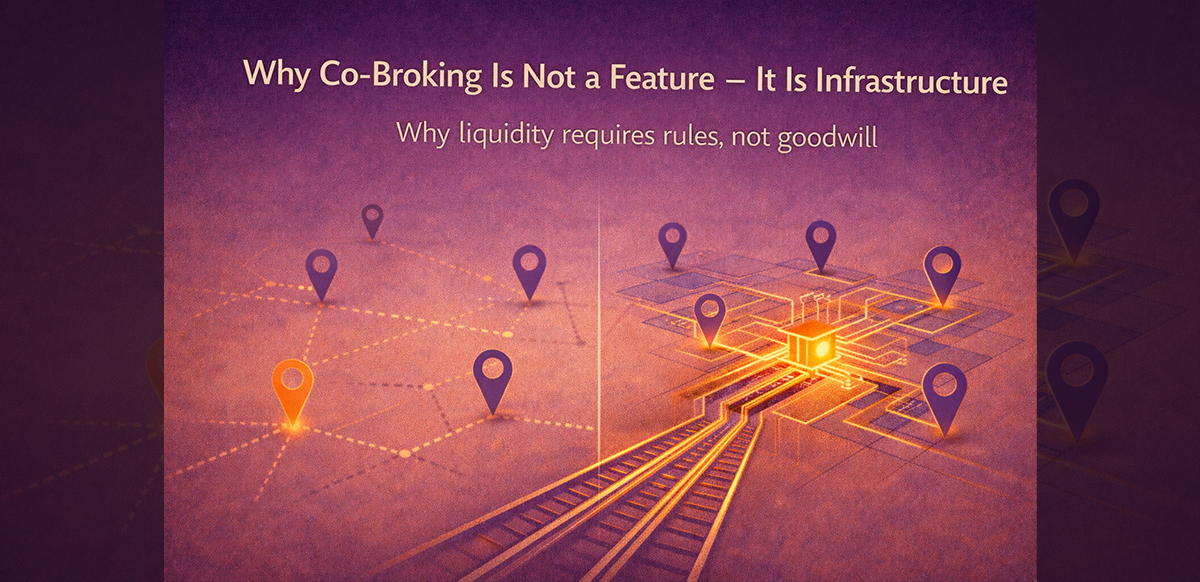
Co-broking is market infrastructure because it affects liquidity, buyer matching, and inventory reach. Goodwill alone cannot support cooperation at scale.
In most Malaysian real-estate agencies, co-broking is treated as a "feature"—a nice-to-have option, a courtesy between friendly agents, or something that happens when someone happens to have a matching buyer. It is maintained through WhatsApp groups, personal relationships, and verbal trust.
This framing is the reason most agencies fail to scale. Co-broking is not a social behavior; it is a liquidity system. And liquidity does not run on goodwill. It runs on rules.
Every agency begins the same way: an "Internal Co-Broking" WhatsApp group. At 10 agents, it works. At 100 agents, it becomes unusable. At 200 agents, cooperation quietly dies.
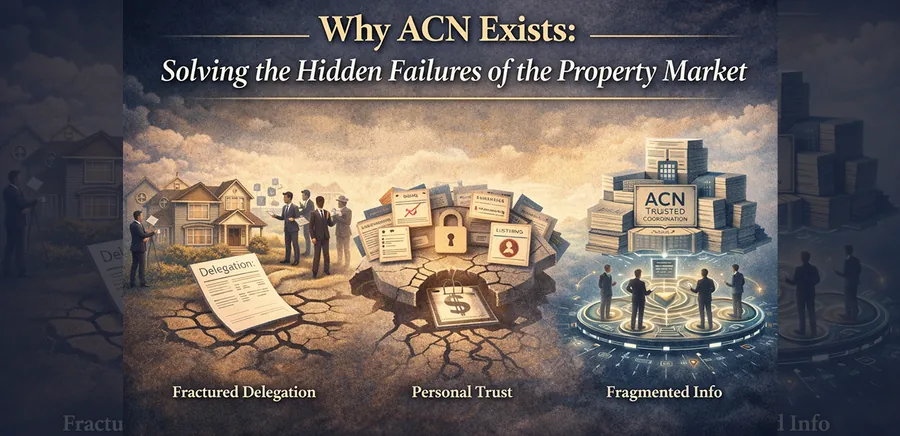
Not because people became selfish, but because social coordination does not scale. Three failures always appear:
Goodwill collapses under volume. Infrastructure does not.
At scale, co-broking is no different from financial infrastructure. It routes buyers to listings across teams, regions, and brands. For this engine to run reliably, three infrastructural components are non-negotiable:
1. Immutable Attribution
You cannot have cooperation without protection. An agent will only co-broke when the system guarantees their role and entitlement. Infrastructure means attribution is locked at the moment of interaction—not after a discussion or a boss intervenes. It becomes a record, not a memory.
2. Standardised Economic Logic
In a feature-based world, every co-broke is a negotiation ("50/50? 60/40?"). Negotiation kills liquidity. In an infrastructure-based world, the split is already known. The logic is settled before the listing is shared. Nothing to argue about; nothing to renegotiate.
3. Automated Settlement
The biggest friction in co-broking is not effort—it is waiting. If agents must chase colleagues or principals for money, they stop cooperating. Infrastructure settles automatically. When the deal closes, the system allocates, splits, and pays. Liquidity requires certainty of settlement.
The industry often says, "Real estate runs on trust." That is true—but incomplete.
Personal Trust
Systemic Trust
High-performance agencies do not try to make 300 agents "friends." They build systems that allow 300 strangers to cooperate safely.
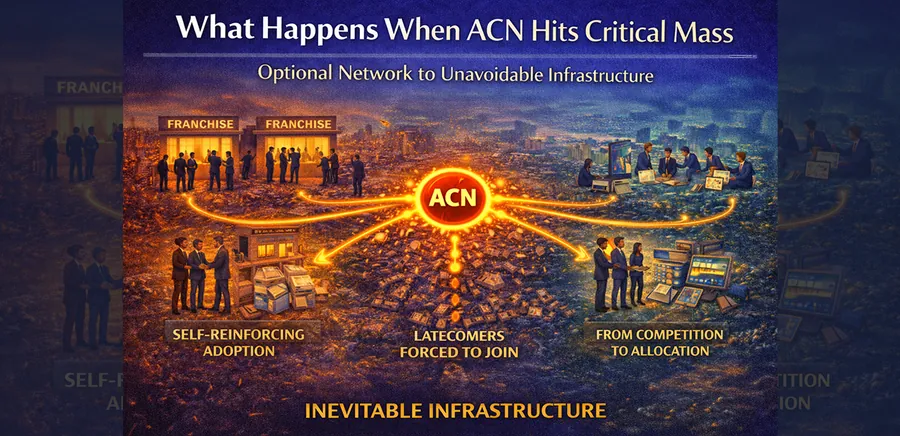
When co-broking is infrastructure, you move from networking to Network Effects. Each new agent adds liquidity, increases match probability, and raises the value of every existing listing. The network compounds.
This is the essence of an Agent Cooperation Network (ACN). Not politeness. Not culture. Mechanics.
ListingMine exists because you cannot run a modern ACN on goodwill and WhatsApp. We provide the liquidity rails:
We don't host chats; we host rules. ListingMine turns co-broking from a fragile social courtesy into the unbreakable backbone of your agency. Because in a high-speed market, agencies with the best friendships lose to agencies with the best infrastructure.

Founder of ListingMine and author of Agent for Life. Building ERP for Malaysian real estate agencies since 2008 — and writing to reshape how agencies grow.
More about Marvin Foong →More articles in this topic
This article is one of the sources behind this assessment. Take it to see what you already know and what to read next.
Educational self-assessment. Not a licensing examination or professional certification.