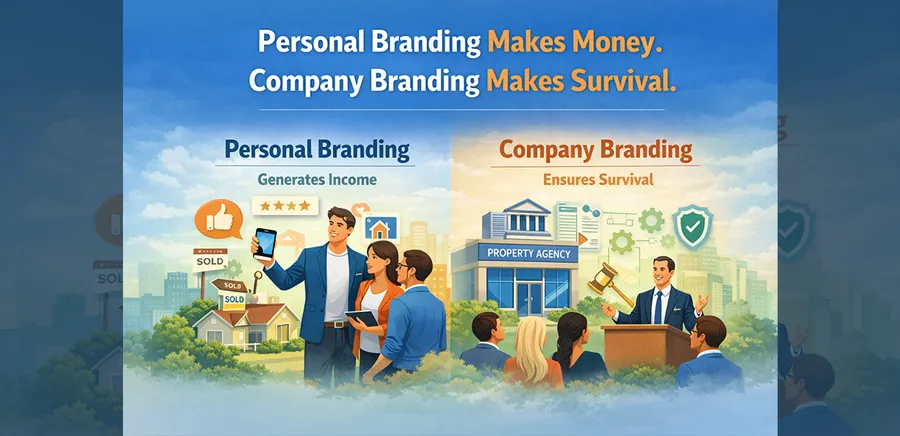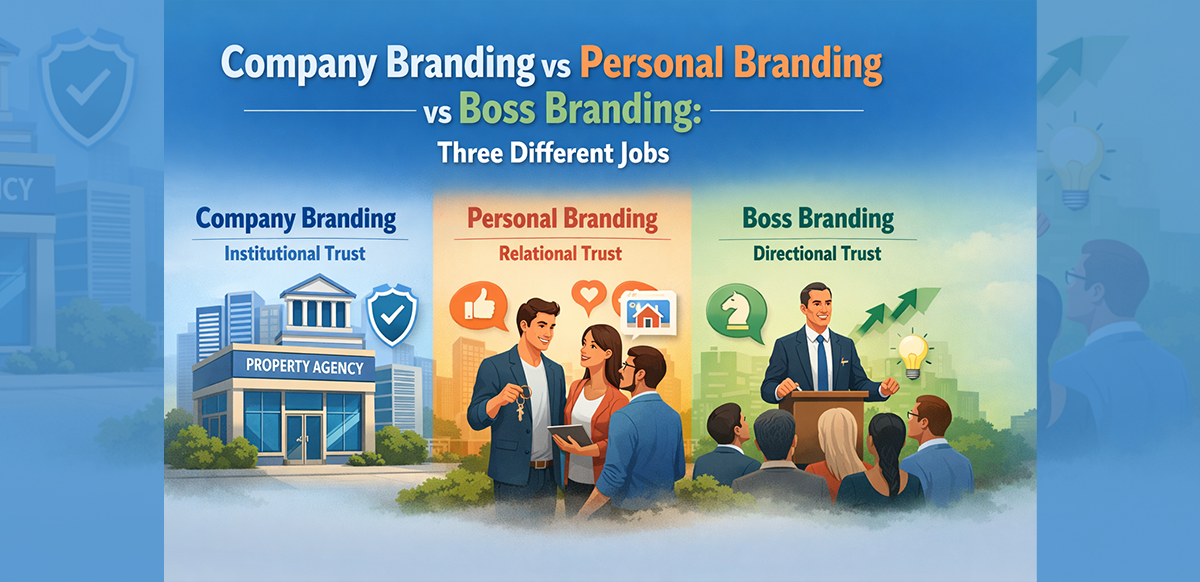
Company branding, personal branding, and boss branding serve different strategic purposes. Agencies need to separate these roles instead of treating all branding as the same activity.
Most people talk about "branding" as if it were one thing. It isn't.
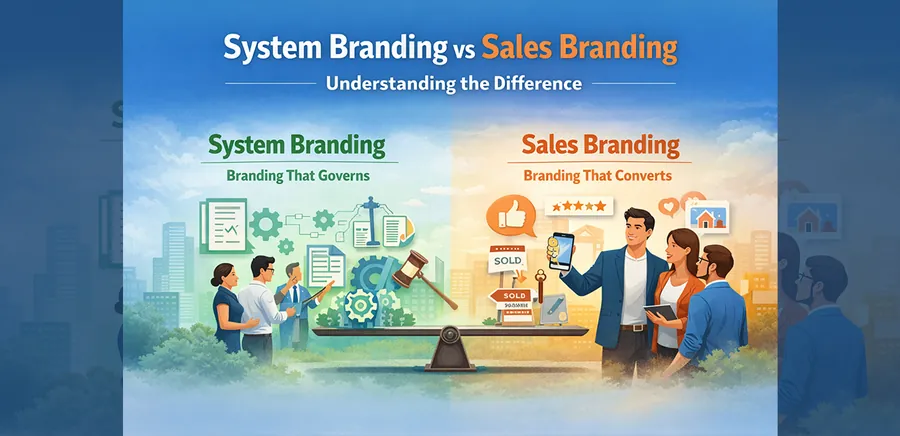
In a property agency, branding operates on three distinct layers:
They serve different purposes, answer different questions, and create trust in different ways.
Confusion happens when these three are mixed together or asked to do the wrong job. This article separates them—clearly and neutrally—before we discuss hierarchy.
The Core Question: "If the person I'm dealing with changes, am I still safe?"
What it is: Company branding is the market's confidence that this organisation behaves consistently, protects outcomes, and will still exist even if the people inside it change.
How it is built It is not built by logos. It is built by:
What it is designed to do
What it cannot do: It cannot create an emotional connection. It cannot replace personal rapport. Company branding is often invisible when things go right. It is the only thing that matters when things go wrong.
The Core Question: "Do I trust you to handle my case?"
What it is: Personal branding is the market's confidence that a specific individual understands their situation and will personally execute the work.
How it is built It is shaped by the agent's specific traits:
What it is designed to do
What it cannot do: It cannot scale. It cannot preserve knowledge after the individual leaves. Personal branding naturally follows the individual. That is not a bug—it is a feature. When the person leaves, the relational trust moves with them.
The Core Question: "Who is steering this ship, and do they know where they are going?"
What it is: Boss branding is the market's (and the talent's) confidence that there is competent leadership setting the standards behind the organisation.
How it is built It is formed through:
What it is designed to do
What it cannot do: It cannot replace systems. Strong Boss Branding without systems creates a cult of personality. Weak Boss Branding leads to organisational drift.
Most agencies do not intentionally confuse these layers. The confusion happens because all three layers are visible to the client, and all three influence the sale.
But visibility is not a function.
Problems arise when the Company tries to be "cool" (fails), or when the Boss tries to be the "star agent" (competes).
These branding types are not competitors. They are complementary layers of a single system.
When each layer stays in its lane:
Branding is not a single voice. It is a system of trust.
Understanding the difference between the Institution, the Individual, and the Architect is the first step toward building an agency that is both human and durable.
Only once these roles are clear does it make sense to discuss hierarchy or incentives.
That comes next.

Founder of ListingMine and author of Agent for Life. Building ERP for Malaysian real estate agencies since 2008 — and writing to reshape how agencies grow.
More about Marvin Foong →More articles in this topic
This article is one of the sources behind this assessment. Take it to see what you already know and what to read next.
Educational self-assessment. Not a licensing examination or professional certification.