Decision Debt: How Inconsistent Leadership Choices Slowly Cripple Agency Culture
In short
Inconsistent decisions create hidden debt inside agency culture. Agents lose trust when rules change depending on mood, politics, or personal preference.
In property, we understand financial debt. It’s the loan you take out to grow, with a clear plan to pay it back. But there’s a more insidious type of debt that agency leaders accumulate, often without realizing it: Decision Debt.
Coined in the tech world, Decision Debt refers to the cumulative cost of all the rushed, postponed, or inconsistent choices made by leadership. It doesn't show up on your balance sheet, but it accrues silently in your agency's culture, eroding trust and crippling performance until the entire operation grinds to a halt.
It is the silent killer of high-performing agency cultures.
What Does Decision Debt Look Like in a Property Agency?
You can't manage what you can't see. These are the clear signs that your agency is accumulating a dangerous level of Decision Debt:
- The "Rule of the Day": One week, you announce a strict "no discounting on commissions" policy. The next month, to win a big listing, you personally authorize a discount for a top agent. The team is left wondering: "What are the actual rules?"
- The Perpetual "Pilot Program": You launch a new lead distribution system "as a trial." Six months later, it's still a "trial," with no clear feedback loop or decision on making it permanent. Ambiguity becomes the default.
- The Invisible Promotion: A senior role opens up. Instead of a transparent internal process, the job is given to the agent who has the most face time with the boss. The message? Performance matters less than proximity.
- The Un-Enforced Standard: Your handbook requires all listings to have professional photos. Yet several agents consistently use poor phone pictures, with zero consequence. The standard becomes a suggestion, and the high-performers who follow the rules feel like suckers.
The Compound Interest: How Decision Debt Cripples Your Agency
This goes far beyond minor staff frustrations. Like financial debt, Decision Debt accumulates crippling "interest" in the form of cultural decay.
- Erosion of Trust: This is the most direct cost. When your actions don't match your stated principles, or when rules are applied inconsistently, your team stops trusting your leadership. They learn that success comes from navigating your whims, not following the established process.
- Paralysis by Analysis: When past decisions have been unpredictable, your team becomes afraid to act on their own. "Should I offer this bid? What did the boss say last time? I'd better just ask." Innovation stops, and you become the bottleneck for every tiny choice, ensuring processes slow to a crawl.
- The Death of Accountability: Why should an agent spend extra time meticulously documenting a tenancy file if they see others cutting corners without consequence? Inconsistent leadership makes accountability feel arbitrary and unfair, so people simply stop holding themselves to a high standard.
- The Exit of Your Best Talent: Your most talented, principled agents have options. They thrive in environments of clarity, fairness, and psychological safety. A culture drowning in Decision Debt feels chaotic and politically charged. They will leave for a competitor with a more coherent culture, taking your best clients with them.
Paying Down the Balance: A Leader's Guide to Solvency
Getting out of Decision Debt requires fiscal discipline for your leadership. It's a conscious shift from being reactive to being systematic.
- Principle Over Precedent: Before making any significant exception or decision, ask yourself: "What principle am I establishing here?" If you grant an exception for one top agent, be prepared to grant it for all who meet the same objective criteria. If you can't, don't make an exception. Leadership is about setting a consistent, principled course, even when it's personally inconvenient.
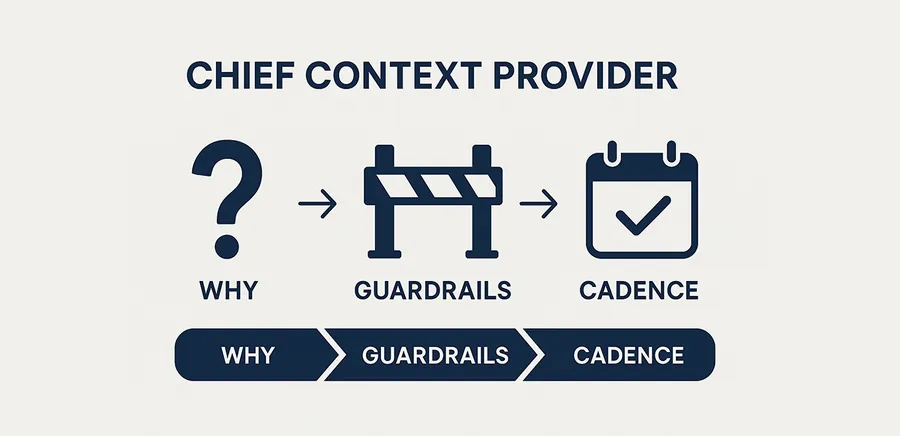
- Default to Transparency: Be open about how decisions are made. If you need to change a commission structure or shift a policy, explain the "why" behind it—the market data, the financial pressure, the long-term vision. When people understand the context, they are far more likely to accept an unpopular decision.
- Close the Loop: For every "pilot program" or "temporary measure," set a clear review date and a decision-making framework. Announce it upfront: "We will trial this new CRM for 90 days. Success will be measured by X and Y. On [Date], we will decide to either adopt it fully, adapt it, or abandon it." This transforms ambiguity into clarity.
- Have the Courage to Collect: When you see a team member ignoring a clearly communicated standard (e.g., poor photo quality), you must address it. Letting it slide is like taking out a new, high-interest loan. Enforcing the rule is a crucial payment against your existing Decision Debt. It's uncomfortable, but essential for solvency.
The Final Viewing
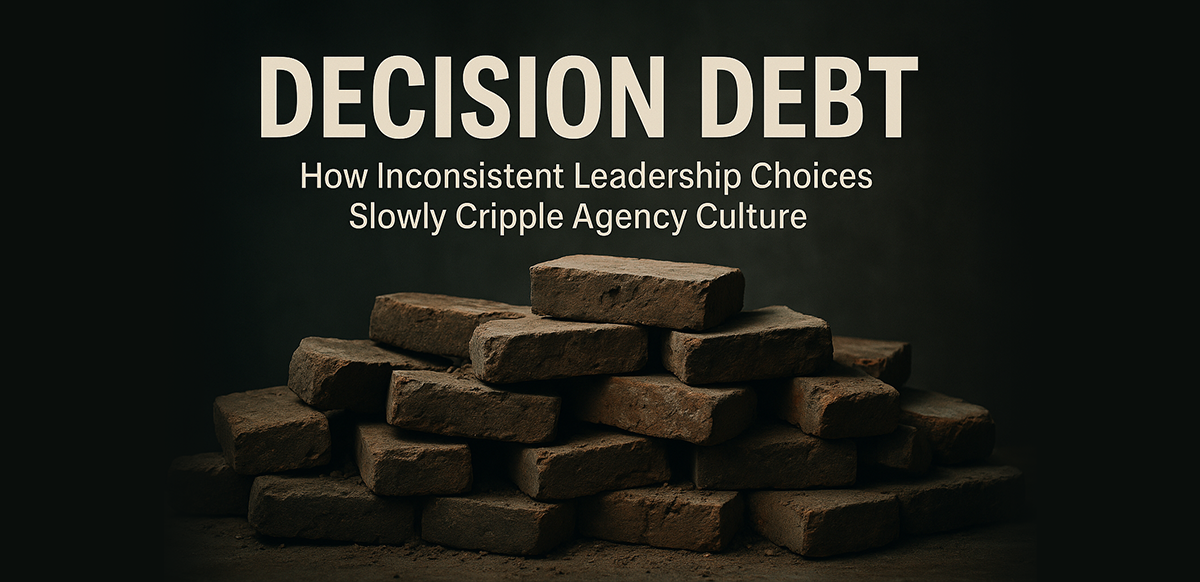
Your agency's culture is not built on your mission statement on the wall. It is built, brick by brick, on every single decision you make and enforce.
Decision Debt is the pile of cracked and crumbling bricks you ignore. Left unpaid, it will eventually cause the entire structure to collapse.
The most successful agencies aren't just great at sales and marketing; they are great at decision hygiene. They understand that a culture of clarity and consistency is the ultimate competitive advantage—one that attracts the best talent and keeps them thriving for the long term.
Stop accumulating debt. Start leading with principle.