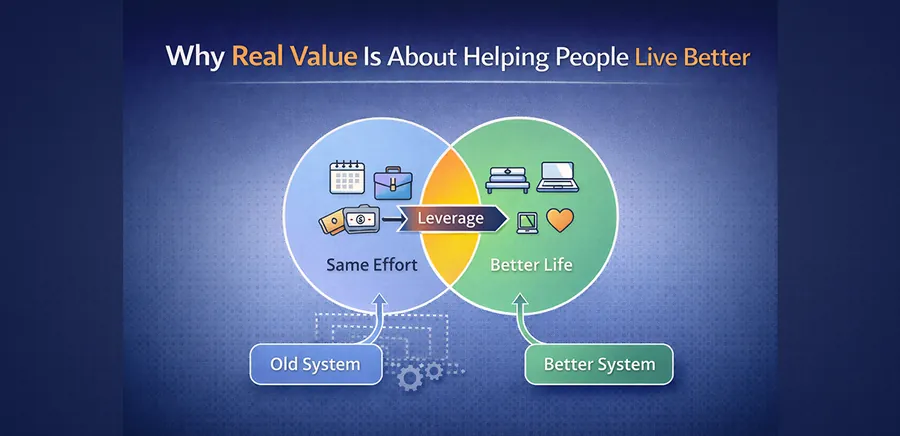
Flashy success branding can create jealousy, distrust, pressure, or wrong client assumptions. Agents should manage image carefully because status signals can backfire.
In many real estate markets, there is a familiar visual trope: agents and agencies posing with supercars, luxury watches, and oversized commission cheques. The message is simple: "Join us, and you will get rich fast."
From a recruitment perspective, this works—at least in the short term. But from a public trust perspective, the damage is significant and often irreversible.
Let's be fair. For recruitment—especially among young agents, career switchers, or those under financial pressure—flashing sports cars is effective. It compresses a long, uncertain career path into a seductive promise: fast money, low barriers, and visible rewards.
In that narrow sense, the tactic is not irrational. It lowers recruitment friction. However, recruitment efficiency is not the same thing as brand health.
What agencies intend to signal is "Success." What the public receives is "Risk."
To a serious buyer or seller, flashy wealth signals:
The subconscious reaction is not admiration; it is suspicion. The client wonders: "If they look this aggressive about wealth, will they pressure me, mislead me, or overpromise to close the deal?"
In the public imagination, the combination of "fast money + aggressive marketing + luxury display" sits dangerously close to investment scams and high-pressure MLM schemes. Even if the agency is 100% legitimate, their branding overlaps with industries that have burned the public before.
As a result, the agency doesn't just look successful—it looks like someone who might cheat you if you aren't careful. In an industry built on trust, that is an extremely expensive signal to send.
Compare aspirational agencies with institutional giants like JLL, CBRE, Knight Frank, or Reapfield. These firms control higher-value transactions and serve more sophisticated clients, yet they never flash sports cars as proof of success. Why? Because their brand is built on Credibility, not Aspiration.
Aspirational Branding: Proof of income.
Institutional Branding: Proof of standard.
The wealth is assumed; the professionalism is advertised. Paradoxically, that restraint increases trust.
Flashy branding optimizes for short-term volume and hype-driven growth. But it quietly taxes:
The High-End Market: Sophisticated sellers (HNWIs and Institutions) are repelled by flashy displays. They want an advisor, not a "hustler."
Agencies trapped in this image struggle to move upmarket. They recruit easily, but they remain stuck in a low-trust, high-pressure tier of the market.
The most enduring agencies don't show wealth. They show:
They let their professionalism speak for them. Because they are quieter, they end up building businesses that are larger, more stable, and ultimately more respected.
Flashy cars are a recruitment shortcut, but they are a trust liability. In a profession where Trust is the Product, branding that smells like "fast money" ultimately costs more than it earns.
The agencies that understand this stop selling success. They start signaling credibility. And the market—especially the high-value market—rewards them for it.

Founder of ListingMine and author of Agent for Life. Building ERP for Malaysian real estate agencies since 2008 — and writing to reshape how agencies grow.
More about Marvin Foong →More articles in this topic
This article is one of the sources behind this assessment. Take it to see what you already know and what to read next.
Educational self-assessment. Not a licensing examination or professional certification.