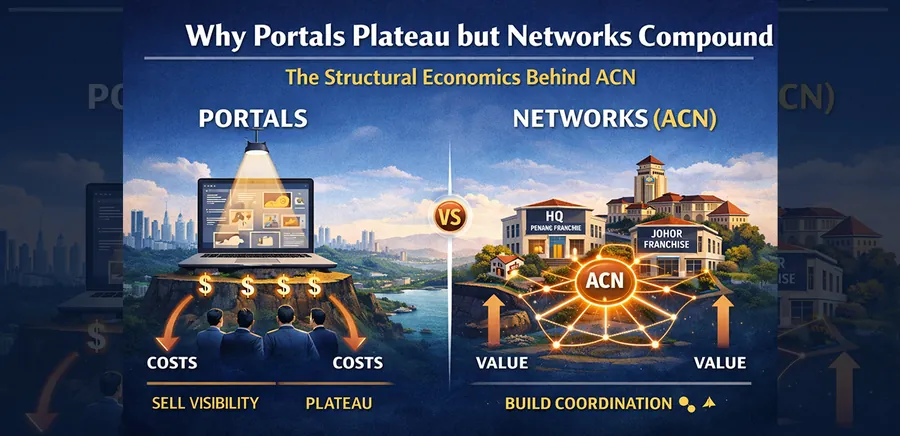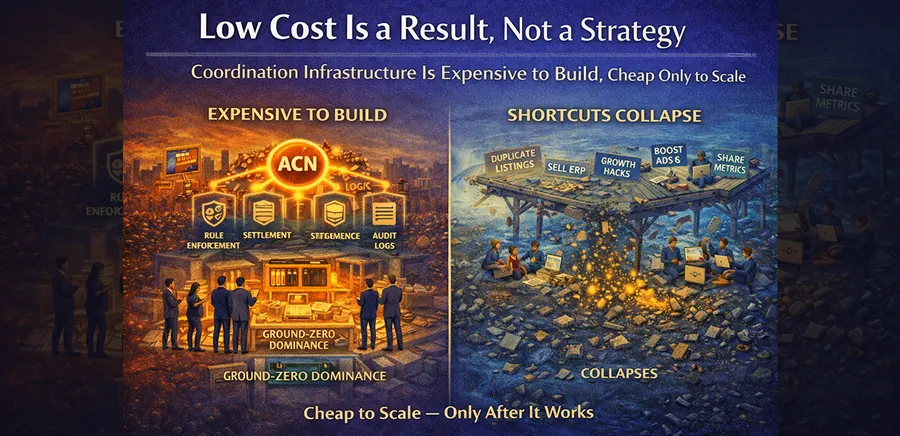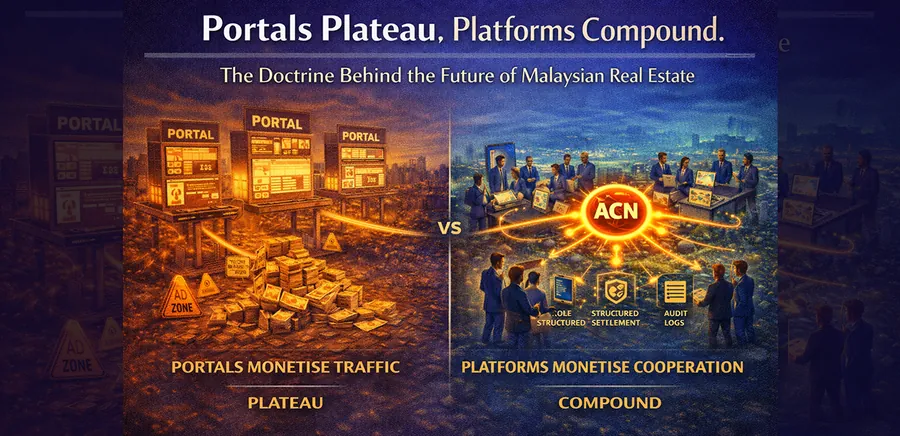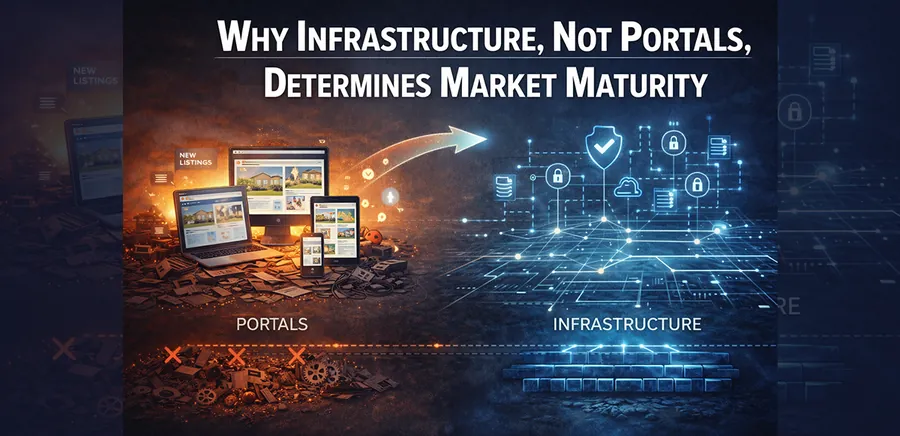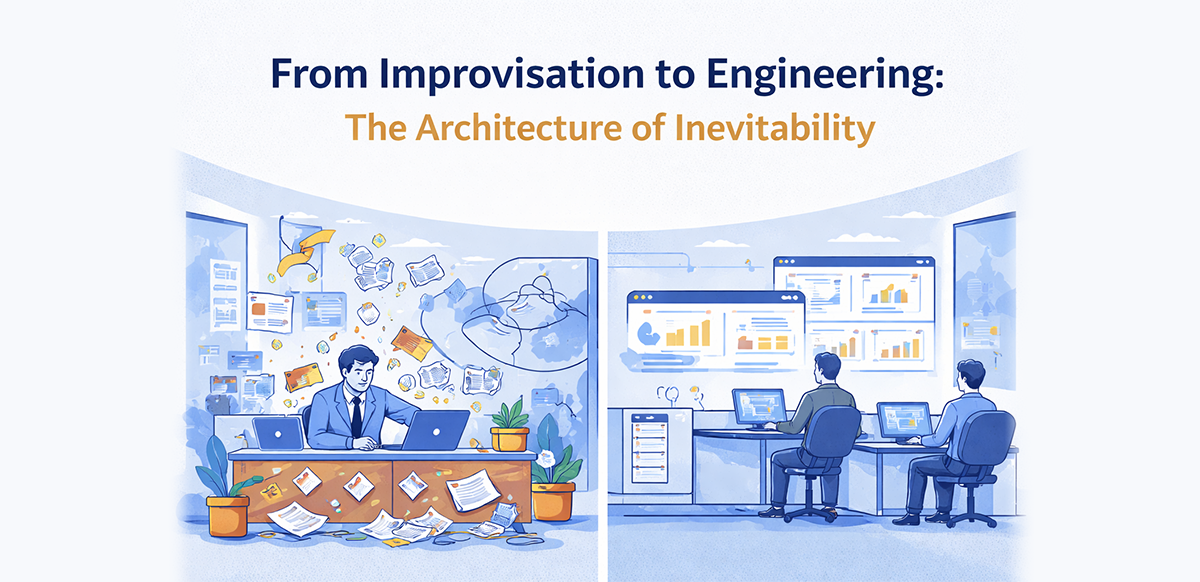
Real agency transformation happens when improvised fixes become engineered systems. The future belongs to agencies that convert repeated problems into designed workflows, rules, and infrastructure.
Every industry undergoes a predictable maturation. This shift occurs not because participants suddenly become more ethical or intelligent—but because complexity eventually outpaces human intuition.
Malaysia's property agency model has reached that threshold.
For decades, the industry functioned on informal coordination. Listings were scarce. Teams were local. Information moved slowly enough for humans to manage manually. That environment no longer exists.
This shift is not cultural. It is structural.
In the early phase of the industry, effort and personality were sufficient. Problems were solved socially rather than architecturally.
This was not incompetence. It was a rational response to a low-complexity environment. In a small pond, you don't need a dam; you just need to know how to swim.
The industry did not deteriorate; it became structurally dense. Several forces converged to create a "Complexity Tax" that now drains agency profits:
Together, they crossed the Improvisation Breakdown Point. At this stage, systemic failures begin masquerading as "people problems."
By the time leaders feel something is wrong, the signals are already consistent:
These are not discipline failures. They are design failures.
When complexity reaches this level, outcomes stop depending on effort and start depending on architecture. This is the same inflection point seen in manufacturing, aviation, and software—where reliability replaces heroics as the determinant of survival.
Engineering means replacing "good intentions" with repeatable systems:
| From: Improvisation | To: Engineering |
|---|---|
| Assumed Responsibility | Explicit, documented Roles |
| Ad-hoc Fixes | Standardized Workflows |
| Human Memory | Data Continuity & Attribution |
| Interpersonal Goodwill | Rule-based Governance |
| Individual Heroics | Systemic Redundancy |
Experience is sequential. You learn one failure at a time—often months apart, and usually at a high personal cost. In a high-complexity environment, that pace is no longer survivable.
Un-engineered agencies quietly rely on:
This concentrates the "brain" of the company into human heads. Engineering relieves this burden by remembering what humans forget: who did what, when, under which conditions, and with what consequence.
Industries do not choose their phase transitions. They are forced into them when old methods become uneconomical.
Property agencies are no longer deciding whether to move from improvisation to engineering. They are deciding how much they are willing to lose before they do—and how long they can afford to keep solving structural problems with human effort alone.
The next pieces in this series will show how engineering appears in practice—first subtly, then unmistakably—as the dividing line between agencies that stabilize and those that quietly exhaust themselves trying to scale chaos.

Founder of ListingMine and author of Agent for Life. Building ERP for Malaysian real estate agencies since 2008 — and writing to reshape how agencies grow.
More about Marvin Foong →More articles in this topic