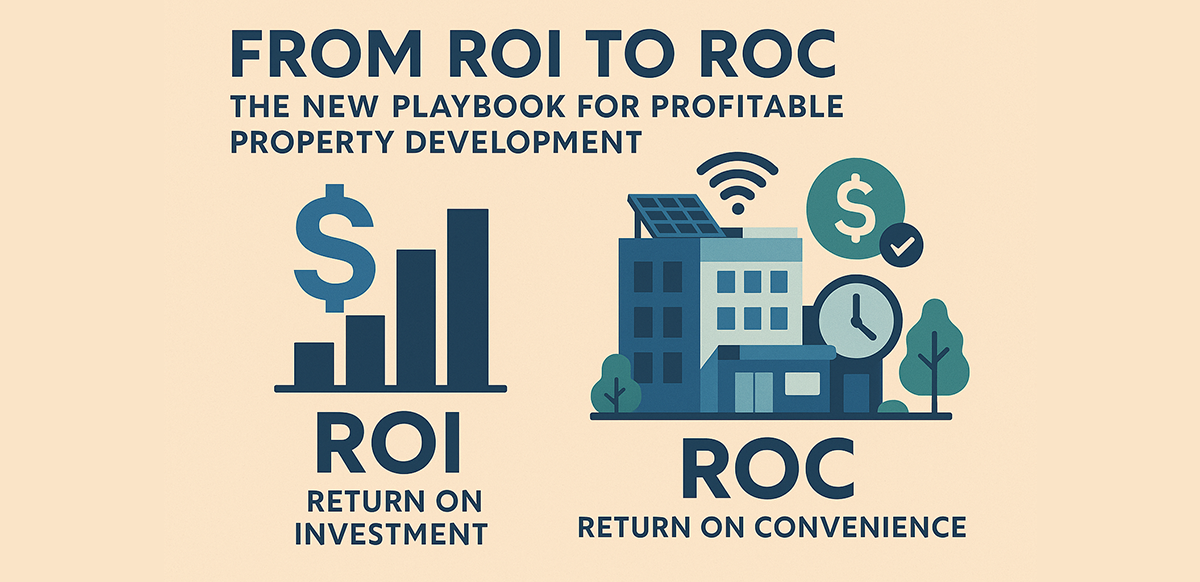
Developers should measure return on coordination, not only return on investment. Better coordination between product, agents, buyers, and financing can improve project profitability.
In our earlier paper, “The Property Operating System: How Malaysia’s Built Environment Becomes Its Next Growth Engine,” we explained how Malaysia’s property sector is shifting from bricks to systems — where verified data, digital governance, and cognitive infrastructure drive national efficiency.
That was the macro thesis: property as Malaysia’s new operating system.
This is the execution thesis: how agents and developers can make that system real — by building cost-saving themed developments that help Malaysians live better, work smarter, and spend less.
Because if the first wave was about systemizing value, the next must be about engineering affordability.
For the past decade, the market has been selling recycled concepts — TOD, Airbnb, resort lifestyle. The slogans remain modern; the economics do not.
Buyers are fatigued. Prices have plateaued. Developers keep building, but agents keep struggling to sell.
It’s not that property lost relevance — it’s that the product stopped evolving.
When appreciation ends, cost efficiency becomes the new appreciation.
The old investor asked: “How much can I make?”
The new buyer asks: “How much can I save?”
Malaysians today measure success not by speculation, but by sustainability. And the next property boom will belong to projects that lower total living cost.
“Live here and reduce your total cost of living by 30%.”
That’s the new slogan of success.
And the professionals who will architect this new reality are not just the builders — but the agents who translate buyer pain into developer strategy. They are the new architects of Malaysia’s living systems.
If a 1,000 sq ft unit charges RM0.30 psf in maintenance (RM300/month), that’s already 10% of a RM3,000 salary gone. Add utilities, food, transport, and a loan — you’re over 110% of income.
A sustainable property isn’t one that appreciates faster — it’s one that helps residents spend slower.
| Cost Component | Cost-Saving Feature | Monthly Savings (RM) |
|---|---|---|
| Utilities | Solar panels, energy-efficient fittings | 50–80 |
| Food | Community hawker kitchens, local suppliers | 80–120 |
| Transport | TOD, e-bikes, EV car-share | 180–250 |
| Internet | Unifi master fiber funded by clubhouse income — free high-speed WiFi | 100 |
| Housing Loan | Dual-key design for rental offset | 500–800 |
| Maintenance | Revenue-capable MC lowers fee from RM0.30 → RM0.10 psf | 200 |
| Total | ≈ RM1,000–1,400/month — 30–40% lower living cost, equal to earning RM10,000–15,000 more per year without a pay raise. | |
Every developer fears that adding all these features will inflate cost. And yes — individually, they do. But collectively, they create scale, and scale is what reduces cost.
The future developer doesn’t build individual conveniences — they build shared systems that multiply efficiency across 500 or 1,000 households. That’s how a building becomes a micro-economy instead of a one-time sale.
Every new feature looks expensive in isolation. But when 500 households share one solar grid, one management app, and one logistics network, the cost per unit drops while the value per unit rises.
That’s the hidden power of economies of scale — the same math behind Singapore’s smart districts and Japan’s living ecosystems.
Developers don’t need to imagine this. It’s already happening — successfully — in the world’s most advanced markets.
🇯🇵 Mitsui Fudosan – Japan’s “Real Estate as a Service” Model
Mitsui Fudosan’s Kashiwa-no-ha Smart City is the global benchmark for this model. They no longer sell townships; they operate ecosystems.
Where most Malaysian developers sell and move on, Mitsui Fudosan stays to operate the ecosystem — controlling not every parcel, but the key systems that make the entire township work: energy, mobility, health, and data.
Mitsui Fudosan doesn’t hand over buildings. They own and operate the ecosystem — proving “developer as system architect” can be both profitable and sustainable.
🇸🇬 Punggol Digital District – Singapore’s Public-Private Smart Infrastructure
Singapore’s JTC Corporation built a new district around shared systems — not speculative towers.
District Cooling, Smart Energy, and Shared Logistics reduced tenants’ operating costs by 20–30%.
Singapore’s Punggol proves that shared infrastructure can be profitable, not charitable.
🇲🇾 EcoWorld, Sunway, and the Malaysian Hybrid Model
Even locally, this trend has begun — though not yet optimized for profitability.
Malaysia doesn’t lack potential — it lacks developers who micro-optimize their projects into systems. The blueprint is now clear. The only missing piece is the will to execute it with the same systemic rigor.
Low fees come not from cutting services, but from creating income.
Developers can design clubhouses and shared areas as active profit centers, not liabilities.
Examples of Revenue Streams
With diversified earnings, maintenance can drop from RM0.30 to RM0.10 psf while maintaining premium service quality. “A modern building isn’t a cost center — it’s a community business.”
After completing a project, most developers hand the keys to the JMB or MC and move on to the next launch. They collect the one-time profit and abandon the recurring ecosystem — the part that could have generated decades of income.
Yet every project hides dozens of profit nodes:
These aren’t speculative. They’re micro-economies waiting for structure.
“The difference between a draining building and a profitable one is 10 extra days of planning — not 10 extra floors.”
A Local Services App connects every resident and nearby merchant into one economy.
Homeowners join the MC-managed app.
This single app can offset service charges — even produce a surplus.
“Every building can become its own economic micro-platform — powered by APIs, not just elevators.”
Modern developers can’t outsource their digital economy. If the app isn’t yours, the economy isn’t yours.
This isn’t a marketing gimmick — it’s the central utility of your building. Third-party apps mean you lose data, innovation, and long-term loyalty.
“Handing your residents to another app is like letting someone else own your plumbing — you’re locked out of the system that controls your building’s value.”
Agents are the feedback loop between buyer pain and developer execution. Your influence can shape the next generation of marketable projects.
How Smart Agents Lead
“Agents who guide design don’t chase buyers — buyers chase them.”
Developers used to chase ROI — return on investment. The future belongs to those who master ROC — Return on Convenience.
Property appreciation may flatten. But cost savings compound — and those who build around it will dominate Malaysia’s 2030s housing market.
“When the property itself becomes a profit engine, everyone — owner, agent, and developer — wins together.”
If you’re an agent, forward this article to your developer friends or team leaders.
If you’re a developer, stop guessing what buyers want — or risk building the slow-moving inventory of tomorrow.
Start building what their wallets need today.
Build smart. Sell easily. Design for the future.

Founder of ListingMine and author of Agent for Life. Building ERP for Malaysian real estate agencies since 2008 — and writing to reshape how agencies grow.
More about Marvin Foong →More articles in this topic
This article is one of the sources behind this assessment. Take it to see what you already know and what to read next.
Educational self-assessment. Not a licensing examination or professional certification.