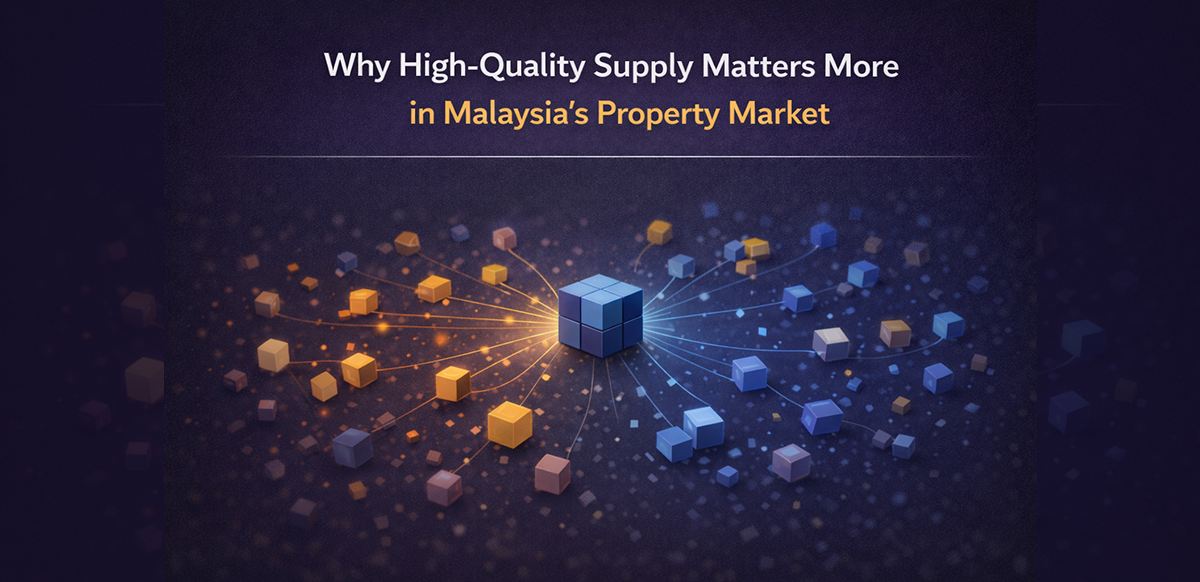
In small markets, high-quality supply matters more because every listing, owner, and buyer signal carries more weight. Agencies win by controlling better inventory, not just more inventory.
There is a universal truth that many property platforms misunderstand: Platforms do not win by attracting everyone. They win by serving the best suppliers.
This is true everywhere—but it matters far more in Malaysia than in large, liquid markets.
Many models are inspired by large economies (like the US or China) where agent inflow is endless and reputational damage is diluted by scale. Malaysia is the opposite. It is a small, dense, fast-feedback ecosystem.
In this environment, volume-first strategies lead to structural degradation.
Good agents close difficult cases, navigate complex financing, and manage developer expectations.
Mediocre agents create noise, trigger loan rejections, and burn leads.
In the Malaysian context, high-quality supply is not about "luxury branding." It is about the structural leverage of the participants:
You cannot enforce quality from the top-down in a fragmented market. Instead, you must use a bottom-up approach:
This is how you scale trust without coercion. When good team leaders benefit and transparent rules reduce conflict, adoption spreads naturally.
Large markets can survive mediocrity through sheer volume. Small markets cannot.
Malaysia's property industry will not be transformed by attracting more agents; it will be transformed by protecting and empowering the best ones.
Platform strategy in Malaysia is not about domination; it is about alignment. Agencies that serve everyone indiscriminately will eventually collapse under the weight of their own noise. Those that build infrastructure for high-quality supply will compound quietly, becoming the "shared rails" for the entire industry.

Founder of ListingMine and author of Agent for Life. Building ERP for Malaysian real estate agencies since 2008 — and writing to reshape how agencies grow.
More about Marvin Foong →More articles in this topic