Agencies grow stronger when they protect agent data, income visibility, and long-term career value. Trust-based protection can attract and retain better agents than control-based management.
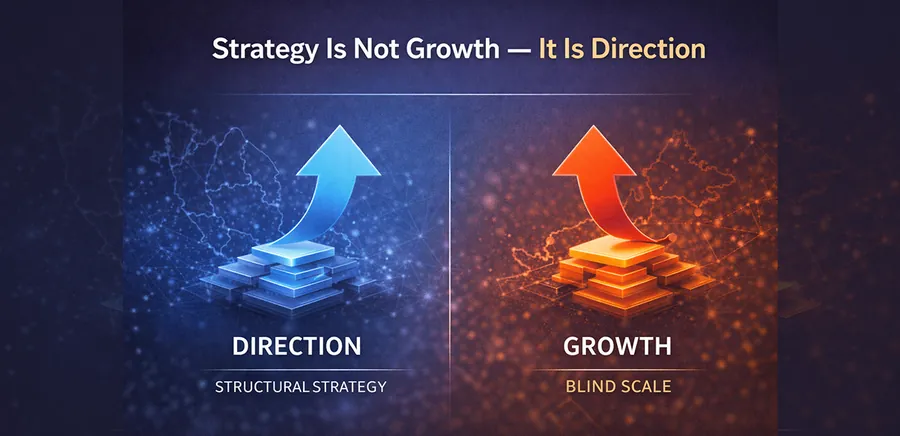
Most agency leaders believe growth comes from control. Control of leads. Control of listings. Control of data. Control of people.
On paper, this feels logical. In reality, it produces the opposite result: Small agencies trapped in permanent rebuild mode.
The agencies that grow larger—not just busier—follow a different principle: They protect agents' careers instead of confiscating them.
Many agencies try to retain agents by making it expensive to leave:
This creates short-term obedience, not long-term loyalty. Agents stay out of fear, until they can't anymore. Then they leave abruptly. When they go, the value disappears with them.
That is not retention. That is delayed attrition.
Here is a simple diagnostic test for agency principals. After 10–15 years of operation:
If every departure feels like starting again, the agency is not growing. It is repeating. Headcount goes up and down. But the organisation stays the same size.
When agents are allowed to own their contacts, history, and relationships (the "Black Box"), something unexpected happens. They stop acting defensively.
They:
Because they are no longer protecting themselves from the system. Protection creates stability. Stability creates scale.
Look at the org chart of most agencies today:
This is a structural failure. The middle layer leaves because they own nothing. Every move resets them. Growth requires escape. Protecting agents' careers repairs this missing middle—and that middle is where leadership, culture, and stability come from.
There is a persistent fear among principals: "If agents are strong, they will leave."
The truth is more uncomfortable: Weak systems fear strong agents. Strong systems attract them.
When an agency provides governance, structure, and collaboration infrastructure—but does not confiscate private assets—strong agents see value in staying. Because the system adds leverage instead of extracting it.
Agencies that protect agents' data gain:
Their growth is quieter—but compounding. They don't recruit aggressively. They don't churn constantly. They don't rebuild endlessly. They accumulate.
Compliance gets tasks done. Institutions retain value.
If your agency collapses the moment key people leave, what you built is not an institution—it is a headcount-dependent operation. Protecting agents is not a moral stance. It is an architectural decision.
Agencies don't grow large by owning agents. They grow large by becoming worth staying in.
Protect agents' careers. Let experience compound.
And the agency will finally grow bigger than its founder, its teams, and its current headcount. That is how protection turns into scale.

Founder of ListingMine and author of Agent for Life. Building ERP for Malaysian real estate agencies since 2008 — and writing to reshape how agencies grow.
More about Marvin Foong →More articles in this topic
This article is one of the sources behind this assessment. Take it to see what you already know and what to read next.
Educational self-assessment. Not a licensing examination or professional certification.