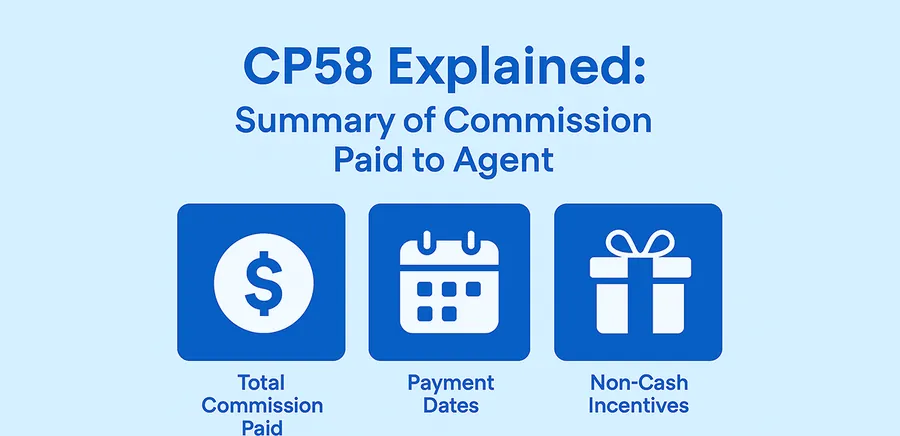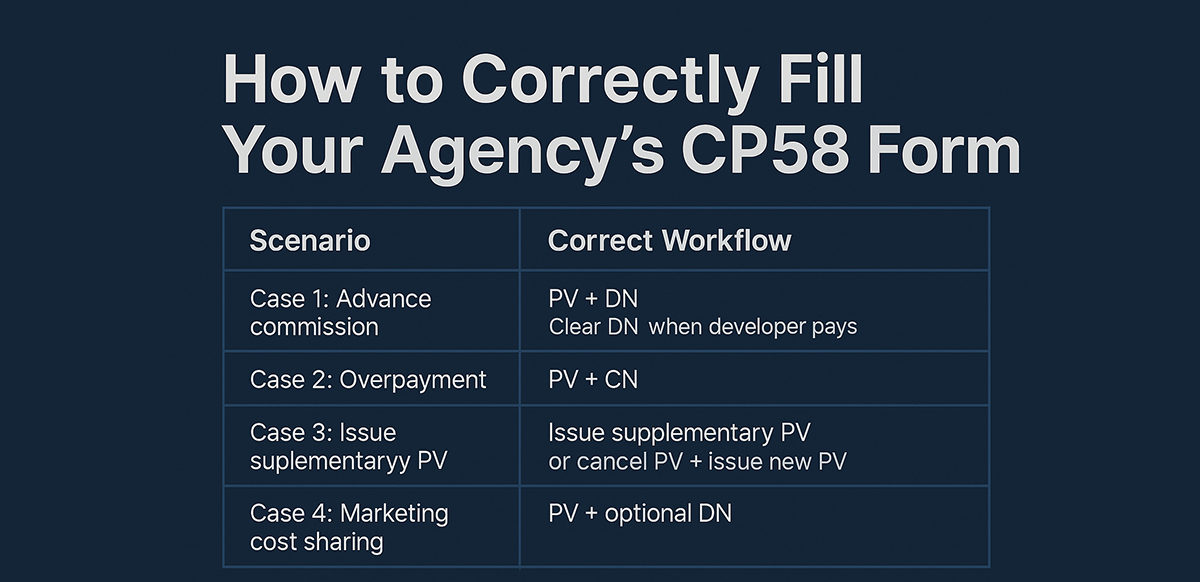
CP58 preparation is part of proper tax reporting for commission and incentive payments. Agencies need accurate records, payment tracking, and compliance discipline to avoid future tax problems.
The Definitive Malaysian Real Estate Guide (Updated for 2026)
CP58 is one of the most misunderstood documents in the real estate industry. Every year, agencies scramble to reconcile Payment Vouchers (PV), Credit Notes (CN), and Debit Notes (DN), often discovering too late that:
This guide fixes all of that. It is the cleanest, most audit-proof way to handle CP58 for commission-based agencies in Malaysia. If your agency follows this method, 99% of all CP58 problems disappear permanently.
There are only three financial documents that matter in a commission-paying business:
Each one has a completely different purpose and must never be mixed up.
1.1 What Each Document Actually Does
| Document | Main Function | Which Account? | Impacts CP58? |
|---|---|---|---|
| PV (Payment Voucher) | Records commission paid or credited to agent | Commission Ledger | YES |
| CN (Credit Note) | Cancels/reduces commission previously in a PV | Commission Ledger | YES |
| DN (Debit Note) | Records agent borrowing or reimbursing money to agency | Agent Receivable (Balance Sheet) | NO |
The LHDN logic is simple:
CP58 reports incentives "paid or credited". That is only PV minus CN. DN is always ignored.
This leads to the unbreakable formula:
CP58 = Σ(PV) − Σ(CN)
(And never involves DN)
Inside agencies, the term "DN" is used loosely. But in formal accounting, only ONE type of DN is valid.
The Two Types of DN (Industry Terminology)
| Industry Usage | Real Accounting Meaning | Status |
|---|---|---|
| DN used to adjust commission | INVALID (must be CN or PV) | Forbidden |
| DN used for money agent owes the agency | Correct Debit Note (Agent Receivable) | Allowed |
This confusion leads to:
To eliminate this:
DN should only mean one thing: "The agent owes money to the company." Never to adjust commission.
These are the four CP58-critical cases:
Advance commission
Overpayment
Underpayment
Marketing/shared-cost deduction
We will cover each in full detail.
CASE 1 — Advance Commission (Developer Has Not Paid Yet)
This is the most common messy scenario.
Scenario
| Item | Amount |
|---|---|
| Agent's commission entitlement | RM1,000 |
| Developer payment | Not yet received |
| Agency advances | RM1,000 |
Correct Workflow
| Document | Amount | Purpose |
|---|---|---|
| PV | RM1,000 | Records commission "paid/credited" (CP58 entry) |
| DN | RM1,000 | Records loan/advance the agent owes the agency |
CP58 = RM1,000
Taxable immediately.
DN does NOT affect CP58.
Why this is correct
When the Developer Pays (Year 2 or Year 3)
This is the part most agencies get wrong. Let's break it into two clean steps.
Step 1 — Recognise Developer Payment (Accrual Method)
| Debit | Credit |
|---|---|
| Cash RM1,000 | Developer Payable / Commission Accrual RM1,000 |
This recognises that the developer has now paid what was originally owed.
Step 2 — Settle the Agent's Loan (DN)
| Debit | Credit |
|---|---|
| Commission Expense / Settlement of Advance RM1,000 | Agent Receivable RM1,000 |
Important clarifications:
CASE 2 — Overpayment
Scenario
| Item | Amount |
|---|---|
| True entitlement | RM1,000 |
| PV issued by admin accidentally | RM1,100 |
| Overpayment | RM100 |
Correct Workflow
| Document | Amount | Purpose |
|---|---|---|
| CN | RM100 | Reduces the overstated PV |
| (Optional) DN | RM100 | If the agent must return the excess |
CP58 = RM1,100 − RM100 = RM1,000
Why DN is optional
If the agent already returned RM100 physically, no DN is needed.
CASE 3 — Underpayment
Scenario
| Item | Amount |
|---|---|
| True entitlement | RM1,000 |
| PV issued | RM900 |
| Shortfall | RM100 |
There are two correct methods.
Method A — Supplementary PV
| Document | Amount |
|---|---|
| Original PV | RM900 |
| Additional PV | RM100 |
CP58 = RM900 + RM100 = RM1,000
Method B — Cancel and Reissue
| Document | Amount |
|---|---|
| CN | RM900 (cancels wrong PV) |
| New PV | RM1,000 |
CP58 = RM1,000
❌ Forbidden Method: DN RM100
A DN cannot increase income. It never enters the commission ledger.
CASE 4 — Marketing Cost Sharing
Scenario
| Item | Amount |
|---|---|
| Commission entitlement | RM1,000 |
| Agent agrees to share marketing | RM100 |
| Net cash paid | RM900 |
There are two possible treatments, but only one is safe for withholding tax compliance.
Method A (Recommended for WHT Section 107D Compliance)
| Document | Amount | Purpose |
|---|---|---|
| PV | RM1,000 | Gross income (safe for WHT) |
| DN | RM100 | Agent reimburses the agency |
CP58 = RM1,000
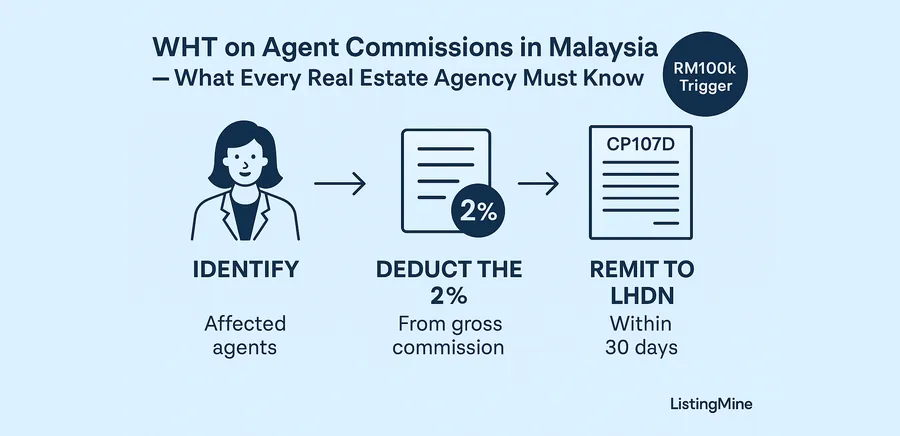
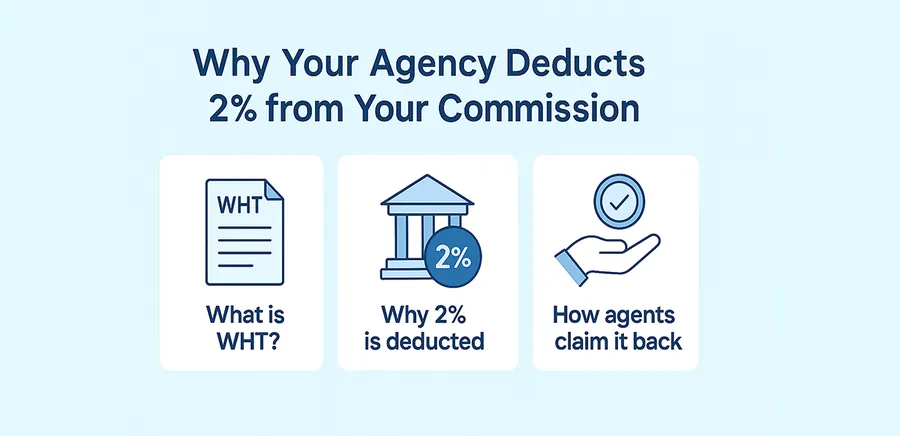
WHT = 2% on RM1,000 (if applicable)
Why this method is safest
Under Section 107D:
WHT applies to gross incentives, not net
LHDN expects agencies to report the full commission
Agents can later claim RM100 as a business expense in their own Borang B
Method B — Using CN (Only If Entitlement Truly Reduced)
| Document | Amount |
|---|---|
| PV | RM900 |
This is only correct if:
| Rule | Description | Applies to |
|---|---|---|
| Resident individuals only | ||
| Threshold | > RM100,000 incentive from same payer in prior YA | |
| Rate | 2% | |
| Based on | Gross payment = PV − CN | |
| DN affects WHT? | NO | |
| Remittance | Monthly via e-CP107D | |
| Agent must have | Tax Identification Number (TIN) |
Malaysia announced a simplified rollout:
E-Invoice Requirements for PV/CN/DN
| Item | Requirement |
|---|---|
| UUID | Mandatory for PV, CN, DN |
| CN must link to | The specific PV UUID |
| DN must link to | The receivable UUID |
| B2C over RM10,000 | Requires e-Invoice starting 2026 |
Important clarification
E-Invoice does not change CP58 rules. Its main purpose is to ensure:
| Case | PV | CN | DN | CP58 Result |
|---|---|---|---|---|
| 1 — Advance | 1,000 | – | 1,000 | 1,000 |
| 2 — Overpayment | 1,100 | 100 | (optional 100) | 1,000 |
| 3A — Underpayment | 900 + 100 | – | – | 1,000 |
| 3B — Cancel + Reissue | 1,000 | 900 | – | 1,000 |
| 4A — Marketing Cost (Safe) | 1,000 | – | 100 | 1,000 |
| 4B — True Reduced Entitlement | 900 | – | – | 900 |
| Law | Meaning |
|---|---|
| Law 1 | PV and CN are the only documents that affect CP58. |
| Law 2 | DN is a loan/debt and must never change commission. |
| Law 3 | CP58 = PV − CN. Always. No exceptions. |

Founder of ListingMine and author of Agent for Life. Building ERP for Malaysian real estate agencies since 2008 — and writing to reshape how agencies grow.
More about Marvin Foong →More articles in this topic
This article is one of the sources behind these assessments. Take one to see what you already know and what to read next.
Educational self-assessment. Not a licensing examination or professional certification.