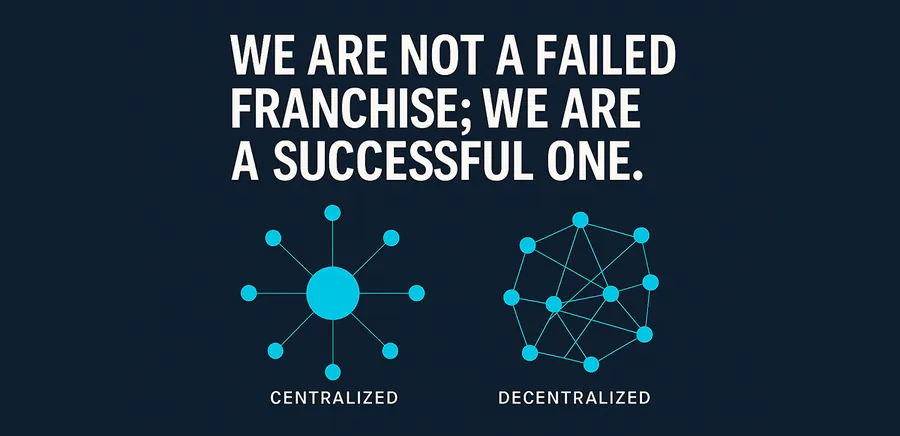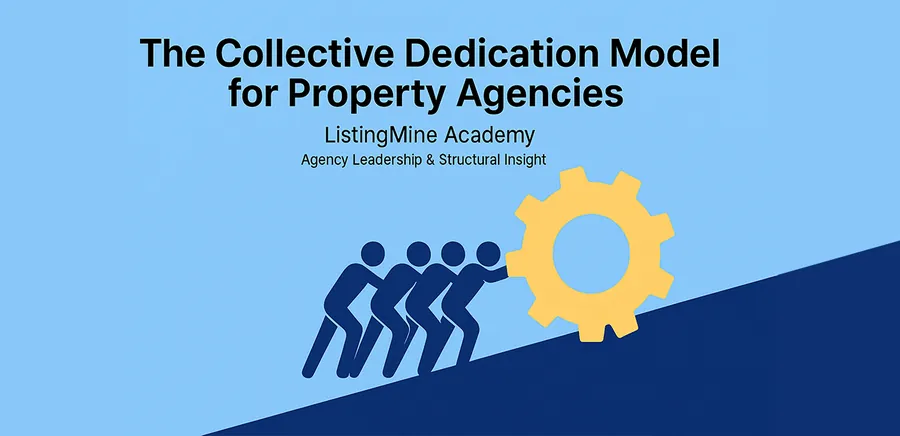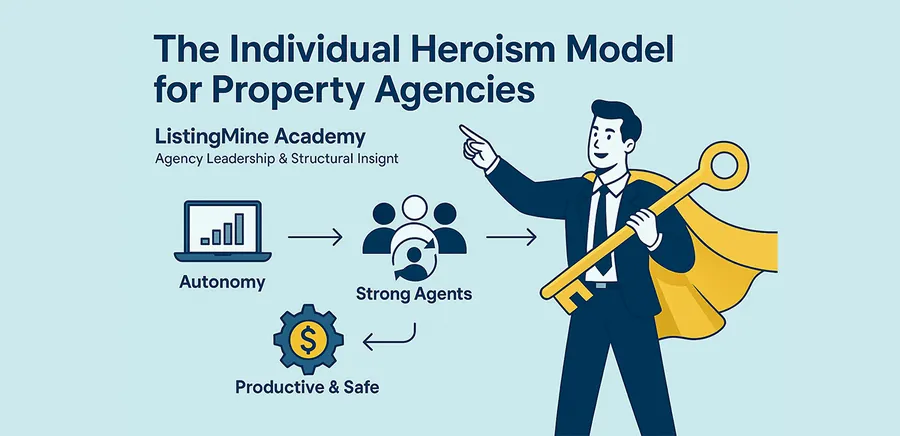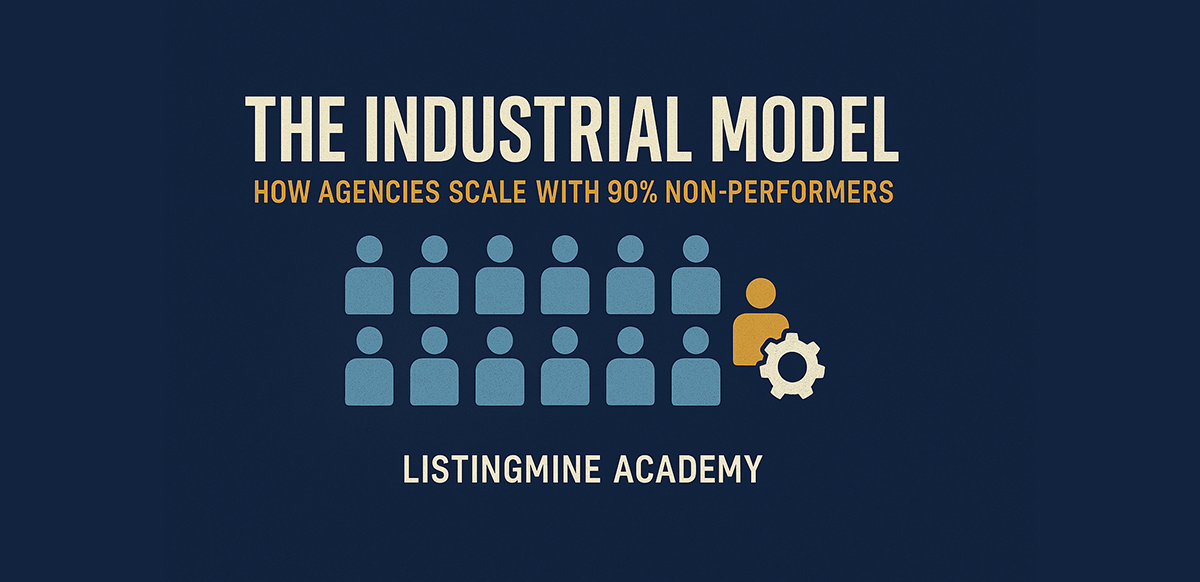
Some agencies scale by accepting high dropout and low productivity as part of the model. The industrial question is whether systems can still extract value from a mostly inactive base.
Most agency principals already know this, even if they rarely say it openly.
You can recruit one hundred people.
Ten will eventually carry the company.
Ninety will float, struggle, or leave quietly.
The traditional approach has always been the same: Recruit harder, motivate louder, train longer, and hope more.
The outcome is also the same: Top producers become overloaded, new agents remain confused, and leaders spend more time cleaning up than building.
The problem is not the character of the agents. The problem is the architecture of the work.
Agencies rely on a “Hero Agent” model that demands every person to be a full-cycle artisan. The future belongs to the Industrial Model: a structured, role-based ACN system where people contribute based on ability, evidence, and discipline.
If you think the "Industrial Model" is theoretical, look North. The battle between the "Hero Agent" and the "System" has already been fought in China. The System won.
Ten years ago, China’s market was chaotic—fake listings, rogue agents, and hoarding. Then came the shift to ACN (Agent Cooperation Network).
Lianjia (链家) / Beike (贝壳): They pioneered the ACN. They realized that by splitting a deal into 10 distinct roles (listing, photography, key holding, showing, closing), they could monetize thousands of junior agents who otherwise would have quit. They didn't just build an agency; they built a manufacturing line.
5i5j (我爱我家): Adopted the CBS (Core Business System). They moved away from the "Lone Wolf" culture to a platform-based cooperative model. The system dictates the workflow, not the star agent.
Maitian (麦田): Implemented a rigorous cooperative framework where "Service Quality" known as M+ is standardized by the process, not the person.
The Result? The "Super Agent" model in China is effectively dead. You cannot compete with a Beike team where one person sources, one edits VR tours, one handles legal, and one closes. They move faster, make fewer mistakes, and dominate market share.
Malaysia is 5-10 years behind this curve. The Industrial Agency is coming. You can either build it or compete against it.
The following blueprint shows you how to build it. This is the operational DNA of the winning system.
In the old model, one agent must source the listing, convince the owner, shoot photos, write descriptions, run ads, handle leads, qualify buyers, arrange access, host viewings, negotiate offers, coordinate legal, manage loan progress, monitor stamping, and handover keys.
This works only for one or two active cases. Beyond that, the “hero” collapses.
The Industrial Model accepts reality: not everyone is an elite closer, but almost everyone can perform one specialised role well if structure, proof, and reward are clear.
The ACN approach breaks the sales cycle into specialised, provable roles. The 10-role subsale blueprint is one engineered version of this industrial workflow.
| Category | Before: Hero Agent Model | After: Industrial ACN Model |
|---|---|---|
| Core Philosophy | One person does everything | Roles do what they do best |
| Workload Structure | Overlapping and memory-based | Sequenced and ticket-based |
| Listing Quality | Inconsistent and personal | Verified and QC-stamped |
| Appointment & Authority | Verbal and unclear | Appointment letter and verification |
| Owner Communication | Multiple agents causing confusion | Single Listing Manager |
| Media Quality | Basic, inconsistent | Professional and standardised |
| Access Management | Unreliable and inconvenient | Key Holder with access governance |
| Buyer Experience | Random and emotional | Scripted viewing with intelligence logging |
| Negotiation | Guesswork and blind offers | Data-driven negotiation |
| Deal Collapse Risk | High due to weak admin | Transaction Coordinator safeguards |
| Lead Management | Lost in WhatsApp | Logged and timestamped |
| Internal Competition | Hoarding and ego conflicts | Open role application with approval |
| Commission Disputes | Frequent and emotional | Automated distribution with proof |
| Talent Utilisation | 10% productive | 100% contributing |
| Agent Progression | No clear pathway | Evidence-based advancement |
| Scalability | Principal manages everyone | Principal manages a few Lead Agents |
| Company Stability | Rebuild every time someone quits | Inventory and data remain in system |
| Recruitment Quality | Overpromising and disappointment | Clear role menu during interview |
| Competitive Advantage | Easy to copy | Verified inventory and ACN culture |
| Exit Impact | Loss of knowledge and listings | Listing, data, and intelligence stay |
| Downturn Resilience | Collapses into chaos | Structure becomes more important |
This is the fundamental difference:
Old Model = Dependency on heroes.
New Model = Dependability on systems.
Different markets require different approaches.
Rentals and Projects are Solo Tracks (Track A). They do not require ACN complexity because the margin is too small or the process is too simple.
Subsale (Track B) requires the heaviest ACN structure because it carries the highest risk: legal issues, valuation differences, owner psychology, multi-party negotiations, and long timelines.
The 10-role subsale blueprint exists for this reason. Subsale needs industrial precision.
The Industrial Model begins with roles, not personalities.
The company defines: Roles, responsibilities, evidence requirements, KPI standards, commission ranges, eligibility rules.
Agents decide: Which roles they take, which roles they open to others, and whom they approve within policy.
Crucially, the system supports Role-Stacking. One qualified agent can hold multiple tickets/roles on a single deal (e.g., the Lister can also be the Listing Manager). This makes the overall commission split for a single agent more palatable, especially on smaller-ticket subsale deals.
Closer is not monopolised by the Lister or Lead. Any qualified agent may apply to be the Closing Agent, subject to agency rules and ACN approval. This prevents ego-based hoarding.
ACN only works if contribution is documented.
Ticket stages include creation, acceptance, completion, and verification.
No ticket means no pay.
This removes arguments and ensures clarity.
The Verifier acts as the risk firewall. They confirm ownership, authority, documents, tenancy, arrears, caveats, and valuation risks. When possible, they enforce appointment letters and ideally exclusive mandates.
Exclusive listings create cleaner workflows and stronger agency control. ACN becomes a moat because exclusive inventory cannot be duplicated easily.
The Industrial Model recognises that most agents are not closers, but they can still contribute meaningfully.
Support roles such as Lister, Key Holder, Viewing Specialist, or Buyer Referrer allow non-closers to participate and earn without carrying the entire sales burden.
Example of a Listing-Side split (conceptual, not fixed):
Roles must total within one hundred percent and follow provable contribution.
The Industrial Model is not a fixed hierarchy. Support Agents can graduate into Lead or Closing roles after consistent performance.
Graduation can require criteria such as:
Promotion is not based on seniority or charisma, but on documented evidence.
ACN cannot be launched agency-wide immediately. It begins with a phased, calculated pilot, what we call the Starter Pack Implementation Plan.
As deals close successfully, internal demand grows. Agents adopt what works, not what is announced.
Slow markets expose weaknesses in hero-based agencies. ACN becomes more critical during downturns:
The Industrial Model stabilises performance when the market is unstable.
A functioning ACN with exclusive listings becomes extremely difficult for competitors to replicate.
The verified listing library, QC discipline, role culture, viewing intelligence, and predictable workflows collectively lock talent in place. Agents do not leave because they cannot rebuild the system elsewhere.
This is the strategic moat: not payout, not recruitment script, but a functioning machine.
ListingMine does not dictate policies or commission structures. It does not force ten roles or any fixed configuration.
It provides the framework:
The agency defines the policy. ListingMine ensures execution. ACN provides scalability.
Every strong principal will inevitably raise objections. This is normal. But remember: Your existing model already suffers from 90% non-performance. ACN is not creating new problems; it is solving old ones.
If you read this and decide to stay with the current model, you are not just "pausing." You are making an active decision to decline.
Here is exactly what happens next if you ignore the Industrial Shift:
The market is maturing.
The era of the "Hero Agent" is ending.
The era of the "Industrial Agency" has begun.
You can either own the factory, or you can be crushed by it.
You already have 90% non-performers, unpredictable pipeline, team leaders resigning, lost inventory, internal politics, and zero asset accumulation. These are fatal structural flaws.
ACN does not create risk. It converts inevitable failure into predictable productivity.
The 90% who do nothing today become the 90% who support the pipeline.
The 10% who carry the agency today become the 10% who scale it.
Once the model works for one property, you can roll it out to the entire agency. ACN is the first system in Malaysia designed for the real industry, the real problems, and the real workforce.
You are not fixing people.
You are fixing the machine that makes people productive.
This is the Industrial Model.
This is how modern agencies grow.
This is what makes ACN a moat.
The concepts, models, comparisons, and commission structures described in this article are for educational and informational purposes only. They are not intended to be used as legal, financial, operational, or compliance advice.
Real estate agencies should not design or implement their commission schemes, business systems, compensation structures, or organisational models solely based on the information presented here.
Every agency operates under different regulations, financial conditions, internal policies, and risk profiles. Before making any structural, financial, or contractual changes, you should consult a qualified professional, such as:
ListingMine Academy and its authors assume no responsibility for decisions made based on this content.

Founder of ListingMine and author of Agent for Life. Building ERP for Malaysian real estate agencies since 2008 — and writing to reshape how agencies grow.
More about Marvin Foong →More articles in this topic