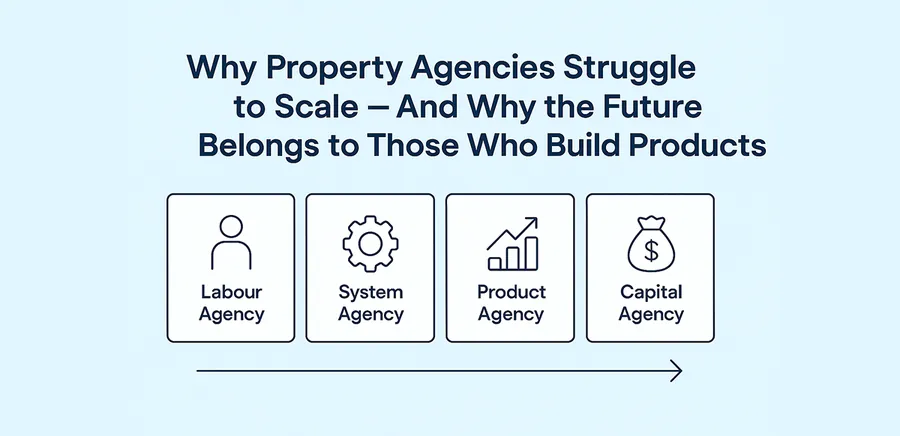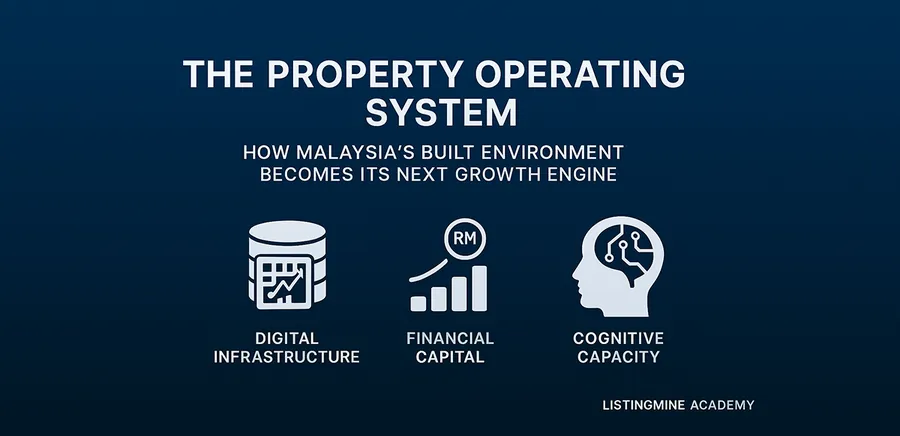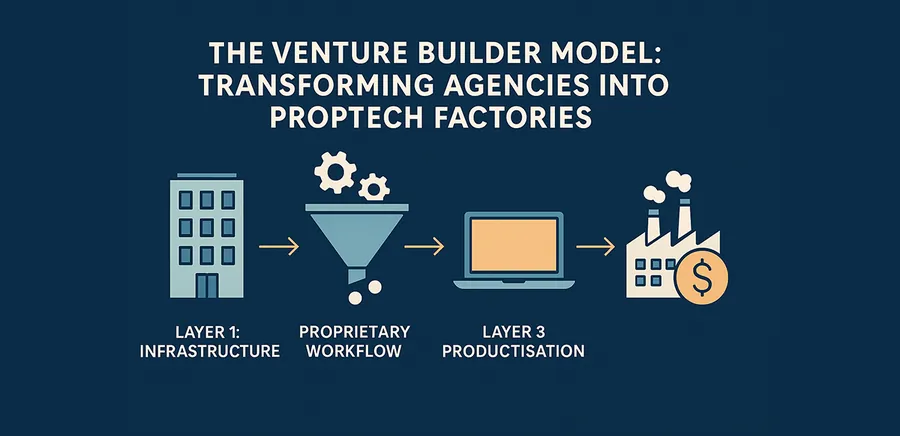
Property should be viewed as national infrastructure affecting households, cities, mobility, finance, and productivity. Agents and agencies need to think beyond individual transactions.
From Transactional Market to National Operating System
Authored by: ListingMine Academy
Lead Researcher: Marvin Foong
Date: November 2025
Malaysia's property sector stands on the edge of its most profound transformation since independence. Once a speculative marketplace, it is evolving into the core operating system of the nation — the network through which data, mobility, compliance, and productivity converge.
By 2035, property will no longer be treated as an investment class. It will function as national infrastructure — interlinking technology, governance, and human behavior into a single intelligent ecosystem.
This paper outlines how Malaysia can make that leap:
For decades, property has been treated as a derivative of physical development. But in the digital economy, spatial systems are informational systems. Property now joins Energy, Transport, and Communications as the fourth infrastructure pillar — the layer where human activity, financial data, and regulatory oversight intersect.
Policy Priorities
When property data becomes standardized and auditable, planning turns predictive instead of reactive.
The previous era rewarded speculation. The next will reward system design — how intelligently policy, capital, and talent are connected.
Structural Shifts
Economic value will migrate from what is built to how it operates.
Modernization is cognitive before mechanical. Malaysia must close the cognitive gap — the distance between what the market sees and what the system requires.
Strategic Priorities
When cognition scales, compliance and innovation co-evolve. Continuous upskilling ensures that digital literacy and professional accountability grow in tandem with technological progress.
A functional Property Operating System requires five interoperable layers:
| Layer | Function | Example Tools |
|---|---|---|
| Data Layer | Verified listings, land records, transaction history | National Property Ledger |
| Workflow Layer | Role-based ERP, ACN co-operation, commission engine | ListingMine ERP |
| Compliance Layer | PDPA · AMLA · BOVAEP (Board of Valuers, Appraisers, Estate Agents and Property Managers) audit trails | Automated timestamping |
| Finance Layer | Digital receivables · Fast-commission markets · Tokenized settlement | RCPS ecosystem |
| Interface Layer | Consumer portals · AI assistants · dashboards | PropertySifu · Agency Dashboards |
Each layer strengthens the others, creating a self-auditing, self-learning national infrastructure.
Transformation cannot rely solely on top-down mandates. Malaysia's advantage lies in alliances — distributed networks aligning private ambition with public infrastructure.
Recommended Actions
| Category | 2025 Baseline | 2035 Projected (Systemized)* |
Impact |
|---|---|---|---|
| Verified Transaction Volume | RM 399 b | RM 600 b+ | +50% efficiency gain |
| Annual Commission Pool | RM 6 b | RM 9 b | +30% liquidity via auditability |
| Compliance Cost per Agency | High / manual | Low / automated | −60% reduction |
| Public-Private Data Access | Fragmented | Unified via API | Real-time planning |
* Source: ListingMine Academy Proprietary Systemization Model
Systemization doesn't inflate the market — it compounds productivity.
The goal is not surveillance but symmetry — where all market actors share the same verified information simultaneously. Transparency becomes infrastructure, not bureaucracy.
Key Outcomes
By 2035, Malaysia's property ecosystem will function as a national nervous system — linking human intent, capital flow, and spatial intelligence.
The agents become operators, the developers become architects of systems, and the nation becomes a platform where every square foot is intelligent, connected, and purposeful.
"Property is not Malaysia's by-product — it is Malaysia's blueprint."
Malaysia's next leap will not come from building taller towers but from building smarter systems. The property market is the perfect foundation: universal, regulated, asset-backed, and human-centric.
The question is not if Malaysia's property market will become a digital operating system — but which coalition of visionary institutions, developers, and agencies will step forward to build its architecture.
Institutional Attribution:
© 2025 ListingMine Academy • Research Division • All Rights Reserved

Founder of ListingMine and author of Agent for Life. Building ERP for Malaysian real estate agencies since 2008 — and writing to reshape how agencies grow.
More about Marvin Foong →More articles in this topic