The Silent Killer: Why Middle Management Can Make or Break an Agency
In short
Middle management determines whether agency strategy reaches agents effectively. Weak team leaders or managers can silently damage culture, productivity, retention, and execution.
Agency principal James was puzzled. His recruitment was strong, the market was good, but agent turnover was at an all-time high. It was only when his top producer, Sarah, resigned saying “the team leader is impossible to work with” that he looked closer at the layer of management he had ignored.
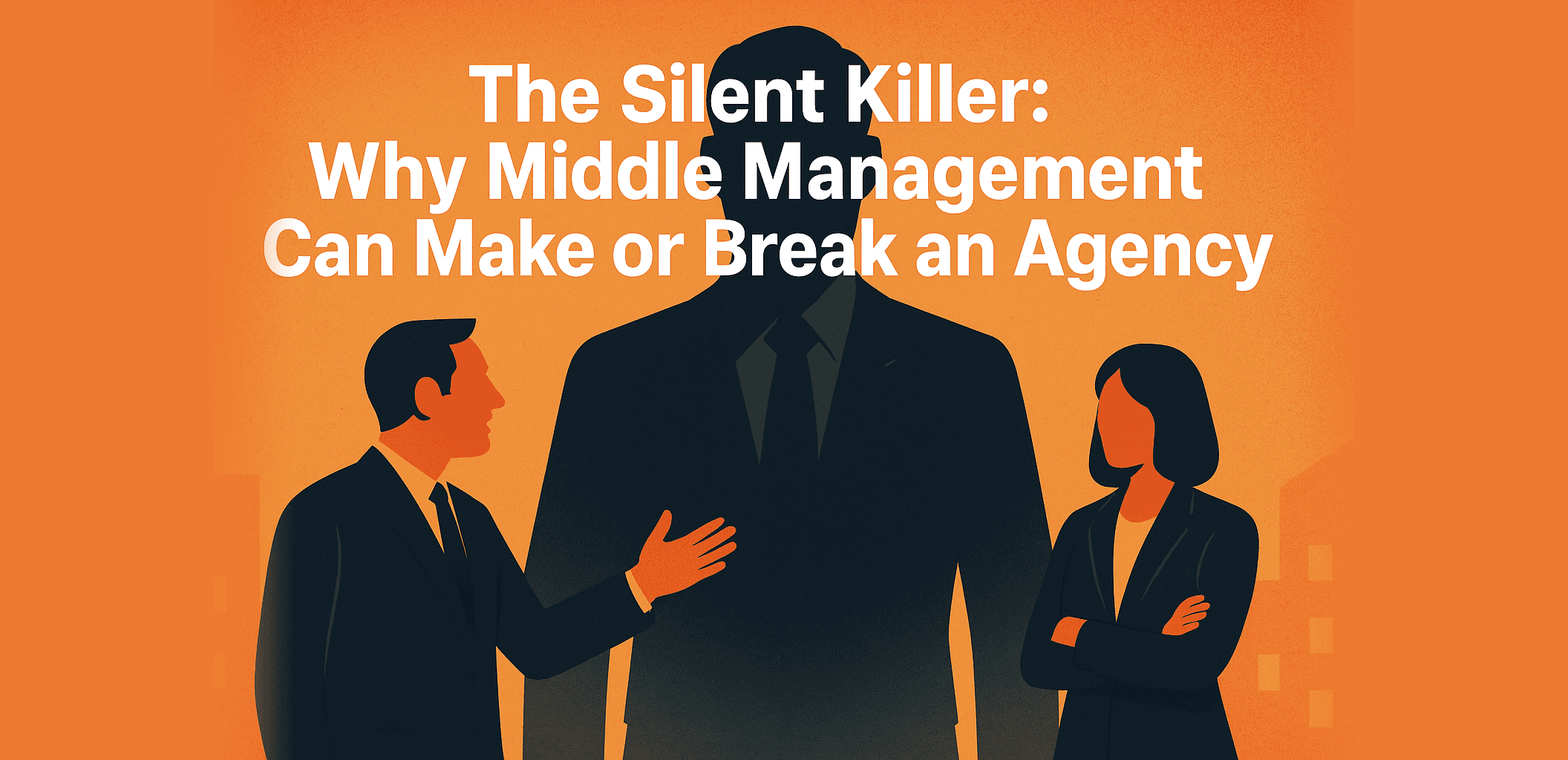
This is the danger of middle management—the silent killer that can quietly destroy even the strongest agency.
The Double Role of Middle Management
Middle managers are both leaders and followers. They receive direction from the boss, but they also directly influence the agents who look up to them. In practice, they:
- Distribute leads fairly—or unfairly.
- Set the tone for professionalism and culture.
- Filter information—sometimes to protect their team, sometimes to protect themselves.
- Coach or neglect new recruits.
Every decision they make compounds. A supportive leader at this level can multiply the agency’s strength. A self-serving one can poison morale faster than any market downturn.
How Middle Management Becomes a Silent Killer
-
Hoarding Leads and Knowledge
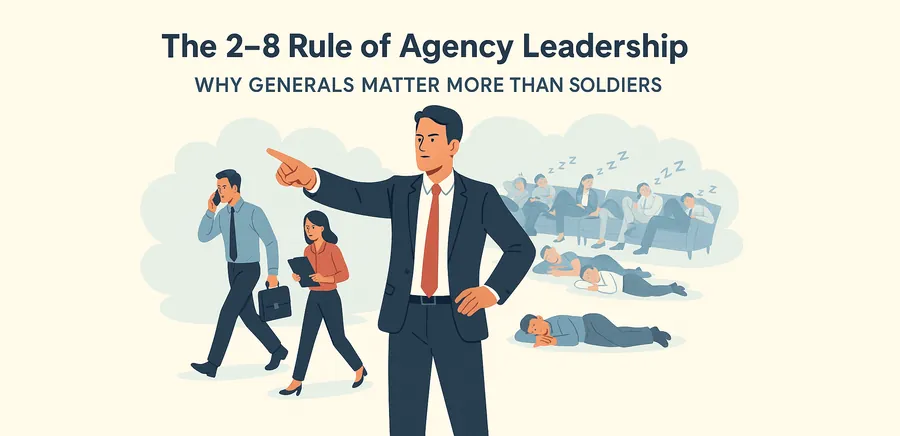
Many mid-level leaders act as “mini-bosses,” keeping the best leads for themselves or their favorites. This creates resentment and churn among agents who feel unfairly treated.
-
Blocking Communication
Principals often assume their instructions reach the ground. In reality, middle managers filter or distort messages. By the time it reaches junior agents, the meaning has changed—or disappeared altogether.
-
Creating Mini-Agencies Inside the Agency
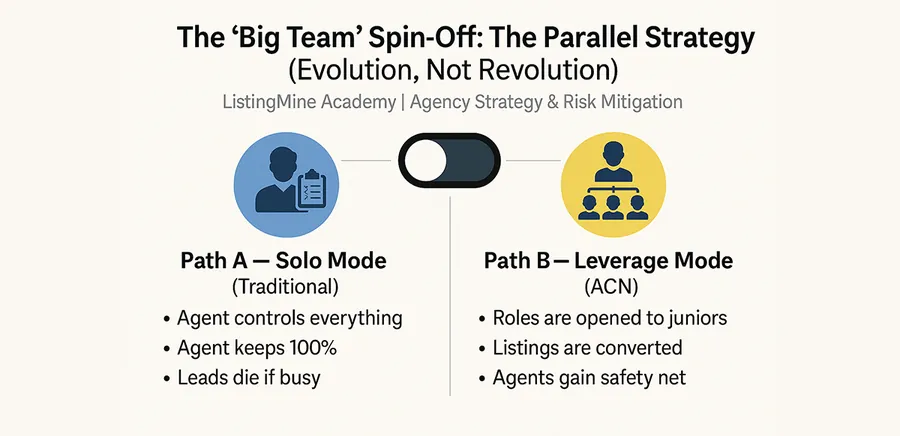
A strong team leader can be an asset—but if left unchecked, they may start building their own “brand” inside your agency, recruiting for themselves, and preparing to spin off.
-
Neglecting Agent Development
New negotiators survive or die based on coaching. Middle managers who see juniors as disposable churn through people, creating a cycle of wasted recruitment and lost reputation.
-
Sabotaging Trust
Principals worry about disloyal agents, but the real erosion of trust often begins when middle managers play politics—reporting selectively, hiding performance gaps, or undermining others to stay in favor.
Why Principals Ignore This Layer
Many principals themselves started as top agents. They know how to sell, but managing managers is another skill set entirely. This blind spot creates three common traps:
-
Fear of Losing Top Producers
If a middle manager is also a top closer, principals hesitate to confront them. The unspoken thought: “If I push too hard, they’ll leave—and take half the team with them.”
-
Lack of Management Training
Most principals were never trained in leadership beyond sales. They know how to push agents, but not how to align or discipline managers.
-
Time Poverty
Principals spend so much time in the business (closing their own deals) that they neglect working on the business (building systems and culture). This leaves middle management free to operate unchecked.
Building Middle Management That Multiplies, Not Destroys
- Transparent Systems
Use ERPs and CRMs to make lead distribution, commission splits, and performance visible. Transparency reduces favoritism.
- Structured Coaching Programs
Don’t assume senior agents can coach. Train them in onboarding, role-playing, and performance feedback.
- Performance Metrics Beyond Sales
Reward middle managers not just for personal deals, but also for retention, agent growth, and contribution to team culture.
- Check Loyalty Early
If a team leader is more loyal to themselves than the agency, the risk will only grow. Don’t ignore the warning signs.
Quick Self-Assessment for Principals
Ask yourself these questions:
- Do your team leaders have clear KPIs for team growth (not just personal sales)?
- Can your junior agents describe the agency’s core values—or do they only know their team leader’s style?
- Is lead distribution data transparent and accessible to all, or does it sit in someone’s WhatsApp?
- Do you have visibility into how new recruits are being coached—or are you relying on blind trust?
- Would your agency survive if your top “mini-boss” walked out tomorrow?
Final Word: The Leverage Point You Can’t Afford to Miss
Middle management is the leverage point of any agency. They are close enough to the ground to shape culture, but senior enough to influence direction. Agencies that succeed in Malaysia don’t just recruit aggressively or pay out high splits—they control, train, and align their middle management layer.
Because when middle management thrives, the agency scales. But when it rots, the agency dies—and no one sees it coming until it’s too late.