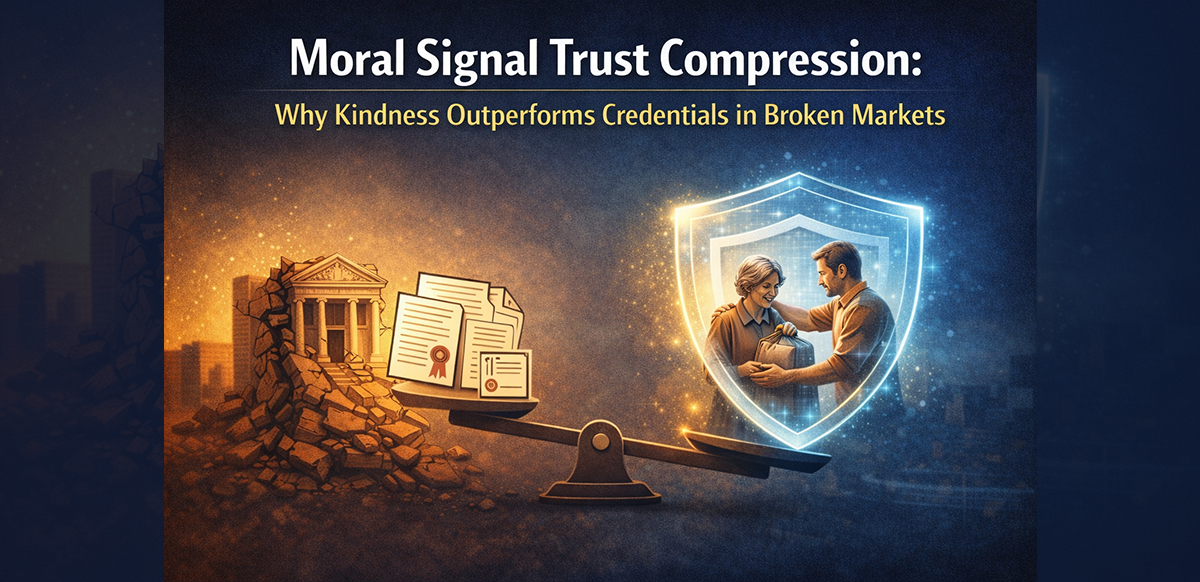
In low-trust markets, kindness and moral signals can build confidence faster than formal credentials. Buyers often look for safety, sincerity, and protection before expertise.
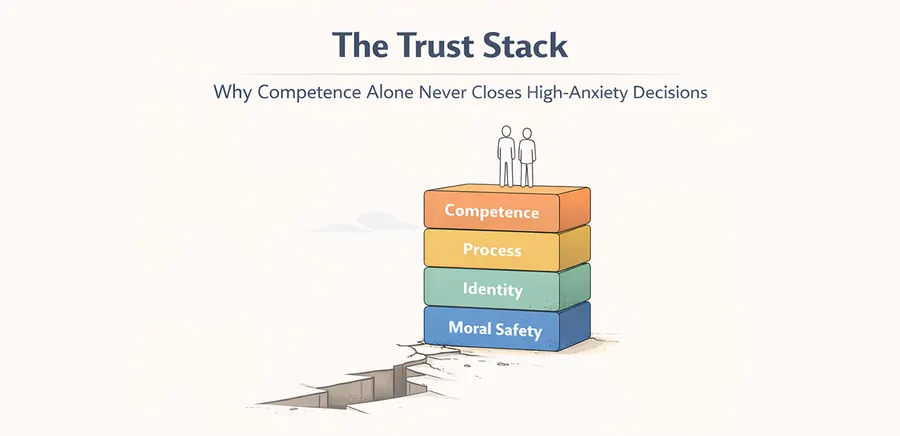
In a healthy economy, we are taught to trust credentials. Licenses, certificates, big agency logos, and years of experience are supposed to signal safety. They exist so buyers don’t need to evaluate character every time.
But in the Malaysian property market, many buyers have learned a hard lesson: People with the right licenses can still behave badly. People with impressive resumes can still exploit you. When that happens repeatedly, the brain quietly changes strategy. It stops trusting symbols and starts watching behavior.
In theory, credentials mean someone vetted you and someone is monitoring you. In practice, in fragmented or poorly enforced markets, bad actors survive and responsibility is diffused.
So buyers adapt. They no longer ask, "Is this person qualified?" They ask a more primitive but more important question:
“Is this person dangerous?”
That question is not answered by paper; it is answered by moral signals.
Imagine this scenario: A property buyer is walking down the street. Ahead, a young woman notices a refugee sitting by the roadside, holding a crying baby. Without drama, without anyone asking, and without knowing she’s being watched, the woman stops and gives RM50. She doesn’t speak. She doesn’t linger. She walks away.
The buyer does not know her. She gains nothing. Yet something decisive happens in the buyer’s mind. They think:
“If she is kind to someone who can offer her absolutely nothing, then she is unlikely to exploit me when money is involved.”
This is not emotion; it is risk filtering.
At a café, a customer realizes they forgot their wallet. They are embarrassed and the queue stalls. A young person behind them quietly pays for the meal and leaves. No name. No attention. No attempt to connect.
A property buyer witnesses this. In that moment, trust forms instantly. Not because the helper is “nice,” but because they demonstrated non-predatory behavior under zero incentive.
This works because the kindness is unrelated to the buyer, the property, or the money. This makes it credible. The buyer’s brain runs a shortcut:
“This person had the power to ignore the situation. They chose to help instead. That choice cost them something. Therefore, exploitation is not their default setting.”
That single inference replaces weeks of background checks and verification.
This is Moral Signal Trust Compression.
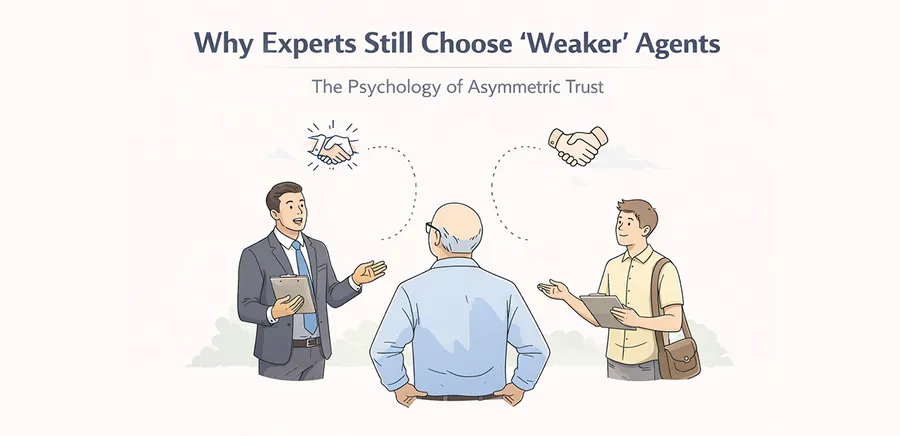
Paradoxically, experienced buyers are more sensitive to moral signals than novices.
Why?
They don’t need technical protection; what they fear is hidden intent. A sharp, aggressive agent is a risk. A kind agent is a safe port.
Experts can supply the structure and knowledge, but they cannot supply your character. They choose the person who signals low exploitation risk.
The moment kindness is staged, filmed for TikTok, or tied to branding, the signal collapses. The power of the signal comes from being observed accidentally, not performed intentionally.
Trust forms because the buyer feels:
“I wasn’t meant to see this.”
That feeling of "unfiltered truth" is what compresses the trust.
When a buyer realizes that both the system and the person are working to protect them, their guard drops. They move from inquiry to closing at 10x the speed of a normal transaction.
In healthy systems, credentials dominate. In broken systems, character surfaces first.
Licenses tell buyers you passed a test. Observed kindness tells them they are safe.
And when fear is high, safety beats sophistication every time.

Founder of ListingMine and author of Agent for Life. Building ERP for Malaysian real estate agencies since 2008 — and writing to reshape how agencies grow.
More about Marvin Foong →More articles in this topic