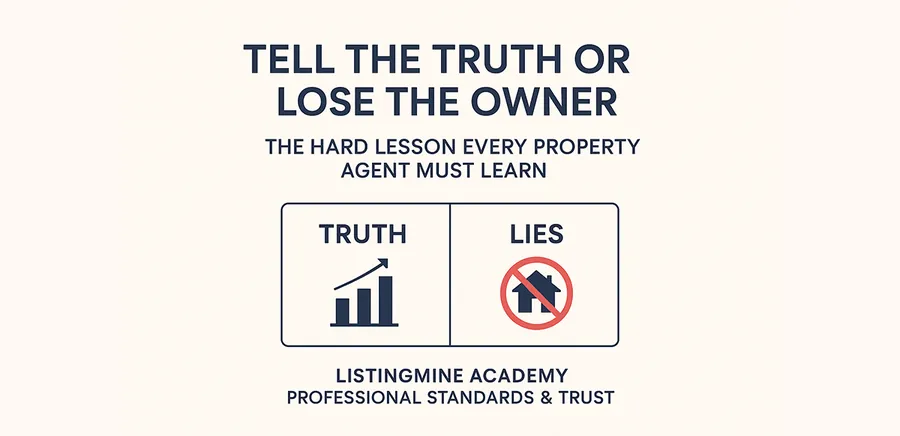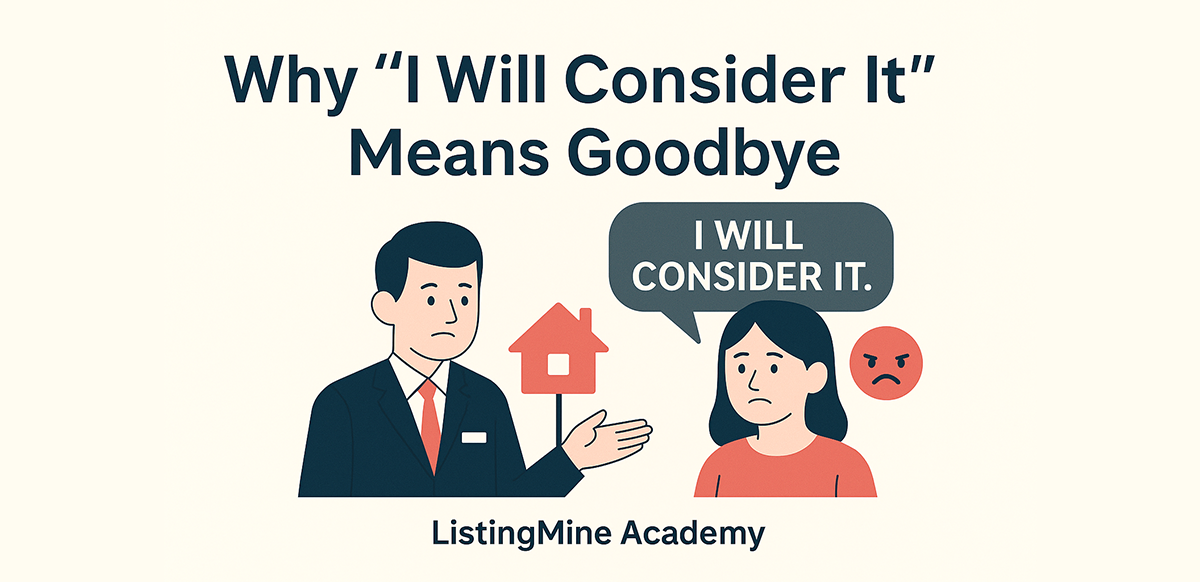
Polite buyer responses often hide weak intent or loss of interest. Agents need stronger qualification and follow-up instead of mistaking niceness for commitment.
ListingMine Academy | Sales Psychology & Qualification Strategy
This is the hardest lesson for a new agent to accept:
A polite buyer is more dangerous than a rude buyer.
You finish a viewing. The prospect is smiling. They shake your hand warmly.
They say the magic words:
“Thank you very much, you were very helpful.”
“I will definitely consider this unit.”
“Don’t worry, if I buy, I will buy from you.”
You go home excited. You mark them as a "Hot Lead." You stop looking for other buyers because you think this deal is happening.
Then... silence.
Blue ticks. Calls rejected.
The Hard Truth:
You just wasted your effort.
Those phrases did not mean they were interested. They meant: "I want to leave now, and I don't want to explain why I'm not buying."
If you believe these polite lies, you will waste weeks chasing ghosts.
In Malaysia, our culture is "face-saving." Buyers rarely say "This house is ugly" because they feel it is rude. So they use "Polite Code" to escape.
You must stop listening to the words and start listening to the intent.
| The Polite Phrase | The Brutal Truth |
|---|---|
| "Thank you very much." | "Goodbye forever." |
| "I will consider it." | "The answer is NO, but I am too shy to say it to your face." |
| "I need to ask my wife/husband." | "I need an excuse to blame for saying no later." |
| "I will definitely buy from you." | "I am already dealing with another agent, but thanks for opening the door." |
Rule #1: If they don't ask specific questions about the price, the deposit, or the defects—they are not buying. General compliments are usually fake.
We need to be honest. The problem isn't the buyer. The problem is you.
If the buyer was not qualified, why did you show the unit?
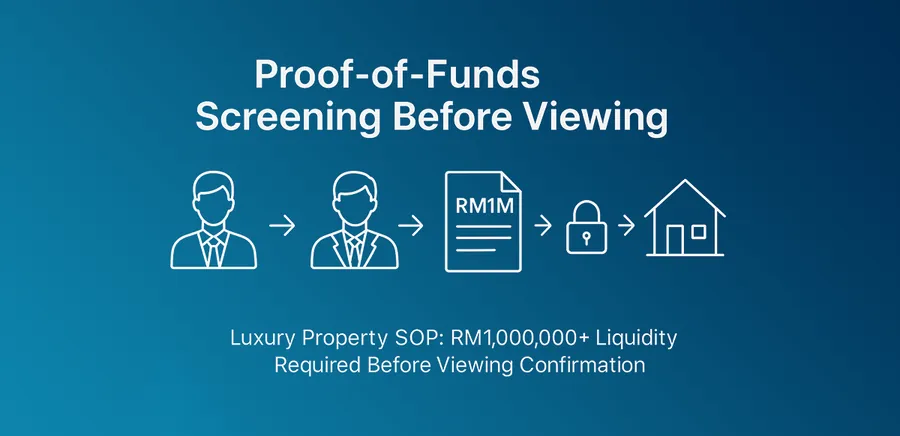
Most agents are so desperate for a viewing that they skip the most important step: Qualification (Probing).
If a buyer calls and says "Can I view?" and you immediately say "Yes! What time?", you are setting yourself up for failure.
There are two types of people in the market:
Type A: The Joyrider (Window Shopper)
They view houses for fun on weekends (their hobby).
They are looking for interior design ideas.
They have no loan pre-approval.
Their strategy: Use your time to entertain themselves.
Type B: The Serious Buyer
They have a deadline (e.g., tenancy ending, baby coming).
They have a budget and have checked their loan eligibility.
They ask hard questions about the property.
How to Differentiate Them:
You must ask "The Hard Questions" on the phone, before you start your car engine.
If they get annoyed or give vague answers like “We are just looking around,” they are Joyriders. Do not prioritize them.
Once you have filtered out the Joyriders and you are in the unit with a Serious Buyer, you need to change your strategy.
Stop "Selling" and Start "Disqualifying."
Amateur agents try to "sell" the house by pointing at obvious things: "This is the kitchen... this is the window." (The buyer has eyes; they know it is a window).
Professional Strategy: The "Negative Reverse"
You need to break the politeness barrier to get the truth. Give the buyer permission to say "No" before they leave.
Instead of asking: "So, do you like it?" (which invites a polite lie), try this:
“Mr. Buyer, thank you for viewing. Honestly, this unit isn't for everyone. It’s okay if you hate it. If you tell me the truth, I can stop wasting your time and show you something better. Is this a 'No'?”
Why this works:
Do not celebrate when a buyer says "Thank you."
Celebrate when a buyer says "The price is too high" or "The roof leaks."
Objections mean they are thinking about buying.
Politeness means they are leaving.
Your goal is not to get more viewings. Your goal is to get more qualified viewings.
Filter the joyriders on the phone. Challenge the polite buyers in the unit.
Don't be a "Nice Agent" collecting compliments.
Be a "Smart Agent" collecting decisions.

Founder of ListingMine and author of Agent for Life. Building ERP for Malaysian real estate agencies since 2008 — and writing to reshape how agencies grow.
More about Marvin Foong →More articles in this topic
This article is one of the sources behind this assessment. Take it to see what you already know and what to read next.
Educational self-assessment. Not a licensing examination or professional certification.