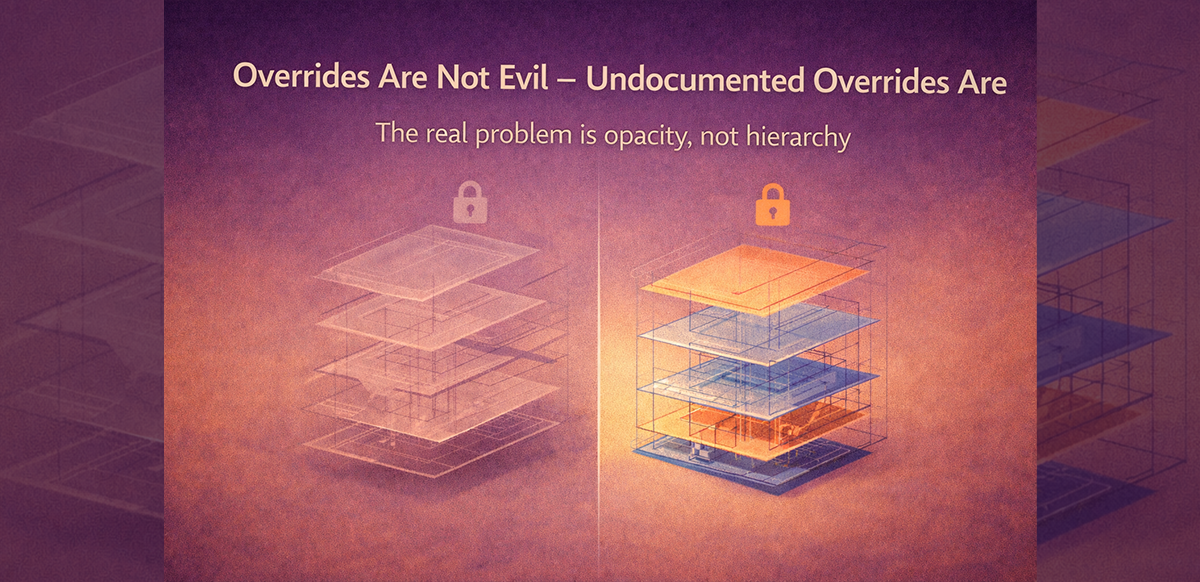
Overrides can work when they are documented, justified, and transparent. The real problem is hidden hierarchy and unclear entitlement.
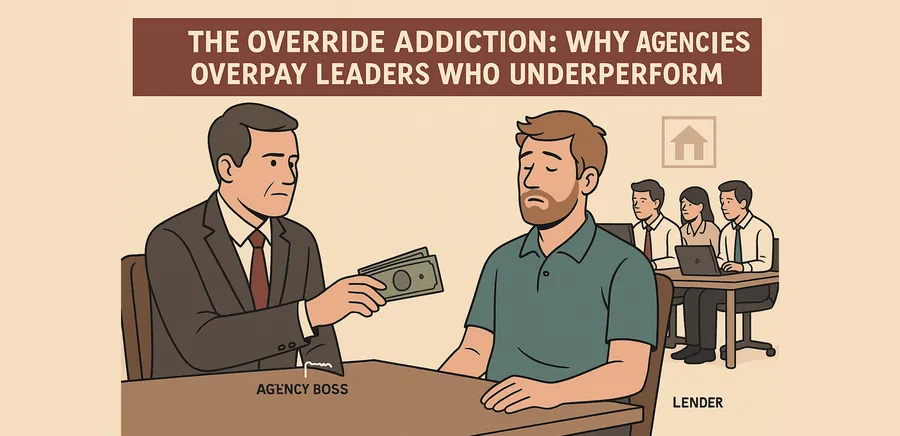
In real-estate agencies, the word override carries a quiet stigma. To many agents, it feels like a tax on their effort—a slice of commission disappearing into the hands of a senior or team leader who never attended the viewing.
But the friction is not caused by the money. It is caused by the shadows.
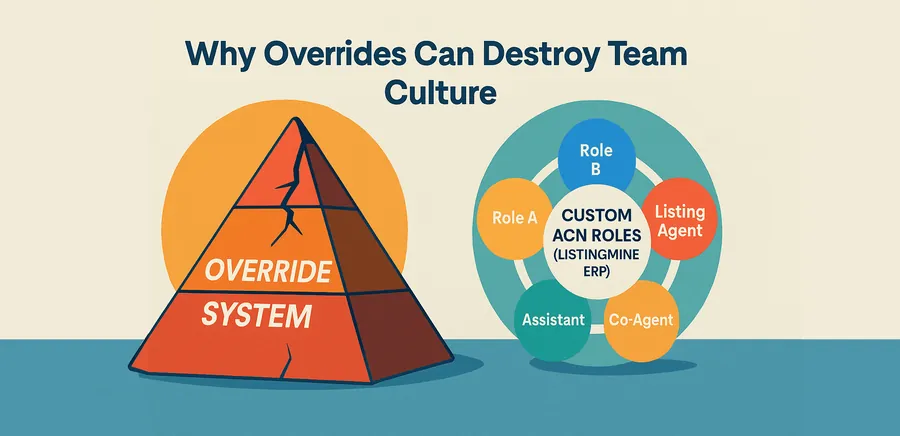
Hierarchy is not the problem. Hierarchy is inevitable in any business that scales. The real poison is when hierarchy is informal, opaque, or negotiable after the fact. Overrides are not evil. Undocumented overrides are.
People do not rebel against structure. They rebel against arbitrariness. When an override exists only as:
it creates a vacuum of trust. In that vacuum, agents don't see a mentorship fee or infrastructure cost. They see a management tax. The psychology of agency friction can be reduced to a simple rule:
Resentment increases as transparency decreases.
When transparency is near zero, even a 2% override feels like exploitation. When transparency is complete, a 10% override is accepted as a professional service fee.
Many principals keep overrides deliberately flexible. They believe this allows them to reward effort, adjust for special cases, or manage exceptions "humanely." In practice, it creates a structural liability.
| Feature | Informal Overrides (The Messy Way) | Formal Overrides (The Systemic Way) |
|---|---|---|
| Agreement Type | Verbal or WhatsApp messages | Hard-coded in the system |
| Criteria | "Let's see how much work you do" | Clear role or volume thresholds |
| Visibility | Invisible to producing agents | Visible before the deal closes |
| Payout Flow | Requires explanation after payout | Calculated automatically |
| Outcome | Produces disputes | Produces certainty |
Informal overrides are the primary fuel for Shadow Labor. Every payout becomes a meeting. Every meeting becomes a justification. Every justification weakens trust.
There is a persistent myth that flat organisations are fairer. They are not. In flat organisations, power still exists—it simply becomes invisible, political, and personal.
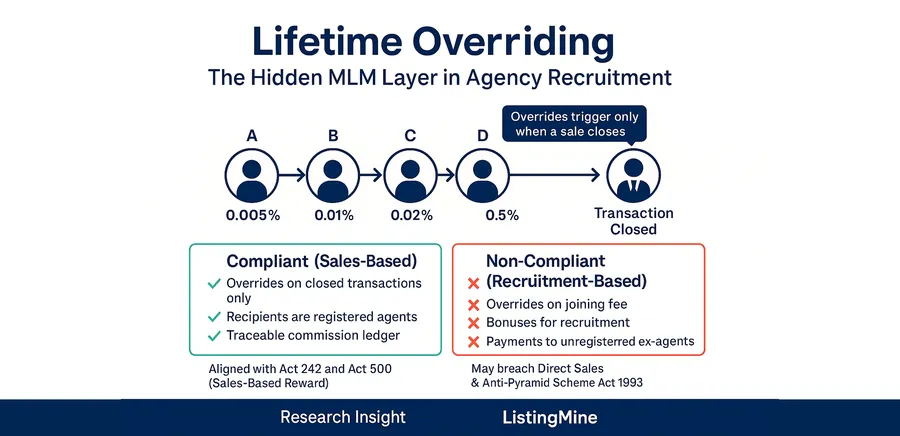
Documented overrides do not protect bosses. They protect everyone. Formalisation:
Power doesn't disappear. It becomes contractual instead of emotional.
An override only feels evil when it arrives as a surprise. In a high-trust agency, an agent should be able to see the full economic stack, every override, and every role-based entitlement before they make their first call.
When truth moves from private conversations to a public system:
As long as the logic is visible and the math is sound, hierarchy is simply leverage.
ListingMine was built to be the truth machine for agency economics. We don't take sides on whether your override should be 2% or 20%. Our job is simpler—and harder: To make it undisputed.
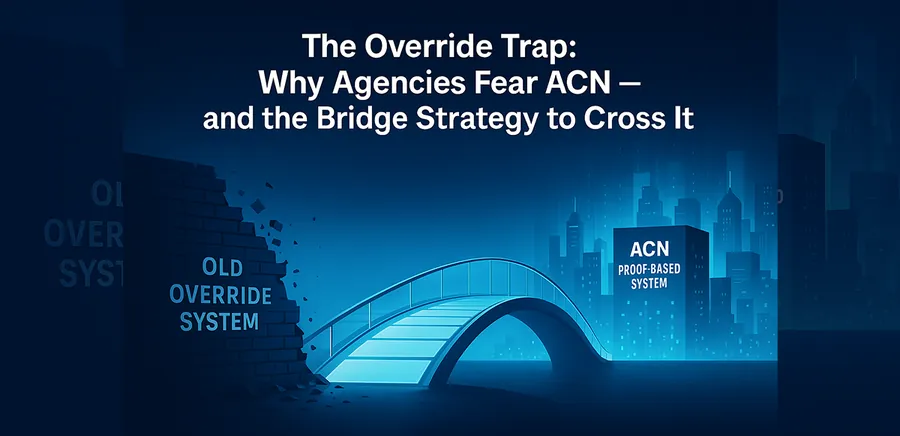
We take handshake deals, legacy promises, and "special arrangements" out of people's heads and encode them into immutable execution logic. Because the only way to build a high-trust, high-performance ACN is to bring overrides out of the shadows.
Once the logic is documented, the "evil" disappears. All that remains is architecture.

Founder of ListingMine and author of Agent for Life. Building ERP for Malaysian real estate agencies since 2008 — and writing to reshape how agencies grow.
More about Marvin Foong →More articles in this topic
This article is one of the sources behind this assessment. Take it to see what you already know and what to read next.
Educational self-assessment. Not a licensing examination or professional certification.