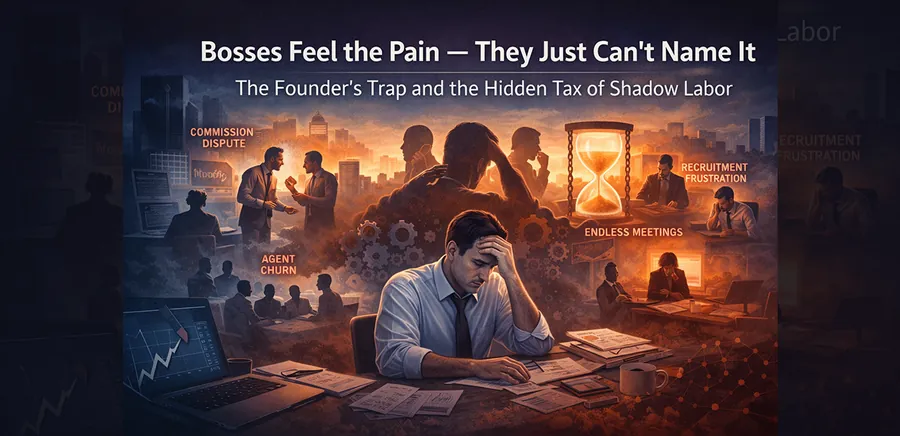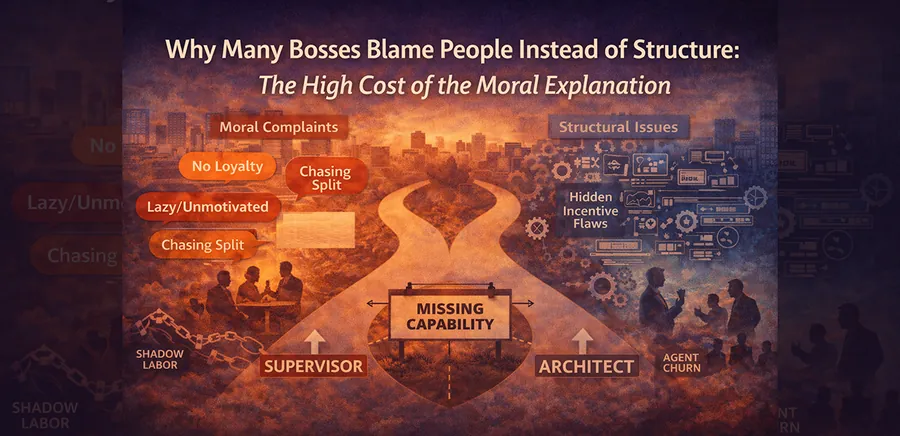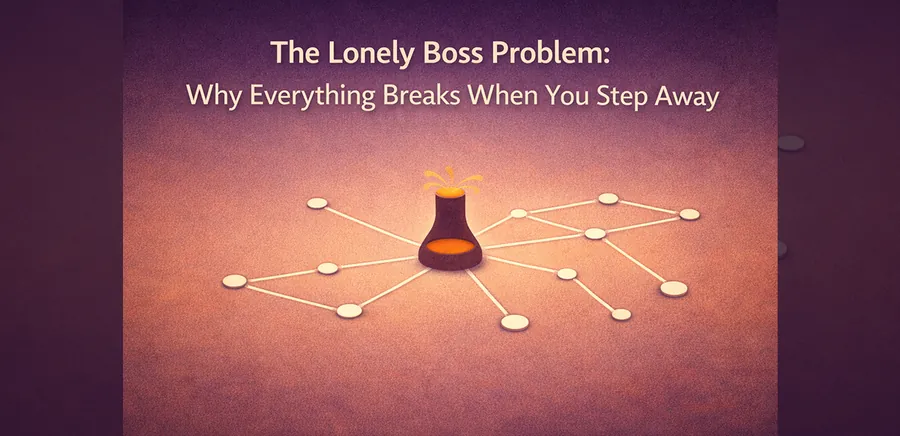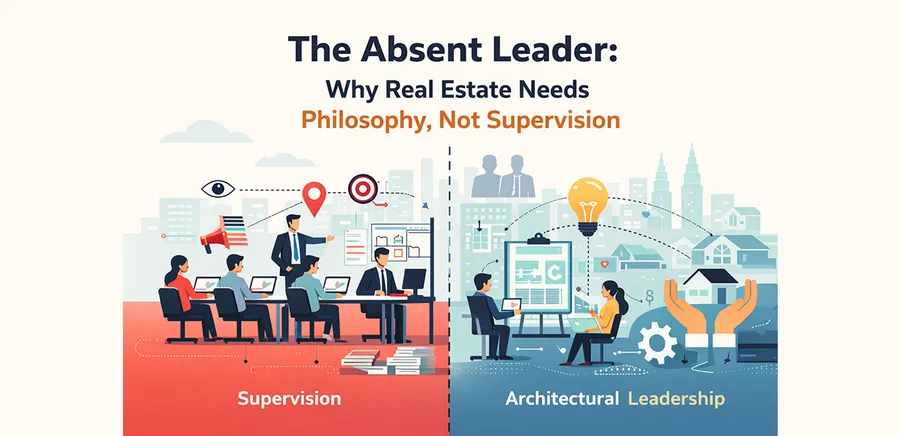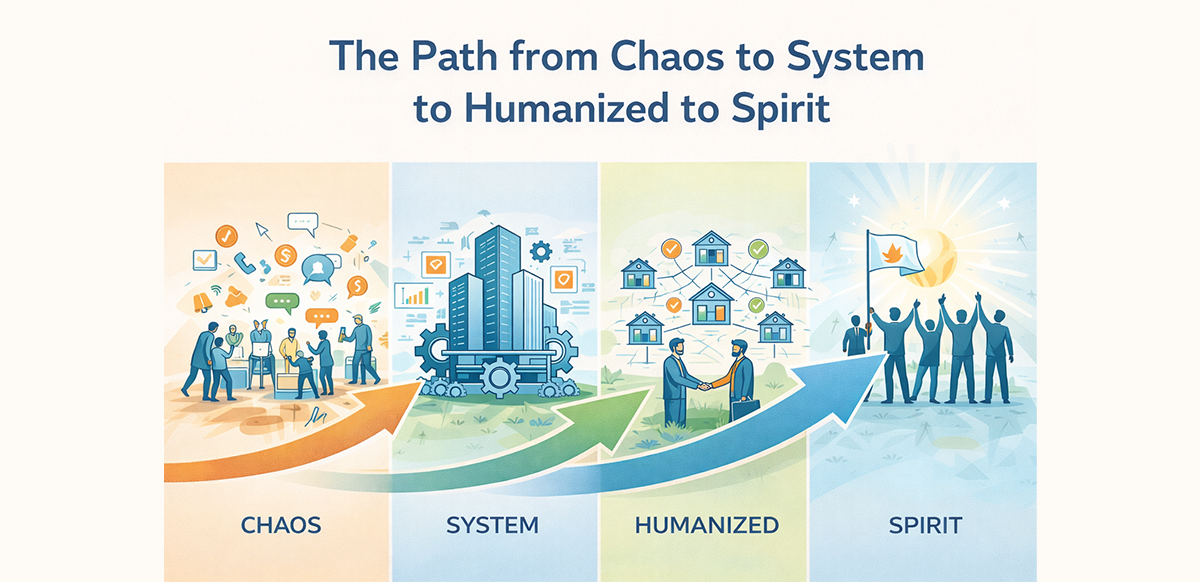
Agency development moves from chaos to systems, then toward more human and meaningful operating cultures. The end goal is not only efficiency, but dignity, trust, and purpose.
Every industry evolves in stages. Real estate is no exception. What most agents experience as daily struggle is often not personal failure, but structural transition.
The property market, especially in developing or semi-mature ecosystems like Malaysia, moves through four recognizable phases:
Understanding this path explains why markets feel unstable and why leadership, software, and infrastructure matter far more than most agents realize.
Chaos is the natural starting point of every fragmented industry. In this stage, survival depends on hustle, personality, and improvisation.
Rules are loose, documentation is inconsistent, commission disputes are common, and reputation travels faster than structure.
In chaos, the loudest voice often wins.
There is energy, but there is no architecture.
Malaysia’s property industry has lived through extended periods of this phase.
Chaos rewards effort, but it does not reward durability.
Chaos feels exciting during growth cycles and painful during downturns. It produces winners, but it does not produce institutions.
When chaos becomes expensive, systems emerge.
System is the phase where rules become standardized and processes become digitized.
In this phase, friction decreases and predictability improves.
Digital tools become mandatory rather than optional.
However, systems introduce a tradeoff.
Standardization reduces chaos, but it can also reduce autonomy.
This is where many industries plateau. The system becomes strong, but it can also become rigid.
Agents risk becoming operators inside frameworks rather than architects of them.
After system maturity, a subtle realization appears.
Efficiency alone is not enough.
People do not operate purely on protocol. They operate on trust, dignity, and shared purpose.
Humanized structure emerges when systems begin to recognize the agent as more than a production unit.
Agents begin to seek environments where structure supports them without erasing identity.
In a humanized phase, the central question changes:
Systems become tools rather than cages. Infrastructure supports growth instead of absorbing it.
For Malaysia, this phase is still emerging.
Agents still experience structural uncertainty:
Humanization requires intentional design.
The final phase is often misunderstood.
Spirit is not mysticism. It is institutional conviction.
When a market reaches the Spirit phase, alignment no longer depends on supervision.
Participants understand the system’s logic deeply enough to operate independently.
Agents are no longer motivated purely by commission.
They believe in the structural model they operate within.
Spirit allows organizations to scale without emotional exhaustion.
It allows leaders to be absent without collapse. It separates temporary growth from institutional endurance.
Malaysia currently oscillates between Chaos and System.
There are visible signs of digitization and standardization, yet fragmentation and personality-driven leadership remain dominant.
The structural danger is becoming trapped at the System stage.
The opportunity lies in progressing toward Humanized and eventually Spirit-driven infrastructure.
This requires:
If the industry jumps from Chaos directly into rigid System structures:
If it evolves through Humanized infrastructure toward Spirit alignment:
The transition from Chaos to System is inevitable.
The transition from System to Humanized is optional.
The transition from Humanized to Spirit is intentional.
Most agents focus only on income this month. Few consider which structural phase the industry is entering.
Yet phases determine leverage.
The rewards of each phase are different:
The future of Malaysian real estate will depend on whether it builds:
The path is not abstract. It is unfolding now.
The only question is which phase you are building for.

Founder of ListingMine and author of Agent for Life. Building ERP for Malaysian real estate agencies since 2008 — and writing to reshape how agencies grow.
More about Marvin Foong →More articles in this topic