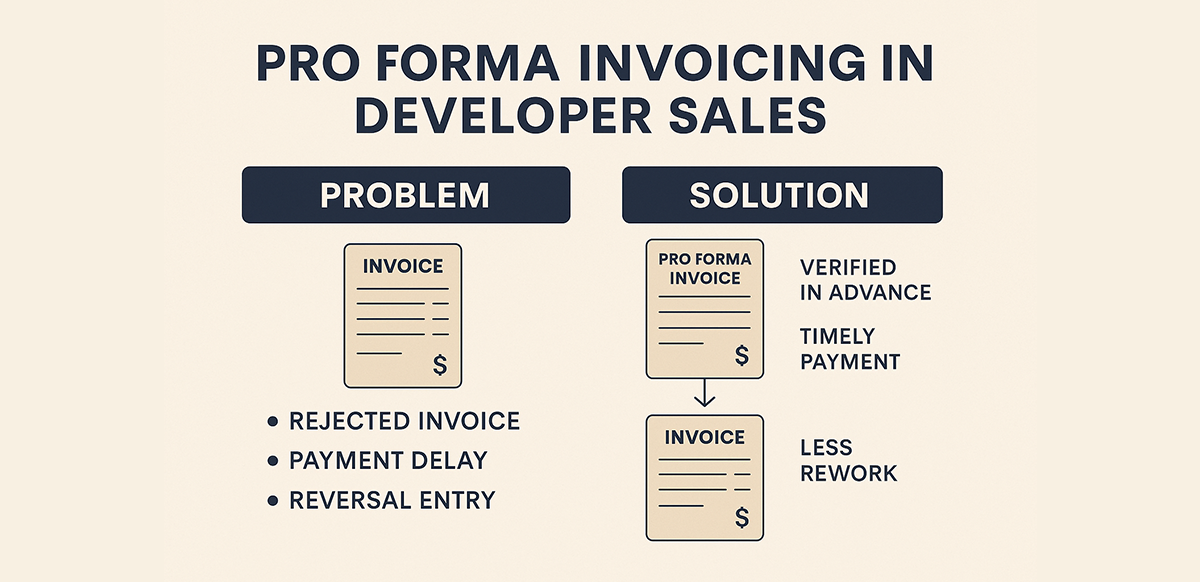
Pro forma invoicing helps agencies manage developer sales, commission claims, and payout tracking before final payment. ERP support reduces confusion and admin workload.
When a property agency closes a developer project, the selling is only half the battle. The commission settlement process becomes increasingly complex when:
This is exactly why pro forma invoicing exists inside ListingMine ERP: to prevent financial mistakes before they become legally binding.
Example tiering:
| Tier | Units Range | Commission Rate |
|---|---|---|
| Tier 1 | 0–10 units | 3% |
| Tier 2 | 11–20 units | 4% |
| Tier 3 | 21–50 units | 5% |
An agency selling 50 units cannot invoice a flat rate. Every SPA has a different price, date, and tier allocation. If even one calculation is wrong, the entire invoice is rejected.
A single revision can mean:
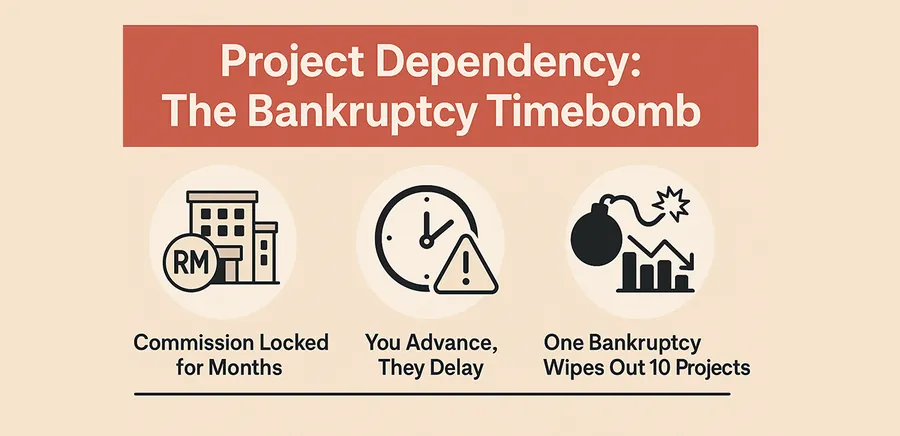
One small error can delay commission payments by one to three months.
Many developers say, “Send us the invoice and we will process payment.” But if the numbers are wrong, the burden falls entirely on the agency:
This creates administrative debt, audit complications, and unnecessary cash-flow delay.
Instead of issuing an official invoice immediately, the ERP allows agencies to:
This workflow prevents invoice rejection, payment delays, and accounting rework.
Developers benefit because:
With pro forma, both sides eliminate avoidable friction.
Invoice timing determines:
With a pro forma workflow, the developer can review, approve, and simply say:
“Please issue the final invoice after 1 Jan so it falls into our next financial year.”
No voiding, no backdated paperwork, no SST amendments.
If your agency is still issuing official invoices first, you are exposing your business to unnecessary risk:
ListingMine ERP fixes this.
It makes the pro forma invoice the default workflow — not an afterthought — protecting your cash flow and your reputation.

Founder of ListingMine and author of Agent for Life. Building ERP for Malaysian real estate agencies since 2008 — and writing to reshape how agencies grow.
More about Marvin Foong →More articles in this topic
This article is one of the sources behind this assessment. Take it to see what you already know and what to read next.
Educational self-assessment. Not a licensing examination or professional certification.