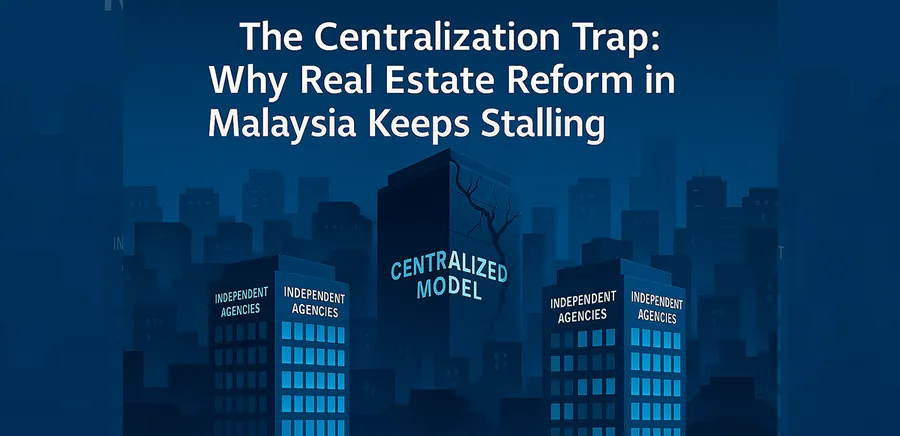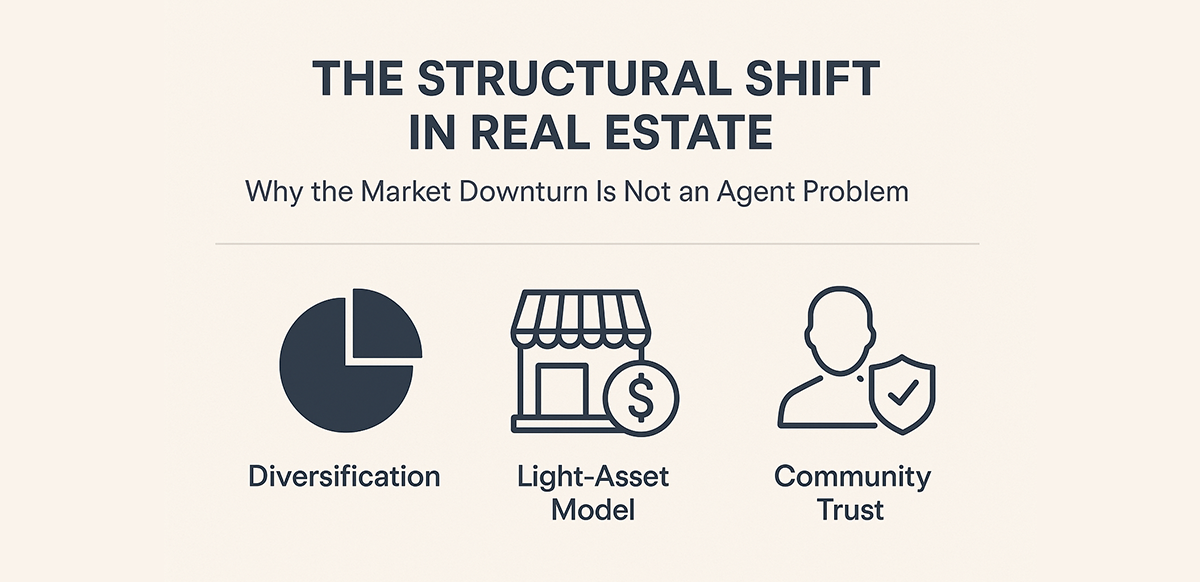
Market downturns are driven by structural forces beyond individual agents. Agencies need to adapt to financing, supply, demand, and buyer confidence rather than blaming salespeople.
ListingMine Academy | Industry Structure & Agent Transformation
For many agents, the biggest misconception about today’s property market is this:
“The downturn is caused by weaker agents.”
This is false.
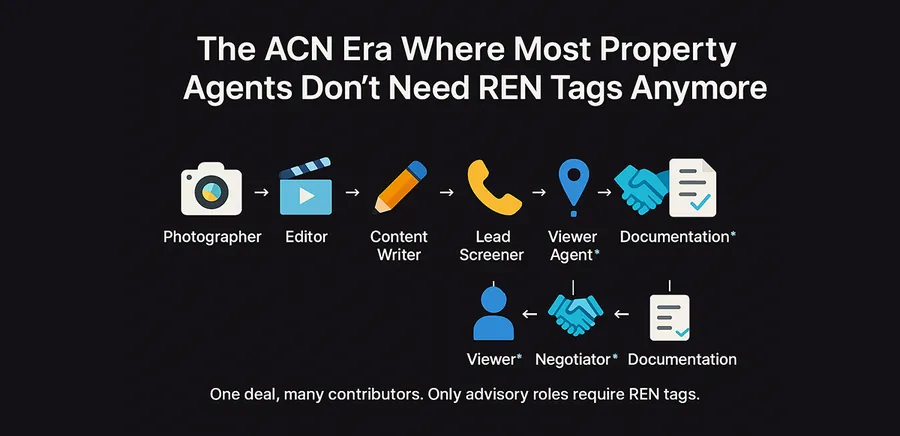
The current slowdown is not a talent issue — it is a structural transition in the real estate industry. The old model of “single-agent, single-skill, single-channel” has collapsed. A new multi-service, multi-role, platform-based era is emerging.
To survive this transformation, agents must understand one truth:
You are not failing — the model is failing.
And when the model changes, the required skills, workflows, and business logic change with it.
This is not a cycle. It is a system reboot.
Most agents treat market downturns as part of a natural cycle: bad years followed by good years. But the post-2020 downturn is fundamentally different. It is structural, not cyclical. What’s changing?
The old “personality-driven middleman model” has lost its structural advantage. The future belongs to platform-enabled, multi-service agents who operate with:
In other words: The job is no longer just ‘being a negotiator’. The role has evolved into a multi-function micro-enterprise.
Selling property requires weakly transferable skills — not universal business ability.
Many agents think they can “just switch industries” or “start another business” if real estate slows down. This is a dangerous illusion. The truth is: The core skills of a property negotiator are weakly transferable.
These skills perform extremely well within the real estate ecosystem, but almost none of them transfer cleanly to other industries. Why?
Because cross-industry entrepreneurship demands high cognitive reconstruction:
Most agents underestimate this cognitive load.
Outside real estate, you are not “experienced” — you are a beginner in a new game. That’s why the safest and smartest path is not to exit the industry — but to move upward within the ecosystem.
The real breakthrough does not come from changing industries. It comes from changing altitude within the real estate ecosystem.
Future-proof agents and team leaders succeed by building a multi-dimensional business model that includes:
A single revenue source is a single point of failure. Modern agents combine:
Diversification absorbs market shocks.
The future is lean, replicable, and scalable.
Instead of large, high-cost shoplots and bloated teams, emerging leaders are moving to:
This structure makes agencies anti-fragile.
In a world where information is abundant, trust becomes scarce — and therefore extremely valuable.
Long-term practitioners who consistently serve a community build:
This is not marketing. This is compounding trust — the strongest moat in real estate.
Agents are not losing because they are weaker.
Agents are losing because the industry has changed dimension, but many are still using one-dimensional tools, processes, and thinking.
The future belongs to those who:
Real estate is no longer about being a “good negotiator.”
It is about becoming a multi-service micro-enterprise backed by systems, leverage, trust, and ecosystem integration. This is the new operating logic. And those who adopt it early will not only survive — they will lead.

Founder of ListingMine and author of Agent for Life. Building ERP for Malaysian real estate agencies since 2008 — and writing to reshape how agencies grow.
More about Marvin Foong →More articles in this topic