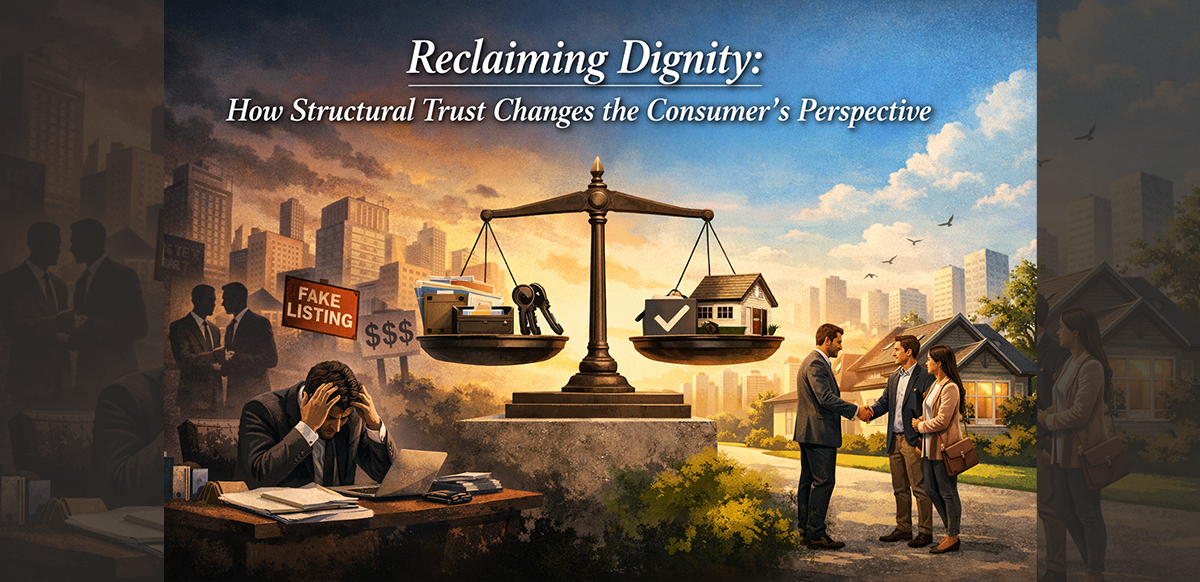
Structural trust changes how consumers see agents by making proof, process, and accountability visible. Dignity returns when service quality is supported by systems.
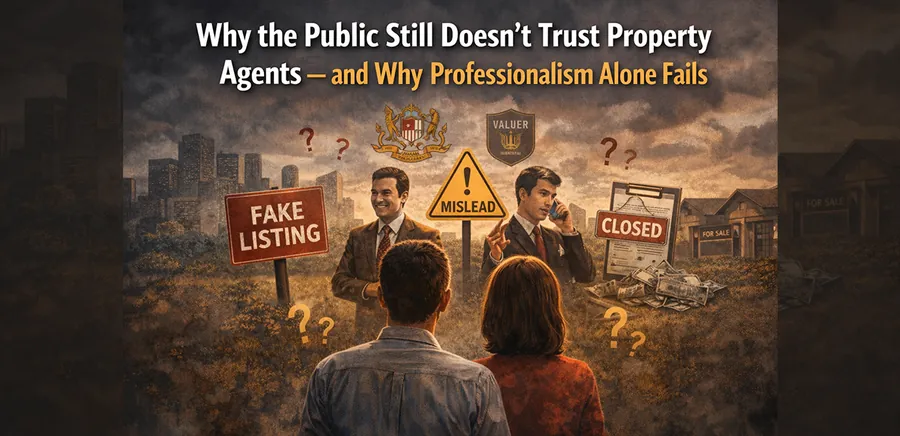
For decades, the property agent has occupied an uncomfortable place in the public imagination: a necessary intermediary, tolerated rather than trusted, useful but rarely respected.
Ask any buyer or seller what they expect from an agent, and the answers are wearily consistent—questionable listings, selective disclosure, and accountability that fades once money moves. This perception is not the result of a few bad actors; it is the consequence of an industry built on professional erasure.
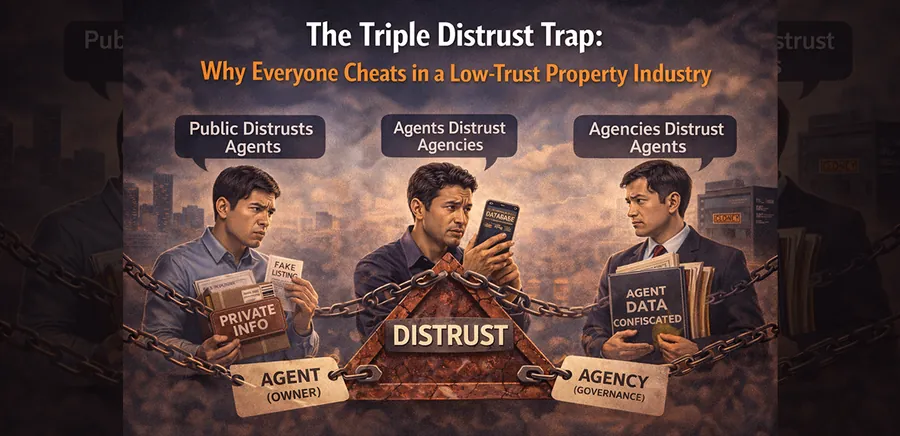
Public cynicism is not isolated. It sits atop a deeper triangle of mistrust that traps everyone in a race to the bottom:
This is not a cultural problem; it is a design failure. In this environment, the consumer's "Tuesday afternoon" is defined by exhaustion.
Before (The Suspicion): A homebuyer spends hours cross-referencing listings on three different platforms, unsure if the photos are real, the price is accurate, or if the agent will even call back. They approach every WhatsApp inquiry as a negotiation against potential deception. They are not looking for a home; they are defending themselves against a scam.
Dignity emerges only when a professional's work accumulates—when effort becomes a portable asset, not a temporary privilege granted by an organization. In the dominant model, an agent is effectively a "tenant" of their own career. When they change agencies, their history is left behind. Contacts disappear. Transaction records reset.
No profession can maintain dignity when its history is periodically erased.
The Old View: The agent is an interchangeable salesperson whose value is reset to zero every three years.
The New View: The agent is a dignified professional with a portable, verifiable, and compounding track record.
For years, the industry has tried to repair its image through ethics training. But consumers do not trust intentions; they trust systems. A conscientious agent operating inside a broken environment still looks suspicious. Dignity is only real to the public when it is structural.
After (The Dignified Flow): In a system of structural trust, the buyer sees a listing marked "Verified Mandate." They click the agent's profile and see a decade of completed transactions with verified former client endorsements. The agent shares a transparent, system-logged timeline of the process. The buyer's energy shifts from defending against scams to evaluating a genuine professional service.
When honesty stops being a "promise" and becomes the default technical experience, the agent is no longer an obstacle to bypass, but a partner in a dignified service.
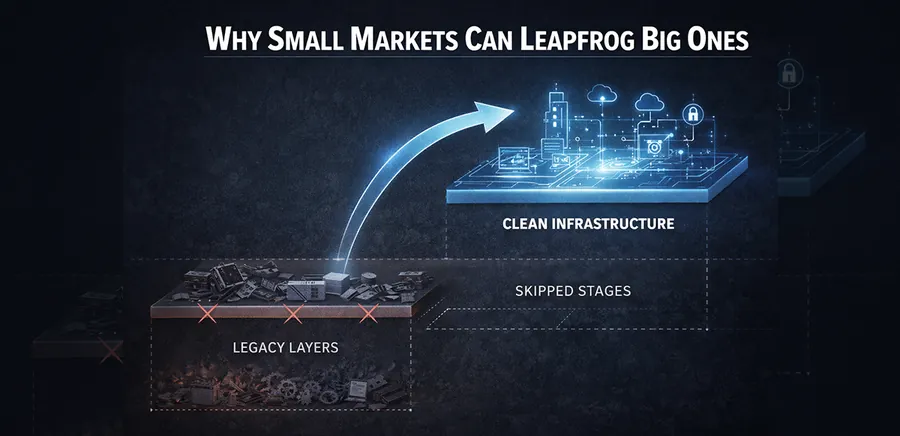
True respect requires neutral ground—infrastructure that does not belong to any single agency and therefore does not erase value when people move.
Many market leaders try to centralize trust under their own brand, but this only deepens the "Triple Distrust Trap" by forcing agents to hoard data. Neutral platforms like ListingMine act as the "Rails of Trust." They allow professional history to remain intact and governance to exist without confiscation.
Neutrality ensures that professionalism outlives organizations. It ensures that an agent's dignity is not "granted" by a boss, but "owned" by the professional.
The consumer's calculation changes when they realize an agent has more to lose from a lie than they have to gain from a commission. If a professional has decades of visible, portable history at stake, trust stops being emotional and becomes rational.
If the industry truly wants to change its reputation, the solution is simple: Build systems where good behavior accumulates and bad behavior cannot hide.
When professionalism lives inside the system, the public stops asking for honesty and starts experiencing it. That is how an industry reclaims its dignity.

Founder of ListingMine and author of Agent for Life. Building ERP for Malaysian real estate agencies since 2008 — and writing to reshape how agencies grow.
More about Marvin Foong →More articles in this topic