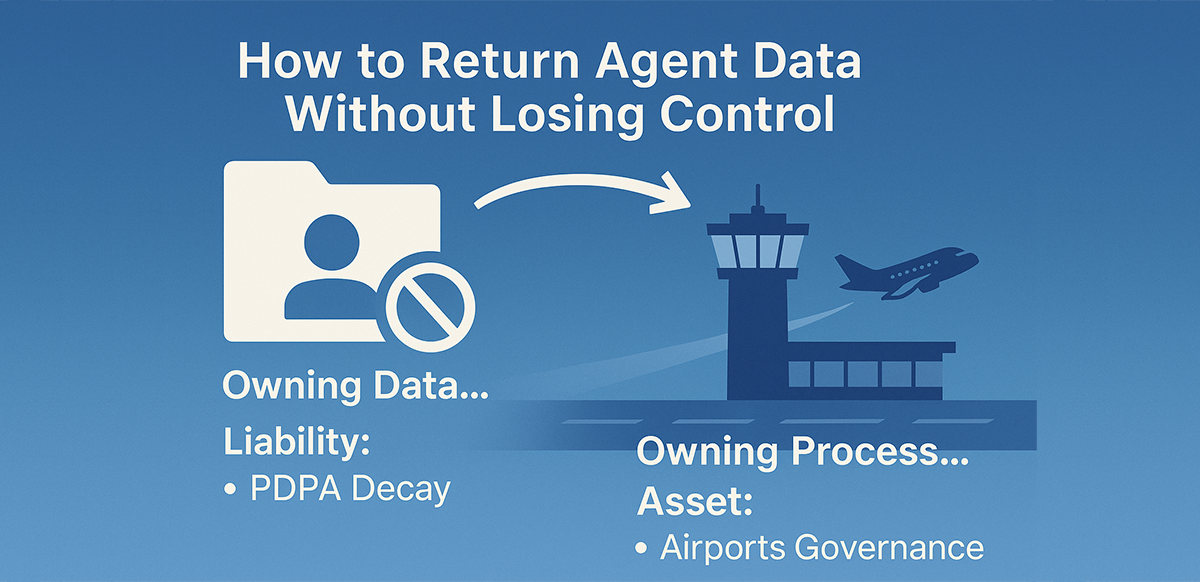
Agencies can allow agent data portability while still protecting company interests through permission, structure, and proper system design. Data ownership and agency control do not need to conflict.
Why Owning Data Is a Liability — and Owning the Process Is the Only Scalable Power
After the first article, most agency owners arrive at the same uneasy thought:
"I agree with this — but if agents own their data, I lose control."
That fear is understandable. It is also rooted in a fundamental misunderstanding of what control actually is.
The real problem is not data ownership. The real problem is that the industry built control on the wrong layer.
An airport does not own airplanes. It does not own airlines. It does not own passengers. Yet it is one of the most powerful entities in the system.
Why? Because airports own:
Planes come and go. Passengers change every day. Airlines compete. But the airport compounds value. Now imagine an airport that says:
"If you land here, the plane belongs to us." No serious airline would ever land there. That is exactly how most agencies treat agent data today.
In real systems, ownership of moving assets is a liability, not a strength. Owning agent data means:
It feels powerful. It is actually fragile. True control comes from owning the process, not the payload.
Let's be explicit.
Data Ownership = Liability
Process Ownership = Asset
Airports don't control planes by owning them. They control the system by defining how planes must operate.
That is the model agencies must adopt.
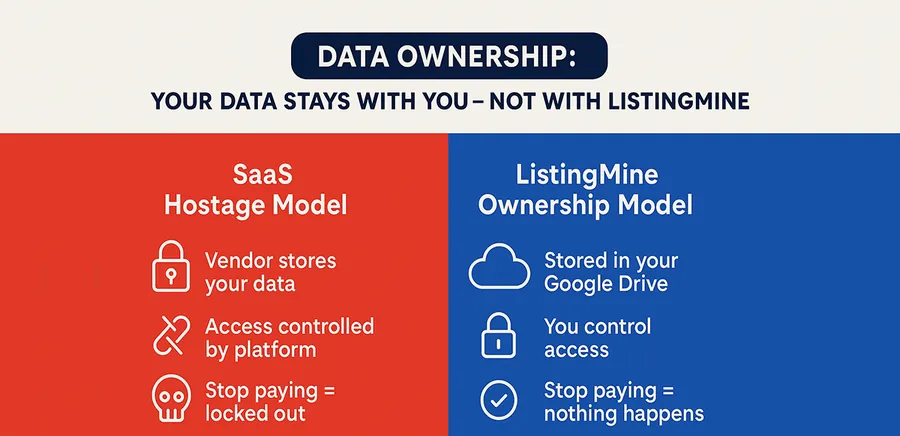
The industry's current retention strategy can be described bluntly: Retention by hostage-taking.
Agents stay because:
This is not loyalty. It is captivity.
And captivity produces predictable behavior:
Now compare that with the alternative: Retention by value.
Agents stay because:
Retention by force breeds resentment. Retention by value compounds trust. Only one of these scales.
Returning data does not mean surrendering authority. It means relocating authority to the right layer.
Agencies must control:
Agencies must not control:
This is the difference between being an operator and being an institution.
This question reveals more than it intends.
If one agent leaving causes:
Then the agency never had a system. It had people doing work manually. Strong systems absorb exits. Weak systems panic.
Airports do not collapse when one airline leaves. Only poorly designed terminals do.
ListingMine was built explicitly on this architecture.
Private = The Plane
The Private layer belongs to the agent.
This includes:
Agents own it. It travels with them. This is career capital, not company property.
Group = The Airport
The Group layer is where agencies operate.
This is where:
Agents choose to land here. Agencies control the rules of operation. If an agent leaves, the runway remains. If an agent stays, value compounds faster.
This leads to a question agency owners rarely ask honestly: Have you had your business valued recently?
After 10 or 20 years of operation, is your effective PE still around 2 times? If your value walks out with people, you do not own an institution. You own a headcount-dependent operation. Institutions own infrastructure. Operations chase retention. Only one of these deserves a premium.
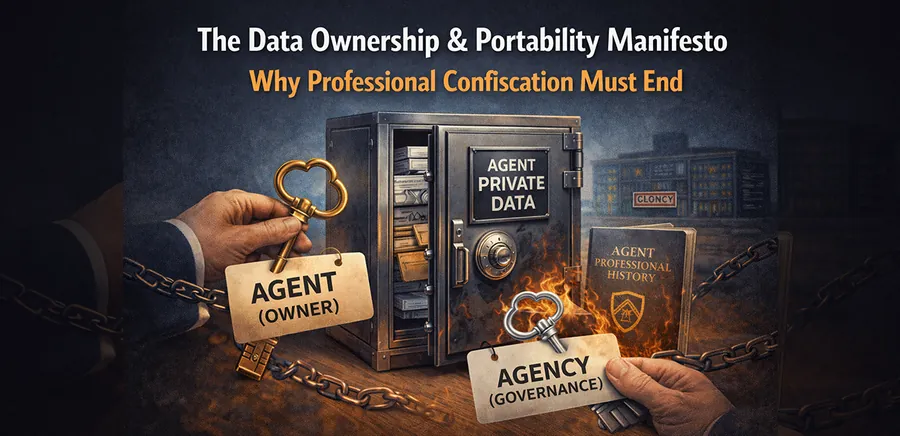
Agencies did not lose control because agents want ownership. They lost control because they built it on confiscation instead of architecture.
Owning data feels like power. The ownership process is power. Returning agent data is not generous. It is system design. And once agencies understand this, control doesn't disappear.
It finally works.

Founder of ListingMine and author of Agent for Life. Building ERP for Malaysian real estate agencies since 2008 — and writing to reshape how agencies grow.
More about Marvin Foong →More articles in this topic