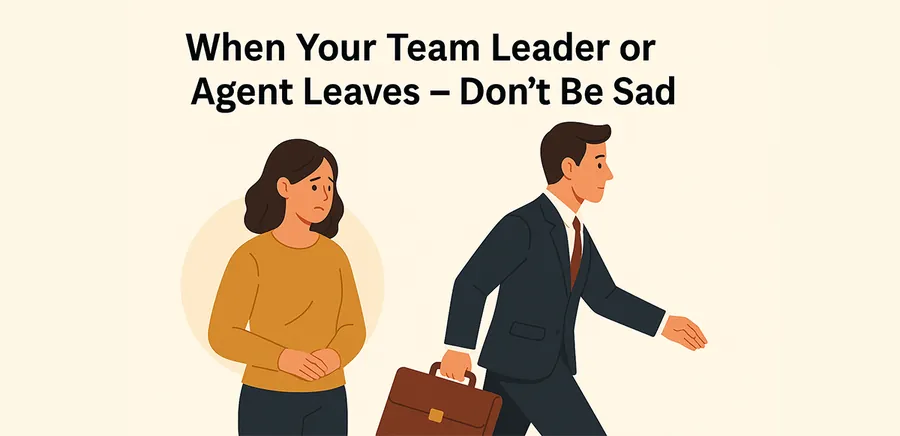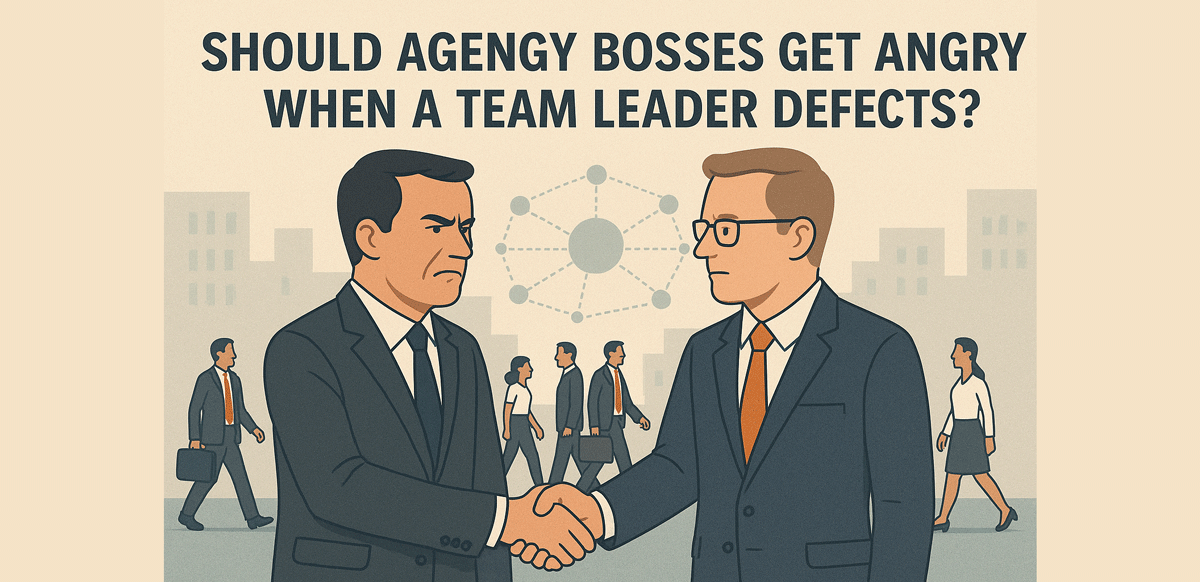
Team leader defection is often a structural outcome, not only betrayal. Agency bosses should study why leaders leave and design better alliance or retention systems.
In Malaysia’s real estate industry, turnover isn’t just normal — it’s cultural. Today, your agent joins another agency. Tomorrow, one of theirs joins you. The cycle never ends. Everyone knows it, yet somehow, when an entire branch or team of a few hundred leaves, friendships turn into rivalries overnight.
Property agencies are people's businesses. Unlike developers or tech companies, your assets aren’t machines or buildings — they’re human networks. People move when opportunities shift, when structures fail, or when leadership chemistry fades. That’s not betrayal; that’s evolution.
So when a team leader leaves, the question isn’t “How could they?”
The real question is “Why wasn’t there a system that kept the relationship intact even after they left?”
Bosses become enemies not because of ego, but because of lost investment — the years spent building that team, funding marketing, providing overrides, and supporting closers. When a large team defects, that sunk cost feels like theft. But in truth, it’s a failure of structure, not loyalty. The industry has no framework for how to handle transitions fairly. No rules, no compensation, no protocol — only emotion.
Imagine an industry where agencies compete commercially but cooperate structurally — through an Alliance Model. Under such a model:
When an entire team moves, the former agency could still earn a “relationship dividend” — a percentage of continued deals, for a limited period, governed by a pre-agreed framework. This keeps friendships intact and recognizes shared contribution.
An alliance cannot be built on goodwill alone. It must define:
Within the Agent Cooperation Network (ACN) framework, these alliance principles can be codified. By embedding proof-of-work, role-based attribution, and audit trails, agencies can cooperate transparently — even across organizational lines. When contribution is recorded and credited fairly, departure no longer equals destruction.
In short:
Anger destroys reputation; structure preserves relationships. The future of Malaysia’s agency ecosystem isn’t to stop agents from moving — it’s to make movement fair, traceable, and professionally governed.

Founder of ListingMine and author of Agent for Life. Building ERP for Malaysian real estate agencies since 2008 — and writing to reshape how agencies grow.
More about Marvin Foong →More articles in this topic