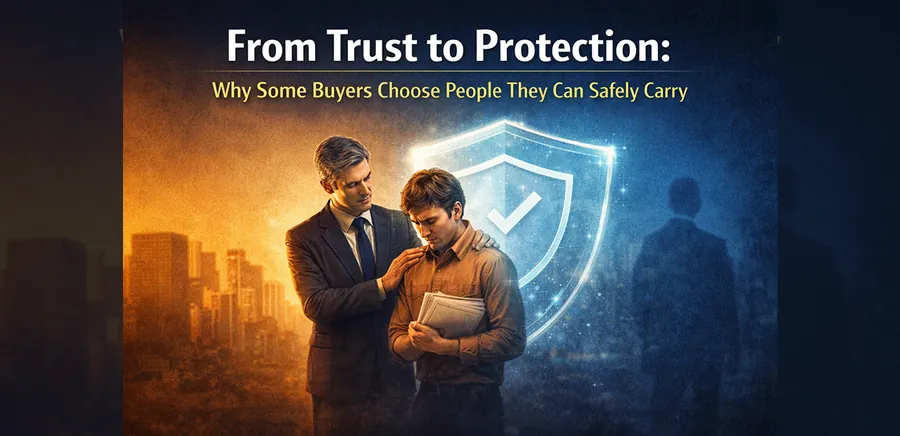
High-net-worth buyers may invest based on trust in people, not only asset quality. Stewardship, judgment, discretion, and relationship confidence can influence capital allocation.
In classical finance, capital is supposed to flow toward the most efficient asset: the highest yield, the lowest risk, and the cleanest numbers. But anyone who has spent time around High-Net-Worth Individuals (HNWIs) knows this is only half the story.
In the real world—especially in broken or transitional markets—capital often flows somewhere else entirely: toward people. Not because the asset is perfect, but because the person is worth backing.
This is Stewardship Capital.
From the outside, the transaction looks irrational. A seasoned investor buys a messy subsale or a low-yield property with complications they already understand. Observers wonder why someone so "smart" would buy an asset they know is not optimal.
The assumption is that rational capital always chases clean financial returns. But HNWIs are not just allocators of money; they are allocators of attention, mentorship, and long-term optionality.
At a certain level of wealth, money is no longer the bottleneck—trustworthy people and aligned operators are.
When trustworthy talent becomes scarcer than money, the investment lens shifts.
The question is no longer, "Is this the best asset?" It becomes:
"Is this a person worth shaping?"
Consider a scenario where a high-net-worth buyer encounters a young, unpolished agent who:
The buyer sees non-predatory intent and untapped potential. They proceed with a deal they know is flawed because they aren't buying the property; they are buying the agent's trajectory.
Charity expects nothing back, but Stewardship expects growth.
In this model:
Often, a "bad" property becomes a sandbox for teaching value creation—plot ratio optimization, change of use, or Airbnb conversion.
The real return is the formation of a future operator for the buyer’s ecosystem.
High-capability buyers choose morally aligned but structurally weak agents because they understand an essential asymmetry:
"I can carry the asset risk. I cannot manufacture integrity."
They know they have the capital and legal depth to fix a mistake in a contract. They are not existentially threatened by one bad deal.
What they cannot do is "fix" a person's character once the deal gets difficult. If the behavior signals safety, everything else becomes solvable.
In clean, institutionalized markets, systems protect participants, so you don't need to "carry" people. But in fragmented markets where standards are inconsistent and enforcement is weak, capable people step in to stabilize the ecosystem.
They support honest juniors not out of pity, but out of strategic self-interest.
Healthy markets require healthy participants.
By backing a principled agent, they are cultivating the people who will eventually make the market safer and more investable for everyone.
Most agents chase better listings and higher commissions. But a small number accidentally unlock Stewardship Capital.
They don't get this by marketing themselves; they get it because their behavior signals:
"I am safe to grow with."
These agents are not competing on assets; they are being selected as future partners. They survive downturns and inherit opportunities because they have been "carried" into the inner circle of high-trust capital.
Stewardship Capital is capital with a strategic conscience.
In those moments, the property is just the medium, and the real investment is the human.
For those who recognize it, that human connection may be the highest-yield asset of all.
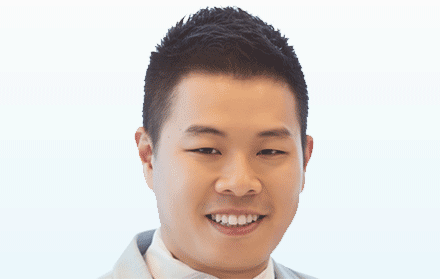
Founder of ListingMine and author of Agent for Life. Building ERP for Malaysian real estate agencies since 2008 — and writing to reshape how agencies grow.
More about Marvin Foong →More articles in this topic