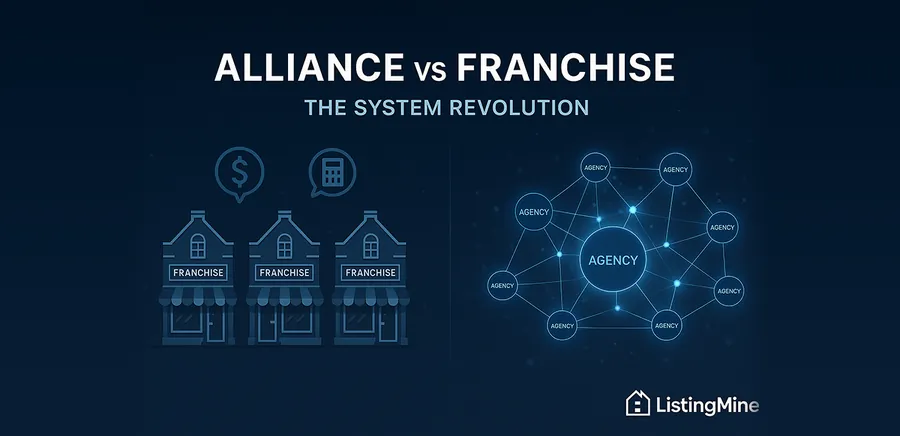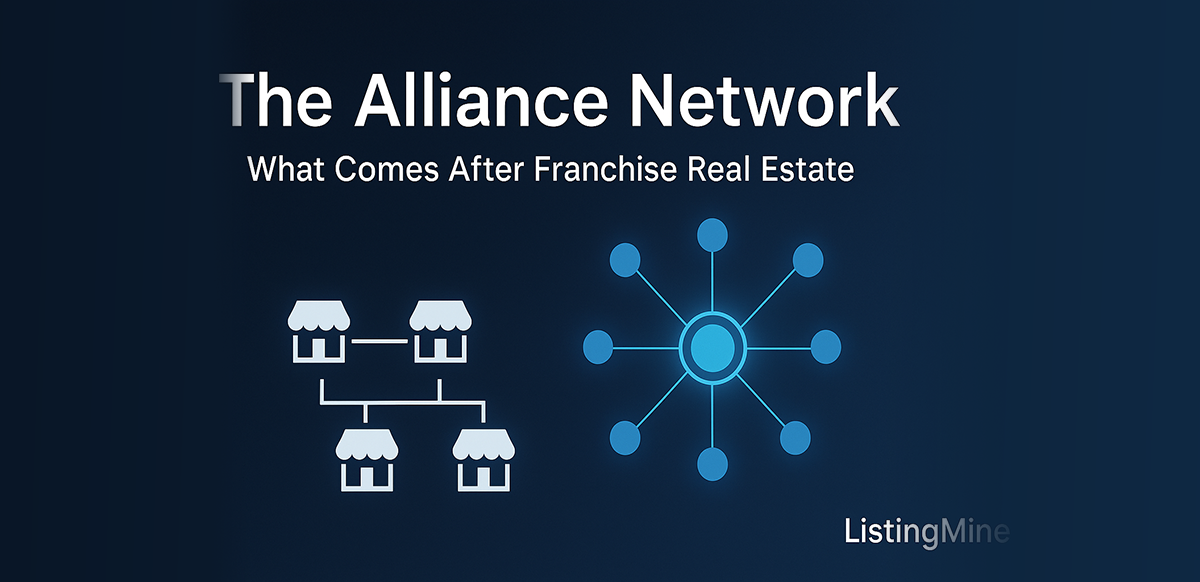
Alliance networks may become the next step after traditional franchise models. Agencies can cooperate through shared systems and standards without surrendering full independence.
For decades, franchising was the ultimate formula for scaling a real estate brand. Pay the royalties, follow the system, borrow the reputation—and get training and tools in return.
But in the future, the cracks are undeniable: Franchise networks are shrinking, top producers are leaving to start micro-brands, and the next generation of agents values autonomy over hierarchy.
The real question is: What comes after franchise real estate?
The franchise system worked brilliantly in the pre-digital era when brand power was the most valuable asset. It offered centralized training, shared credibility, and standardized operational templates. Agents needed the big logo to generate leads.
However, social media, CRMs, and digital advertising have democratized marketing. Now, any agent can:
What was once a necessary leverage has become friction—high fees, slow decision-making, and often outdated technology. The franchise model solved yesterday’s problems; it doesn’t fit tomorrow’s agent.
The Alliance Network is the next evolution. It replaces ownership of the brand with ownership of cooperation.
In this model, independent agencies don't compete for domination; they align under shared infrastructure while keeping their individual identity, name, and culture intact.
Think of it as a decentralized ecosystem where collaboration is standardized. Each agency remains fully independent but operates under a shared trust protocol for listings, leads, and commission splits. That protocol is the Agent Cooperation Network (ACN).
Traditional co-broking relies on manual trust—WhatsApp chats, screenshots, and verbal promises. This is inefficient and prone to conflict.
The ACN makes trust digital and auditable. Every agent’s contribution to a deal is logged, timestamped, and tied to a specific role:
Each defined role earns a specific share of the commission, automatically distributed through ERP logic. There is no more "he said, she said"—the system records who did what, when, and how much they are owed. This is how collaboration becomes governable, not guesswork.
The difference between the two models is philosophical:
| Franchise Model | Alliance Network |
|---|---|
| Scales by Command: Rules flow top-down. | Scales by Consensus: Standards flow across brands. |
| Motto: "Obey the system to use the name." | Motto: "Use the system to keep your name—and still cooperate fairly." |
| Monetizes: Control and hierarchy (via fixed royalties). | Monetizes: Proof and value-per-interaction (via usage credits). |
Platforms like ListingMine are leading this shift by embedding ACN protocols directly into their ERPs. This allows every deal, regardless of the agency involved, to be verified, split, audited, and paid—all under one unified, cooperative framework.
The Alliance Network thrives because it directly solves three core market realities that the franchise model struggles with:
The Alliance structure provides all three: autonomy for the agent, efficiency for the agency, and assurance for the client. The industry is moving from shared logos to shared truth. The next decade of real estate will be defined by agencies that align on standards, not slogans.

Founder of ListingMine and author of Agent for Life. Building ERP for Malaysian real estate agencies since 2008 — and writing to reshape how agencies grow.
More about Marvin Foong →More articles in this topic