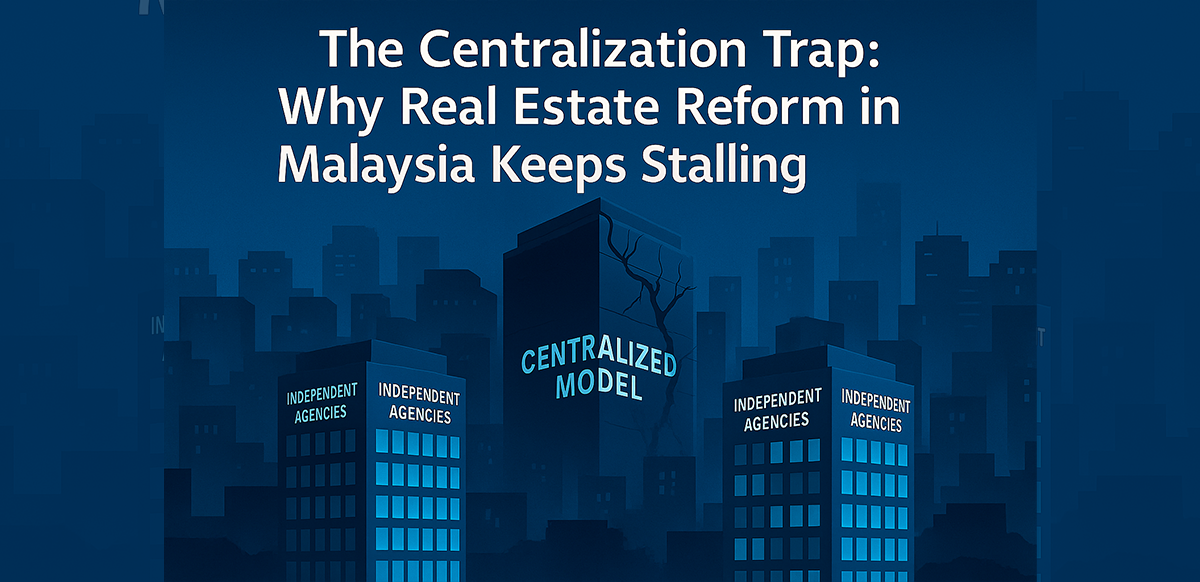
Real estate reform stalls when the industry expects one central body or model to solve everything. Malaysia may need distributed systems, alliance structures, and practical cooperation instead.
ListingMine Academy | Real Estate System Design
The Multiple Listing Service (MLS) was the original proof that competitors could cooperate without surrendering independence.
It standardized trust through transparency — not control.
For decades, real-estate professionals around the world have tried to replicate that logic in their own markets.
Malaysia was no exception.
Over the years, numerous organizations have tried to bring order to Malaysia’s fragmented property market.
The Malaysian Institute of Estate Agents (MIEA), the Association of Valuers, Appraisers, Estate Agents and Property Managers (PEPS), the Persatuan Perunding Hartanah Muslim Malaysia (PEHAM), the Independent Malaysian Property Agents Coalition (IMPAC, formerly MIPEAC), the Persatuan Usahawan Hartanah Kuala Lumpur (PUHKL), and the Founder and Real Estate Negotiator Association Malaysia (FORENA) each sought to strengthen professionalism and unity.
Later, digital platforms such as Synergiem, Wonderlist, ESP Global, Didian, Appiliate, and CorePropTech attempted to solve the same issues through technology and data — yet the outcome remained the same.
Each initiative sought to unify the market.
Each ran into the same wall — the Centralization Trap.
Malaysia doesn’t lack ambition or expertise — it lacks shared digital rails.
The Board of Valuers, Appraisers, Estate Agents and Property Managers (BOVAEP) governs licensing but not interoperability.
Every agency operates its own spreadsheets, chats, and CRMs that can’t communicate.
So each “unifying” effort inevitably becomes another central authority, rebuilding the very bottlenecks it was meant to remove.
The result wasn’t outright failure — it was fragmented evolution.
Different groups fixed pieces of the puzzle but never built the rails that connect them.
Malaysia’s modernization didn’t start with technology — it began with institutions. The MIEA and PEPS laid the professional groundwork from the 1980s onward, setting standards for ethics, licensing, and training.
Over time, new associations emerged — IMPAC, PUHKL, FORENA, and PEHAM — representing independent or community-based practitioners seeking fairer voice and recognition.
MIEA even launched early MLS-style initiatives — pioneering attempts to standardize listings and promote transparency.
By the 2010s, attention shifted from governance to digital integration. Modernizers shared one assumption:
“If chaos is the problem, control must be the solution.”
That belief produced six categories of reform — each meaningful, yet none able to deliver full interoperability.
| Category | Examples | What They Solved |
|---|---|---|
| 1. Professional Committees (Pre-Digital Foundation) | MIEA, PEPS | Established legitimacy, ethics, and REN training. Early MLS attempts by MIEA promoted listing transparency. |
| 2. Rebel Associations (Alternative Representation) | IMPAC, PUHKL, FORENA, PEHAM | Represented independent or community-based practitioners. Built networks and advocacy but lacked shared digital rails. |
| 3. Tech Cooperatives (Early Digital MLS Experiments) | Synergiem, Wonderlist | Built shared-listing systems funded by agents and agencies. Temporarily united stakeholders around data ambitions. |
| 4. Brand Networks (Super-Agencies) | ESP Global | Aggregated thousands of agents using white-label ERPs. Improved internal compliance and training. |
| 5. Utility Platforms (Workflow Digitization) | Didian, Appiliate | Streamlined developer-agent transactions, improving payout accuracy and workflow efficiency. |
| 6. Shadow Networks (Informal Connectivity) | CorePropTech | Enabled rapid informal deal-sharing among negotiators prioritizing speed over structure. |
These experiments collectively reshaped Malaysia’s agency landscape — paving the way for the next phase of reform.
By 2025, Malaysia’s first modernization wave had achieved progress — but not permanence.
PUHKL, FORENA, Synergiem, and Wonderlist appear inactive.
IMPAC continues under new branding.
PEHAM remains active, educating and representing Muslim practitioners.
Didian, Appiliate, and CorePropTech stay focused on narrower verticals.
ESP Global thrives commercially but remains closed within its own network.
Each initiative advanced the industry — yet all stalled at the same barrier: integration without independence.
The MIEA remains vital — the guardian of professionalism, ethics, and legitimacy. Its leadership has produced meaningful reforms, education programs, and stronger ethical standards that helped shape the modern property industry.
However, MIEA’s two-year presidential cycle makes long-term digital projects difficult to sustain. Each new leadership team brings fresh priorities, but major infrastructure initiatives often lose continuity before they mature.
In short, MIEA’s mandate centers on professional governance rather than technological integration.
Malaysia now needs an operational protocol that complements this foundation — one that automates compliance, co-broking, and proof-of-work across all firms.
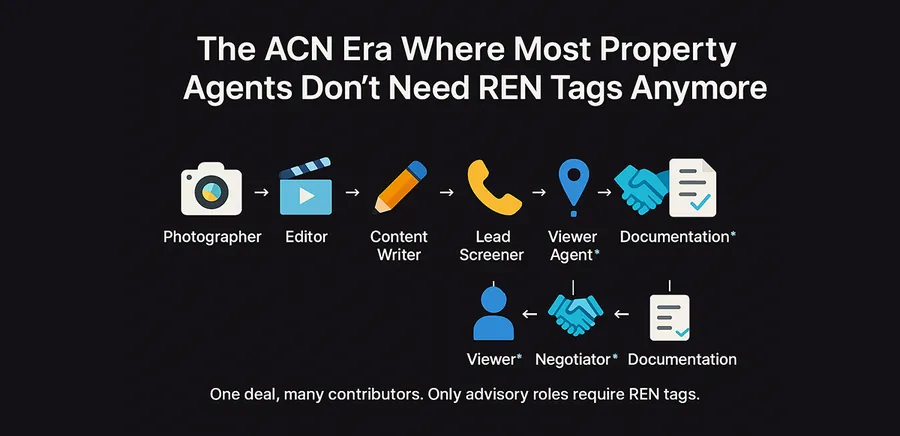
China’s Beike is often cited as the most advanced example of property-system reform. Its Agent Cooperation Network (ACN) introduced verified roles, timestamps, and commission records — converting deals into auditable digital events.
But Beike remains a property agency firm at its core, not a neutral technology network. Its efficiency created dependency, and agents within its ecosystem have increasingly voiced frustration over rigid rules and one-sided control.
Beike proved that proof-based cooperation works, but its ownership model cannot scale across independent brands. It unified through control — and in doing so, sacrificed neutrality and flexibility.
Malaysia doesn’t need to repeat that mistake. Our market is already decentralized and agile, with thousands of small agencies operating freely.
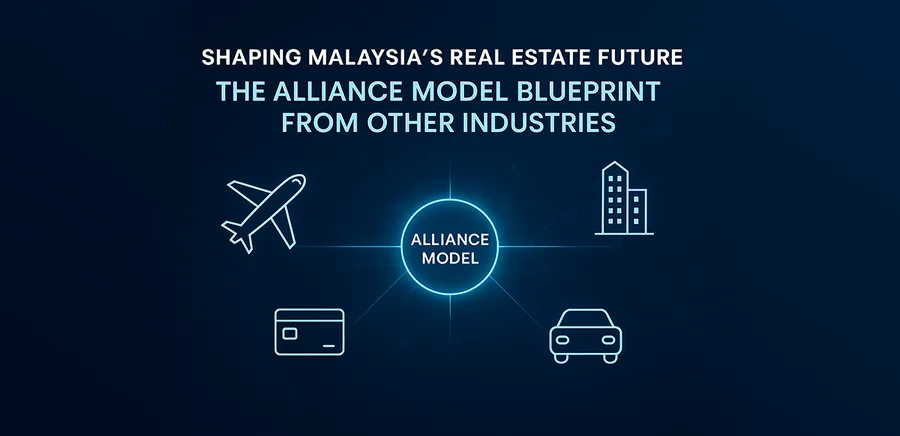
The Alliance ACN, powered by ListingMine, introduces a federated alternative:
Each agency runs its own ERP — managing listings, leads, and commissions independently.
These ERPs connect through a shared proof layer, ensuring transparency and PDPA / AMLA compliance.
BOVAEP remains the regulator — the system simply operationalizes its governance logic.
This is not another association or franchise. It’s infrastructure that unites without ownership.
Beike built control.
ListingMine builds cooperation.
From Shared Listings to Shared Proof: The Evolution of Real Estate Systems
| Evolution Stage | Core Logic |
|---|---|
| MLS (U.S.) | Shared listings |
| Beike ACN (China) | Shared proof |
| Alliance ACN (Malaysia) | Shared proof + federated ERP interoperability |
Malaysia now stands at a pivotal moment:
The next five years will determine the nation’s real-estate standards — from compliance protocols to payout logic.
Agencies that adopt federated proof systems early will define the rules everyone else must follow.
For fifteen years, every modernization effort — from committees to cooperatives — chased the same cure for chaos. Each made progress, yet all hit the same wall: centralization brings order, but kills freedom.
The next era belongs to federated systems — where every agency remains sovereign yet connected by transparent proof.
By combining:
Malaysia can finally achieve the efficiency and fairness the industry has pursued since its first digital reforms.
Transparency was MLS.
Proof was Beike.
Sovereignty is ListingMine.
If you’re interested in understanding how Malaysia’s real estate industry can truly reform, read the articles on ListingMine Academy. All are original writings from the ListingMine founder, built from real operational experience, system architecture, and agency economics.
Whether you’re a new boss, a team leader, or an industry veteran, you’ll definitely learn something new that helps you run smarter, scale faster, and think beyond old structures.
The Academy covers topics such as commission architecture, leadership strategy, compliance and governance, ACN and ERP systems, developer relations, and market evolution — a boss-centric perspective rarely found anywhere else in the industry.
Start reading.
Understand the logic.
Then launch your ERP when ready — the steps are already built inside ListingMine.

Founder of ListingMine and author of Agent for Life. Building ERP for Malaysian real estate agencies since 2008 — and writing to reshape how agencies grow.
More about Marvin Foong →More articles in this topic
This article is one of the sources behind this assessment. Take it to see what you already know and what to read next.
Educational self-assessment. Not a licensing examination or professional certification.