Falling property prices require different agent behaviour, pricing advice, buyer targeting, and seller education. Survival depends on realism, not market optimism.
How agents and agencies can adapt, survive, and even thrive in a falling market
Most agents build their careers in an inflationary mindset — where prices rise, sentiment is bullish, and every year feels like an upgrade. But what happens when the curve bends the other way?
When property prices fall 20%, the entire logic of the industry inverts. Buyers wait. Sellers panic. Developers freeze. The old playbook — “renovate, repackage, relaunch” — no longer works because time itself becomes the new cost.
In a deflationary cycle, speed, not styling, becomes your competitive edge.
In a falling market, the most dangerous word is wait. Every day of holding cost erodes value — loan interest, maintenance fees, and depreciation stack quietly in the background.
The agent who helps sellers liquidate fast and fair will outperform those chasing “one last high price.” Because in deflation, the winner isn’t the one who sells the highest — it’s the one who sells first.
Tactically, this means:
Liquidity is the new luxury.
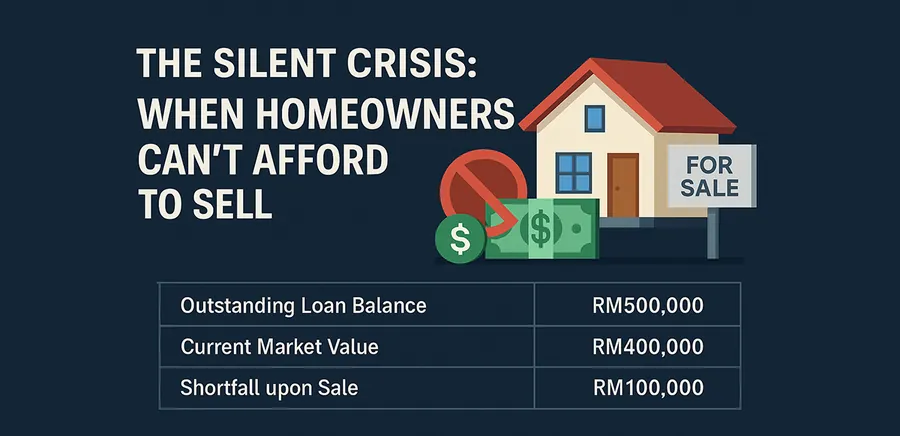
When the market turns, clients don’t need hype — they need clarity. Agents who can explain cash flow, loan exposure, and loss recovery psychology will retain trust.
Your role shifts from marketing agent to financial strategist. Learn to frame your advice in financial terms:
In deflation, knowledge replaces persuasion.
When prices fall, the buyer pool shrinks — but motivation increases. The agents who thrive aren’t chasing leads; they’re mapping distress.
Start by tracking:
Forced sellers are not failures — they’re signals. They reveal where liquidity will reappear first. Help them exit gracefully, and you’ll gain listings others can’t touch.
In deflation, traditional listings lose relevance fast. Repositioning — not relisting — is how you reset market perception.
Your marketing must shift from aspiration to opportunity.
Agencies that survive downturns have diversified income logic:
In downturns, those who control information and trust flows make more than those who chase listings. You’re not selling property — you’re selling certainty.
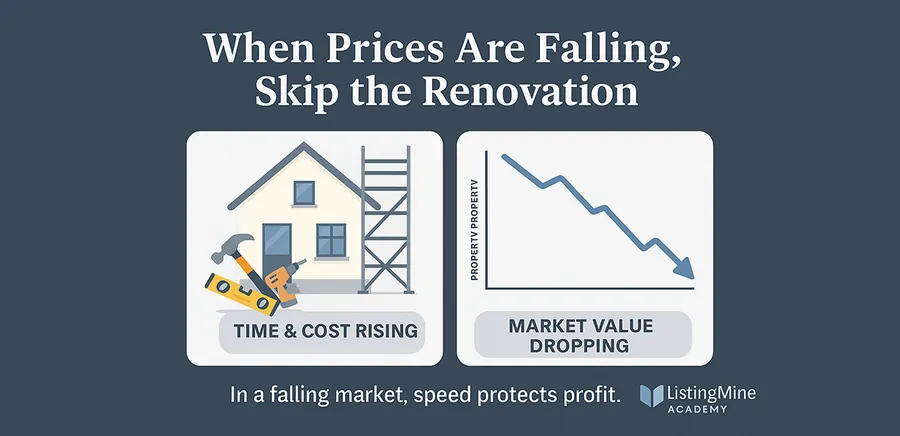
In a deflationary market, renovation is not an upgrade — it’s a liquidity delay. Every month spent renovating in a falling market means selling into a lower floor.
The correct play is repricing, not refurbishing. Smart agents pivot from “add value” to “preserve value.” They help sellers exit early, reposition creatively, and redeploy capital into undervalued buys before the rebound.
Deflation resets the leaderboard. Flashy agents disappear; those who guide clients through fear rise to authority.
Be the voice that explains, not excuses. Document market movements. Publish reasoning, not reactions. When the next cycle turns — and it always does — clients will remember the one person who told them the truth.
When prices rise, the market rewards confidence. When prices fall, it rewards competence.
In deflation, survival belongs to agents who operate like analysts, not marketers — who understand that in a falling tide, trust is the only currency that appreciates.

Founder of ListingMine and author of Agent for Life. Building ERP for Malaysian real estate agencies since 2008 — and writing to reshape how agencies grow.
More about Marvin Foong →More articles in this topic
This article is one of the sources behind this assessment. Take it to see what you already know and what to read next.
Educational self-assessment. Not a licensing examination or professional certification.