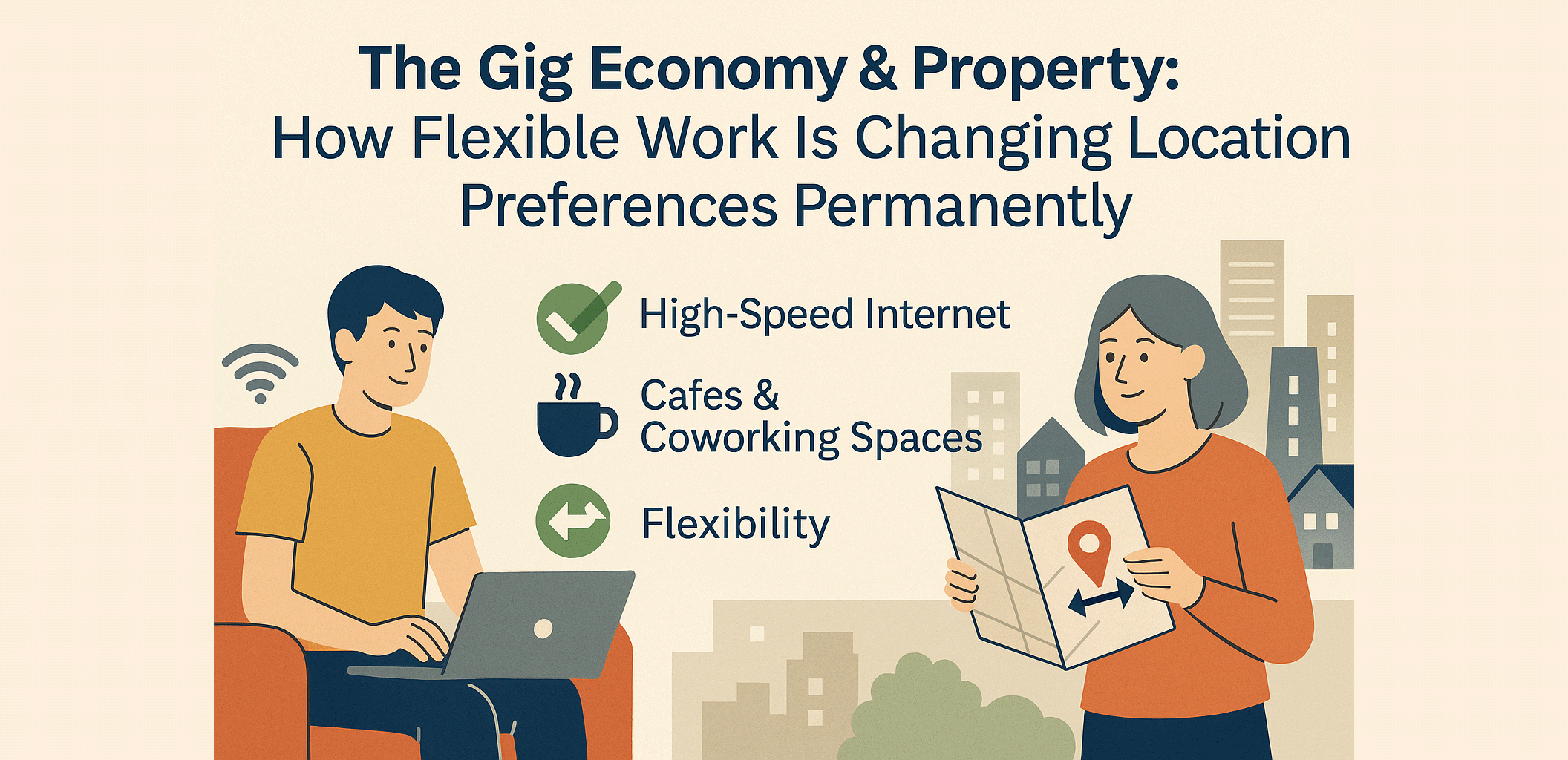
Flexible work changes where people choose to live by reducing dependence on office locations. Agents need to understand lifestyle, space, and connectivity preferences.
The way Malaysians work has changed forever. The old formula — “live near the office, commute daily, retire to the suburbs” — is collapsing.
The gig economy, once a side hustle culture, has become a defining feature of modern income. From freelancers and Grab drivers to digital nomads, self-employed agents, and remote professionals — today’s workforce is location-flexible but infrastructure-dependent.
This shift is reshaping how people choose homes, where they rent, and what they value — and the effects are permanent.
For decades, location decisions revolved around one anchor: the office. But when work becomes digital, that anchor disappears.
Instead, buyers and tenants now ask:
That’s why we’re seeing new hotspots emerging outside traditional CBDs — places like Kota Damansara, Bangi, Penang Island’s southern corridor, and Iskandar’s Medini. These areas combine connectivity with lifestyle amenities at half the cost of city centers.
Malaysia’s gig economy workforce has exploded — now accounting for an estimated 25–30% of active income earners, including real estate agents, ride-hailing drivers, designers, content creators, and consultants.
Their defining feature: income flexibility, not income stability. That means:
Developments catering to this audience are introducing:
For property investors, this represents a new tenant class — one that demands agility more than luxury.
Before COVID-19, location value followed a predictable pattern — the closer to offices, the higher the premium. Today, proximity to a laptop plug point often matters more than proximity to a corporate tower.
This shift has unlocked “second-tier” locations:
The permanent decentralization of work means property value will increasingly follow livability, not address prestige.
Developers are adapting. The next wave of urban design isn’t purely residential — it’s work-enabled living. Projects now blend:
Agents selling these units should shift their narrative:
“This is not just a home — it’s your office, studio, and lifestyle hub in one.”
Buyers today aren’t buying walls — they’re buying freedom.
For Agents:
For Landlords:
Real estate has always been tied to one question: Where do people need to be? Now, the better question is: Where can people afford to live well and still work effectively?
As 5G expands, more Malaysians will migrate toward secondary towns and lifestyle-driven suburbs — places where cost, community, and connectivity intersect.
The gig economy didn’t just change work — it reprogrammed the entire logic of location.
The property market used to serve corporations; now it serves individuals. The agent who understands the flexibility economy — who sells not space, but freedom of space — will thrive in the decade ahead.
In short, the office may have died, but location never stopped mattering. It simply changed shape.

Founder of ListingMine and author of Agent for Life. Building ERP for Malaysian real estate agencies since 2008 — and writing to reshape how agencies grow.
More about Marvin Foong →More articles in this topic