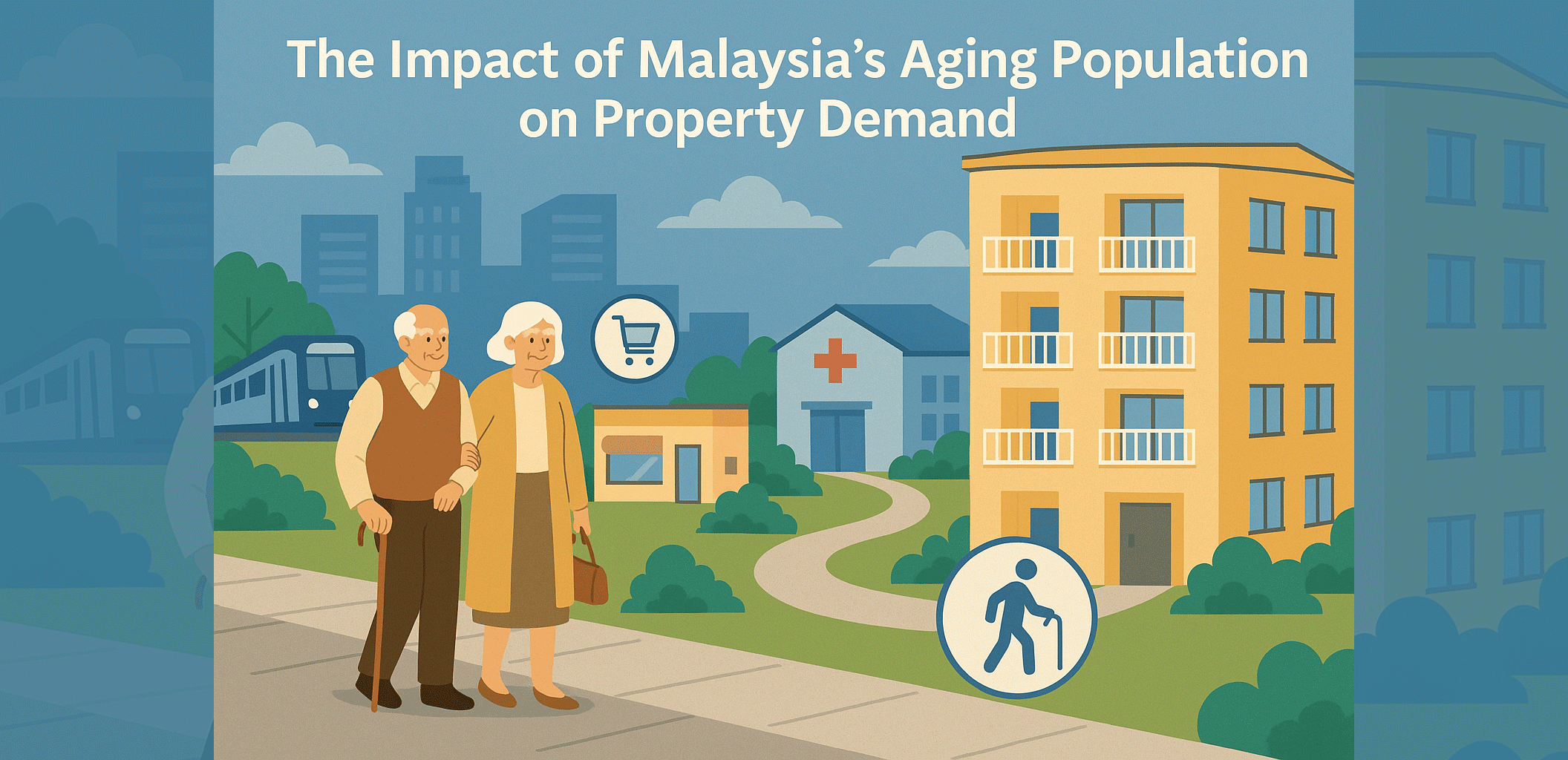
Malaysia’s aging population will affect downsizing, accessibility, healthcare proximity, inheritance, and retirement housing demand. Agents should understand demographic shifts before advising clients.
Malaysia is aging — quietly but steadily. According to the Department of Statistics Malaysia (DOSM), 15% of Malaysians will be aged 60 or above by 2030, officially classifying the nation as an “aging society.”
This demographic shift is more than just a social issue — it’s reshaping how, where, and what types of properties will be in demand in the coming decades.
Unlike youth-driven markets where demand comes from household formation and new families, an aging population creates a different kind of demand — for security, convenience, and care.
Older Malaysians are not necessarily poor. Many are asset-rich but income-light, sitting on fully paid homes purchased in the 1980s–2000s. As they retire, their priorities change:
This shift will reallocate housing demand — away from suburban expansion and toward compact, connected, and service-oriented housing.
Historically, cities like Kuala Lumpur, Penang, and Johor Bahru attracted working-age migrants. But as the population ages, demand will grow strongest in “care-proximate zones” — areas within 10–15 minutes of:
Developments like Sunway City, Bangsar South, Cheras, and Subang Jaya are early examples of neighborhoods that naturally fit this demographic — combining healthcare, lifestyle, and walkability.
The rise of medical districts (e.g., KL Sentral–Brickfields, HUKM–Cheras, Gleneagles–Ampang) will create new demand for senior-friendly apartments, serviced residences, and small investment units rented by caregivers, retirees, or families assisting the elderly.
The traditional Malaysian property dream — large landed houses for three generations — no longer aligns with demographic reality. Fewer children, more single retirees, and the migration of younger adults overseas or to cities are forcing a redesign of what “home” means in later life.
Key trends:
Agents who understand these shifts can position themselves in a new, underserved market — the “retirement transition” buyer.
As retirees seek liquidity, property disposal and equity release will rise. Expect more listings from:
This makes the elderly property segment both sensitive and valuable — requiring agents to act as trusted advisors, not just salespeople.
Professionals who can navigate these transactions with empathy and compliance (especially around wills, grants of probate, and enduring power of attorney) will thrive in this evolving landscape.
Developers will need to shift from “youth and luxury” to “comfort and accessibility.” Expect:
Government agencies, too, may begin zoning “senior living zones” — similar to Japan’s community-integrated care model — balancing healthcare, housing, and social inclusion.
Identify Aging Hotspots — Map which condos or neighborhoods are seeing older owner demographics.
Build Healthcare Partnerships — Collaborate with hospitals, rehabilitation centers, or insurance advisors for referral ecosystems.
Offer Downsizing Consultations — Help retirees liquidate, relocate, and reinvest strategically.
Create “Elder-Care” Listing Categories — Filter listings by accessibility, hospital proximity, and maintenance ease.
This segment isn’t flashy — but it’s predictable, stable, and growing fast.
Malaysia’s property market is quietly entering a demographic transformation phase. As the silver generation grows, the winners will be those who pivot early — from chasing speculative trends to solving practical, long-term housing needs.
In the next decade, the most valuable real estate skill won’t be hype — it will be empathy. Agents who understand aging not as decline, but as continuity with new priorities, will lead the next property cycle with wisdom and purpose.

Founder of ListingMine and author of Agent for Life. Building ERP for Malaysian real estate agencies since 2008 — and writing to reshape how agencies grow.
More about Marvin Foong →More articles in this topic