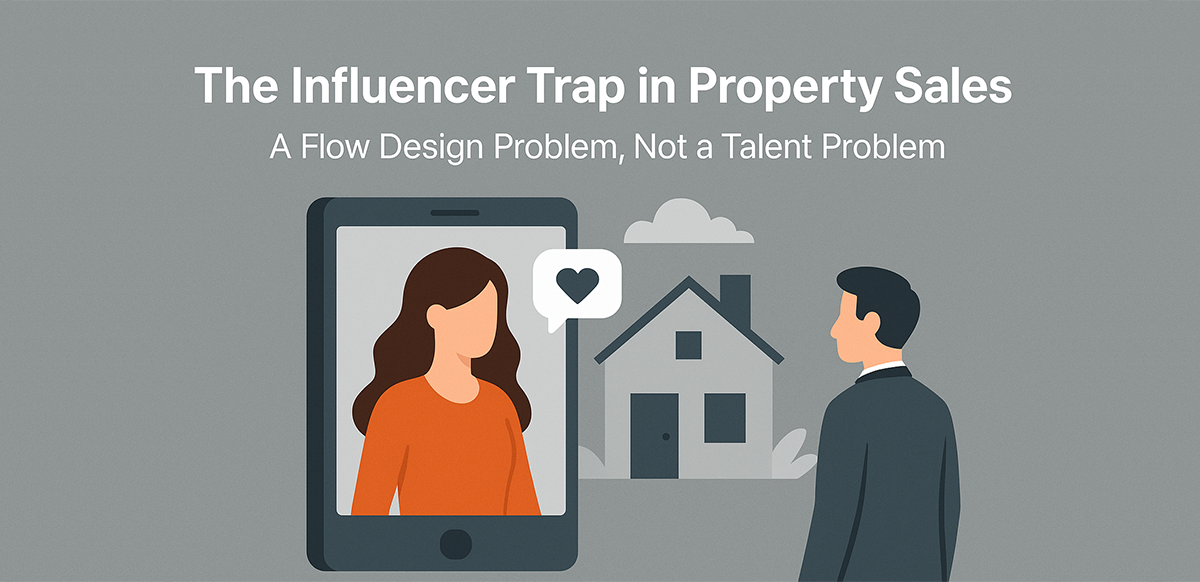
Influencer traffic fails when agencies lack capture, qualification, follow-up, and conversion systems. The problem is usually flow design, not the influencer.
Influencer marketing has become the industry's favourite shortcut. Hire a famous face. The video looks great. Engagement spikes. Appointments flood in. On the surface, it looks like a win.
In reality, many of these campaigns quietly fail where it matters most: conversion.
Not because the influencer is weak. Not because agents are lazy. But because the flow design is broken.
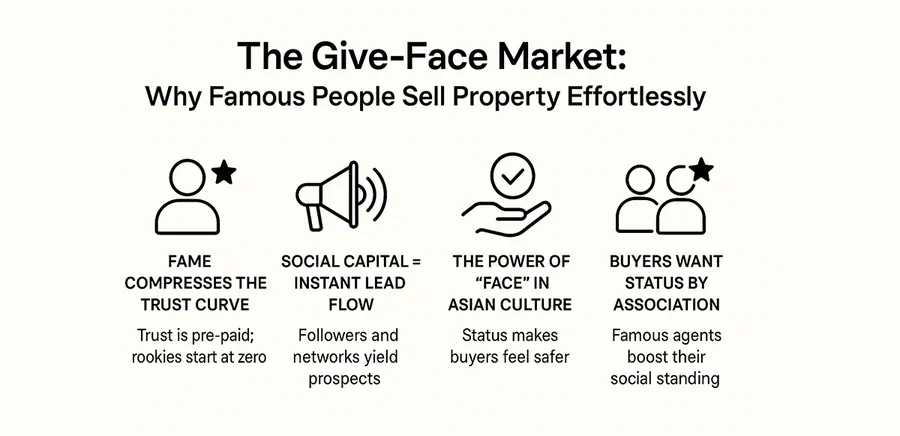
Most teams misunderstand what an influencer actually does. They think the job is exposure. The real job is trust transfer.
When a buyer books a viewing through an influencer, a psychological contract is formed. The buyer expects the experience to continue seamlessly from the person they watched.
The Reality Check The buyer arrives at the sales gallery. They expect the influencer. Instead, they meet another agent.
No explanation. No acknowledgement. No emotional handover.
The buyer feels disappointed—sometimes even misled—but says nothing. It's awkward to admit, "I only came because I wanted to meet the influencer."
That disappointment doesn't vanish. It shows up as:
The deal didn't die at the closing table. It died at the greeting. This is an emotional continuity failure.
There is a second reason influencer campaigns fail: volume shock.
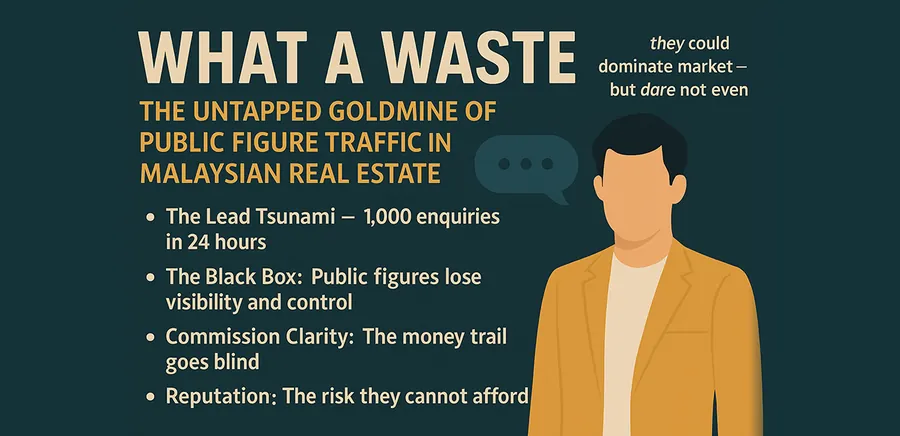
Influencers create spikes. Five hundred enquiries in forty-eight hours is normal. Now ask the uncomfortable question: How does a team of three agents handle five hundred leads properly?
They can't. What follows is predictable:
At that point, marketing spend is burning. High demand without infrastructure is not growth. It is chaos.
Talent Cannot Replace Systems No individual agent—no matter how hardworking—can manage mass demand manually. WhatsApp groups collapse. Spreadsheets break. Memory fails. If the plan is "We'll just work harder when the leads come," the campaign is already lost.
This problem does not require better people. It requires better architecture.
Fix the Emotional Flow
Fix the Capacity (Infrastructure) Influencer-driven funnels demand systems, not improvisation. Using an ACN-style infrastructure allows:
With proper infrastructure, a flood becomes leverage.
Influencers amplify demand. Systems decide outcomes.
If the flow breaks emotional continuity—or the infrastructure cannot absorb volume—influencer marketing will only magnify inefficiencies.
Don't just pay for the face. Design the flow.
All strategies and examples discussed in this article are conceptual and must be implemented in full compliance with applicable Malaysian laws and regulations, including the Board of Valuers, Appraisers, Estate Agents and Property Managers (BOVAEP) guidelines and the Valuers, Appraisers, Estate Agents and Property Managers Act 1981 (Act 242). Agencies and individuals are responsible for ensuring that all recruitment practices, referral incentives, commission structures, and marketing activities adhere strictly to professional standards, ethical requirements, and regulatory obligations.

Founder of ListingMine and author of Agent for Life. Building ERP for Malaysian real estate agencies since 2008 — and writing to reshape how agencies grow.
More about Marvin Foong →More articles in this topic
This article is one of the sources behind this assessment. Take it to see what you already know and what to read next.
Educational self-assessment. Not a licensing examination or professional certification.