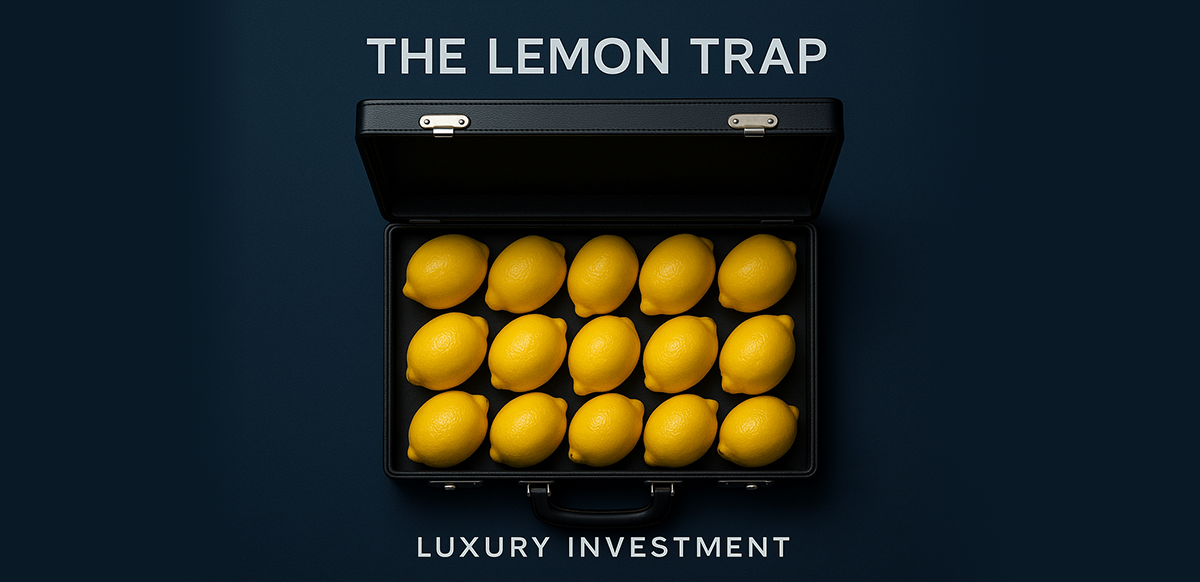
Agents can mislead themselves when they emotionally believe in weak products before properly testing buyer demand. Self-persuasion can become a sales trap.
In every sales training, you’ll hear the same line:
“If you don’t believe in what you sell, how can you convince others?”
So many agents took that literally. They started buying the very properties they were supposed to sell — not because it made financial sense, but because they thought belief equals conviction.
They told buyers,
“See? I also bought it. That’s why I’m asking you to buy it.”
But belief without cognition is just self-persuasion — not expertise.
Most RENs attended a two-day NCC course and assumed they were now property experts. They memorized the script, learned to quote “ROI,” “rental yield,” and “future MRT line,” but never learned how to read developer accounts, zoning risk, or bank valuation bias.
They believed the marketing brochure more than the feasibility report. They confused confidence with competence.
In trying to convince buyers, they convinced themselves first — and ended up buying the same lemons they sold.
Years later, the same pattern repeats:
Now both agent and buyer are stuck — same project, same regret, same monthly repayment.
The agent thought they were proving credibility. In reality, they were proving their own cognitive limit.
Believing in property is not wrong.
But belief must be backed by literacy — not loyalty to your listing.
A two-day NCC doesn’t make anyone an investment analyst.
It teaches you compliance, not valuation.
Real professionals don’t prove conviction by sharing the risk.
They prove it by having the expertise to assess it.
Their value isn’t in being a co-investor; it’s in being a guide who knows the terrain well enough to spot the traps — especially the one labeled “Believe In What You Sell.”

Founder of ListingMine and author of Agent for Life. Building ERP for Malaysian real estate agencies since 2008 — and writing to reshape how agencies grow.
More about Marvin Foong →More articles in this topic
This article is one of the sources behind this assessment. Take it to see what you already know and what to read next.
Educational self-assessment. Not a licensing examination or professional certification.