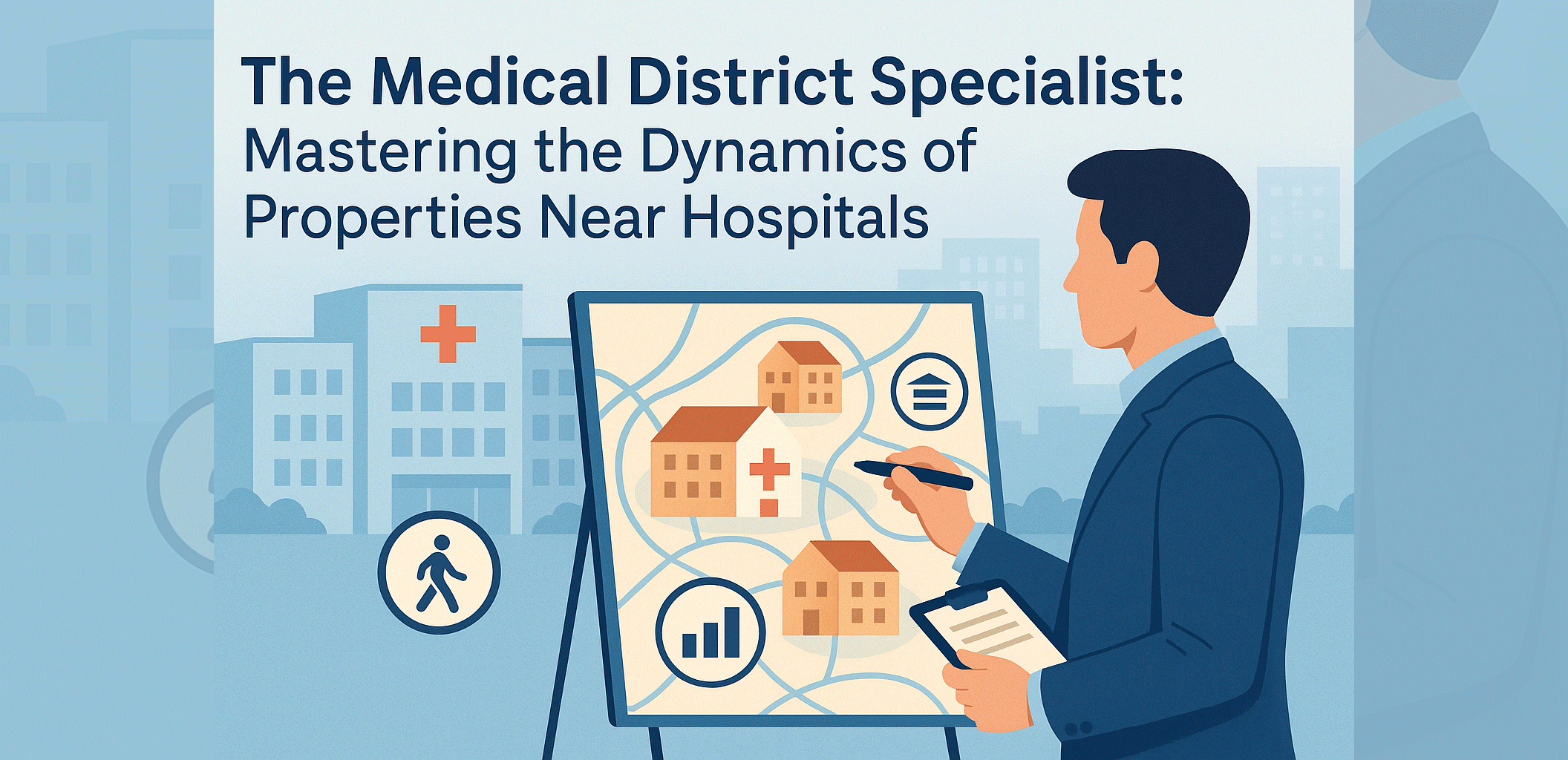
Properties near hospitals serve doctors, patients, staff, investors, and short-term accommodation demand. Medical districts require agents to understand niche demand drivers.
Real estate near major hospitals is one of the most underappreciated yet stable niches in the Malaysian property market. While investors often chase malls, schools, and transit hubs, the medical district quietly sustains consistent rental demand, strong capital preservation, and rapid tenant turnover. For agents, mastering this niche requires understanding not just the buildings—but the ecosystem of people who keep hospitals alive.
Hospitals never sleep. They generate continuous human movement—patients, families, nurses, doctors, international specialists, medical students, and pharmaceutical reps. This 24/7 rhythm fuels a constant demand for short- and medium-term accommodation, retail, and parking spaces.
Unlike speculative developments, hospital-adjacent properties are supported by reliable institutional anchors. A hospital may change management, but it almost never relocates—creating a permanent, recession-resistant microeconomy.
A Medical District Specialist serves a very specific mix of clients, each with unique needs:
Medical Professionals – Doctors, nurses, and medical assistants value proximity, quietness, and security. They prefer smaller, easy-maintenance units with good Wi-Fi and 24-hour access.
Patients’ Families – Often from outstation, they seek affordable, short-term stays near hospitals. Furnished studios or Airbnbs perform well here.
Investors – Many landlords target this segment for yield stability. They rely on agents to identify units within 300–500 meters of hospitals or medical universities.
Clinics & Pharmacies – Retail owners and commercial tenants who depend on hospital traffic for walk-in customers.
Knowing how to balance these profiles allows agents to position each listing strategically—some units appeal more to tenants, others to investors or service operators.
Walking Distance and Accessibility
The shorter the walking distance to the hospital, the stronger the demand. Covered walkways, grab-drop areas, and shuttle routes add bonus value.
Noise & Traffic Management
Ironically, being too close can backfire. Constant ambulance sirens or traffic congestion may reduce livability. A smart specialist learns to evaluate the “comfort radius”—usually 300–700 meters.
Zoning and Commercial Potential
Some residential towers near hospitals quietly evolve into mixed-use communities—hosting clinics, diagnostic labs, or nurses’ quarters. Understanding zoning flexibility lets you spot hidden potential.
Tenant Turnover vs. Occupancy Stability
Expect high turnover, but low vacancy. Your prospects may stay only three to six months—but someone else will replace them almost immediately.
Parking and Mobility
Hospitals attract vehicles all day. Properties with dedicated parking or multiple access points stand out.
Map Your Zone
Know the top 10 hospitals in your city—public and private. Chart the 500-meter radius around each one and identify which condos, apartments, and shoplots are most active.
Build Relationships with Medical Staff
Network with hospital HR departments, nurses’ unions, and relocation coordinators. Many hospitals assist staff and visiting specialists in finding housing—if they trust an agent.
Offer Furnished and Managed Solutions
Create a database of landlords open to short-term leasing and coordinate cleaning, furnishing, and maintenance. This convenience attracts both tenants and owners.
Highlight ROI and Stability
When marketing to investors, emphasize that hospital-proximate units may not appreciate the fastest—but they hold their value, rent steadily, and rarely stay vacant.
Stay Compliant with Local Rules
Be aware of zoning, tenancy duration, and business licensing issues if you manage short-stay units. Professionalism builds long-term trust in a sector where reliability matters more than hype.
The Medical District is not a flashy niche—but it is a resilient and dependable one. Every agent chasing high-end condos or tourist Airbnbs eventually learns that stability pays the bills. By becoming a Medical District Specialist, you’re positioning yourself in a need-driven market—one that transcends trends, pandemics, and economic cycles.
It’s a business of empathy, data, and local expertise—helping people at their most vulnerable moments find comfort, proximity, and peace of mind.

Founder of ListingMine and author of Agent for Life. Building ERP for Malaysian real estate agencies since 2008 — and writing to reshape how agencies grow.
More about Marvin Foong →More articles in this topic
This article is one of the sources behind this assessment. Take it to see what you already know and what to read next.
Educational self-assessment. Not a licensing examination or professional certification.