WhatsApp chats may help show communication history but are not a perfect substitute for proper documents. Agents should treat chat logs as support, not primary protection.
In Malaysia’s real estate industry, WhatsApp has become the default office. Listings, prices, viewings, negotiations — everything happens inside that green chat box.
So when a deal closes and a dispute arises, most agents scroll up and say:
“See? I have proof. It’s all in the chat.”
But here’s the uncomfortable truth:
A WhatsApp trail might show effort, but it doesn’t prove authority.
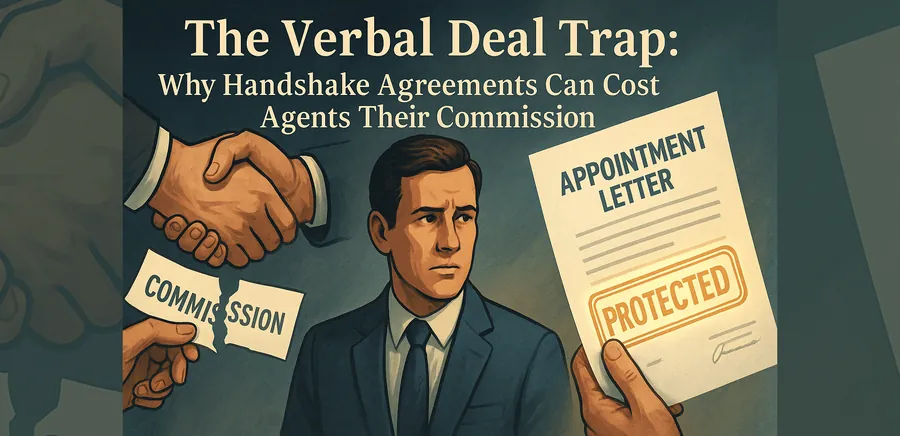
In court, screenshots can support your story — but they can’t replace a signed appointment letter.
Let’s be clear: WhatsApp logs can help. They can prove:
But under Act 242, your right to commission doesn’t come from effort — it comes from written authority.
That means:
In short: WhatsApp shows what you did. It doesn’t prove you were entitled to do it.
If you already have a valid appointment letter, your chat logs become a powerful backup — they show transparency, timeline, and communication. Together, they build a strong case for professionalism and delivery.
If you relied only on WhatsApp messages — even ones saying “okay, go ahead” — the court will ask:
Most of the time, the answer is no. Chats are treated as evidence of discussion, not proof of agreement.
The reason is simple: Property transactions involve high value and legal representation. The law expects clarity — not convenience.
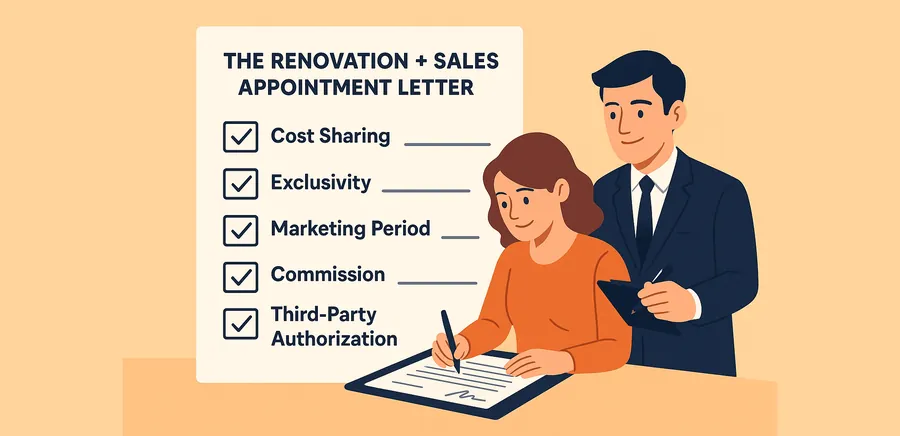
A signed appointment letter provides:
WhatsApp may show intent, but courts need certainty — a written, signed, dated document.
It’s easy to feel safe with screenshots. You can search, export, and highlight messages.
But here’s the catch:
In the end, WhatsApp is a supplement, not a substitute. It tells your story — but it doesn’t sign your name.
You don’t need to abandon WhatsApp — you just need to anchor it properly.
Here’s how professionals do it:
That way, your paper and your chat tell the same story — and one of them is legally binding.
A WhatsApp chat shows you were involved. A signed appointment proves you were entitled.
If you ever end up defending your commission, it’s not the chat that saves you — it’s the contract behind it.

Founder of ListingMine and author of Agent for Life. Building ERP for Malaysian real estate agencies since 2008 — and writing to reshape how agencies grow.
More about Marvin Foong →More articles in this topic
This article is one of the sources behind this assessment. Take it to see what you already know and what to read next.
Educational self-assessment. Not a licensing examination or professional certification.