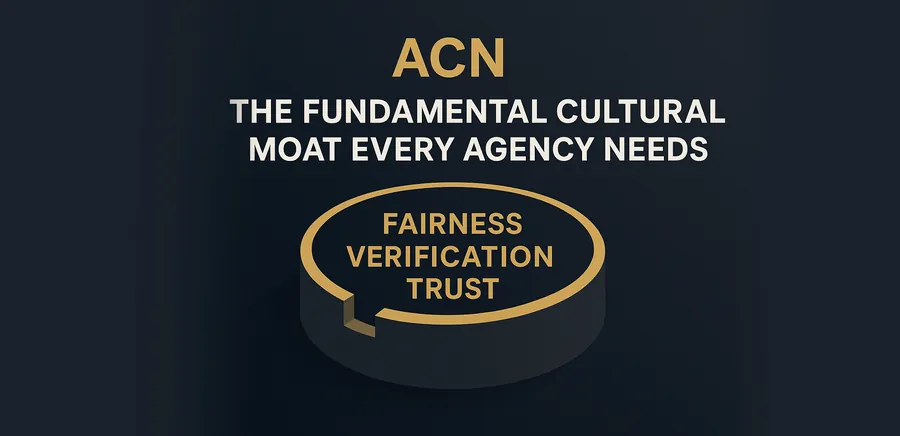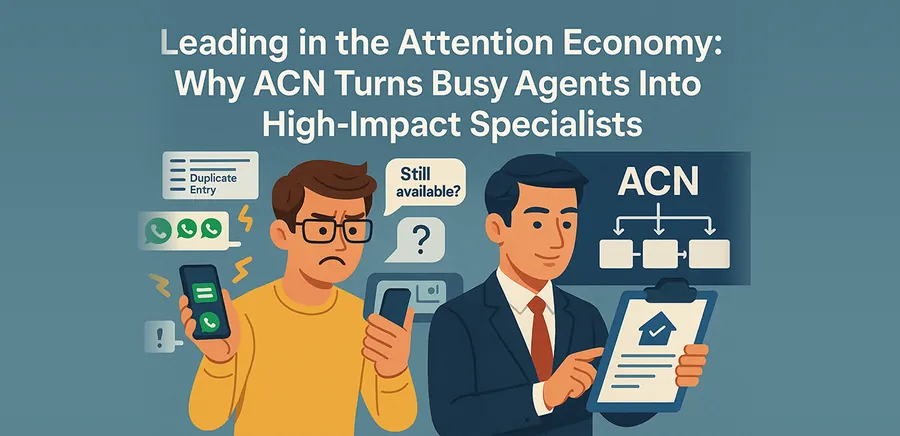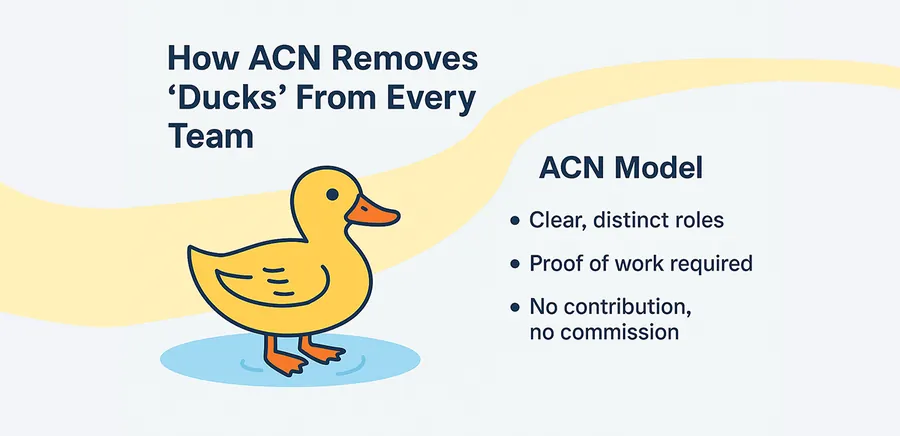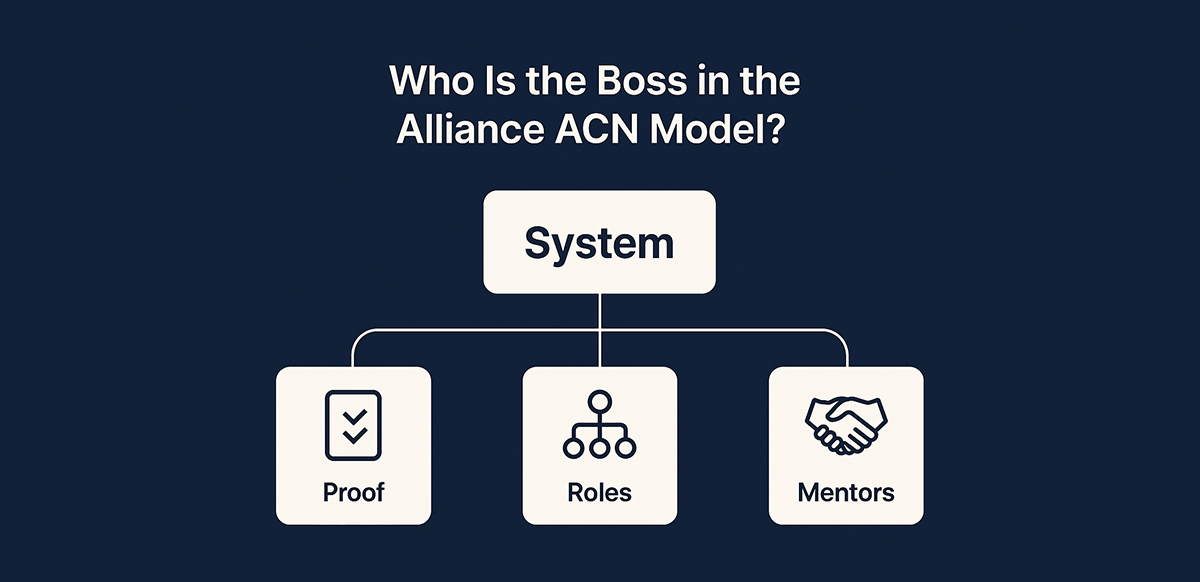
In an Alliance ACN model, authority comes from the operating system, rules, and governance rather than one dominant personality. The system becomes the boss because it defines roles, proof, payouts, and cooperation standards.
In the old world of real estate, power was simple.
The agency boss signed the commission.
The team leader distributed the leads.
The franchise HQ made the rules.
That hierarchy worked — for a time.
But Malaysia’s real estate market is changing faster than those hierarchies can adapt. Agents are smarter. Systems are cheaper. Compliance is digital.
And the question that used to define control — “Who’s the boss?” — now has a very different answer.
In the Alliance ACN, there isn’t one.
There’s a system of proof and a network of mentors.
Together, they form the new structure of power and profit.
The first revolution of the Alliance ACN is structural.
It replaces hierarchy with proof — and power with process.
This is how leadership stops being personal, and starts being systemic.
1. The Shift From Command to System
In a franchise, the hierarchy is clear. The franchisor owns the brand, the playbook, and the right to enforce.
In the Alliance ACN, hierarchy doesn’t disappear — it’s replaced by systems of proof.
There’s still authority, but it’s data-driven, not personality-driven. Power doesn’t flow from who you report to; it flows from what you’ve contributed and what the system can verify.
When every listing, lead, and deal is logged inside a transparent system, that record becomes the referee.
No favoritism. No politics. Just timestamps, proofs, and logic.
“In a franchise, you follow the boss. In an alliance, you follow the record.”
2. Roles Replace Ranks
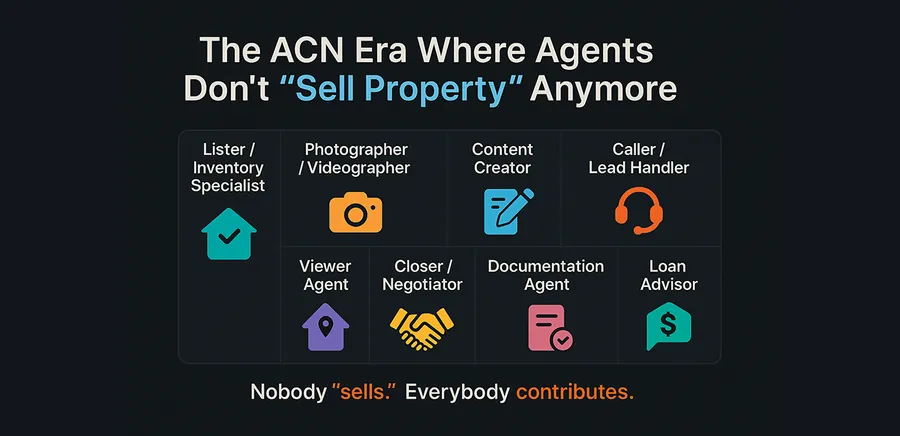
In the Alliance model, leadership is dynamic. Every transaction creates its own temporary leadership structure.
| Role | Responsibility |
|---|---|
| Listing Agent | Controls inventory and property data. |
| Buyer Agent | Drives client engagement and negotiation. |
| Verifier / Photographer | Ensures listing accuracy and compliance. |
| Finance Advisor | Oversees documentation, AMLA checks, and closing. |
When the deal closes, those roles dissolve — and a new one forms with new leaders. It’s a rotating meritocracy: whoever creates value in the moment leads in that moment.
This is what real cooperation looks like — authority that follows contribution.
“The boss changes with the job — not with the title.”
3. Governance Through Data, Not Ego
The Alliance ACN doesn’t mean “no rules.” It means the rules live in the system.
Every action is timestamped. Every commission is auto-calculated. Every agent’s role is recorded in the audit trail.
That means disputes don’t go to a person — they go to the system log. Leadership stops being about managing people and starts being about managing integrity and design.
The system becomes the institution. That’s real governance — without politics.
4. The Platform Isn’t the Boss — It’s the Bridge
The platform doesn’t sit above you. It runs beneath you.
It’s the invisible infrastructure that allows hundreds of independent leaders to coexist, collaborate, and grow without reporting to a central HQ.
The system doesn’t dictate how you run your agency. It simply connects your private ERP — a self-contained business operating system for commissions, leads, and compliance — to a shared proof layer that ensures:
You don’t lose control. You gain interoperability. Your ERP remains yours — your rules, your team, your brand. The Alliance just gives you the rails to cooperate with others safely and profitably.
“The platform isn’t your boss. It’s your bridge — from isolation to integration.”
The second revolution of the Alliance ACN is economic.
It replaces retention by control with retention by collaboration. It’s the new business model for growth in an era where independence is inevitable.
5. The Retention Revolution: Graduation vs. Defection
For decades, agency growth meant one thing: recruit more agents, hold them as long as possible. But in Malaysia, that game is breaking down.
Top agents don’t want to be controlled — they want to grow. And until now, “growth” meant leaving.
The Alliance model flips this logic. Instead of fighting defections, you design graduations.
When an agent becomes too capable for your internal structure, you don’t lose them. You elevate them — to start their own team, their own brand, powered by their own ERP.
And because that ERP connects back into your Alliance, they don’t disappear. They expand your network — and your earnings.
“In the old model, you feared their independence. In the new model, you profit from it.”
6. The Mentor Company Model
In a franchise, the HQ enforces. In an alliance, the mentor company empowers.
The mother agency doesn’t own its graduates — it partners with them. It provides guidance, branding, and system access in exchange for participation in the Alliance network.
The relationship shifts from hierarchical to symbiotic: You trained them. Now you trade with them.
They remain under your Alliance umbrella — sharing listings, co-broking rules, and compliance oversight — but they operate independently, with full brand and data control.
This turns “attrition” into network multiplication.
“Franchises keep people below. Alliances grow people beside.”
7. How It Works: The Graduate ERP
Every graduate leader runs their own ERP (business operating system): a private command center that handles commissions, team logic, developer projects, and compliance.
These micro-ERPs connect seamlessly through the Alliance network. That means every deal — across brands — still syncs under the same proof-of-work framework.
Graduates gain autonomy, but the network retains cohesion. It’s independence without fragmentation — freedom with connectivity.
“Graduation isn’t departure. It's a duplication — at scale.”
8. The New Economics: From Overrides to Royalties
The economics change, too. Traditional agencies rely on overrides — taking 30–50% from every deal until the agent leaves.
In the Alliance ACN, the mentor agency earns a network royalty — say 5% — on all Alliance deals closed by its graduates.
That royalty isn’t extracted through hierarchy — it’s earned through system verification. The Alliance tracks every transaction transparently, rewarding the mentor ecosystem automatically.
It’s revenue forever — built on success, not control.
“You stop taking from your people. You start earning with them.”
9. The Endgame: Network Sovereignty
As the ecosystem matures, Malaysia’s real estate landscape will look less like a corporate pyramid and more like a federated alliance — hundreds of independent brands, each powered by their own ERP, united by proof and policy.
Each brand remains sovereign. Each leader remains independent. But all share the same backbone of fairness and automation.
That’s the real vision of the Alliance ACN. Not one boss at the top — but thousands of empowered bosses, connected through systems of proof and networks of trust.
“In the Alliance ACN, the system is the boss — and you are the mentor.”
The future of Malaysia’s real estate leadership isn’t about who gives the orders.
It’s about who builds the systems others want to follow.
Franchises reward obedience. Alliances reward initiative.
And the ACN is the bridge between the two — the model that turns freedom into structure, and structure into scale.
“The next generation of property leaders won’t work for a boss. They’ll build one — in code.”

Founder of ListingMine and author of Agent for Life. Building ERP for Malaysian real estate agencies since 2008 — and writing to reshape how agencies grow.
More about Marvin Foong →More articles in this topic