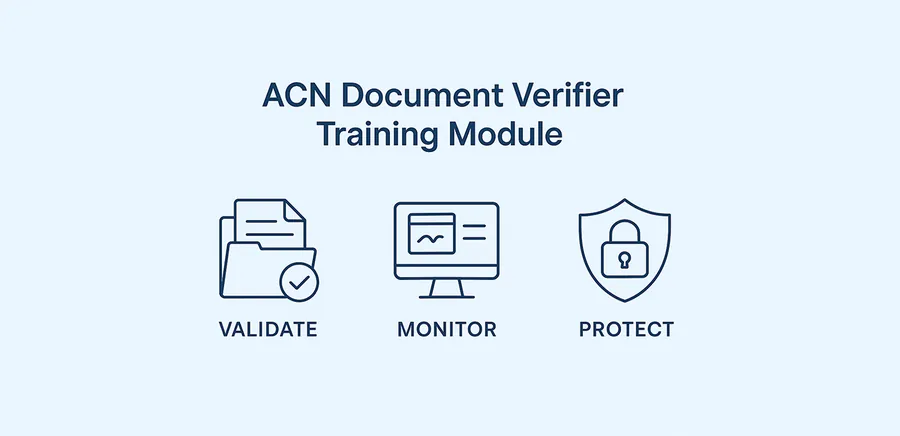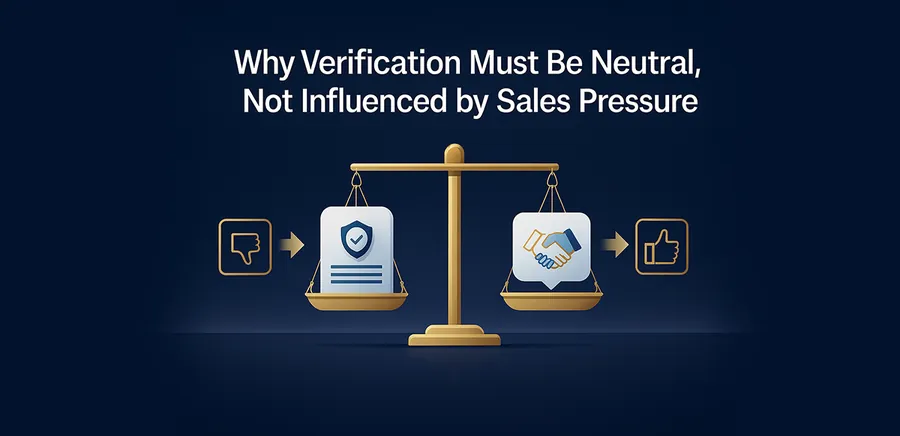
Document verification protects ACN from fake, weak, or risky listings. A verifier role strengthens trust before agents invest time in marketing or buyer work.
The Agent Cooperation Network (ACN) is a verification-driven ecosystem designed to replace the systemic failure of "trust-based" co-broking. In the current Malaysian market, co-broking is often a gamble where agents bet their time and marketing capital on unverified data.
The ACN Iron Law:
No listing enters the shared ecosystem unless it is proven to be Real, Authorized, Ready, and Marketable.
If the foundation of a listing is structurally unsound, no amount of marketing or sales talent can force a successful closing. The Document Verifier exists to insulate the network from the "garbage in, garbage out" cycle.
In the traditional model, agents assume a listing is valid until it fails at the lawyer’s desk or during a viewing. This "discovery at the end" is the single greatest cause of wasted capital in the industry.
Common "Shadow" Failures:
The Economic Reality: The cost (ads, petrol, time) is incurred first; the failure is discovered last. ACN reverses this by front-loading the friction to the verification stage.
The Document Verifier is not a clerk; they are a Risk Underwriter. Their mission is to ensure:
A listing only enters the ACN "Live Stream" if it passes these 10 integrity checks:
| # | Checkpoint | Objective |
|---|---|---|
| 1 | Ownership Legitimacy | Cross-reference SPA/Title/DOA against Seller ID. |
| 2 | Legal Authority | Verify the signatory has the right to bind the sale. |
| 3 | Appointment Class | Categorize as Open, Sole, Exclusive, or Developer PIC. |
| 4 | Enforceability | Ensure dates, exit terms, and renewals are legally sound. |
| 5 | Commission Logic | Confirm % and abortive clauses are agreed and workable. |
| 6 | Multi-Owner Consent | Ensure all legal owners (or authorized reps) have signed. |
| 7 | Price Validation | Compare against CMA to ensure the listing isn't "dead on arrival." |
| 8 | Asset Documentation | Ensure photos, fact-sheets, and tenancies are complete. |
| 9 | Risk Profiling | Assign a Risk Grade: Low, Medium, or High. |
| 10 | Audit Frequency | Define the check-in rhythm (e.g., Weekly for high-demand areas). |
To prevent "zombie listings," the Verifier monitors the inventory lifecycle:
| Task | Trigger / Threshold |
|---|---|
| Availability Pulse | No owner response for > 7 days = Instant Suspension. |
| Velocity Tracking | < 3 inquiries in 14 days = Requires Strategy Audit. |
| Objection Mapping | 3 identical feedback patterns = Mandatory Price/Condition Review. |
| Market Alignment | Price > 10% above current CMA = Recommendation for Adjustment. |
| Asset Refresh | Listing active for 30+ days without update = Mandatory Refresh. |
| Expiry Watch | < 14 days to authority expiry = Mandatory Renewal or Removal. |
| ACN Reporting | Weekly rhythm to update the network on "Ready-to-Close" status. |
The Verifier is compensated for Capital Protection. In aviation, maintenance engineers are paid to ensure the plane doesn't crash; in real estate, the Verifier is paid to ensure the deal doesn't collapse.
The Value Created:
When the "Source of Truth" is already verified, the role is minimized to maximize the sales execution split:
| Role | Standard ACN Split | Exempt/Streamlined Split |
|---|---|---|
| Listing Input | 10–15% | 20–25% |
| Document Verifier | 10–20% | 0–5% |
| Marketing & Lead Flow | 20–30% | 20–30% |
| Viewing & Buyer Management | 15–25% | 15–25% |
| Negotiation & Closing | 25–35% | 30–40% |
| Transaction Support | 5–10% | 5–10% |
With the Document Verifier role formalized, ACN transforms from a "chat group" into a Neutral Infrastructure. It moves the industry away from a "luck-based hustle" toward an Engineered Precision model.
Cooperation without verification is not a strategy; it is a liability.

Founder of ListingMine and author of Agent for Life. Building ERP for Malaysian real estate agencies since 2008 — and writing to reshape how agencies grow.
More about Marvin Foong →More articles in this topic
This article is one of the sources behind this assessment. Take it to see what you already know and what to read next.
Educational self-assessment. Not a licensing examination or professional certification.