Agency bosses often close when growth problems become too complex to understand or solve. The wall appears when leadership, cash flow, agents, systems, and strategy all break down together.
ListingMine Academy | Real Estate System Design
Most agency bosses don’t fail because they refuse to change.
They fail because they try to change — and then collide with something they never anticipated.
There is a moment in every struggling agency when:
ambition meets friction,
restructuring meets resistance,
vision meets system limitations.
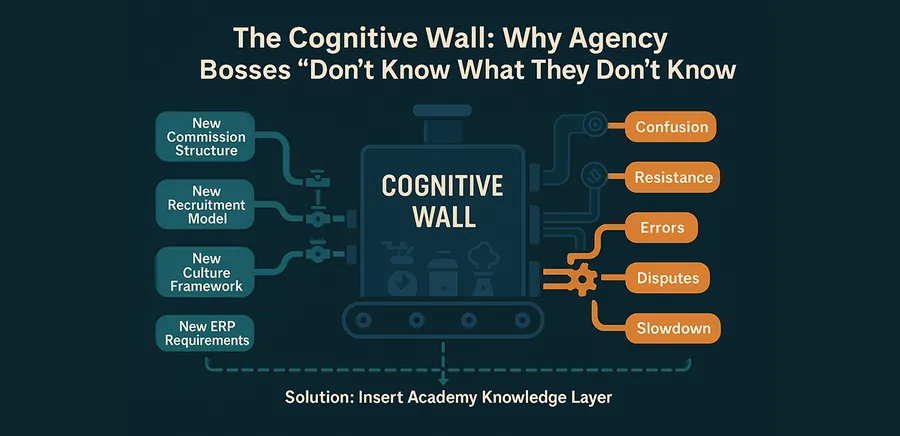
This moment is The Agency Wall — where ambition crashes into the unyielding reality of a broken foundation.
Once a boss hits it, everything after becomes a slow collapse of confidence, structure, and momentum.
Restructuring rarely comes from confidence. It comes from pressure, frustration, or declining performance.
A boss launches one big move:
a new commission structure,
a new ERP,
a culture reset,
a new recruitment model,
a new management framework.
Emotionally, this is the last bullet, the final attempt before giving up.
When results don’t appear quickly, the disappointment is immediate and crushing.
It feels like hitting a concrete wall at full speed.
Every transformation enters a predictable early dip:
confusion rises,
productivity drops,
seniors complain,
team leaders resist,
agents panic,
sales soften.
This is normal — but the boss is already tired and anxious.
A small dip feels like total failure.
Any resistance feels like collapse.
One complaint feels like the entire agency rejecting the change.
Instead of pushing through, momentum collapses.
The Wall stands firm.
This is the moment most bosses never forget.
They realise their new structure cannot run on their existing system.
The ERP cannot:
Everything breaks at the exact moment they need stability the most.
The truth becomes impossible to avoid:
The future cannot run on the system they currently have.
This is the real Wall — the architectural one.
Leadership, motivation, and culture cannot compensate for broken infrastructure.
When the new structure collapses under system limitations, the boss begins doubting themselves.
Quiet, painful thoughts begin:
“Maybe I’m not capable.”
“Maybe my idea was wrong.”
“Maybe the market is impossible now.”
“Maybe nothing will work.”
A boss can handle pressure.
They cannot handle hopelessness.
This is the shift from leader to survivor.
Survivors do not innovate.
They freeze.
Agents quickly sense the loss of direction.
After the Wall:
An agency doesn't collapse from market conditions. It collapses from the loss of momentum and belief.
When the boss freezes, everyone else slows down.
The numbers tighten:
revenue drops,
commission payouts stay high,
admin costs remain fixed,
marketing stops,
recruitment budgets vanish,
bonuses disappear.
The boss shifts into survival mode.
Survival becomes paralysis.
Paralysis becomes silence.
Agency closures are rarely dramatic.
They happen quietly.
A senior leader leaves.
Two teams split off.
Recruitment stalls, and sales fall.
The boss becomes numb.
One by one, the lights go out:
the admin resigns,
the ERP bills stop,
the website goes offline.
The WhatsApp group falls silent,
broken only by growing commission disputes.
Compliance fades.
Energy evaporates.
And suddenly—there is nothing left to save.
The boss didn’t choose closure.
Closure happened to them.
Not all collapse is emotional or operational.
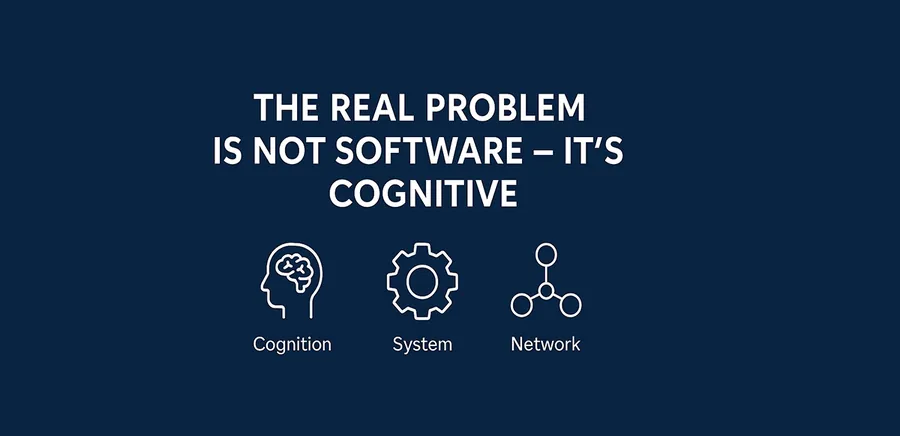
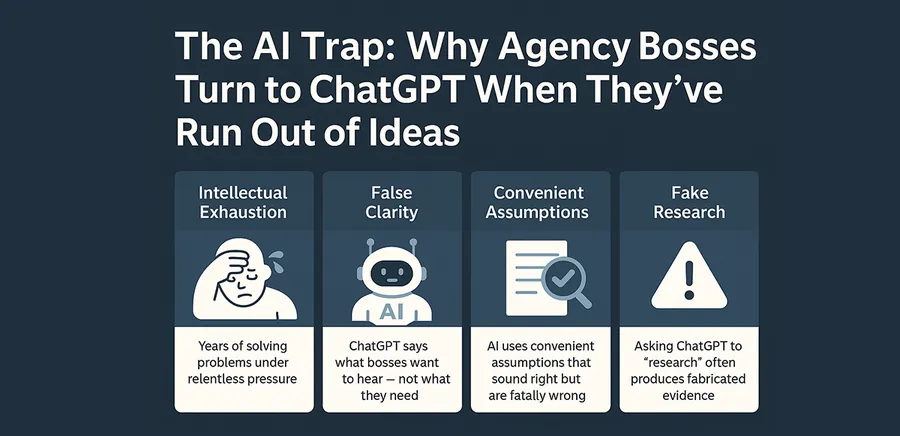
Some collapse happens because the boss simply runs out of cognitive bandwidth.
Leadership requires clarity, structural thinking, creativity, and the ability to reimagine systems. But after years of firefighting, dealing with resignations, handling disputes, chasing leads, and compensating for a weak ERP, the mind wears out.
Cognition dries up.
The ideas stop.
The creativity disappears.
The vision shrinks.
The ability to see new structures collapses.
They’re not lazy.
They’re not incompetent.
They’re simply empty.
Once cognition collapses, the agency follows.
Fresh direction requires fresh thinking —
and fresh thinking requires new inputs.
Without new mental models, the boss cannot redesign the agency.
Without redesign, the system collapses.
Without structure, the agency dies.
This is the deepest form of the Wall.
The agency didn’t collapse because the boss lacked courage.
It didn’t collapse because the vision was wrong.
It didn’t collapse because the agents were bad.
It collapsed because:
They tried to build the future on infrastructure designed for the past — and eventually ran out of cognitive space to imagine a path forward.
No culture can replace missing audit trails.
No motivation can replace broken commission logic.
No leadership can replace workflows the ERP cannot enforce.
No restructuring can survive manual admin and WhatsApp coordination.
They didn’t hit the Wall because of weakness.
They hit the Wall because their foundation could not bear the weight of their ambition.
Once the Wall stops momentum, nothing moves again until the foundation is rebuilt.
If you’re serious about rebuilding your thinking, redesigning your structure, and understanding how Malaysia’s real estate industry is evolving, explore the full library at ListingMine Academy.
Every article is original writing from the ListingMine founder — built from real operational experience, system architecture, and agency economics.
You’ll learn how to:
Topics include:
Commission architecture
Leadership strategy
Governance and compliance
ACN workflow design
ERP logic and automation
Agency economics
Market evolution
When you’re ready, create your ListingMine account and follow the built-in steps to launch your agency’s ERP:
No consultants
No manual configuration
No custom coding
No theory
Just a system that works — and grows with you.

Founder of ListingMine and author of Agent for Life. Building ERP for Malaysian real estate agencies since 2008 — and writing to reshape how agencies grow.
More about Marvin Foong →More articles in this topic