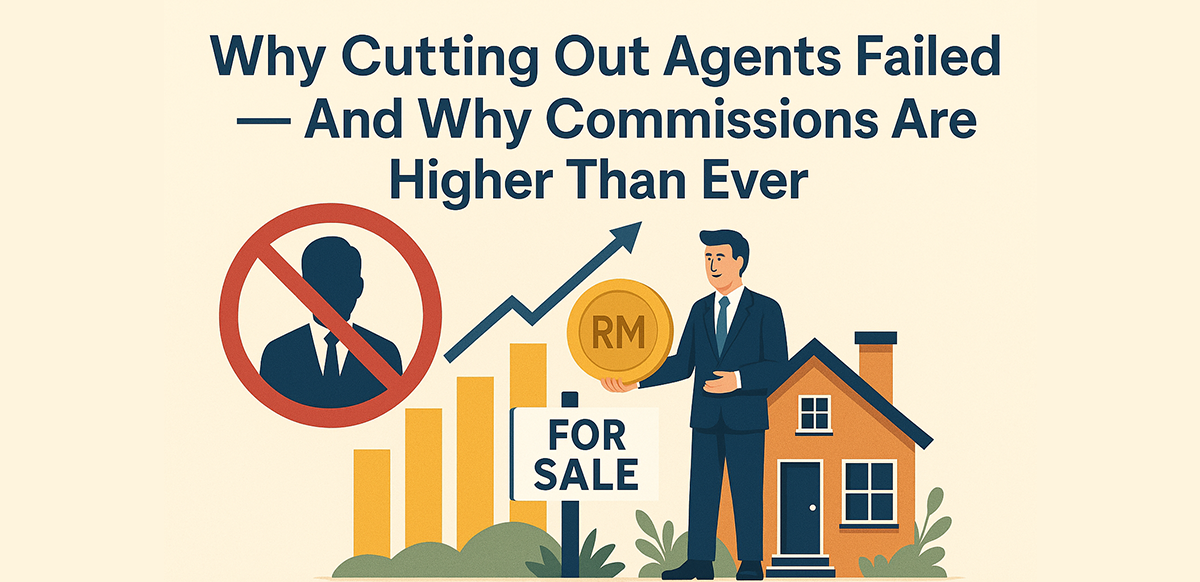
Attempts to remove agents failed because buyers and sellers still need trust, persuasion, coordination, and market access. Commissions remain high where agents solve real transaction friction.
A structural analysis of why real estate disintermediation never succeeded — and why, in 2025, agents are more valuable, not less.
For two decades, the internet reshaped entire industries. Travel agents disappeared. Music distributors collapsed. Retail intermediaries were replaced by e-commerce. The prediction seemed obvious:
“Real estate agents will be next.”
Platforms emerged promising a direct buyer–seller marketplace. Tech founders claimed commissions would collapse. Consumers believed they could save money.
Yet today, the result is the exact opposite:
Developers and sellers in Malaysia are paying the highest success-based commissions in history — in RM, not in percentages.
Many developers pay 3%–5%, sometimes 6%–8%, entirely on success basis. Some even pay RM20,000–RM60,000 per unit for specialised projects.
Why?
Because the market has more sellers than buyers. The buyer pool is limited. Competition for each buyer is intense. So sellers and developers hire agents as special forces, hoping they can bring that one qualified buyer from their networks.
If going direct was possible, everyone would do it. But property transactions are not products — they are negotiation, risk management, and multi-party execution.
Here is the structural explanation of why disintermediation failed — and why agents have become more important than ever.
Disintermediation works only when transactions are simple and low-risk. Property is the opposite:
One mistake can collapse the deal or create financial loss.
Sellers and developers don’t pay agents for “finding a buyer.”
They pay agents for getting the deal safely to completion. This is why success-based fees work — agents absorb all the effort, cost, and risk. They only earn when they deliver results.
Yes, listings are online.
Yes, buyers can research prices.
Yes, sellers can post on Facebook.
But:
A seller can list a unit at RM800,000. A skilled agent knows:
Tech platforms can show listings. They cannot replace judgment, negotiation, or strategy.
In Malaysia today, the structural reality is:
There are far more sellers than buyers.
This is why:
Agents are now hired not for “listing a property,” but for:
With 10 sellers chasing 1 buyer, the one who uses a strong agent wins.
This is why sellers willingly pay higher commissions. A higher fee is meaningless if the agent can close a transaction that others cannot.
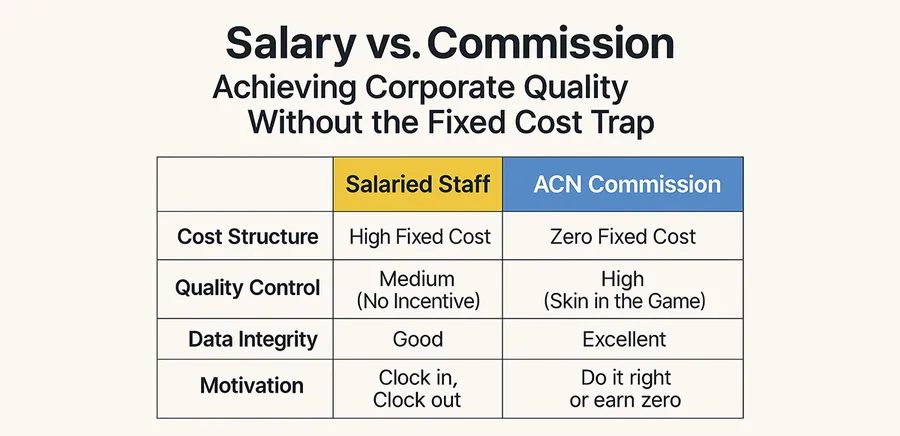
Before MCO, many developers carried large in-house sales teams. After MCO, many cut them entirely.
Why?
Reason A — Salary is a fixed monthly cost, even when sales are zero.
During downturns or slow months, the company bleeds cash.
Reason B — Full-time staff become too comfortable.
They receive a salary whether they close or not. Motivation drops. Effort levels decline. Urgency disappears.
Reason C — Agents work purely on a success basis.
Developers pay RM0 until the unit is truly sold. When sold, the commission is simply added into the pricing strategy.
Instead of cutting prices (which damages brand value), developers:
The result: Developers shift risk outward. Agents bring in buyers faster and at lower cost compared to maintaining in-house teams.
Negotiations between buyers and sellers often collapse when done directly. Why?
Agents serve as:
Apps cannot replicate this. Algorithms cannot defuse human emotion.
Direct sellers struggle because they:
Data shows FSBO units typically:
The dream of cutting out the agent never matched reality.
Developers and sellers are not paying more because they love agents. They are paying more because:
A RM30,000 commission is nothing compared to holding costs, bank interest, and unsold stock risk.
The internet removed:
But it strengthened:
Real estate didn’t lose agents. It upgraded them.
You can replace:
But you cannot replace the professional who:
In real estate, the transaction is too complex, too emotional, and too high-stakes. That is why, even in the digital age:
Agents are not disappearing. They are becoming indispensable. And success-based commissions will continue to rise.

Founder of ListingMine and author of Agent for Life. Building ERP for Malaysian real estate agencies since 2008 — and writing to reshape how agencies grow.
More about Marvin Foong →More articles in this topic
This article is one of the sources behind this assessment. Take it to see what you already know and what to read next.
Educational self-assessment. Not a licensing examination or professional certification.