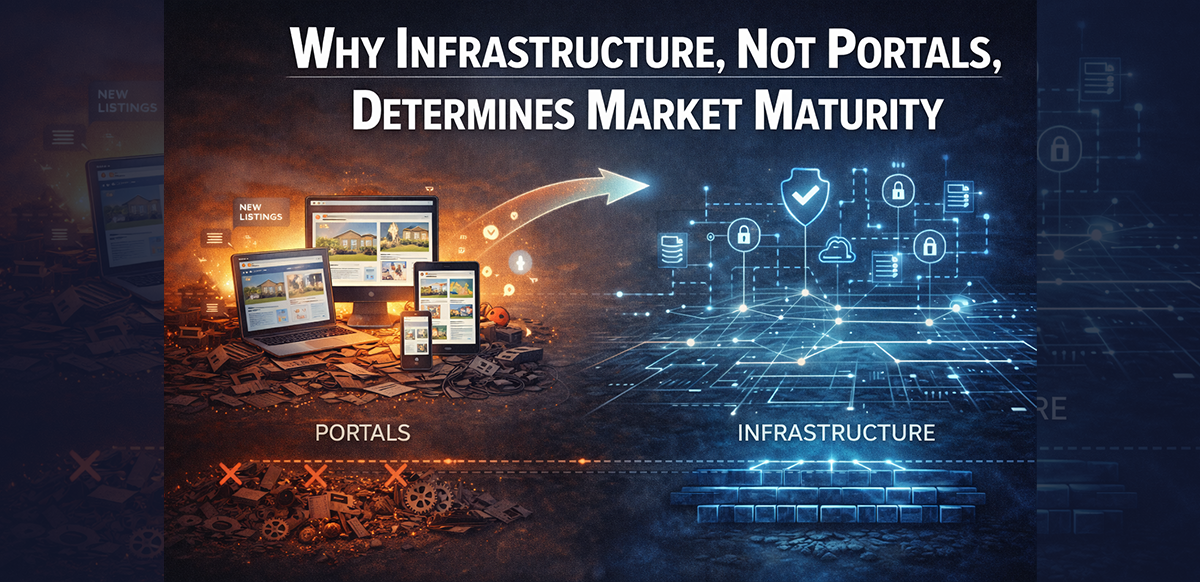
Market maturity depends on verification, cooperation, data, compliance, and workflow infrastructure. Portals alone cannot create a mature property ecosystem.
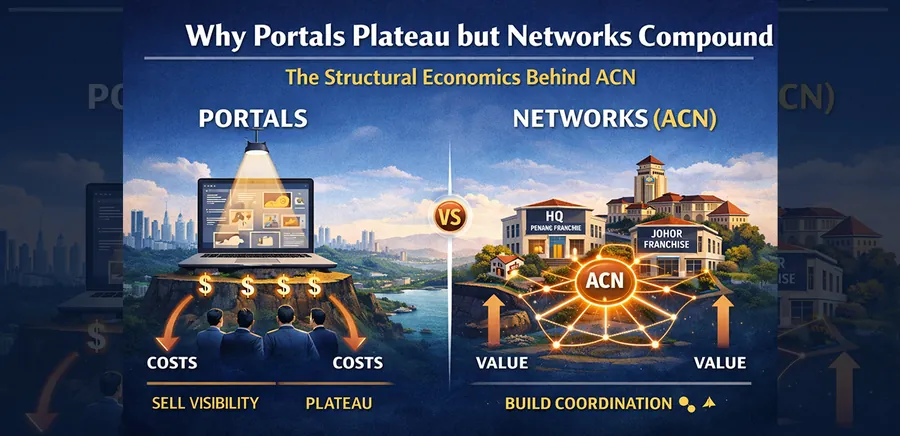
When an industry feels immature, the instinctive solution is visibility. More traffic. More eyeballs. More portals. This is how most property markets try to "modernise" themselves—by building louder billboards instead of better roads.
It feels logical. It is also the wrong lever. Portals do not mature markets. Infrastructure does.
A portal answers one narrow question: "What exists?" Infrastructure answers the harder ones:
An immature market confuses discovery with maturity. A mature market understands that discovery is the last layer, not the first. You can put a million listings online—that does not mean you have a functioning market. It just means you have noise.
Portals feel productive because they are visible. Clicks rise, leads flow, and dashboards look impressive. But nothing fundamental improves:
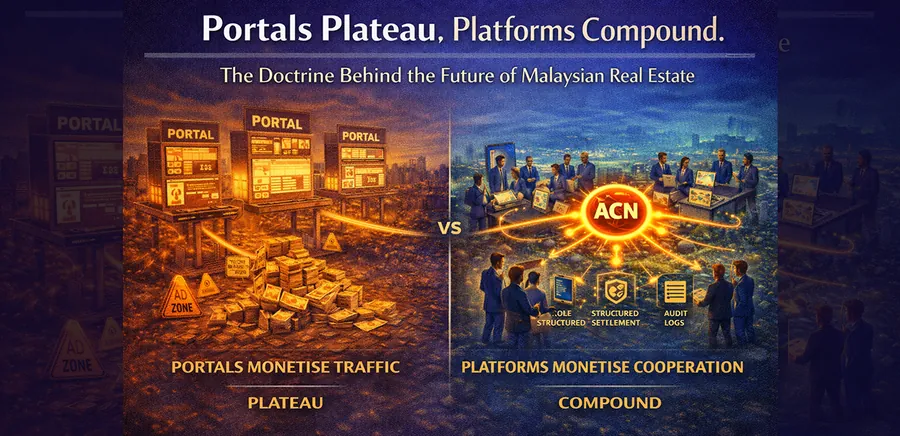
Portals grow by taxing activity, not by reducing friction. They monetise chaos; they do not resolve it. In fact, the worse the underlying infrastructure, the more valuable the portal becomes—because everyone is forced to rely on it as a workaround.
That is not maturity. That is dependency.
Infrastructure is not a feature, an app, or a marketing channel.
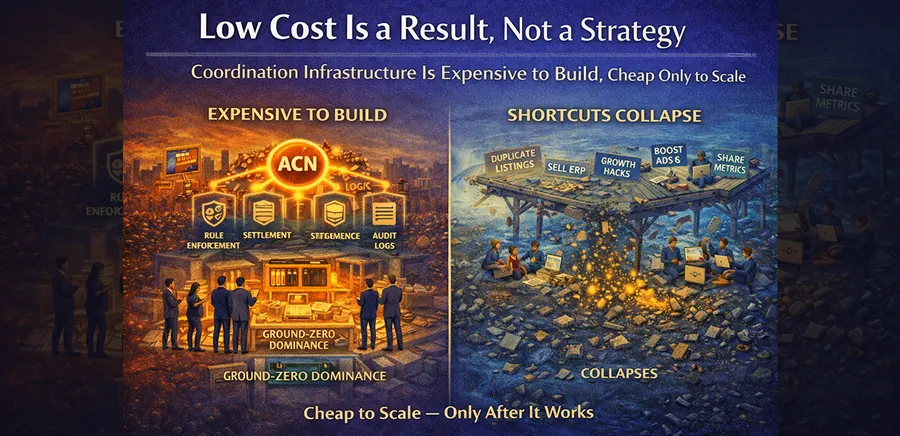
Infrastructure is the enforced protocol of the market. It is the set of rails that determine how work is done before a single advertisement is ever seen. It doesn't ask for "better behavior"; it uses logic and system design to make bad behavior impossible—or at the very least, unprofitable.
In a mature market, infrastructure quietly enforces:
When infrastructure exists, behaviour aligns naturally. When it doesn't, portals become the loudest substitute for order.
People often describe mature markets as boring. That's not an insult; it's a signal. Boring markets are predictable. Predictable markets are investable. Investable markets attract serious capital.
In these markets:
None of this is achieved by portals. It is achieved by infrastructure that removes ambiguity upstream.
Attention is cheap; confidence is expensive. A portal can scale traffic overnight. Infrastructure takes years—but it compounds permanently.
This is why portal-led markets eventually plateau. As data quality collapses and trust erodes, the portal survives, but the market fails to grow up. Infrastructure-led markets behave differently. As confidence compounds, talent stays longer, specialisation deepens, and capital commits earlier. The market becomes legible.
Most immature markets get the sequence wrong:
The correct sequence is the opposite:
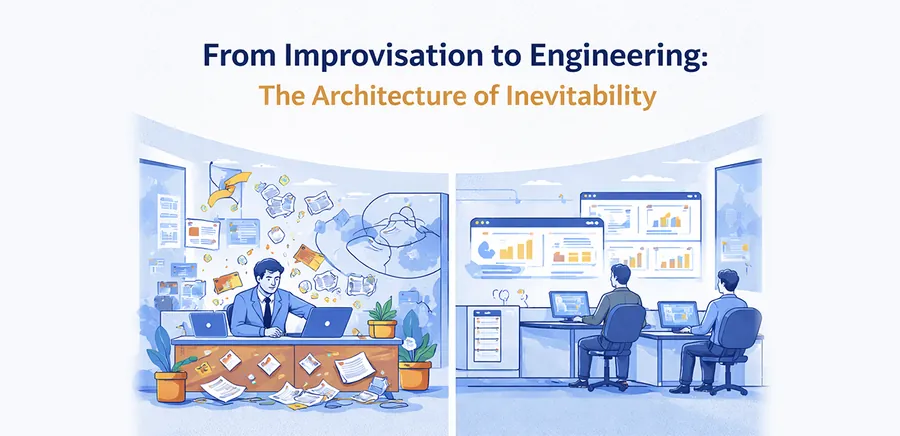
Portals belong at step five, not step one. When discovery comes first, everything underneath is forced to improvise.
Small markets can be mature. Large markets can be primitive. Maturity is not measured by the number of listings or monthly traffic. It is measured by:
Every industry that truly matured did so the same way: Finance matured with clearing houses, not trading floors. Logistics matured with standards, not marketplaces. Discovery always comes after reliability.
The real question is not "Which portal should dominate?" It is: "What infrastructure should everyone rely on—even competitors?"
Until that question is answered, markets remain loud, emotional, and fragile. When it is answered, portals become a tool, and maturity becomes inevitable.
Portals make markets louder. Infrastructure makes markets work. One sells attention; the other produces trust. Only one of them determines whether an industry ever grows up.

Founder of ListingMine and author of Agent for Life. Building ERP for Malaysian real estate agencies since 2008 — and writing to reshape how agencies grow.
More about Marvin Foong →More articles in this topic