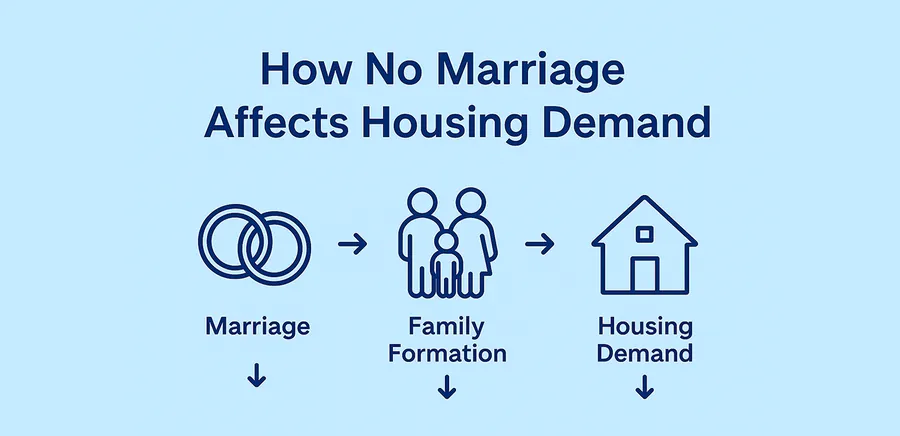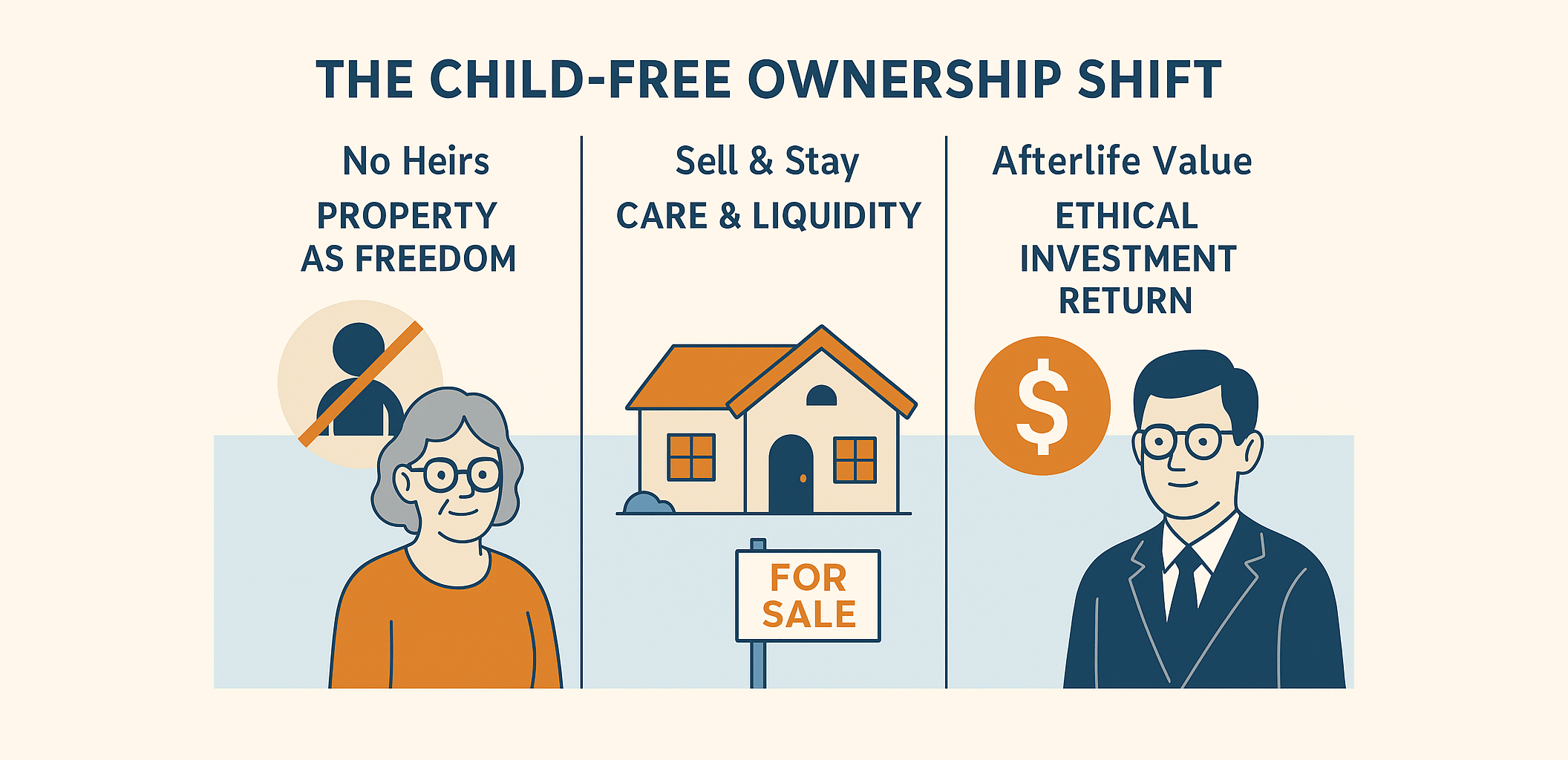
Lower birth rates and changing family choices affect home size, location needs, inheritance, and long-term property demand. Agents should track demographic shifts.
When Legacy No Longer Drives Ownership, Lifestyle and Liquidity Take Over.
Across Asia, and increasingly in Malaysia, more adults are consciously choosing not to have children. Whether driven by career, the rising cost of living, or a preference for personal freedom, this demographic shift fundamentally reshapes the meaning of property ownership.
Traditionally, a home was a family anchor—bought, held, and passed down as an asset. Now, for a growing segment of society, it is viewed as a financial instrument—bought, enjoyed, and later liquidated to fund comfort and care in later life.
For child-free owners, the endgame is not inheritance; it is quality of life. The common refrain is, "I don’t need to leave assets behind. I just want to live well and be cared for when I’m old."
This shift changes everything about how the property is managed. Instead of preserving assets for the next generation, many elderly owners seek to monetize equity to fund:
They view property not as a legacy asset, but as stored freedom—a self-funded insurance plan.
This trend fuels the growth of models like Sell-and-Rent-Back or Life Tenancy Housing, merging social needs with financial innovation.
Here is how the ethical exchange works:
This is not charity; it's a fair exchange where the seller gains dignity, care, and money, and the buyer gains an asset with high future yield. This arrangement is becoming critical in urban Malaysia, especially for single retirees and child-free couples.
The underlying psychological shift is profound: property ownership is moving from the historical focus on "passing something down" to the modern necessity of "living fully now."
As lifespans increase and healthcare costs rise, property is becoming the ultimate self-funded security net. The central question for these owners is: "How can I convert my property into comfort, love, and care while I’m still alive?"
This question creates entirely new business niches: elder-care real estate funds, guaranteed tenancy programs, and service-linked retirement communities.
Agents who understand this shift will dominate a crucial future niche. The properties involved in these structured deals offer a win-win: low entry price for the investor and guaranteed occupancy (by the seller), followed by significant appreciation potential upon the seller's passing.
This movement will become mainstream—not an emotional exception—as Malaysia’s population ages.
When legacy is no longer the goal, living well becomes the entire point. Professionals must adapt their frameworks to meet this new, powerful market demand.

Founder of ListingMine and author of Agent for Life. Building ERP for Malaysian real estate agencies since 2008 — and writing to reshape how agencies grow.
More about Marvin Foong →More articles in this topic